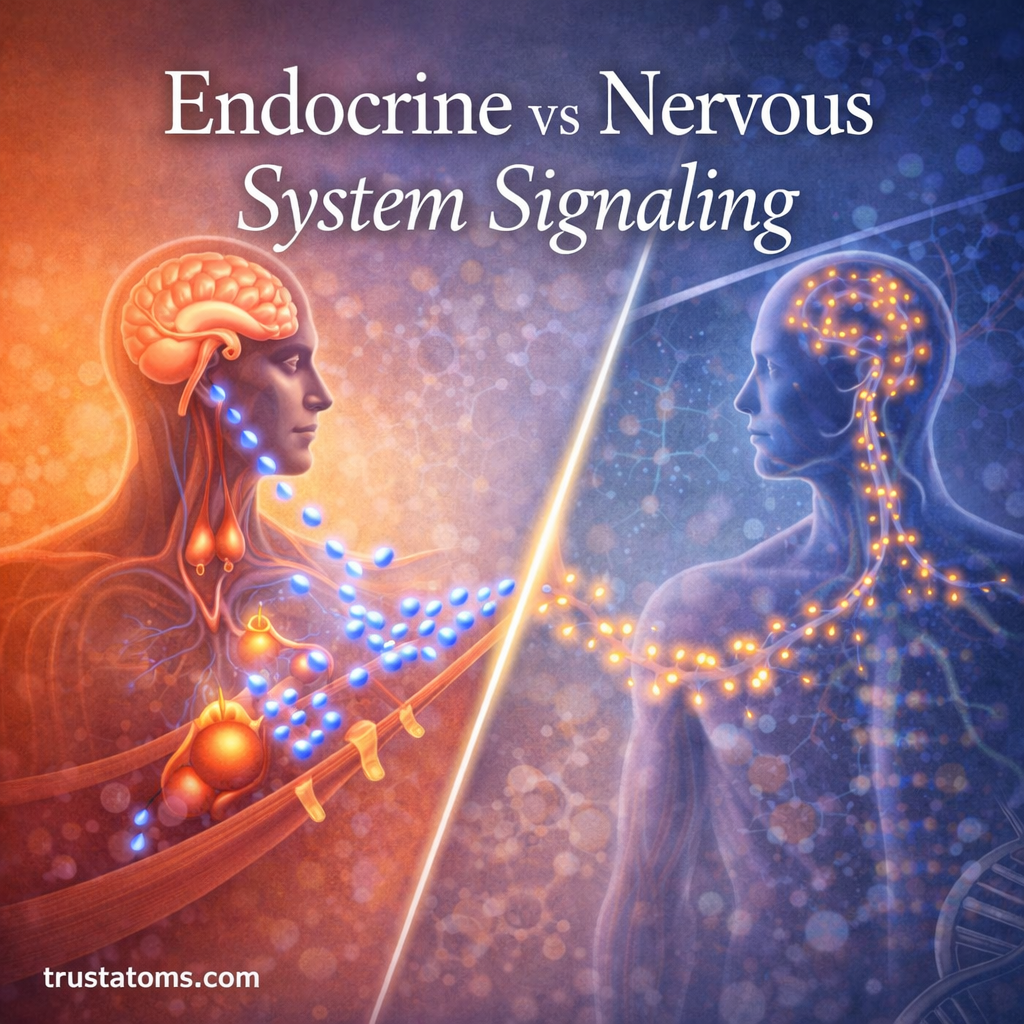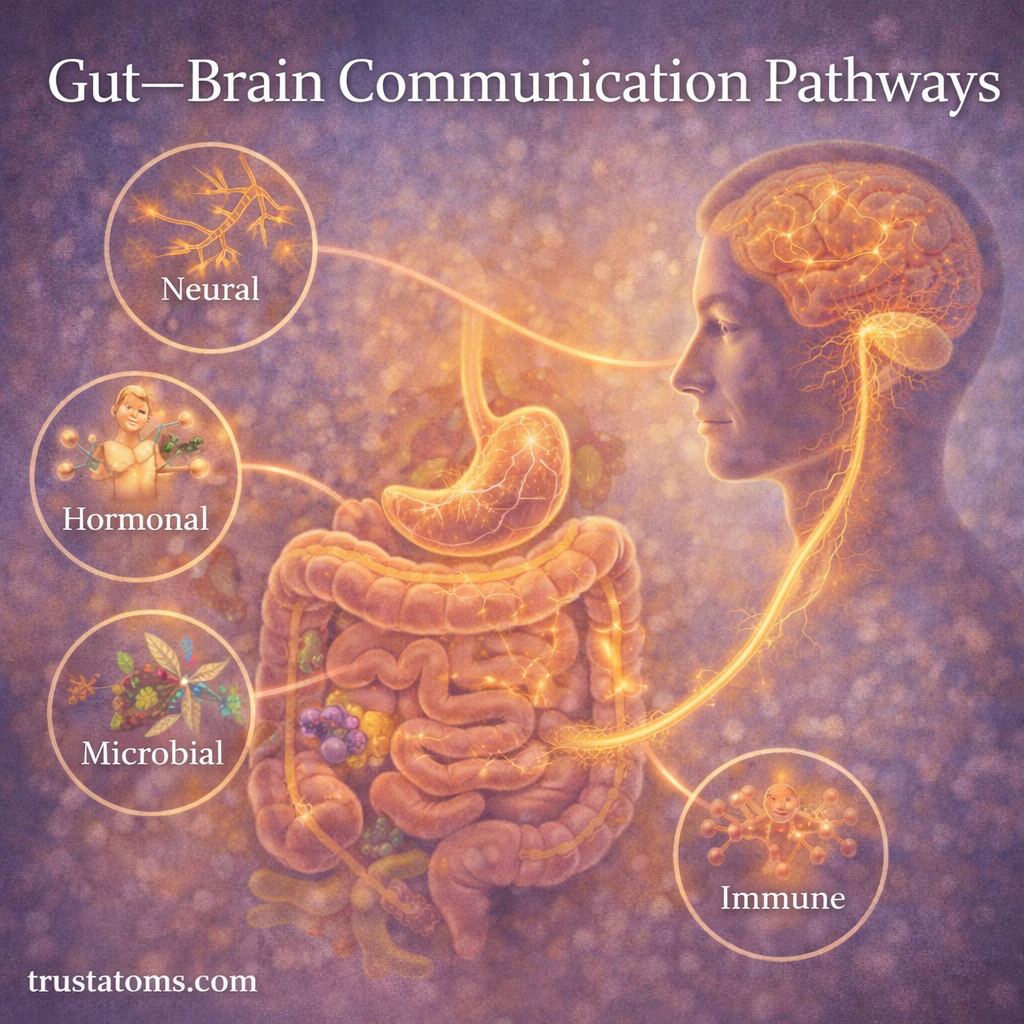
The human body is connected in more ways than we often realize. One of the most fascinating connections is the communication between the gut and the brain, known as the gut–brain axis. This system links the digestive tract with the central nervous system, allowing constant two-way communication that influences digestion, mood, and overall health.
Understanding gut–brain communication pathways helps explain how emotions affect digestion, why stress can upset the stomach, and how gut health impacts mental well-being.
What Is the Gut–Brain Axis?
The gut–brain axis is a bidirectional communication network connecting the gastrointestinal (GI) system and the brain.
Key Components
- The brain (central nervous system)
- The enteric nervous system (ENS)
- The vagus nerve
- Hormones and neurotransmitters
- The gut microbiome
Together, these components coordinate signals that regulate digestion, appetite, immune responses, and emotional states.
Main Communication Pathways
Gut–brain communication occurs through several overlapping pathways. Each plays a distinct role in transmitting signals between the digestive system and the brain.
1. Neural Pathways
The nervous system provides the fastest route of communication.
The Vagus Nerve
- Acts as the primary connection between the gut and brain
- Sends sensory information from the gut to the brain
- Transmits motor signals that regulate digestion
The vagus nerve enables rapid responses to changes in the digestive environment.
2. Hormonal Signaling
Hormones released in the gut influence brain activity and behavior.
Key Hormones
- Ghrelin – Signals hunger
- Leptin – Signals fullness
- Cholecystokinin (CCK) – Promotes satiety
- GLP-1 – Slows digestion and reduces appetite
These hormones travel through the bloodstream to communicate with the brain.
3. Immune System Pathways
The immune system plays a role in gut–brain communication through inflammatory signaling.
How It Works
- The gut contains a large portion of the body’s immune cells
- Cytokines (immune signaling molecules) can affect brain function
- Inflammation in the gut can influence mood and cognition
This pathway highlights the link between gut health and systemic inflammation.
4. Microbiome Communication
The gut microbiome—the trillions of bacteria living in the digestive tract—plays a crucial role in communication.
Key Functions
- Produces neurotransmitters like serotonin and dopamine
- Influences immune system activity
- Affects stress responses and emotional regulation
Changes in gut bacteria can directly impact brain function and behavior.
The Role of Neurotransmitters
Neurotransmitters are chemical messengers that carry signals between nerve cells.
Important Neurotransmitters in the Gut
- Serotonin – Regulates mood and digestion (about 90% is produced in the gut)
- Dopamine – Influences reward and motivation
- GABA – Helps regulate anxiety and calmness
These chemicals allow the gut to communicate effectively with the brain.
How the Gut Influences the Brain
Signals from the gut can significantly affect mental and emotional states.
Examples
- A healthy gut microbiome supports stable mood
- Digestive discomfort can increase stress or anxiety
- Nutrient deficiencies may impact brain function
The gut constantly sends feedback to the brain about internal conditions.
How the Brain Influences the Gut
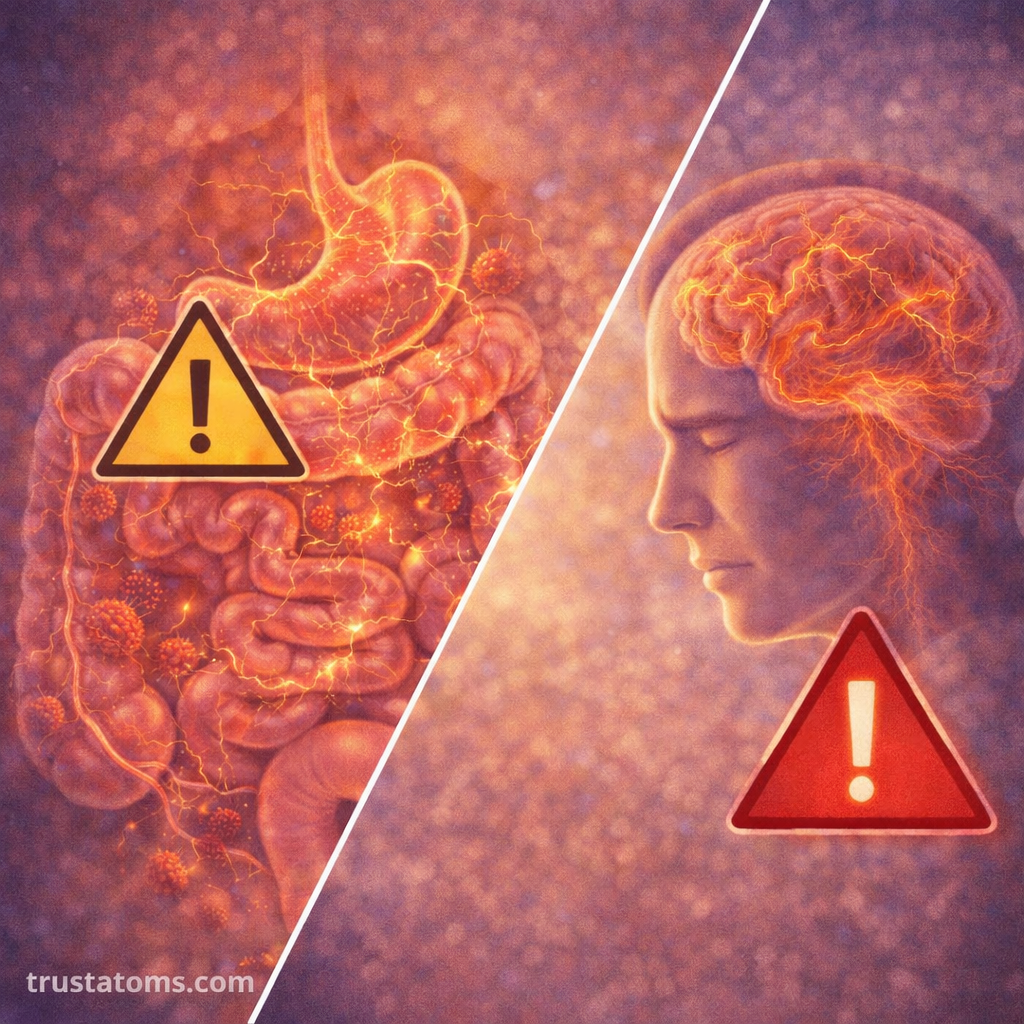
The communication works both ways—the brain also affects digestive processes.
Examples
- Stress can slow or speed up digestion
- Anxiety may cause stomach discomfort or changes in bowel habits
- Emotional states can influence appetite
This explains why emotional experiences often have physical digestive effects.
Factors That Affect Gut–Brain Communication
Several factors can influence how effectively the gut and brain communicate.
1. Diet
- Nutrient-rich diets support microbiome health
- Processed foods may disrupt communication pathways
2. Stress
- Chronic stress alters hormone and neural signaling
- Can negatively affect gut motility and microbiome balance
3. Sleep
- Poor sleep disrupts hormone regulation
- Affects both digestion and brain function
4. Antibiotics and Medications
- Can alter gut bacteria composition
- May impact communication between the gut and brain
Disorders Linked to Gut–Brain Dysfunction
Disruptions in gut–brain communication are associated with several conditions.
Common Examples
- Irritable bowel syndrome (IBS)
- Anxiety and depression
- Functional gastrointestinal disorders
- Chronic inflammation-related conditions
These conditions often involve both digestive and neurological symptoms.
Tips to Support Healthy Gut–Brain Communication
Maintaining a healthy gut–brain axis can improve both physical and mental well-being.
Practical Strategies
- Eat a balanced diet rich in fiber and whole foods
- Include probiotics and fermented foods
- Manage stress through mindfulness or relaxation techniques
- Maintain regular sleep patterns
- Stay physically active
These habits support both gut health and brain function.
Final Thoughts
Gut–brain communication pathways form a powerful and dynamic system that influences digestion, mood, and overall health. Through neural, hormonal, immune, and microbial signals, the gut and brain are constantly exchanging information.
By understanding this connection, you can make lifestyle choices that support both your digestive system and mental well-being.