Heat waves are among the most impactful and dangerous weather events, often lasting for days or even weeks. While high temperatures alone can occur for short periods, prolonged and extreme heat is usually linked to a specific atmospheric pattern known as atmospheric blocking.
Understanding how heat waves form—and why they sometimes persist—helps explain their intensity, duration, and growing impact on communities around the world.
What Is a Heat Wave?
A heat wave is a period of unusually high temperatures that lasts for several consecutive days, often combined with high humidity.
Key Characteristics
- Temperatures significantly above average for a region
- Lasts multiple days (typically 2–3 days or longer)
- Can occur with or without humidity
- Often accompanied by clear skies and light winds
Heat waves can vary by region, but their effects are often severe regardless of location.
What Is Atmospheric Blocking?
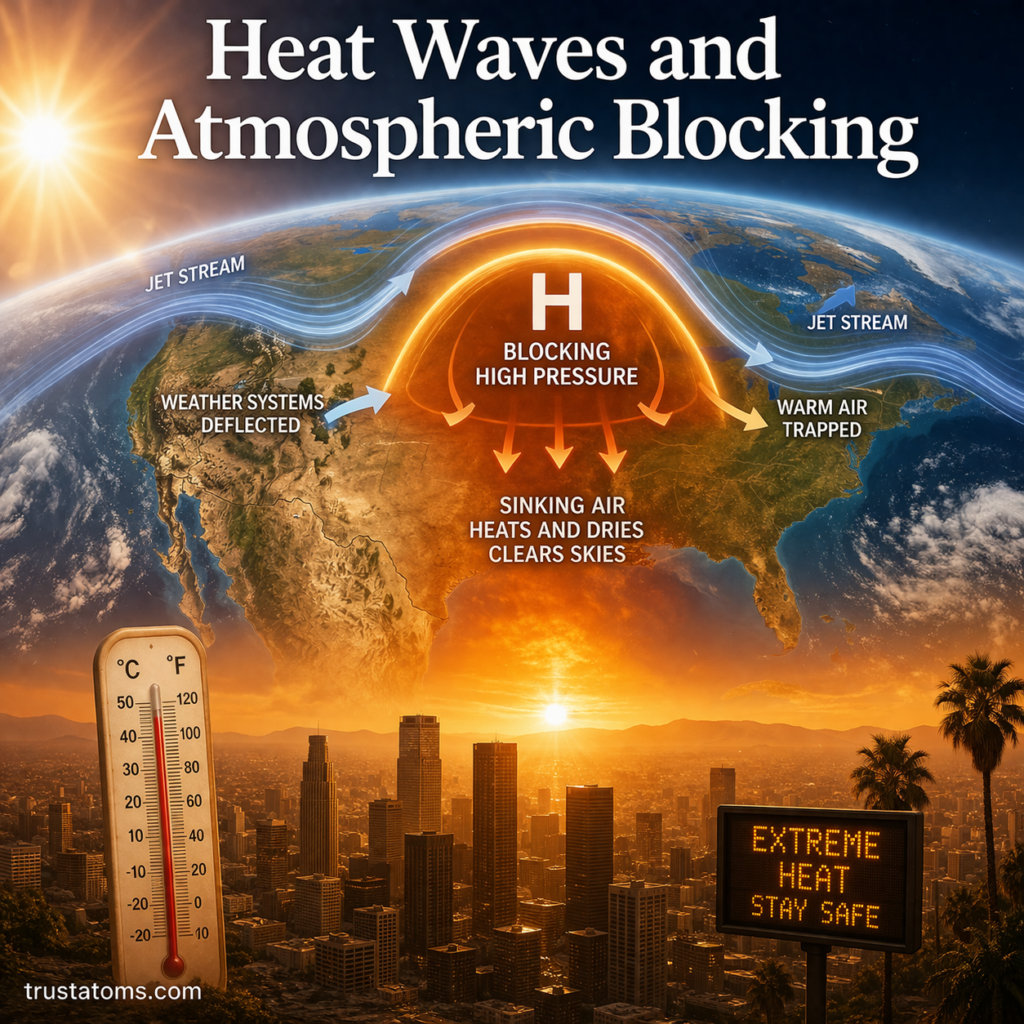
Atmospheric blocking is a weather pattern where high-pressure systems become stationary and disrupt the normal flow of the atmosphere.
How It Works
- A strong high-pressure system forms
- It slows or “blocks” the jet stream
- Weather patterns become stuck in place
This blocking effect prevents cooler air or storms from moving into the region, allowing heat to build over time.
The Role of High-Pressure Systems
High-pressure systems are central to heat wave formation.
What High Pressure Does
- Causes air to sink (subsidence)
- Suppresses cloud formation
- Leads to clear skies
- Increases solar heating at the surface
As air sinks, it warms and dries, creating ideal conditions for rising temperatures.
How Heat Waves Develop
Heat waves typically form when several atmospheric factors align.
Step-by-Step Process
- A high-pressure system settles over a region
- Air begins to sink and warm
- Cloud formation is reduced
- Sunlight heats the surface continuously
- Heat accumulates over several days
- Temperatures rise well above normal
Without changes in weather patterns, the heat continues to intensify.
Why Atmospheric Blocking Prolongs Heat
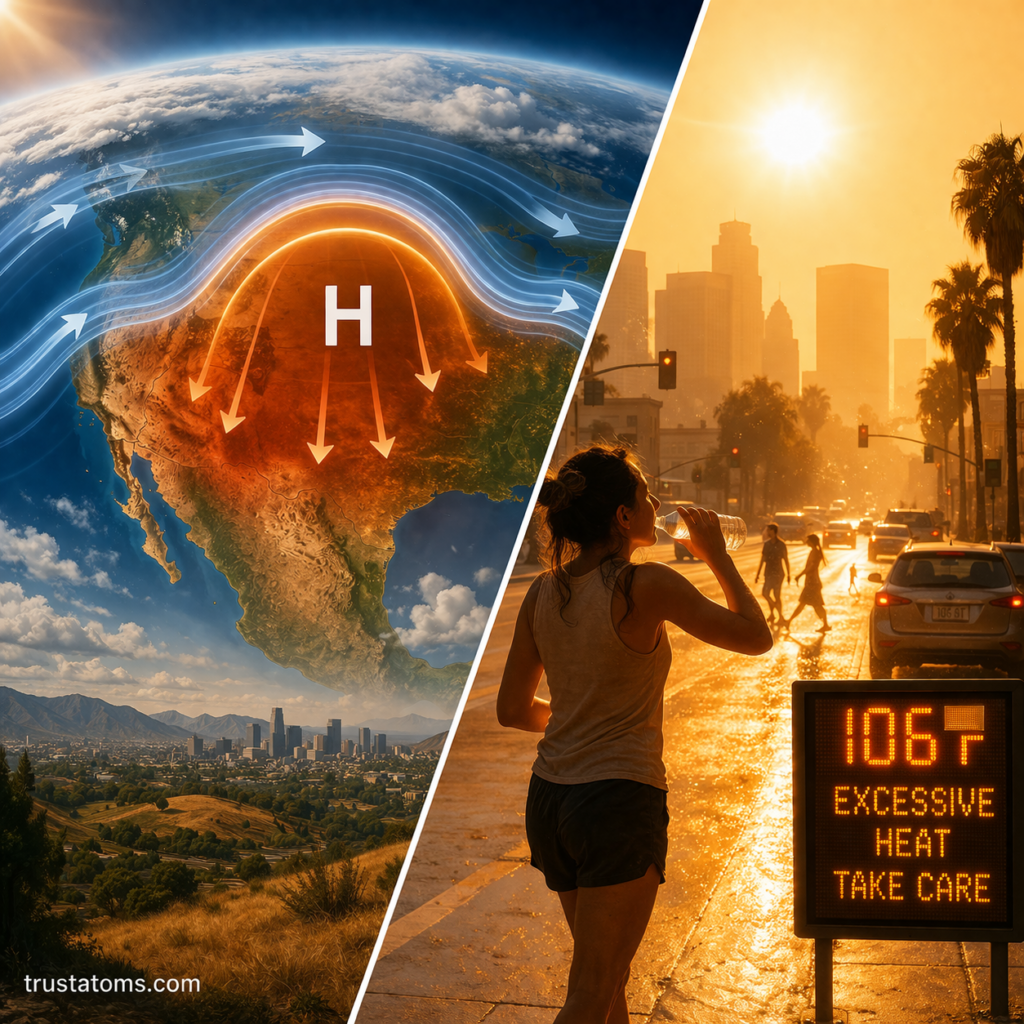
Atmospheric blocking is what turns short-term heat into prolonged heat waves.
Key Effects of Blocking
- Prevents cooler air from entering the region
- Stops storms that could bring relief
- Keeps the same hot air mass in place
- Extends the duration of extreme heat
This is why some heat waves last far longer than expected.
Types of Atmospheric Blocking Patterns
Meteorologists identify several types of blocking patterns.
Common Blocking Types
- Omega Block
- Shaped like the Greek letter Ω
- High pressure in the center, low pressure on both sides
- Rex Block
- High pressure positioned north of low pressure
- Creates a stable, stagnant pattern
- Cut-Off High
- A high-pressure system separated from the main jet stream
Each type can trap weather systems and lead to prolonged conditions.
The Role of the Jet Stream
The jet stream normally moves weather systems across the globe.
Normal vs. Blocked Flow
- Normal flow → Weather changes frequently
- Blocked flow → Weather becomes stagnant
When the jet stream weakens or becomes wavy, it can create the conditions needed for blocking to occur.
Impacts of Heat Waves
Heat waves can have widespread and serious consequences.
Human Health
- Heat exhaustion and heatstroke
- Dehydration
- Increased mortality in vulnerable populations
Infrastructure
- Power grid strain due to air conditioning demand
- Road and rail damage
- Water shortages
Environment
- Drought conditions
- Increased wildfire risk
- Stress on crops and ecosystems
Urban Heat Island Effect
Cities often experience higher temperatures than surrounding rural areas.
Why This Happens
- Concrete and asphalt absorb and retain heat
- Limited vegetation reduces cooling
- Buildings trap heat
This effect can make heat waves even more dangerous in urban environments.
Are Heat Waves Becoming More Common?
Scientific evidence suggests that heat waves are becoming:
- More frequent
- More intense
- Longer-lasting
Possible Reasons
- Global temperature rise
- Changes in atmospheric circulation
- Increased likelihood of blocking patterns
While individual events vary, the overall trend points toward more extreme heat events.
How to Stay Safe During a Heat Wave
Preparation and awareness are essential.
Safety Tips
- Stay hydrated
- Avoid outdoor activity during peak heat
- Use air conditioning or cooling centers
- Check on vulnerable individuals
- Wear light, breathable clothing
Key Takeaways
- Heat waves are prolonged periods of extreme heat
- Atmospheric blocking traps weather patterns in place
- High-pressure systems drive heat wave formation
- The jet stream plays a critical role in weather movement
- Blocking patterns can significantly extend heat events
- Heat waves have major impacts on health, infrastructure, and the environment
Final Thoughts
Heat waves and atmospheric blocking demonstrate how large-scale atmospheric patterns can shape local weather in powerful ways. While a few hot days may be manageable, prolonged heat driven by blocking systems can have serious consequences.
By understanding these processes, we can better prepare for extreme weather and recognize the importance of monitoring atmospheric patterns in a changing climate.