Hormones act as chemical messengers that travel through the bloodstream to regulate countless processes in the human body. However, hormones can only influence cells that are equipped to recognize them. This is where hormone receptors come into play.
Hormone receptors determine how target cells respond, making them essential for proper communication within the endocrine system.
What Are Hormone Receptors?
Hormone receptors are specialized proteins located either on the surface of a cell or inside it. Their role is to bind to specific hormones and trigger a response within the cell.
Each receptor is highly specific, meaning:
- A receptor only binds to certain hormones
- The shape and chemical structure must match (like a lock and key)
- Only target cells with the correct receptor will respond
This specificity ensures that hormones affect the right tissues.
What Is a Target Cell?
A target cell is any cell that has receptors for a particular hormone.
Key points:
- Not all cells respond to every hormone
- The presence of receptors determines sensitivity
- A single hormone can affect multiple tissues differently
For example, the same hormone may stimulate growth in one tissue while triggering metabolism in another.
Types of Hormone Receptors
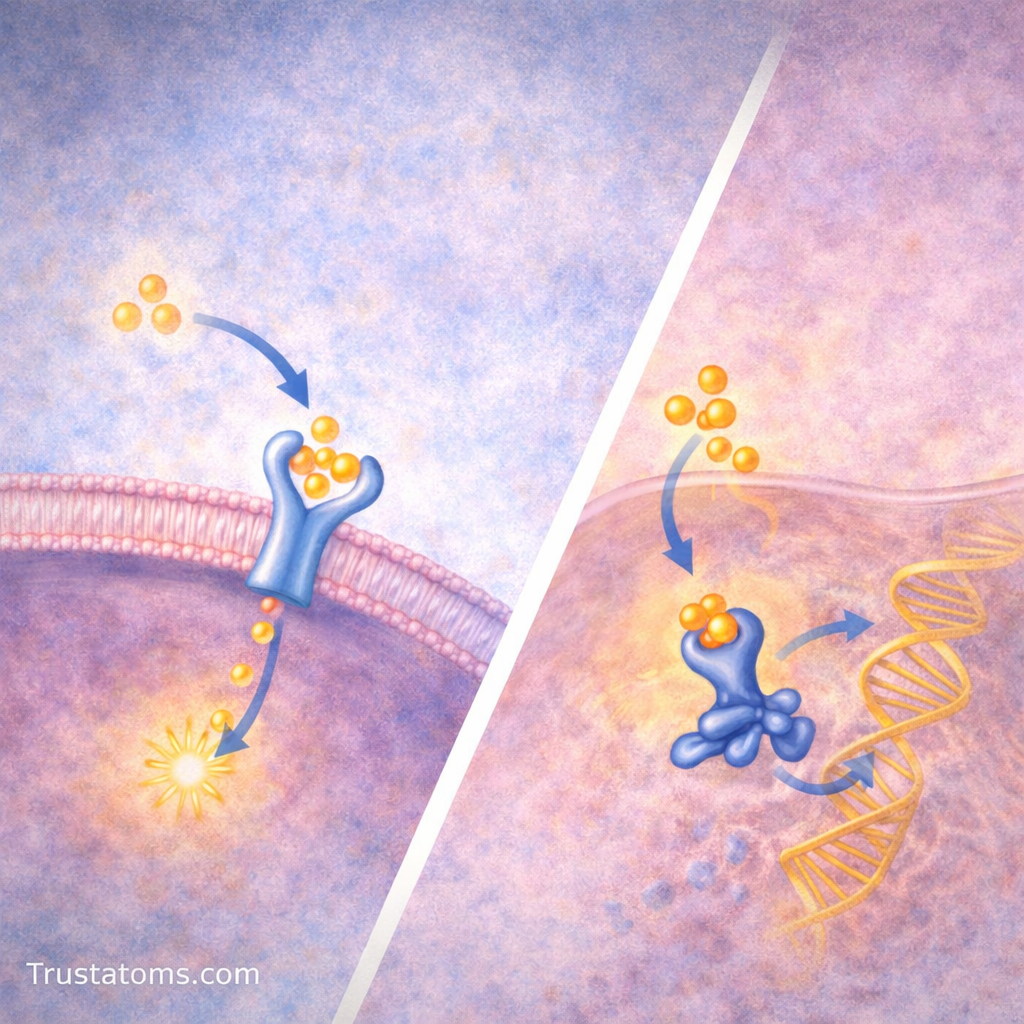
Hormone receptors are generally classified based on their location in or on the cell.
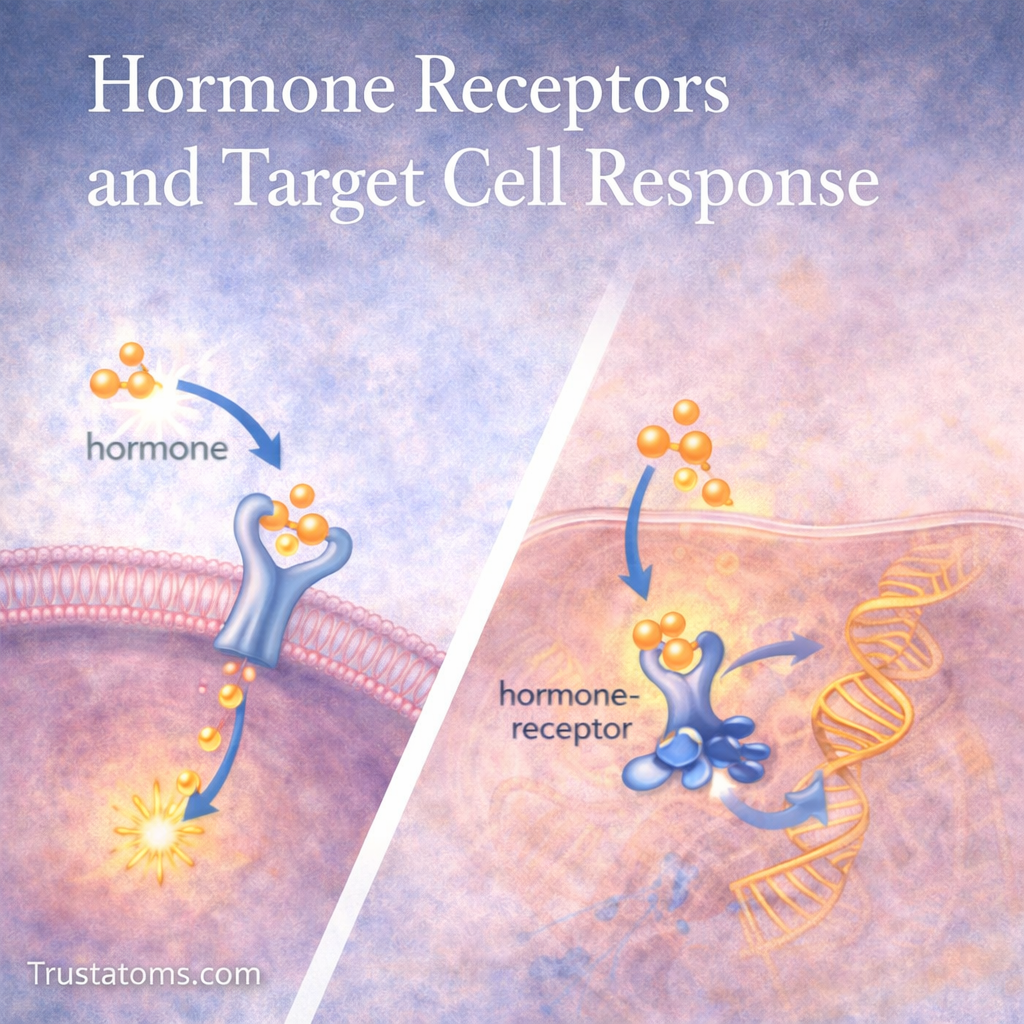
1. Cell Surface Receptors
These receptors are found on the outer membrane of the cell.
They interact with:
- Water-soluble hormones (e.g., peptide hormones, insulin)
How they work:
- The hormone binds to the receptor on the cell surface
- This activates a signaling pathway inside the cell
- Secondary messengers transmit the signal
- The cell produces a response
Examples of responses:
- Enzyme activation
- Ion channel opening
- Rapid metabolic changes
2. Intracellular Receptors
These receptors are located inside the cell, either in the cytoplasm or nucleus.
They interact with:
- Lipid-soluble hormones (e.g., steroid hormones, thyroid hormones)
How they work:
- The hormone enters the cell by passing through the membrane
- It binds to an intracellular receptor
- The hormone-receptor complex moves to the nucleus
- It influences gene expression
Examples of responses:
- Protein synthesis
- Cell growth and differentiation
- Long-term physiological changes
How Hormone Binding Triggers a Response
When a hormone binds to its receptor, it initiates a cascade of events inside the cell.
General process:
- Hormone binds to receptor
- Receptor changes shape (activation)
- Signal is transmitted within the cell
- Cellular activity is altered
This process is known as signal transduction.
Factors That Affect Target Cell Response
Not all target cells respond in the same way, even to the same hormone.
Key influencing factors:
1. Receptor Number
- More receptors = stronger response
- Fewer receptors = weaker response
2. Hormone Concentration
- Higher hormone levels increase the likelihood of binding
- Low levels may produce minimal effects
3. Receptor Sensitivity
- Cells can become more or less responsive over time
- This is known as upregulation or downregulation
4. Interaction with Other Hormones
- Some hormones enhance each other (synergistic effect)
- Others may oppose each other (antagonistic effect)
Types of Hormonal Responses
Once activated, target cells can produce a variety of responses.
Common responses include:
- Changes in enzyme activity
- Alterations in gene expression
- Increased or decreased secretion of substances
- Structural changes in the cell
- Growth and division
The type of response depends on both the hormone and the target tissue.
Why Hormone Receptors Are Important
Hormone receptors ensure that signals are delivered accurately and efficiently.
They help:
- Maintain precise control over body functions
- Prevent unwanted or excessive responses
- Coordinate complex physiological processes
- Allow cells to adapt to changing conditions
Without receptors, hormones would circulate without effect.
What Happens When Receptors Malfunction?
Problems with hormone receptors can disrupt normal body functions.
Examples include:
- Insulin resistance (cells do not respond properly to insulin)
- Hormone insensitivity disorders
- Overactive or underactive signaling pathways
These issues can lead to conditions such as diabetes or hormonal imbalances.
Final Thoughts
Hormone receptors and target cell responses are fundamental to how the body communicates and functions. By ensuring that only specific cells respond to specific hormones, receptors maintain precision in biological processes.
From rapid metabolic changes to long-term growth and development, these interactions form the foundation of endocrine signaling. Understanding how receptors work highlights the complexity and efficiency of the human body.