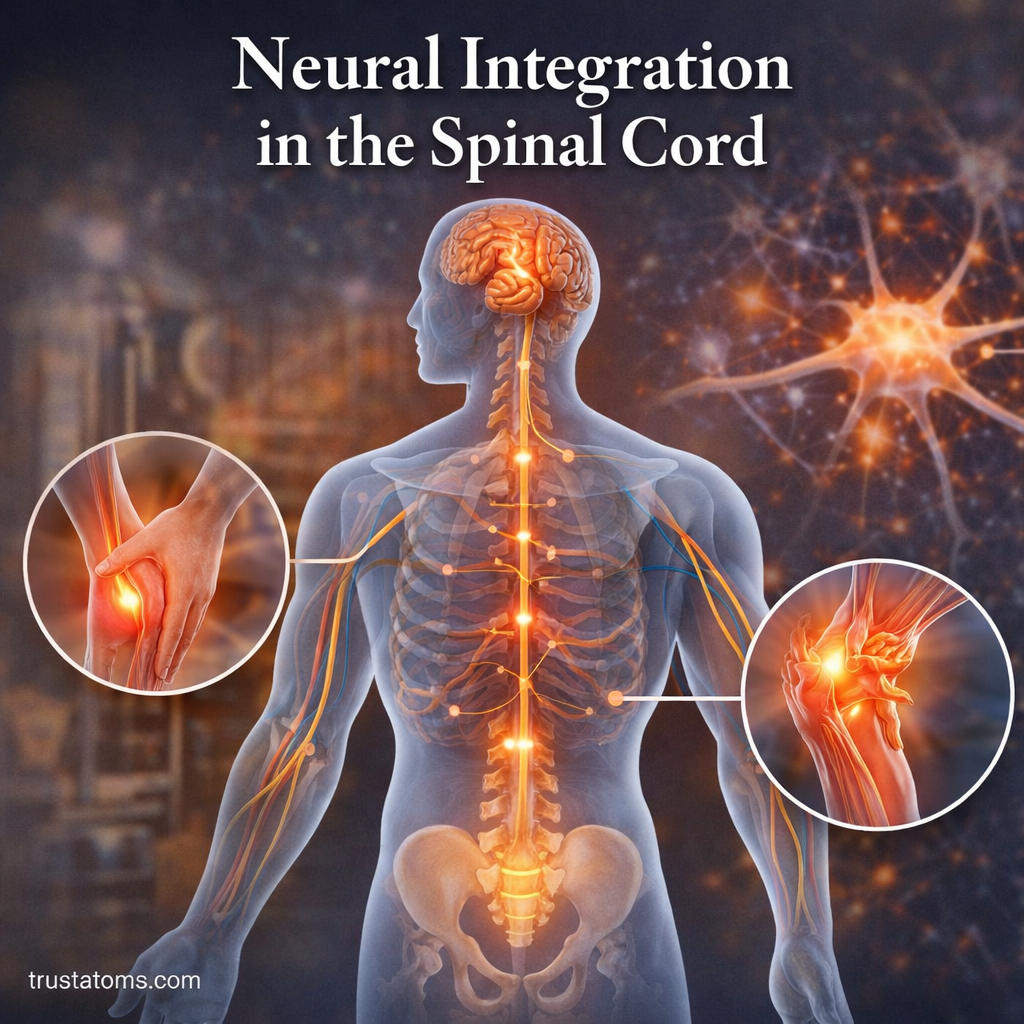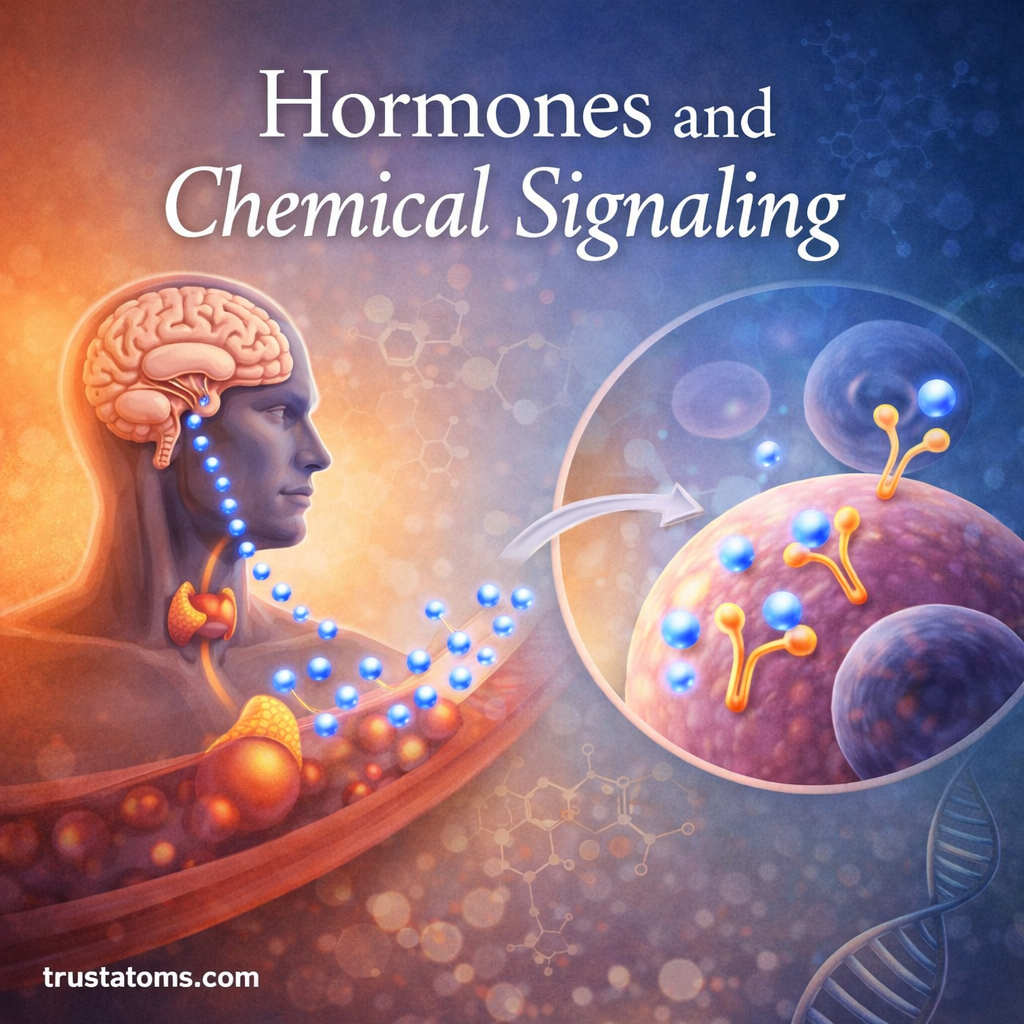
Hormones are powerful chemical messengers that coordinate communication throughout the body. Produced by glands in the endocrine system, these substances travel through the bloodstream to regulate vital processes such as growth, metabolism, mood, and reproduction.
Chemical signaling is how cells and systems “talk” to each other. Without it, the body would struggle to maintain balance, respond to changes, or function efficiently.
What Are Hormones?
Hormones are specialized molecules released by endocrine glands. Once secreted, they move through the bloodstream to reach specific target cells or organs.
Each hormone is designed to affect certain cells that have the correct receptors. This ensures that signals are precise and not randomly distributed.
Key characteristics of hormones:
- Produced in one part of the body, act in another
- Travel through the bloodstream
- Bind to specific receptors on target cells
- Trigger changes in cell activity
How Chemical Signaling Works
Chemical signaling involves a step-by-step process that ensures accurate communication between cells.
The Basic Process
- A gland or cell produces a hormone
- The hormone is released into the bloodstream
- It travels to a target cell or tissue
- The hormone binds to a receptor on the target cell
- The cell responds by changing its activity
This process allows the body to coordinate complex functions over long distances.
Types of Chemical Signaling
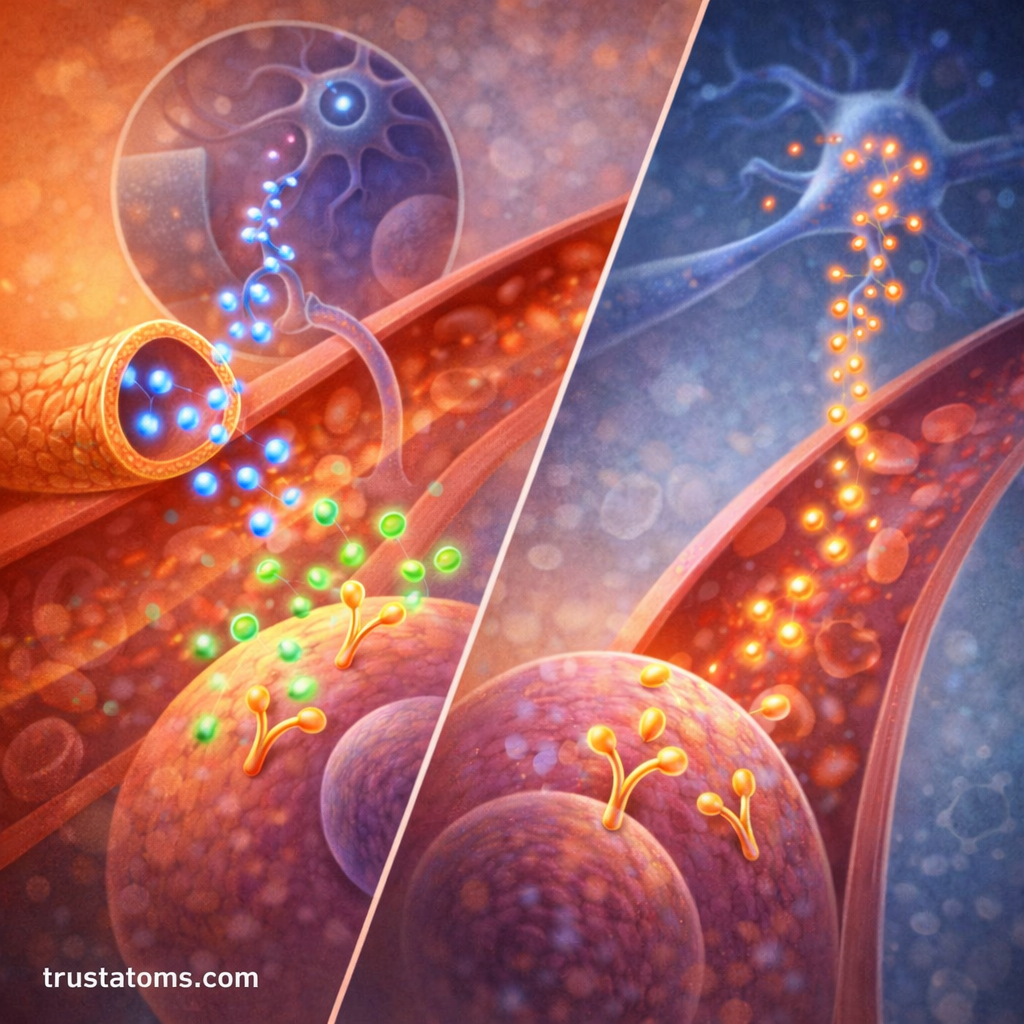
Not all signaling in the body happens the same way. Different types of chemical signaling allow for both local and long-distance communication.
Endocrine Signaling
- Hormones travel through the bloodstream
- Affect distant target cells
- Slower but longer-lasting effects
Example: Insulin regulating blood sugar levels
Paracrine Signaling
- Signals affect nearby cells
- Do not enter the bloodstream
- Fast and localized response
Example: Cells releasing signals during inflammation
Autocrine Signaling
- Cells signal themselves
- Used for self-regulation
Example: Immune cells activating their own responses
Neuroendocrine Signaling
- Involves both the nervous and endocrine systems
- Neurons release hormones into the blood
Example: The hypothalamus controlling hormone release
Hormone Receptors and Target Cells
Hormones only affect cells that have the right receptors. These receptors act like locks, and hormones act like keys.
There are two main types of receptors:
Surface Receptors
- Located on the cell membrane
- Bind to water-soluble hormones (like peptide hormones)
- Trigger signals inside the cell
Intracellular Receptors
- Found inside the cell (cytoplasm or nucleus)
- Bind to lipid-soluble hormones (like steroid hormones)
- Directly influence gene expression
This specificity ensures that hormones produce the correct response in the right cells.
Major Classes of Hormones
Hormones can be grouped based on their chemical structure and how they function.
Peptide Hormones
- Made of amino acids
- Water-soluble
- Act quickly
Examples:
- Insulin
- Growth hormone
Steroid Hormones
- Derived from cholesterol
- Lipid-soluble
- Cross cell membranes easily
Examples:
- Testosterone
- Estrogen
- Cortisol
Amino Acid–Derived Hormones
- Made from single amino acids
- Can act quickly or slowly
Examples:
- Adrenaline (epinephrine)
- Thyroid hormones
Why Hormonal Balance Matters
The body depends on precise hormone levels to function properly. Even small imbalances can lead to noticeable effects.
Common issues caused by imbalance:
- Fatigue and low energy
- Weight gain or loss
- Mood changes or anxiety
- Sleep disturbances
- Blood sugar irregularities
The body uses feedback systems—especially negative feedback loops—to maintain balance and adjust hormone production as needed.
Hormones vs Neurotransmitters
Hormones and neurotransmitters are both chemical messengers, but they operate differently.
Hormones:
- Travel through the bloodstream
- Affect distant targets
- Slower but longer-lasting effects
Neurotransmitters:
- Travel across synapses (tiny gaps between neurons)
- Act locally in the nervous system
- Fast and short-lived effects
Together, they form an integrated communication system that controls the body’s responses and behaviors.
Everyday Examples of Chemical Signaling
Chemical signaling influences many daily processes you might not even notice.
Examples include:
- Feeling hungry or full (regulated by hormones like ghrelin and leptin)
- Stress response (adrenaline and cortisol)
- Sleep cycles (melatonin)
- Growth and development during puberty
- Regulation of blood sugar after eating
These processes highlight how essential hormones are to normal life.
Final Thoughts
Hormones and chemical signaling are fundamental to how the body communicates internally. Through precise and coordinated messaging, they regulate everything from basic survival functions to complex behaviors.
Understanding how this system works provides insight into overall health and helps explain how imbalances can affect the body in significant ways.