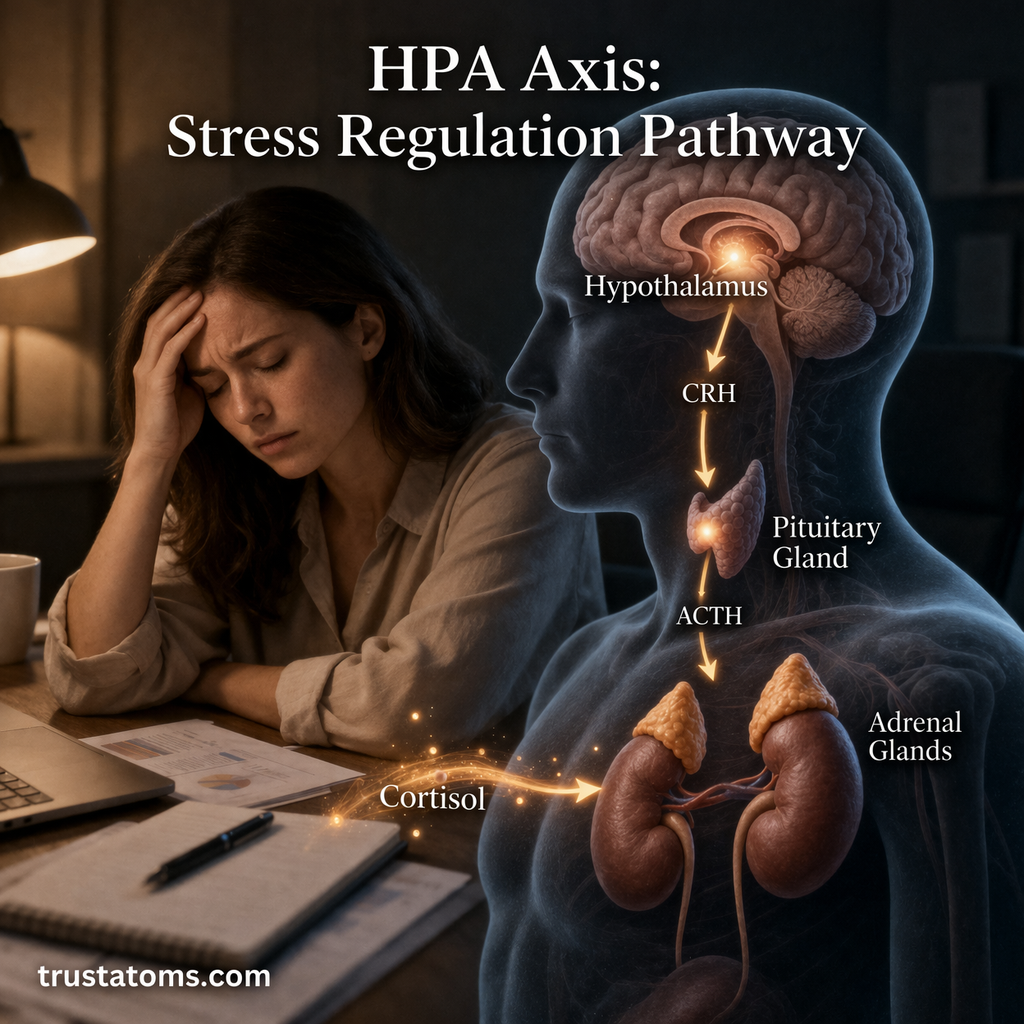
The HPA axis—short for the hypothalamic-pituitary-adrenal axis—is one of the body’s most important systems for managing stress. It connects the brain and endocrine system in a coordinated pathway that regulates how the body responds to physical, emotional, and environmental challenges.
From a sudden threat to long-term psychological pressure, the HPA axis helps the body adapt by releasing hormones that influence energy, mood, immune function, and metabolism.
What Is the HPA Axis?
The HPA axis is a three-part hormonal system involving:
- Hypothalamus
- Pituitary gland
- Adrenal glands
These components communicate through hormone signaling to regulate the body’s stress response.
Key Hormones Involved
The HPA axis relies on a sequence of hormones that activate one another.
Corticotropin-Releasing Hormone (CRH)
- Released by the hypothalamus
- Initiates the stress response
Adrenocorticotropic Hormone (ACTH)
- Released by the pituitary gland
- Travels through the bloodstream to the adrenal glands
Cortisol
- Released by the adrenal cortex
- Known as the primary stress hormone
Step-by-Step Activation of the HPA Axis
When the body perceives stress, the HPA axis is activated in a predictable sequence.
Step 1: Stress Detection
- The brain identifies a stressor (physical or psychological)
- Signals are sent to the hypothalamus
Step 2: Hypothalamus Releases CRH
- CRH is released into the bloodstream
- Travels to the pituitary gland
Step 3: Pituitary Releases ACTH
- ACTH enters circulation
- Targets the adrenal glands
Step 4: Adrenal Glands Release Cortisol
- Cortisol is released into the bloodstream
- Produces widespread physiological effects
Effects of Cortisol
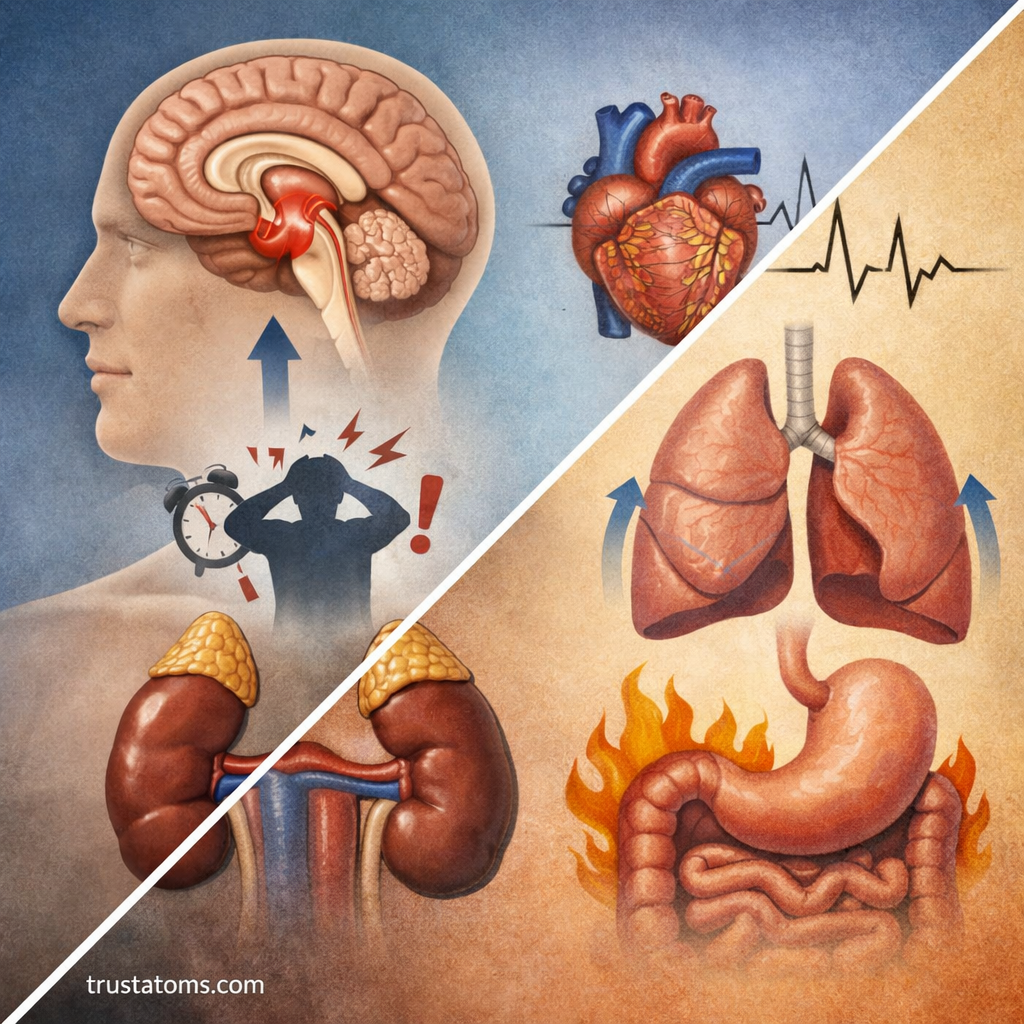
Cortisol prepares the body to handle stress by adjusting multiple systems.
Immediate Effects
- Increases blood sugar for energy
- Enhances alertness and focus
- Raises blood pressure
Longer-Term Effects
- Alters immune function
- Influences metabolism
- Affects mood and behavior
Cortisol ensures the body has the resources needed to respond to challenges.
Negative Feedback and Regulation
The HPA axis is tightly controlled through negative feedback.
How It Works
- Rising cortisol levels signal:
- Hypothalamus → reduce CRH
- Pituitary → reduce ACTH
- This prevents excessive hormone production
Why Feedback Matters
Without proper feedback:
- Cortisol levels could remain elevated
- The body could stay in a prolonged stress state
Acute vs Chronic Stress
The HPA axis responds differently depending on the duration of stress.
Acute Stress (Short-Term)
- Brief activation of the HPA axis
- Rapid increase in cortisol
- Quick return to baseline
Examples:
- Sudden danger
- Public speaking
- Physical exertion
Chronic Stress (Long-Term)
- Prolonged activation of the HPA axis
- Persistently elevated cortisol levels
Effects:
- Fatigue
- Impaired immune function
- Increased risk of disease
- Mood disturbances
Interaction with the Nervous System
The HPA axis works closely with the autonomic nervous system.
Sympathetic Nervous System
- Activates immediate “fight-or-flight” response
- Releases adrenaline
HPA Axis
- Provides sustained hormonal response
- Maintains energy and alertness over time
Together, they ensure both rapid and prolonged adaptation to stress.
Factors That Influence the HPA Axis
Several lifestyle and environmental factors can affect how the HPA axis functions.
Common Influences
- Sleep: Poor sleep disrupts cortisol rhythms
- Nutrition: Inadequate diet affects hormone production
- Exercise: Moderate activity supports regulation
- Stress exposure: Chronic stress alters feedback sensitivity
- Mental health: Anxiety and depression can dysregulate the axis
Disorders of the HPA Axis
When the HPA axis becomes dysregulated, it can lead to health issues.
Hyperactivity of the HPA Axis
- Excess cortisol production
Associated conditions:
- Cushing’s syndrome
- Chronic anxiety
- Depression
Hypoactivity of the HPA Axis
- Insufficient cortisol production
Associated conditions:
- Addison’s disease
- Chronic fatigue
HPA Axis Dysregulation
- Impaired feedback mechanisms
- Irregular cortisol patterns
Common symptoms:
- Sleep disturbances
- Mood swings
- Low energy
- Difficulty handling stress
Circadian Rhythm and Cortisol
Cortisol follows a daily rhythm regulated by the HPA axis.
Normal Pattern
- Highest levels in the morning
- Gradual decline throughout the day
- Lowest levels at night
This rhythm supports:
- Wakefulness during the day
- Restful sleep at night
Disruption of this cycle can affect overall health.
Key Takeaways
- The HPA axis regulates the body’s stress response
- It involves the hypothalamus, pituitary, and adrenal glands
- CRH, ACTH, and cortisol are key hormones
- Negative feedback prevents overactivation
- Acute stress is adaptive; chronic stress can be harmful
- The HPA axis interacts with the nervous system
- Lifestyle factors significantly influence its function
Final Thoughts
The HPA axis is essential for survival, enabling the body to respond effectively to stress while maintaining internal balance. When functioning properly, it allows for adaptation and recovery. When disrupted, it highlights the delicate balance required for hormonal and physiological health.
Understanding the HPA axis provides valuable insight into how stress affects the body—and why managing stress is critical for long-term well-being.