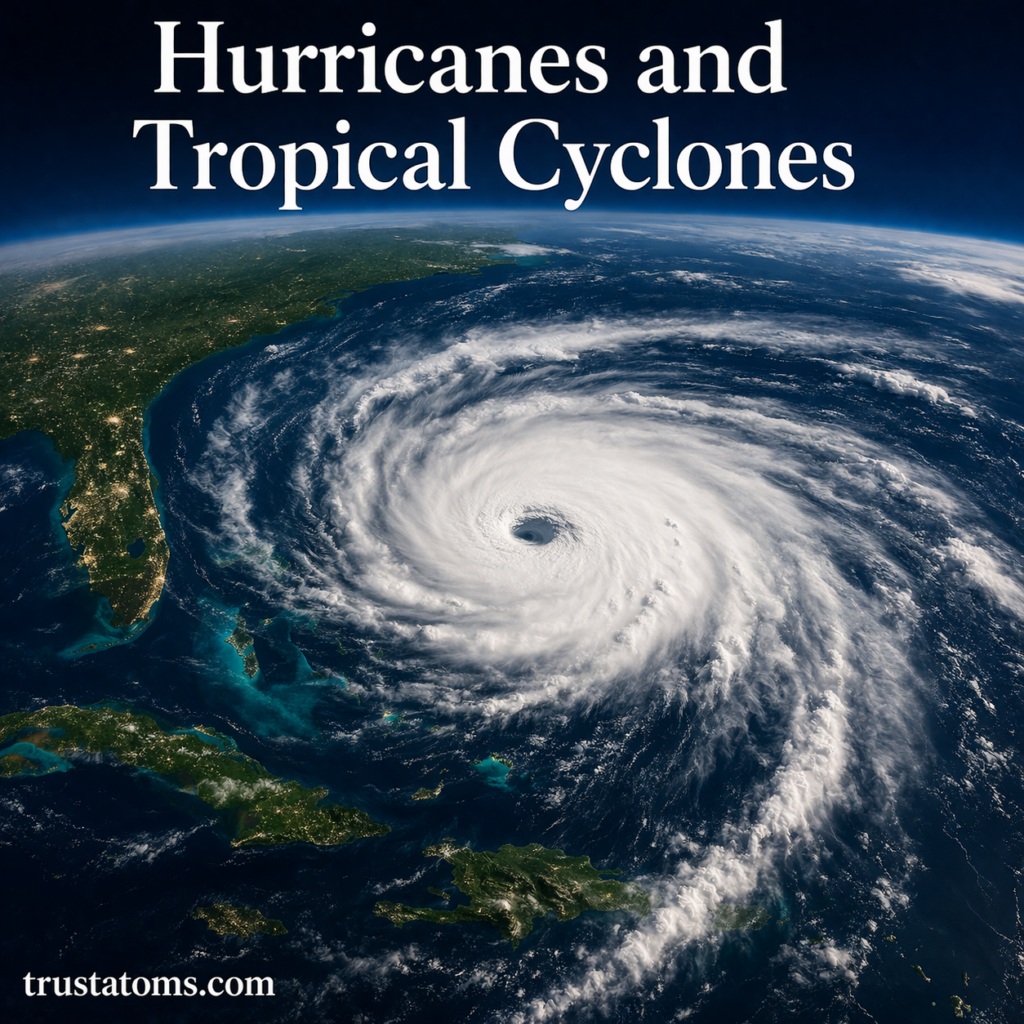
Hurricanes and tropical cyclones are among the most powerful weather systems on Earth. Forming over warm ocean waters, these storms can grow into massive rotating systems capable of producing intense winds, heavy rainfall, and widespread coastal impacts.
Understanding how these storms form, strengthen, and behave is essential for both scientific knowledge and real-world preparedness.
What Are Hurricanes and Tropical Cyclones?
A tropical cyclone is a large, rotating storm system that forms over warm ocean waters. The name used depends on the region:
- Hurricane – Atlantic Ocean and northeastern Pacific
- Typhoon – Northwestern Pacific
- Cyclone – Indian Ocean and South Pacific
Despite different names, they are all the same type of storm.
Key Characteristics of Tropical Cyclones
These storms share several defining features:
- A low-pressure center (the eye)
- Rotating winds around the center
- Organized thunderstorms
- Heavy rainfall and strong winds
At the center lies the eye, which is often calm compared to the surrounding storm.
Conditions Required for Formation
Tropical cyclones only form under specific environmental conditions.
1. Warm Ocean Water
- Sea surface temperatures must be at least 26–27°C (79–81°F)
- Warm water provides energy through evaporation
2. Moist Air
- High humidity supports cloud formation and storm growth
3. Low Wind Shear
- Minimal changes in wind speed or direction with height
- Strong wind shear can disrupt storm development
4. Pre-existing Disturbance
- A tropical wave or low-pressure system
- Acts as the initial trigger
5. Coriolis Effect
- Caused by Earth’s rotation
- Gives the storm its spin
- Prevents formation near the equator
Structure of a Hurricane
A fully developed hurricane has a well-defined structure.
The Eye
- Calm, clear, and low-pressure center
- Can be 20–40 miles wide
The Eyewall
- Surrounds the eye
- Contains the strongest winds and heaviest rain
Rainbands
- Spiral bands extending outward
- Produce bursts of rain, wind, and sometimes tornadoes
How Hurricanes Form
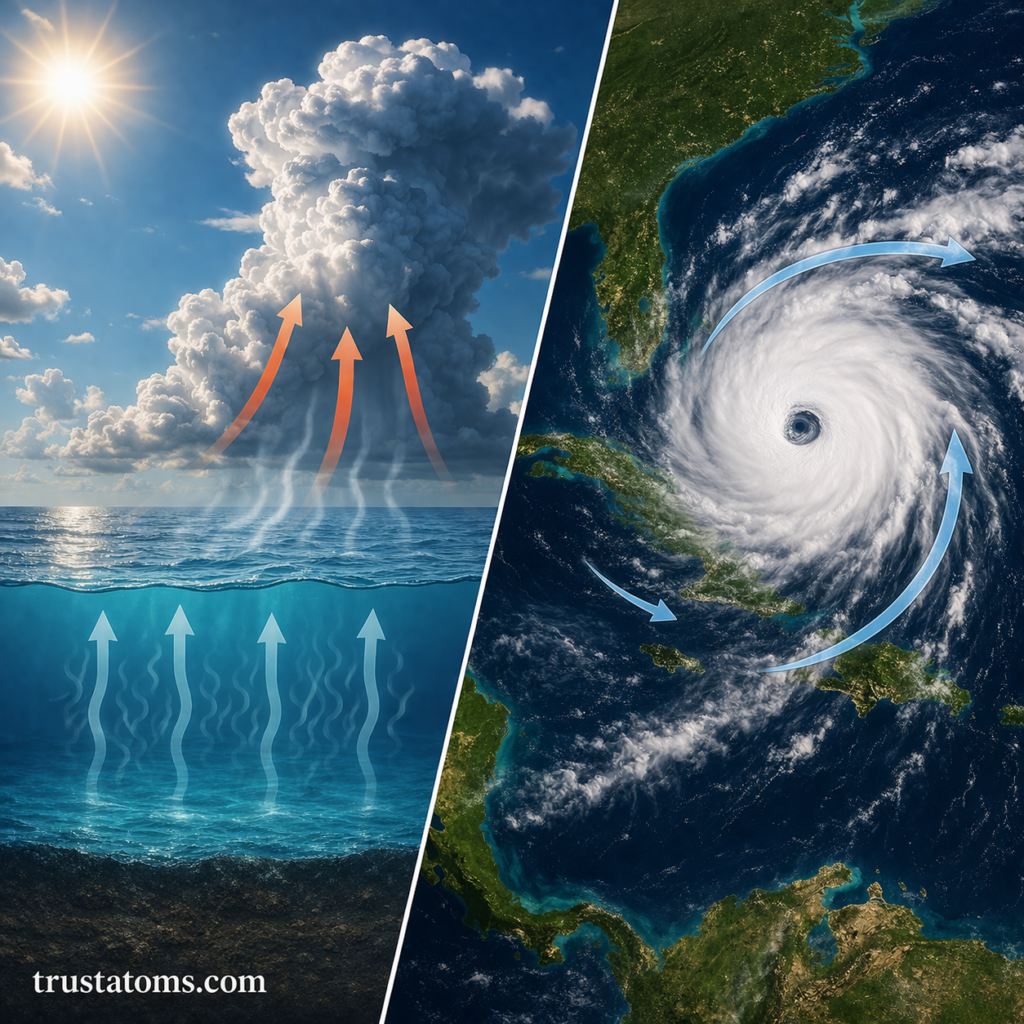
The process of hurricane formation is known as tropical cyclogenesis.
Step-by-Step Development
- Warm ocean water heats the air above it
- Moist air rises, creating an area of low pressure
- More air flows in and rises, forming clouds
- The system begins to rotate due to the Coriolis effect
- Thunderstorms organize and intensify
- A tropical depression forms, which can strengthen into a storm
As long as warm water continues to supply energy, the storm can grow stronger.
Classification of Tropical Cyclones
Storms are classified based on wind speed.
Tropical Depression
- Winds less than 39 mph
- Early stage of development
Tropical Storm
- Winds between 39–73 mph
- Receives an official name
Hurricane (or Equivalent)
- Winds of 74 mph or higher
The Saffir-Simpson Hurricane Wind Scale
Hurricanes are further categorized using the Saffir-Simpson scale:
- Category 1: 74–95 mph (minimal damage)
- Category 2: 96–110 mph (moderate damage)
- Category 3: 111–129 mph (major damage)
- Category 4: 130–156 mph (severe damage)
- Category 5: 157+ mph (catastrophic damage)
Categories 3 and above are considered major hurricanes.
Movement and Path
Hurricanes do not stay in one place—they move based on surrounding atmospheric conditions.
Steering Factors
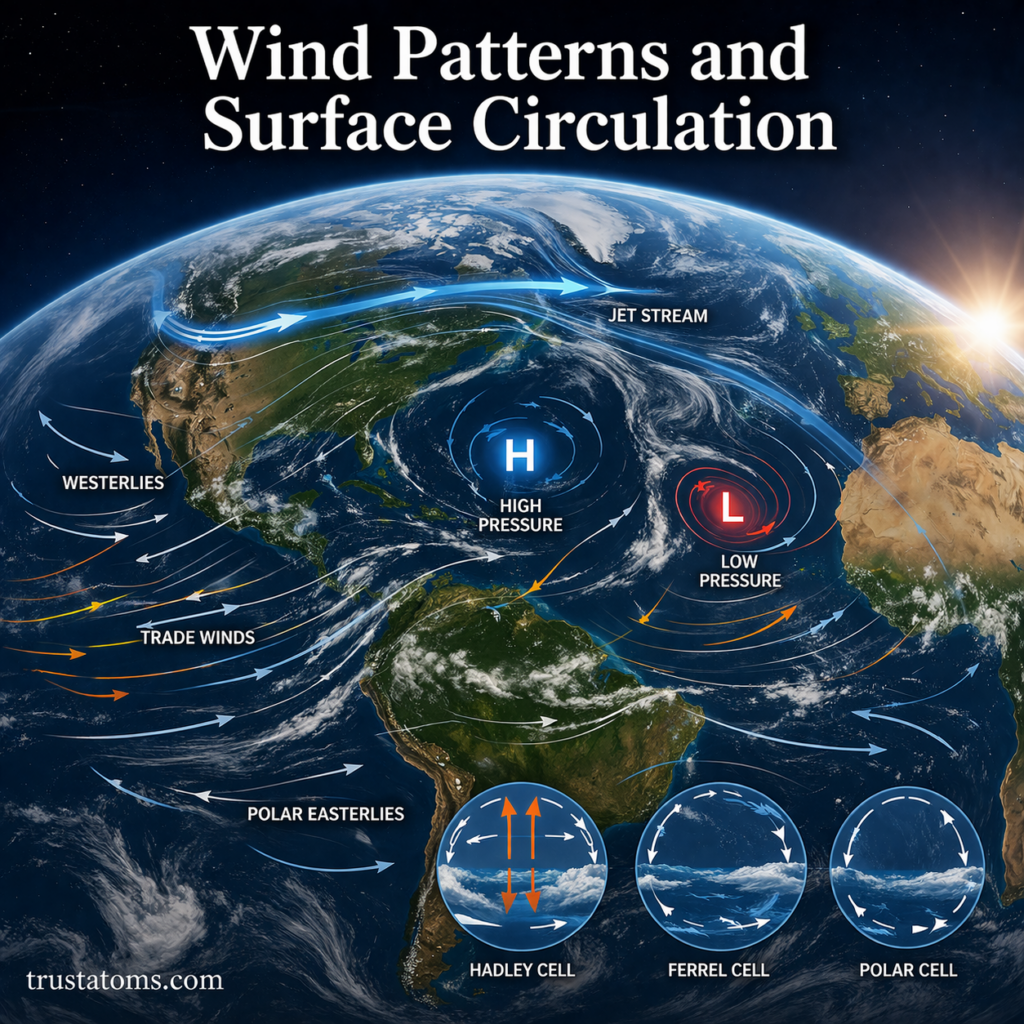
- Trade winds
- High- and low-pressure systems
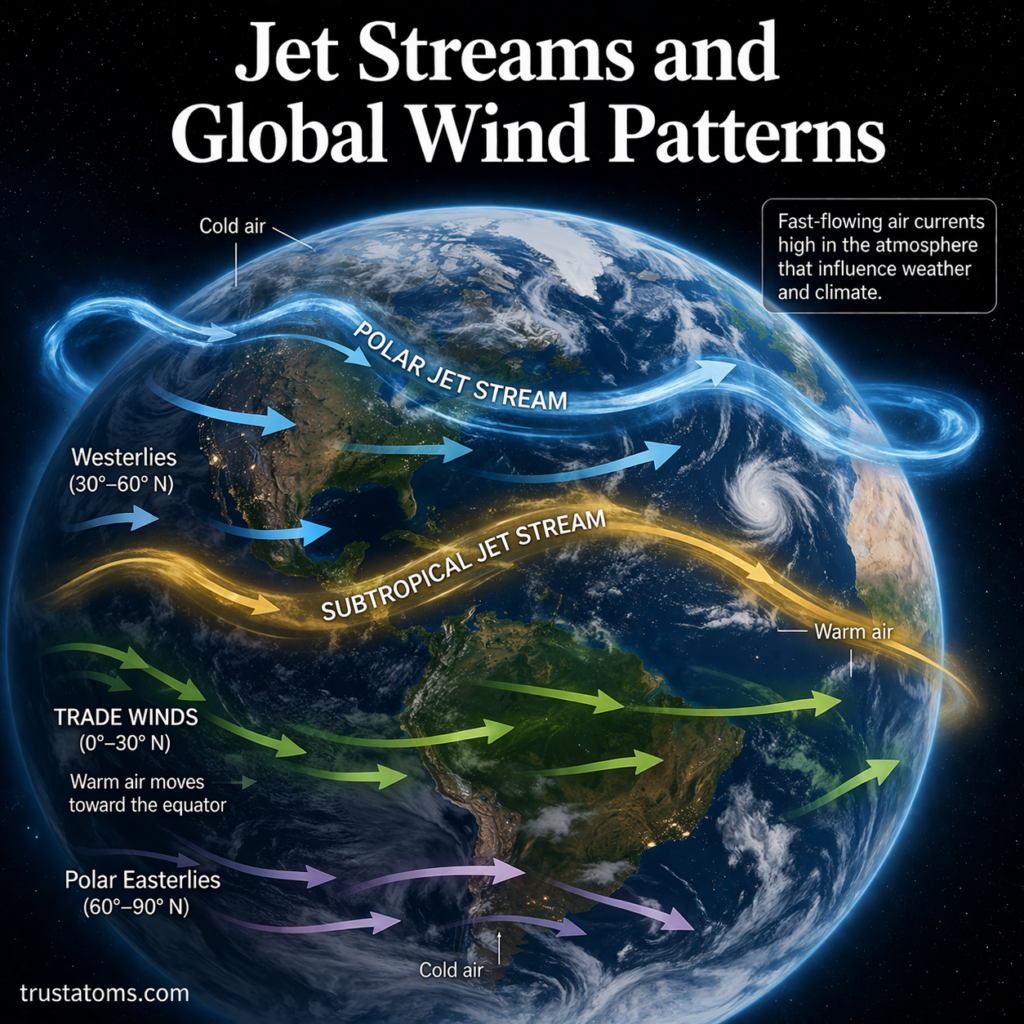
- Jet streams
Their paths can be unpredictable, making forecasting challenging.
Impacts of Hurricanes
Tropical cyclones can cause a wide range of hazards.
1. Storm Surge
- Rise in sea level pushed by strong winds
- Often the most dangerous and deadly impact
2. Heavy Rainfall
- Can lead to flooding and landslides
- Sometimes affects areas far inland
3. Strong Winds
- Damage buildings, trees, and infrastructure
4. Tornadoes
- Often form in outer rainbands
How Hurricanes Weaken
Hurricanes lose strength when they are cut off from their energy source.
Common Weakening Factors
- Moving over land (loss of warm water)
- Cooler ocean temperatures
- Increased wind shear
- Dry air intrusion
Once weakened, storms can transition into other types of weather systems.
Why Hurricanes Matter
Hurricanes play an important role in Earth’s climate system:
- Help redistribute heat from the tropics to higher latitudes
- Influence ocean and atmospheric circulation
- Contribute to rainfall in many regions
However, their destructive potential makes them one of the most closely monitored weather events.
Final Thoughts
Hurricanes and tropical cyclones are complex systems driven by warm ocean waters, atmospheric conditions, and Earth’s rotation. From their formation to their impacts, these storms demonstrate the immense power of nature.
By understanding how they work, we can better prepare for their effects and appreciate their role in the global climate system.