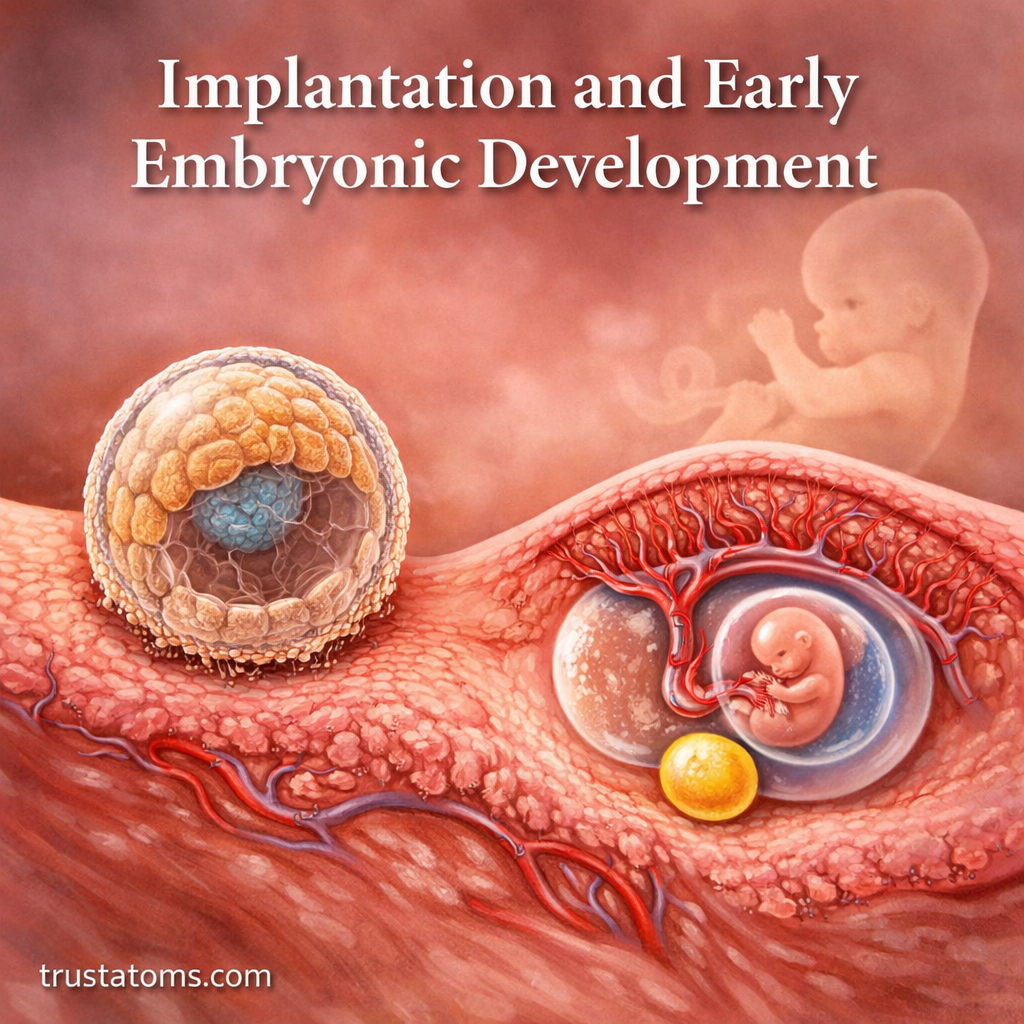
Implantation and early embryonic development are critical stages in human reproduction. During this period, a fertilized egg becomes securely embedded in the uterus and begins forming the structures necessary for growth. These early steps lay the foundation for all future development, making them essential to understand in human anatomy.
What Is Implantation?
Implantation is the process by which a fertilized egg (blastocyst) attaches itself to the lining of the uterus (endometrium). This typically occurs about 6–10 days after fertilization.
Before implantation, the fertilized egg travels down the fallopian tube while dividing into multiple cells. By the time it reaches the uterus, it has developed into a blastocyst—a hollow structure with specialized cells.
Key Components of the Blastocyst
- Inner cell mass: develops into the embryo
- Trophoblast: forms the placenta and supporting tissues
- Blastocoel: fluid-filled cavity
Stages of Implantation
Implantation occurs in three main stages:
1. Apposition
The blastocyst loosely aligns with the uterine wall.
2. Adhesion
Cells of the blastocyst begin to stick to the endometrium.
3. Invasion
The trophoblast cells invade the uterine lining, embedding the blastocyst securely.
Once implantation is complete, the embryo is connected to the mother’s blood supply, allowing nutrient exchange.
Early Embryonic Development Timeline
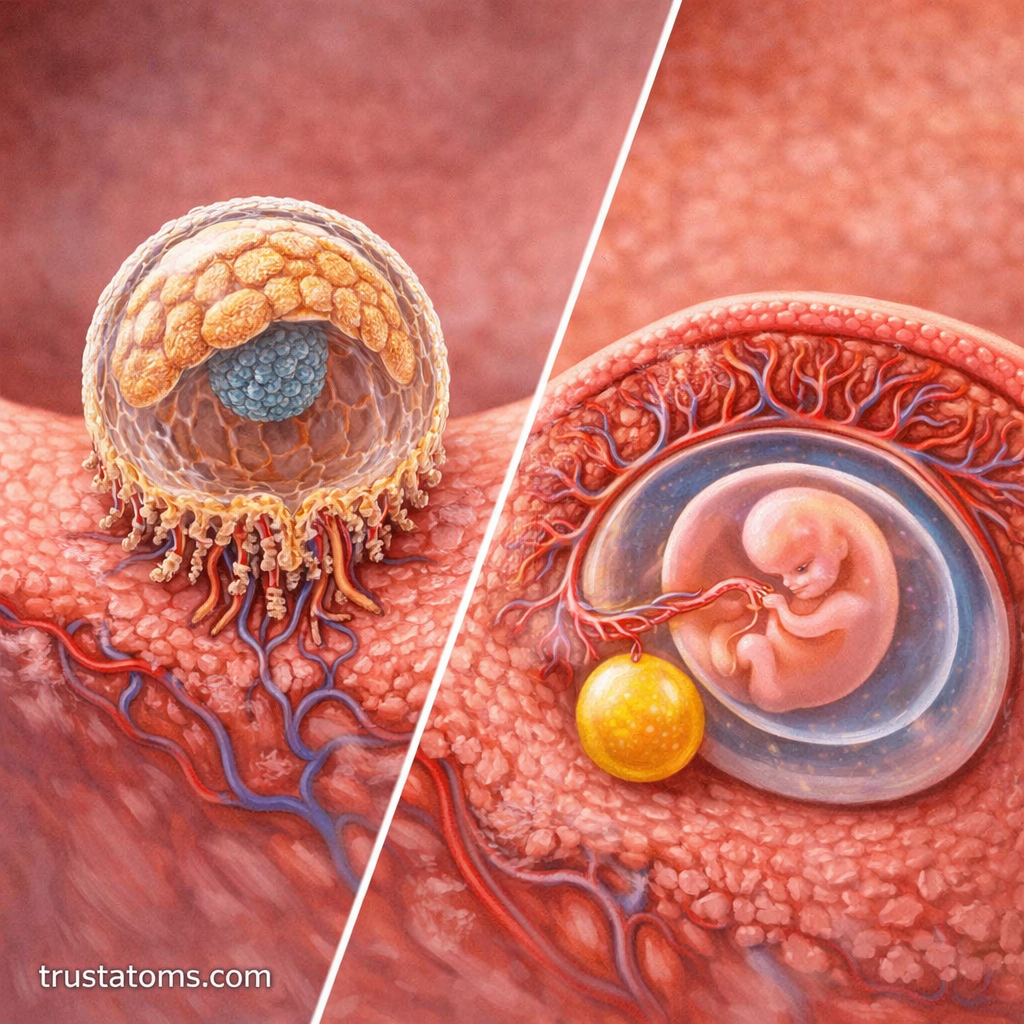
After implantation, rapid development begins. The first few weeks are especially important as the basic body plan forms.
Week 1: Fertilization and Cell Division
- Fertilization creates a zygote
- Rapid cell division (cleavage) begins
- The morula (solid ball of cells) forms
Week 2: Implantation and Differentiation
- Blastocyst implants into the uterus
- Cells differentiate into two main layers:
- Epiblast (future embryo)
- Hypoblast (support structures)
Week 3: Gastrulation
Gastrulation is a key milestone where three primary germ layers form:
- Ectoderm: skin and nervous system
- Mesoderm: muscles, bones, and circulatory system
- Endoderm: internal organs like lungs and digestive tract
Formation of the Placenta
The placenta begins forming shortly after implantation and plays a vital role throughout pregnancy.
Functions of the Placenta
- Transfers oxygen and nutrients to the embryo
- Removes waste products
- Produces hormones such as human chorionic gonadotropin (hCG)
- Acts as a protective barrier
The trophoblast develops into structures called chorionic villi, which increase surface area for nutrient exchange.
Development of Extraembryonic Structures
Several supporting structures form early to sustain the embryo:
Amniotic Sac
- Surrounds the embryo with fluid (amniotic fluid)
- Protects against mechanical shock
Yolk Sac
- Provides early nutrients
- Contributes to blood cell formation
Chorion
- Forms part of the placenta
- Helps anchor the embryo
Why Implantation Is Critical
Successful implantation is essential for pregnancy to continue. If implantation fails, the embryo cannot receive nutrients and is naturally lost.
Factors that influence implantation include:
- Hormonal balance (especially progesterone)
- Uterine lining thickness
- Timing within the menstrual cycle
- Overall reproductive health
Common Implantation Symptoms
Some individuals may notice subtle signs during implantation:
- Light spotting (implantation bleeding)
- Mild cramping
- Slight increase in basal body temperature
However, many people experience no noticeable symptoms at all.
Early Development and Vulnerability
The early embryonic stage is highly sensitive to environmental influences. During this time:
- Cells are rapidly dividing
- Organs begin forming
- Exposure to harmful substances can have significant effects
Examples of risks include:
- Alcohol or drug exposure
- Nutritional deficiencies
- Certain infections
Key Takeaways
- Implantation occurs about 6–10 days after fertilization
- The blastocyst embeds into the uterine lining and begins nutrient exchange
- Early embryonic development includes rapid cell division and germ layer formation
- The placenta and supporting structures form to sustain growth
- This stage is critical and highly sensitive to internal and external conditions
Final Thoughts
Implantation and early embryonic development represent one of the most complex and delicate phases of human life. In just a few weeks, a single fertilized cell transforms into a structured, developing organism with specialized tissues and systems.
Understanding these processes provides valuable insight into how life begins and highlights the importance of conditions that support healthy development from the very start.