Lactation is the biological process by which the body produces and delivers milk to nourish a newborn. This process is tightly controlled by hormones and involves coordinated changes in the breasts, endocrine system, and nervous system.
Understanding how lactation works provides insight into postpartum physiology and the complex hormonal interactions that support infant nutrition.
What Is Lactation?
Lactation is the production and secretion of milk from the mammary glands following childbirth.
It occurs in three main stages:
- Mammogenesis – development of the mammary glands
- Lactogenesis – initiation of milk production
- Galactopoiesis – maintenance of milk supply
Each stage is regulated by specific hormones and physiological signals.
Structure of the Mammary Glands
The breasts are specialized organs designed for milk production and delivery.
Key Components
- Alveoli – small sacs that produce milk
- Lactiferous ducts – channels that transport milk
- Nipple – opening through which milk is released
- Areola – pigmented area that helps guide the infant during feeding
Milk is produced in the alveoli and travels through ducts to the nipple.
Hormones Involved in Lactation
Lactation is primarily regulated by a group of key hormones.
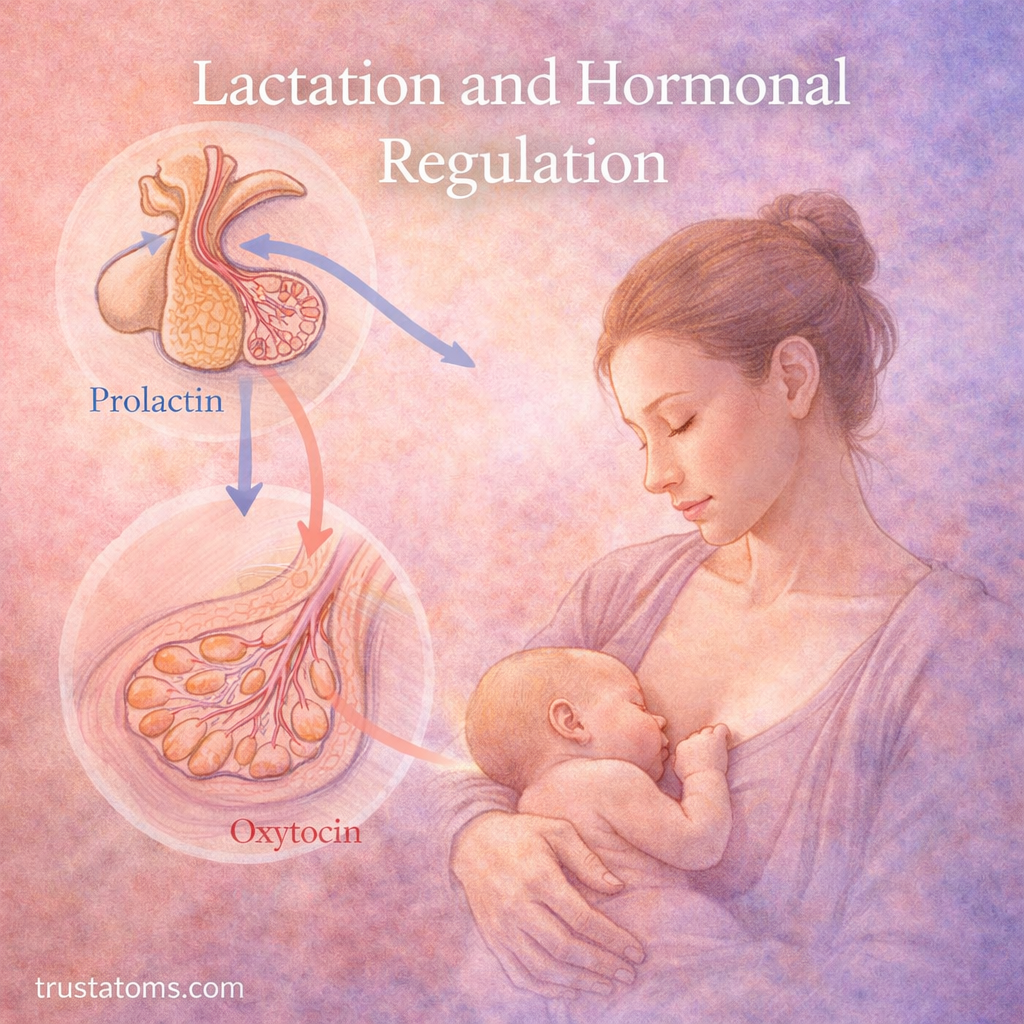
Prolactin
- Produced by the pituitary gland
- Stimulates milk production in the alveoli
- Levels increase after childbirth
Oxytocin
- Triggers milk ejection (let-down reflex)
- Causes contraction of muscle cells around alveoli
- Released in response to infant suckling
Estrogen
- Promotes breast tissue development during pregnancy
- Inhibits milk secretion until after delivery
Progesterone
- Supports breast development
- Prevents full milk production during pregnancy
Human Placental Lactogen (hPL)
- Prepares the breasts for lactation
- Influences metabolic changes during pregnancy
Stages of Lactation
1. Mammogenesis (Breast Development)
Occurs during puberty and pregnancy:
- Growth of ductal and glandular tissue
- Hormonal influence from estrogen and progesterone
2. Lactogenesis (Milk Initiation)
Begins after childbirth:
- Drop in estrogen and progesterone triggers milk production
- Prolactin becomes dominant
- Colostrum (early milk) is produced first
3. Galactopoiesis (Milk Maintenance)
Maintains ongoing milk production:
- Stimulated by regular suckling
- Controlled by prolactin levels
- Supply adjusts based on demand
The Let-Down Reflex
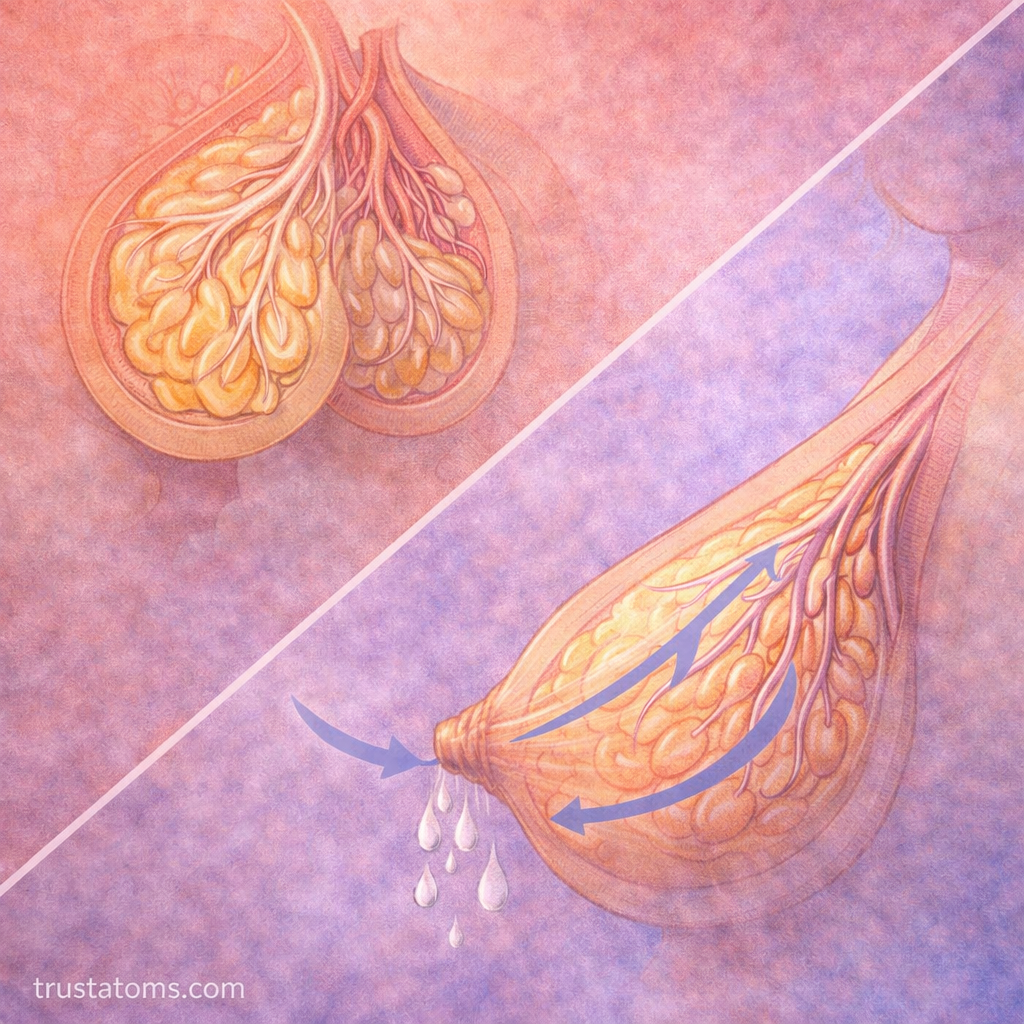
The let-down reflex is a key mechanism in milk delivery.
How It Works
- Infant suckling stimulates nerve endings in the nipple
- Signals are sent to the brain
- The pituitary gland releases oxytocin
- Milk is pushed from alveoli into ducts
This reflex can also be triggered by:
- Hearing a baby cry
- Emotional bonding
- Anticipation of feeding
Colostrum vs Mature Milk
Milk composition changes over time to meet the infant’s needs.
Colostrum (First Few Days)
- Thick, yellowish fluid
- Rich in antibodies
- High in protein, low in fat
Transitional Milk
- Produced a few days after birth
- Increasing fat and lactose content
Mature Milk
- Fully developed milk supply
- Balanced nutrients for growth
- Contains water, fats, proteins, and immune factors
Feedback Mechanisms in Milk Production
Milk production is regulated by a supply-and-demand system.
Key Principles
- More frequent feeding → increased milk production
- Less stimulation → decreased supply
Feedback Inhibitor of Lactation (FIL)
- A protein in milk that slows production when milk accumulates
- Prevents overproduction
Nervous System Involvement
The nervous system works closely with hormones during lactation.
Key Functions
- Sensory input from the nipple triggers hormonal release
- Brain coordinates prolactin and oxytocin secretion
- Emotional state can influence milk let-down
Stress or anxiety may temporarily inhibit milk release.
Common Challenges in Lactation
Some individuals may experience difficulties during lactation.
Common Issues
- Delayed milk production
- Low milk supply
- Blocked ducts
- Pain or discomfort during feeding
Contributing Factors
- Hormonal imbalances
- Infrequent feeding
- Poor latch
- Stress
Understanding the physiology behind lactation can help identify and manage these challenges.
Common Misconceptions
“Milk production is automatic”
Milk production depends on hormonal signals and regular stimulation.
“Only hormones matter”
Nervous system input and infant behavior also play major roles.
“All milk is the same”
Milk composition changes over time to meet developmental needs.
Final Thoughts
Lactation is a highly coordinated process involving hormonal regulation, glandular function, and neural signaling. From the initial production of colostrum to the ongoing maintenance of milk supply, the body adapts dynamically to support infant nutrition.
By understanding how lactation works, we gain deeper insight into postpartum physiology and the remarkable biological systems that sustain early human life.