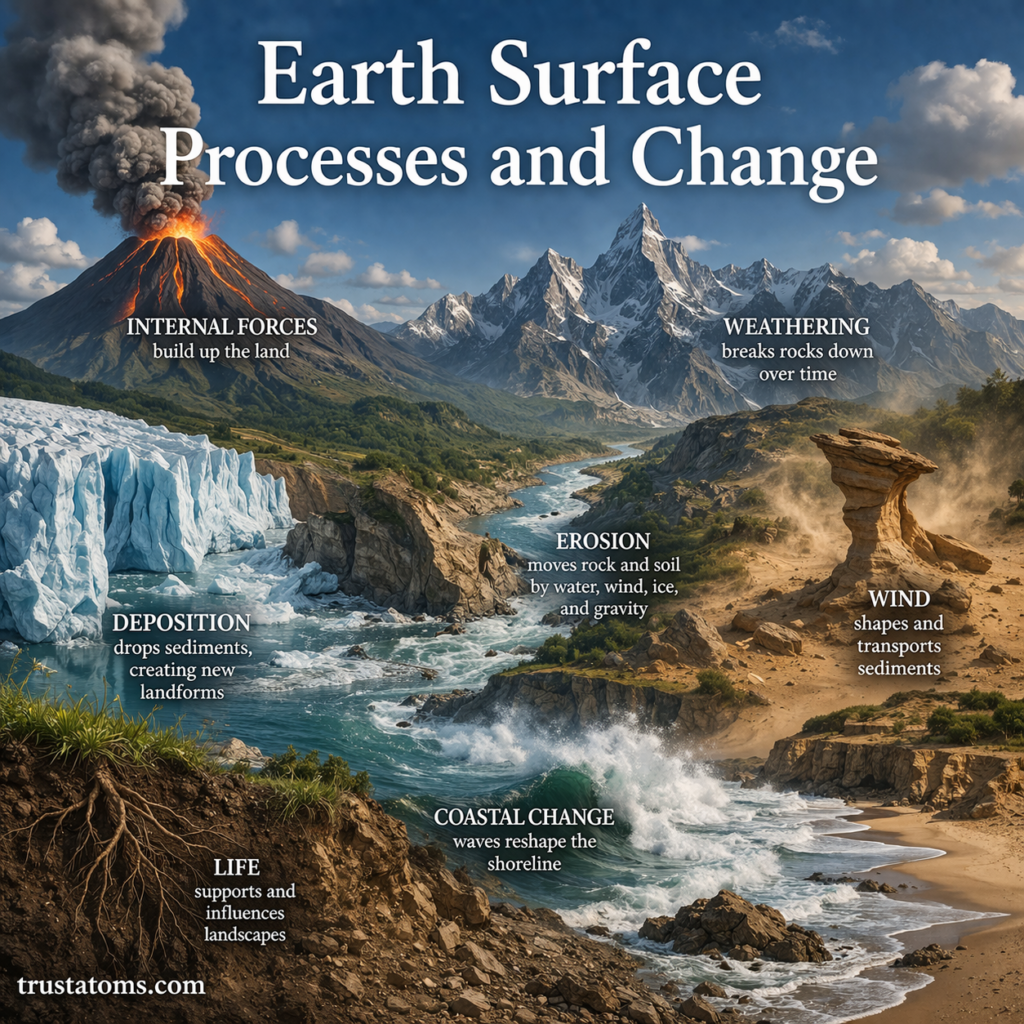
Landscapes are constantly changing. Mountains rise and fall, rivers shift their paths, and coastlines advance or retreat. These changes occur over timescales ranging from sudden natural events to slow transformations that take millions of years.
Landscape evolution is the study of how Earth’s surface changes over time due to the interaction of geological, climatic, and biological processes.
What Is Landscape Evolution?
Landscape evolution refers to the gradual and continuous transformation of landforms.
It involves two key forces:
- Constructional processes (building landforms)
- Destructional processes (wearing them down)
These processes work together to shape the terrain we see today.
The Driving Forces Behind Landscape Change
Landscape evolution is controlled by a combination of internal and external forces.
Tectonic Activity
- Uplifts land through plate movement
- Forms mountains, plateaus, and fault lines
Example: The Himalayas continue to evolve due to ongoing tectonic collision.
Climate and Weather
- Rainfall increases erosion
- Temperature changes cause rock expansion and contraction
- Glaciers reshape entire regions
Gravity
- Moves rock and soil downhill
- Drives landslides and sediment transport
Key Processes in Landscape Evolution
Several natural processes interact to shape landscapes over time.
Weathering
Breaks down rock into smaller pieces.
Types include:
- Physical weathering
- Chemical weathering
- Biological weathering
Erosion
Transports material away from its original location.
Main agents:
- Water
- Wind
- Ice
- Gravity
Deposition
- Occurs when transported materials settle
- Builds new landforms like deltas and plains
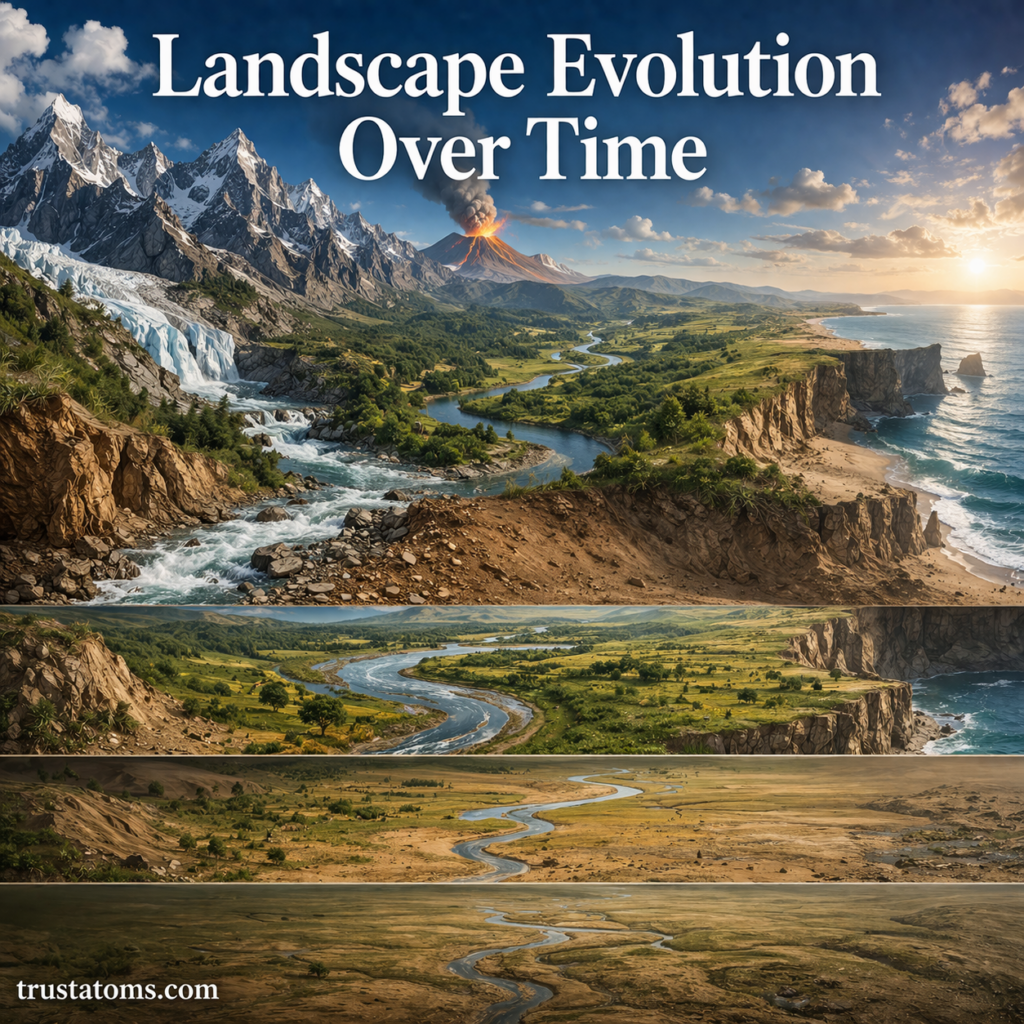
Stages of Landscape Development
Landscapes often evolve through recognizable stages, especially in river systems.
1. Youthful Stage
- Steep slopes
- Fast-flowing rivers
- Deep valleys
2. Mature Stage
- Slopes become less steep
- Rivers develop curves (meanders)
- Valleys widen
3. Old Age Stage
- Low relief (little elevation difference)
- Broad, flat plains
- Slow-moving rivers
The Role of Rivers in Landscape Evolution
Rivers are one of the most powerful agents of landscape change.
How Rivers Shape Land
- Cut valleys through erosion
- Transport sediment downstream
- Deposit materials in floodplains and deltas
Example: The Mississippi River has shaped vast floodplains over thousands of years.
The Impact of Glaciers
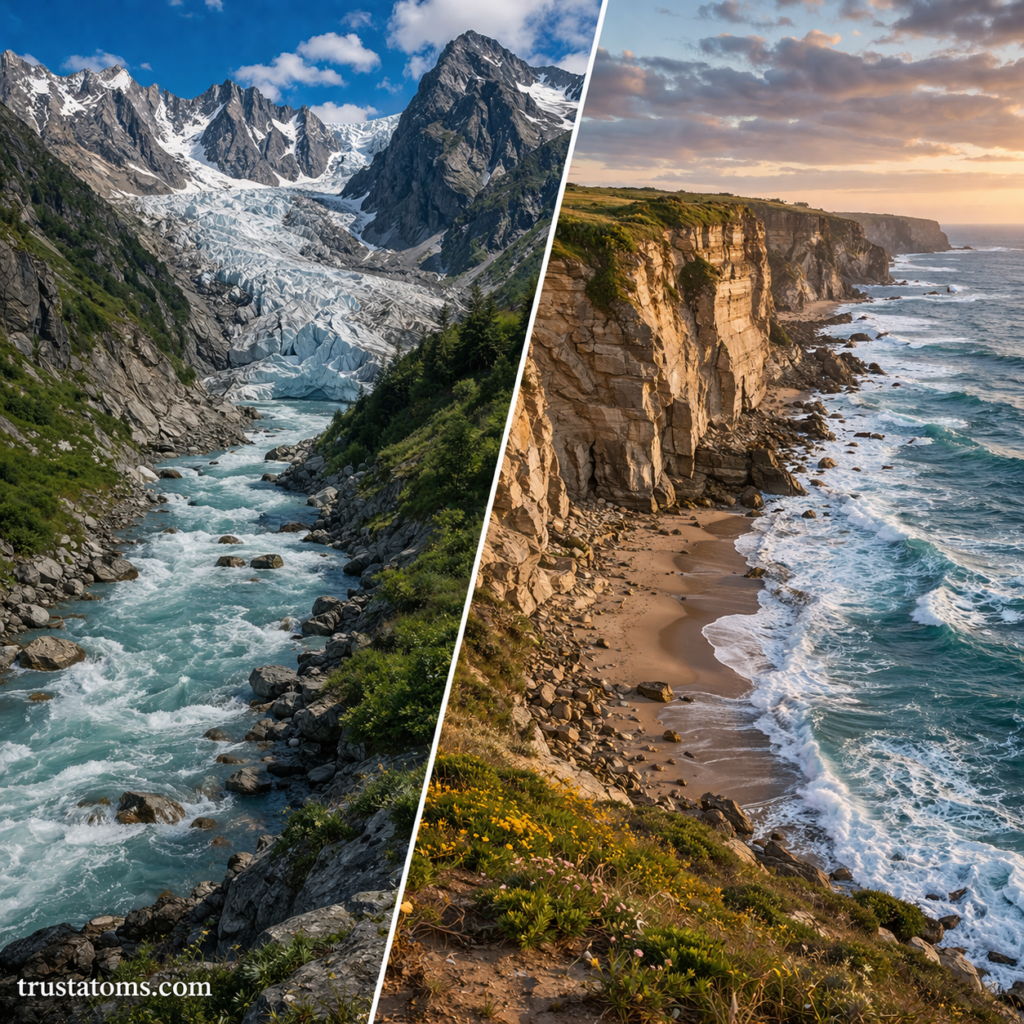
Glaciers dramatically reshape landscapes, especially in colder regions.
Glacial Effects
- Carve U-shaped valleys
- Transport large amounts of debris
- Create features like moraines and fjords
Even after glaciers melt, their impact remains visible in the terrain.
Coastal Landscape Evolution
Coastlines are constantly changing due to wave action and sea-level shifts.
Coastal Processes
- Waves erode cliffs and shorelines
- Sediment is transported along the coast
- Beaches and sandbars form through deposition
These processes can reshape coastlines over relatively short periods.
The Role of Time in Landscape Evolution
Time is one of the most important factors in shaping landscapes.
Short-Term Changes
- Landslides
- Floods
- Volcanic eruptions
Long-Term Changes
- Mountain building
- River valley formation
- Plateau erosion
Over millions of years, even massive mountain ranges can be worn down into flat plains.
Human Influence on Landscape Evolution
Humans now play a significant role in shaping Earth’s surface.
Common Impacts
- Deforestation increases erosion
- Urban development alters natural drainage
- Mining reshapes landforms
- Agriculture changes soil structure
These activities can accelerate natural processes and create new landscape patterns.
Why Landscape Evolution Matters
Understanding landscape evolution helps us make better decisions about land use and environmental protection.
Key Benefits
- Predicting natural hazards
- Managing water resources
- Protecting ecosystems
- Planning sustainable development
Final Thoughts
Landscape evolution is an ongoing process shaped by powerful natural forces and the passage of time. From towering mountains to flat plains, every landform tells a story of change.
By studying how landscapes evolve, we gain insight into Earth’s history and a better understanding of how our planet will continue to transform in the future.