Hunger is not just a matter of willpower—it is controlled by a sophisticated hormonal system that constantly monitors the body’s energy needs. Two of the most important hormones involved in this process are leptin and ghrelin.
Often described as opposing forces, these hormones work together to regulate when you feel hungry, how much you eat, and when you feel full. Understanding their roles provides key insight into appetite control, weight regulation, and metabolic health.
What Are Leptin and Ghrelin?
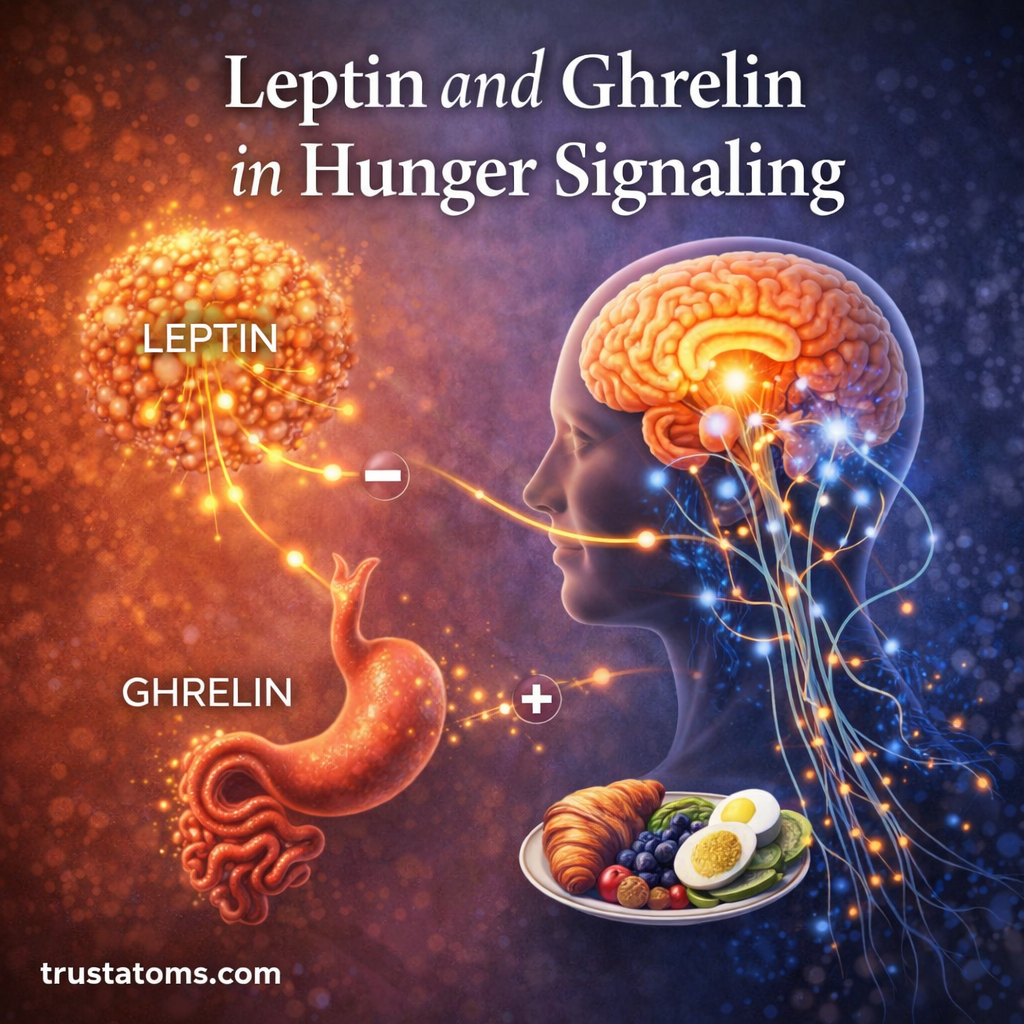
Leptin and ghrelin are hormones that communicate directly with the brain, particularly the hypothalamus, to regulate hunger and energy balance.
Key Differences
- Leptin → signals fullness (satiety)
- Ghrelin → stimulates hunger
Together, they form a feedback system that helps maintain stable body weight.
Ghrelin: The Hunger Signal
Ghrelin is often called the “hunger hormone” because it actively increases appetite.
Where It Comes From
- Primarily produced in the stomach
- Also found in smaller amounts in the intestines and brain
When It Is Released
- Levels rise before meals
- Levels fall after eating
What Ghrelin Does
- Stimulates hunger
- Increases food intake
- Promotes fat storage
- Signals the brain to seek food
How It Affects Behavior
When ghrelin levels are high:
- You feel hungry
- Food becomes more appealing
- Motivation to eat increases
This is why skipping meals often leads to stronger cravings later.
Leptin: The Satiety Signal
Leptin plays the opposite role of ghrelin by signaling that the body has enough energy stored.
Where It Comes From
- Produced by adipose (fat) tissue
What Leptin Reflects
- Total energy stored in the body
- Higher fat stores → higher leptin levels
What Leptin Does
- Suppresses appetite
- Reduces food intake
- Promotes energy expenditure
- Signals the brain to stop eating
How It Affects Behavior
When leptin levels are high:
- Hunger decreases
- You feel satisfied after eating
- The body reduces the drive to consume more food
How Leptin and Ghrelin Work Together
Leptin and ghrelin operate as a coordinated system to maintain energy balance.
The Basic Cycle
- Before eating, ghrelin levels rise → hunger increases
- You eat food → ghrelin levels decrease
- Leptin signals fullness → appetite decreases
- Energy stores are maintained → balance is achieved
Opposing Effects
| Hormone | Effect on Appetite | Source |
|---|---|---|
| Ghrelin | Increases hunger | Stomach |
| Leptin | Decreases hunger | Fat tissue |
This balance helps prevent both under-eating and overeating under normal conditions.
The Role of the Hypothalamus
Both hormones act on the hypothalamus, the brain’s appetite control center.
Two Key Pathways
- Orexigenic neurons → stimulated by ghrelin (increase hunger)
- Anorexigenic neurons → stimulated by leptin (reduce hunger)
The hypothalamus integrates these signals and determines whether to:
- Trigger hunger
- Maintain current intake
- Signal fullness
Short-Term vs Long-Term Signals
Leptin and ghrelin operate on different time scales.
Ghrelin (Short-Term)
- Regulates meal timing
- Fluctuates throughout the day
- Responds quickly to food intake
Leptin (Long-Term)
- Reflects overall body fat levels
- Regulates long-term energy balance
- Changes more gradually over time
Leptin Resistance: When the System Fails
In some individuals, especially those with obesity, leptin signaling becomes impaired.
What Is Leptin Resistance?
- The brain does not respond properly to leptin signals
- Even with high leptin levels, hunger persists
Effects
- Increased appetite
- Reduced satiety
- Difficulty losing weight
Possible Causes
- Chronic overeating
- Inflammation
- Hormonal imbalances
This is one reason why weight regulation is more complex than simply eating less.
Factors That Influence Leptin and Ghrelin
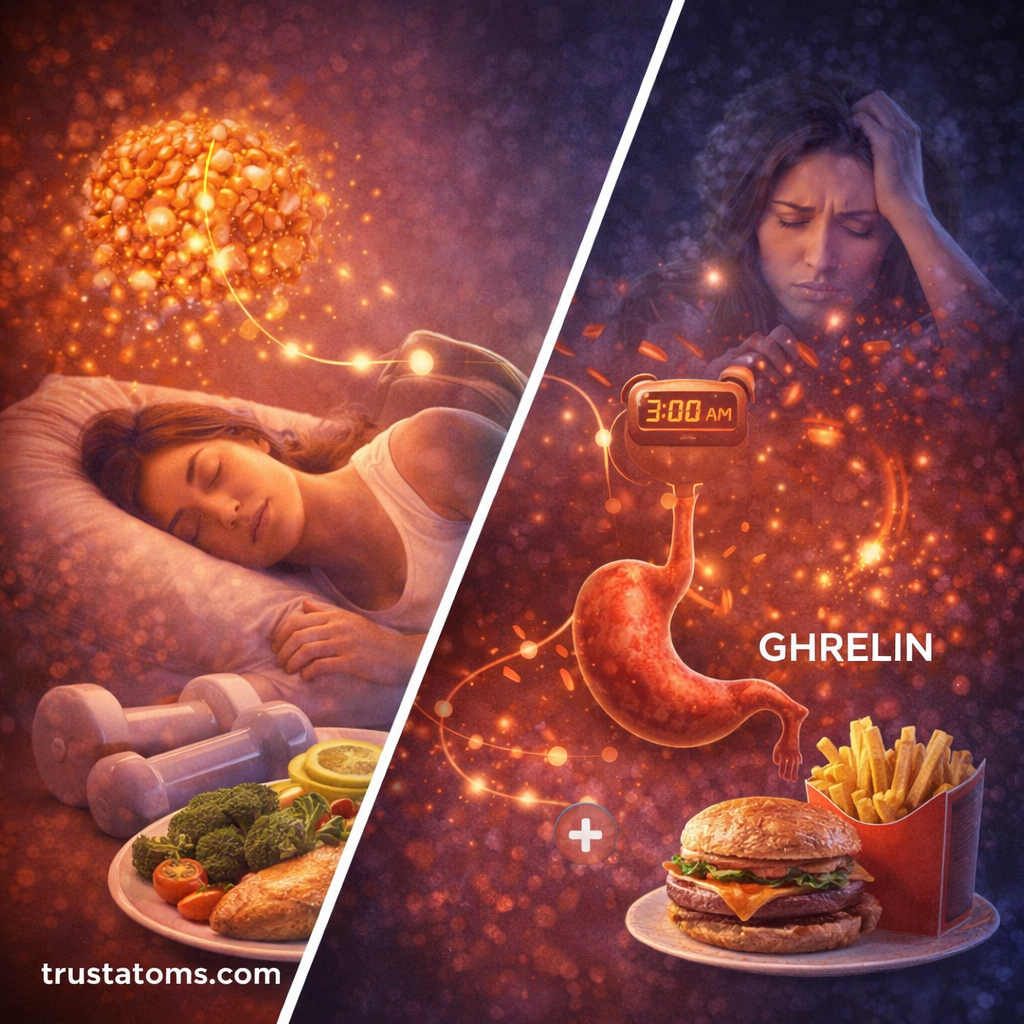
Hormone levels are affected by daily habits and lifestyle choices.
Sleep
- Poor sleep increases ghrelin
- Decreases leptin
- Leads to increased hunger
Diet
- High-protein foods improve satiety
- Ultra-processed foods may disrupt signaling
- Fiber slows digestion and enhances fullness
Stress
- Chronic stress can increase appetite
- May alter hormone balance
Physical Activity
- Regular exercise helps regulate hormone levels
- Improves sensitivity to leptin
Why This Matters
Understanding leptin and ghrelin helps explain:
- Why you feel hungry at certain times
- Why dieting can be difficult
- Why weight regulation varies between individuals
It highlights that appetite is biologically driven—not just a matter of discipline.
Key Takeaways
- Ghrelin increases hunger and signals the need to eat
- Leptin decreases appetite and signals fullness
- Both hormones act on the hypothalamus
- They work together to maintain energy balance
- Disruptions in signaling can lead to overeating or weight gain
- Lifestyle factors like sleep, diet, and stress influence hormone levels
Final Thoughts
Leptin and ghrelin form the foundation of hunger signaling in the human body. Their dynamic interaction ensures that energy intake matches the body’s needs—at least under normal conditions.
When this system is disrupted, it can lead to persistent hunger, weight changes, and metabolic challenges. By understanding how these hormones work, it becomes easier to see why appetite is a complex biological process rather than a simple choice.