The immune system relies on precise communication to detect threats and protect the body. One of the most important components in this process is the Major Histocompatibility Complex (MHC).
MHC molecules act as cellular “ID tags,” allowing immune cells to distinguish between healthy body cells and potential threats. Without this system, the immune response would lack accuracy, leading to infections going undetected—or worse, the body attacking itself.
What Is the Major Histocompatibility Complex?
The Major Histocompatibility Complex (MHC) is a group of genes that code for proteins found on the surface of cells. These proteins present small fragments of proteins (called antigens) to immune cells.
Key functions of MHC include:
- Displaying antigen fragments to immune cells
- Helping T cells recognize infected or abnormal cells
- Supporting immune system coordination
- Maintaining self-recognition
In humans, MHC proteins are also known as Human Leukocyte Antigens (HLA).
Why MHC Is Important in Immunology
MHC molecules are essential for immune surveillance—the process by which the immune system constantly scans the body for danger.
They help the immune system:
- Detect viral or bacterial infections
- Identify cancerous or abnormal cells
- Distinguish between self and non-self
- Coordinate targeted immune responses
Without MHC, T cells would not be able to recognize antigens effectively.
Types of MHC Molecules
There are two main classes of MHC molecules, each with distinct roles.
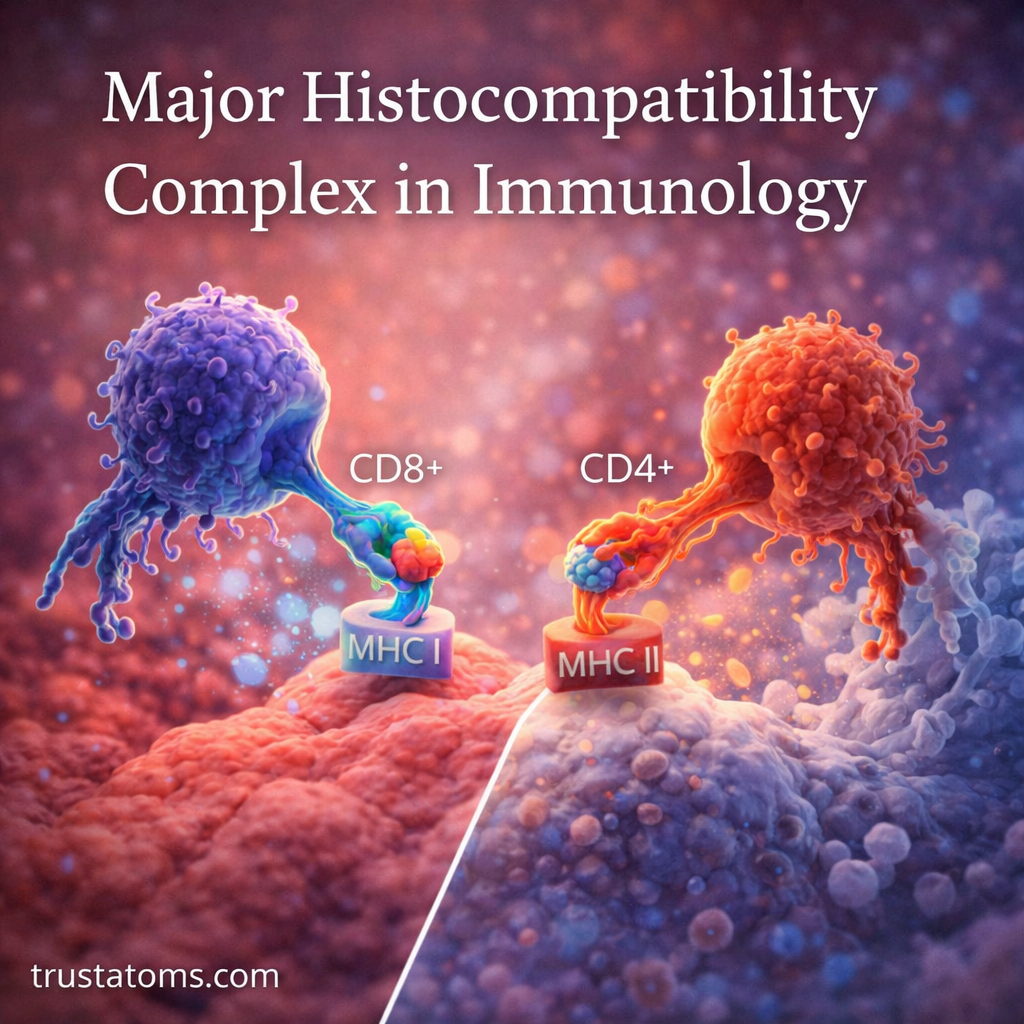
MHC Class I
MHC Class I molecules are found on almost all nucleated cells in the body.
Key Features:
- Present antigens from inside the cell (endogenous antigens)
- Display fragments from viruses or abnormal proteins
- Interact with cytotoxic T cells (CD8+ T cells)
Function:
When a cell is infected (e.g., by a virus), MHC Class I displays pieces of the pathogen on the cell surface. This signals cytotoxic T cells to destroy the infected cell.
MHC Class II
MHC Class II molecules are found primarily on specialized immune cells.
Key Features:
- Present antigens from outside the cell (exogenous antigens)
- Found on antigen-presenting cells (APCs) such as:
- Dendritic cells
- Macrophages
- B cells
- Interact with helper T cells (CD4+ T cells)
Function:
MHC Class II helps activate helper T cells, which then coordinate broader immune responses, including activating B cells and other immune cells.
How MHC Antigen Presentation Works
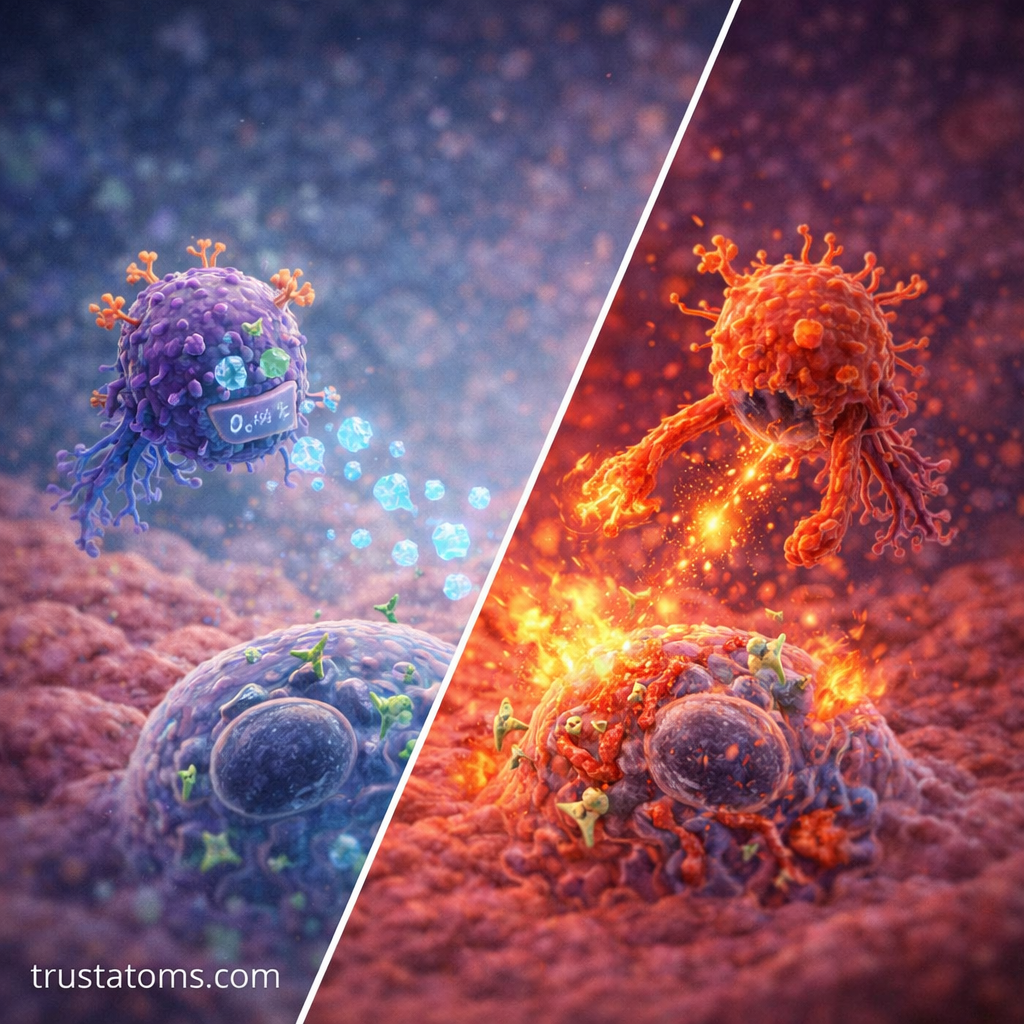
MHC molecules are central to antigen presentation—the process of showing immune cells what to respond to.
Step-by-Step Process:
- Antigen Processing
- Proteins from pathogens or abnormal cells are broken into smaller fragments
- Loading onto MHC Molecules
- These fragments are loaded onto MHC Class I or II molecules
- Display on Cell Surface
- The MHC-antigen complex moves to the cell surface
- Recognition by T Cells
- T cells scan the complex and determine whether the antigen is harmful
- Immune Activation
- If recognized as a threat, the immune system is activated
This process ensures that immune responses are targeted and specific.
MHC and Self-Recognition
MHC plays a crucial role in helping the immune system recognize the body’s own cells.
How It Works:
- MHC molecules constantly present normal “self” peptides
- T cells are trained during development to tolerate these signals
- Only unfamiliar or abnormal peptides trigger a response
This mechanism prevents unnecessary immune attacks on healthy tissues.
MHC Diversity and Genetic Variation
One of the most important features of MHC genes is their high level of variability.
Why Diversity Matters:
- Each person has a unique set of MHC molecules
- This increases the ability of populations to fight diverse pathogens
- It improves survival against infections on a population level
However, this diversity also has important implications.
MHC and Organ Transplantation
MHC compatibility is a major factor in transplant success.
Why Matching Matters:
- The immune system recognizes mismatched MHC as foreign
- This can trigger transplant rejection
- Closer MHC matching reduces the risk of rejection
Clinical Considerations:
- HLA typing is used to match donors and recipients
- Immunosuppressive drugs are often required
MHC and Disease Susceptibility
Certain MHC gene variations are associated with increased risk of specific diseases.
Examples:
- Autoimmune diseases (e.g., type 1 diabetes, rheumatoid arthritis)
- Increased or decreased resistance to infections
- Links to inflammatory conditions
MHC influences how the immune system responds to different challenges.
MHC and the Adaptive Immune System
MHC molecules are central to adaptive immunity, which provides targeted and long-term protection.
Key Roles:
- Activating T cells
- Guiding immune specificity
- Supporting immune memory formation
Without MHC, adaptive immunity would not function effectively.
Differences Between MHC Class I and Class II
MHC Class I:
- Found on nearly all cells
- Presents internal (endogenous) antigens
- Interacts with CD8+ T cells
- Targets infected or abnormal cells
MHC Class II:
- Found on antigen-presenting cells
- Presents external (exogenous) antigens
- Interacts with CD4+ T cells
- Coordinates broader immune responses
Key Functions of MHC at a Glance
- Presents antigens to T cells
- Enables immune system recognition
- Maintains self vs. non-self distinction
- Supports immune coordination
- Influences disease susceptibility
- Determines transplant compatibility
Why MHC Matters
The Major Histocompatibility Complex is essential for immune precision. It ensures that the immune system responds only when necessary and targets the correct threats.
Without MHC:
- Infections would go undetected
- Immune responses would be disorganized
- The risk of autoimmune damage would increase
MHC is the foundation of how the immune system “sees” the body.
Final Thoughts
The Major Histocompatibility Complex plays a central role in immunology by enabling cells to communicate critical information about their internal state.
Through antigen presentation, MHC molecules guide immune responses, protect against disease, and maintain internal balance. Their importance extends beyond basic immune function into areas like transplantation, disease research, and modern medicine.
Understanding MHC provides a deeper insight into how the immune system achieves both precision and protection.