Mass wasting is one of the most important natural processes shaping Earth’s surface. It refers to the downslope movement of soil, rock, and debris under the force of gravity. From slow soil creep to sudden landslides, mass wasting plays a major role in landscape evolution, hazard formation, and environmental change.
Understanding these processes helps scientists, engineers, and communities reduce risk and better manage land use.
What Is Mass Wasting?
Mass wasting (also called slope movement or slope failure) occurs when gravity pulls material downhill. Unlike erosion, which involves transport by water, wind, or ice, mass wasting is driven primarily by gravity itself.
Key characteristics include:
- Movement occurs downslope
- Gravity is the main driving force
- Can be slow or rapid
- Often triggered by external factors like water or earthquakes
Factors That Influence Mass Wasting
Several factors determine whether a slope remains stable or fails.
Slope Angle
- Steeper slopes are more likely to fail
- Gravity exerts a stronger downslope force on steep terrain
Water Content
- Water adds weight to soil and rock
- Reduces friction between particles
- Can trigger sudden failures after heavy rainfall
Type of Material
- Loose sediments are more unstable than solid rock
- Clay can become slippery when wet
- Fractured rock is more prone to collapse
Vegetation
- Plant roots help hold soil in place
- Removal of vegetation increases risk of slope failure
Human Activity
- Construction, mining, and deforestation can destabilize slopes
- Poor drainage systems can increase water buildup
Types of Mass Wasting Processes
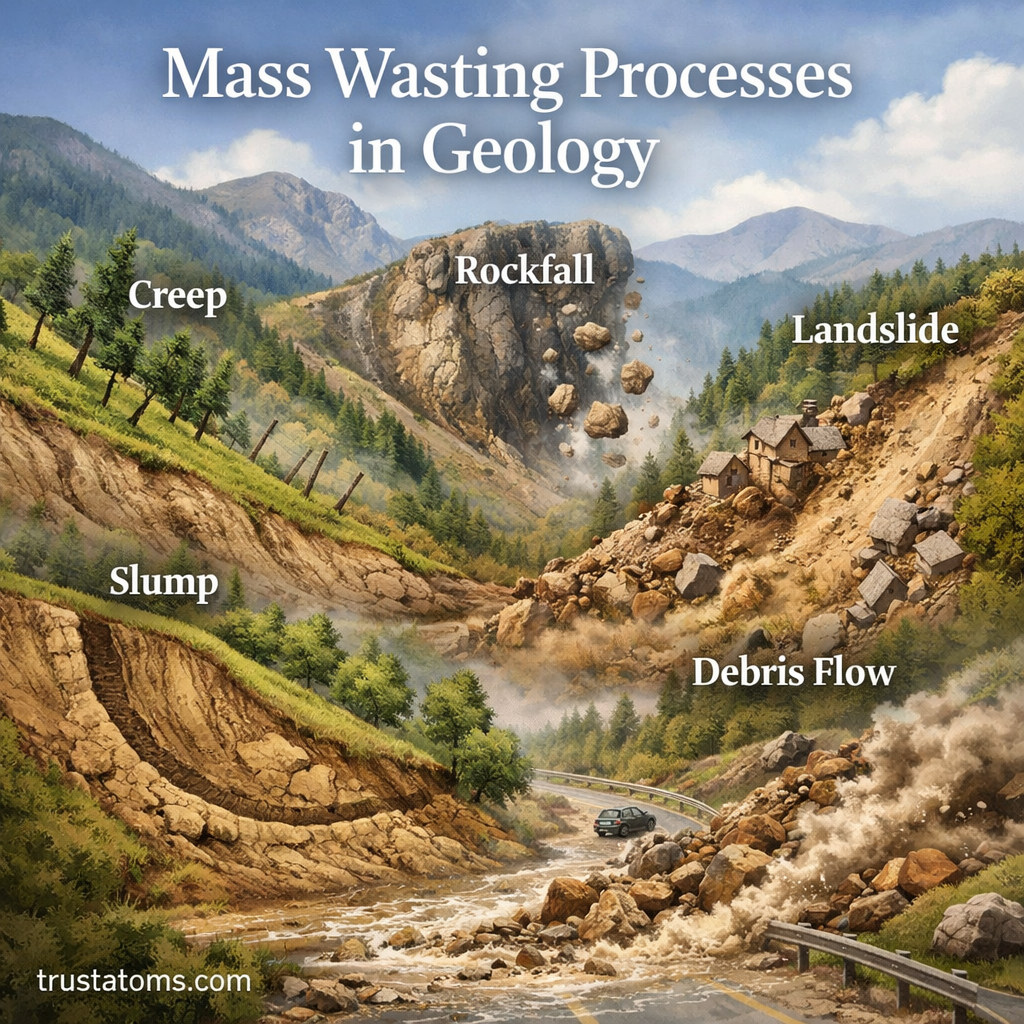
Mass wasting processes are classified based on speed and type of movement.
Creep (Slow Movement)
Creep is the slowest form of mass wasting, often occurring over years or decades.
Characteristics:
- Gradual downhill movement of soil
- Hard to notice in real time
- Causes tilted trees, bent fences, and cracked foundations
Slumps (Rotational Movement)
A slump involves the downward movement of a block of material along a curved surface.
Characteristics:
- Rotational movement
- Leaves a step-like scar on the slope
- Common in clay-rich soils
Rockfalls (Free-Fall Movement)
Rockfalls occur when rocks break loose and fall freely from steep cliffs.
Characteristics:
- Very fast movement
- Often triggered by weathering or earthquakes
- Common in mountainous areas
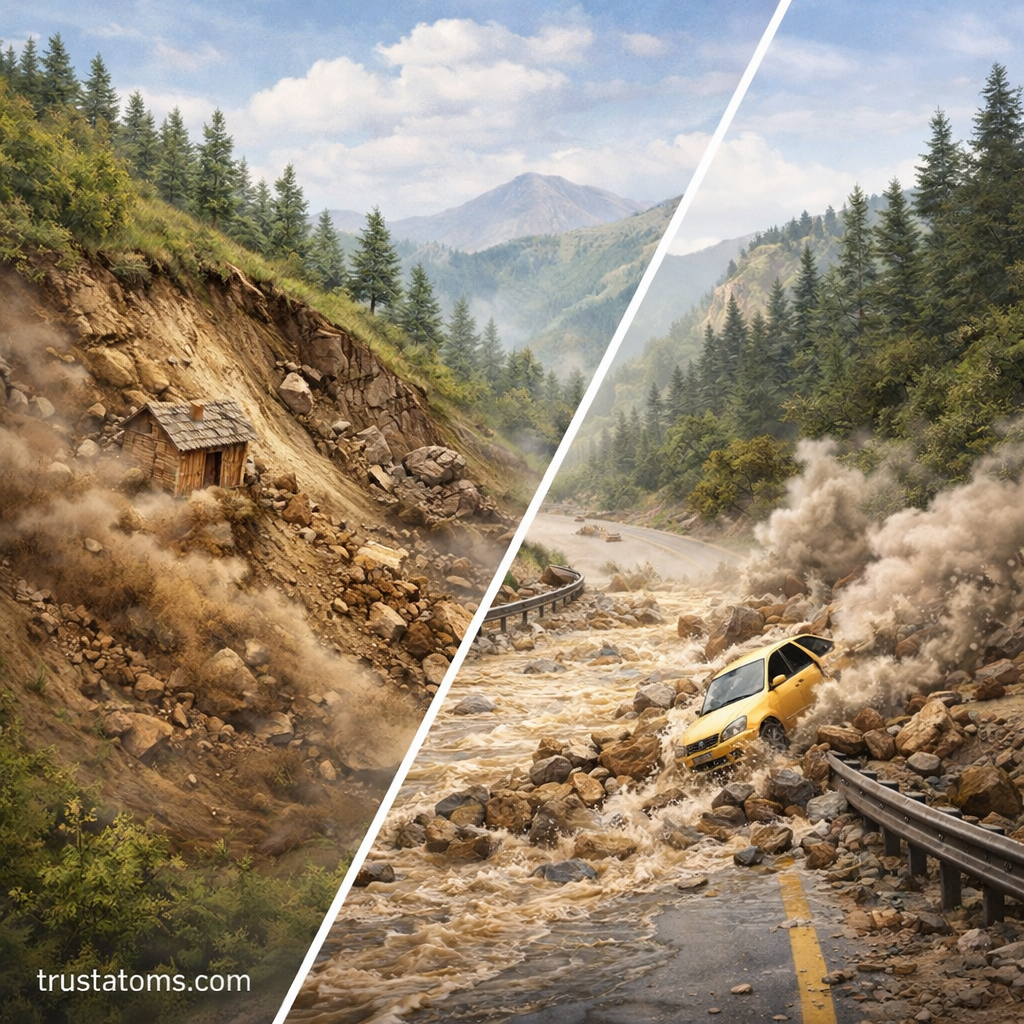
Landslides (Rapid Movement)
Landslides are one of the most well-known and dangerous forms of mass wasting.
Characteristics:
- Rapid movement of large amounts of material
- Can include rock, soil, and debris
- Often triggered by heavy rainfall or seismic activity
Debris Flows and Mudflows
These are fast-moving mixtures of water, soil, and rock.
Characteristics:
- Flow like a liquid
- Extremely destructive
- Can travel long distances
Common triggers:
- Intense rainfall
- Volcanic activity (lahars)
Triggers of Mass Wasting Events
Mass wasting often occurs when a slope reaches a critical point of instability. Common triggers include:
- Heavy rainfall or rapid snowmelt
- Earthquakes
- Volcanic eruptions
- Erosion at the base of a slope
- Human activities such as excavation
Real-World Examples
Mass wasting occurs all over the world and can have serious consequences.
- The Oso Landslide in Washington caused significant loss of life and property
- The Vargas Tragedy involved massive debris flows after intense rainfall
- The Aberfan Disaster showed how human activity can worsen slope instability
Impacts of Mass Wasting
Mass wasting can have both natural and human impacts.
Environmental Impacts
- Reshapes landscapes
- Alters river courses
- Destroys vegetation and habitats
Human Impacts
- Damage to homes and infrastructure
- Loss of life
- Disruption of transportation and utilities
How Mass Wasting Is Managed and Prevented
While mass wasting cannot be completely prevented, its risks can be reduced.
Engineering Solutions
- Retaining walls
- Drainage systems
- Slope grading and reinforcement
Land Use Planning
- Avoid building on unstable slopes
- Conduct geological surveys before construction
Vegetation Management
- Planting trees and vegetation to stabilize soil
- Preventing deforestation
Monitoring and Early Warning
- Sensors to detect slope movement
- Weather monitoring for heavy rainfall alerts
Why Mass Wasting Matters
Mass wasting is a key process in Earth science because it:
- Shapes mountains and valleys
- Influences soil formation
- Contributes to natural hazards
Understanding it is essential for reducing disaster risks and building safer communities.
Final Thoughts
Mass wasting processes are a powerful reminder of how gravity continuously reshapes the Earth. Whether moving slowly over decades or striking suddenly in a landslide, these processes impact both natural environments and human societies.
By studying the causes, types, and prevention strategies, we can better prepare for and reduce the risks associated with slope failure.