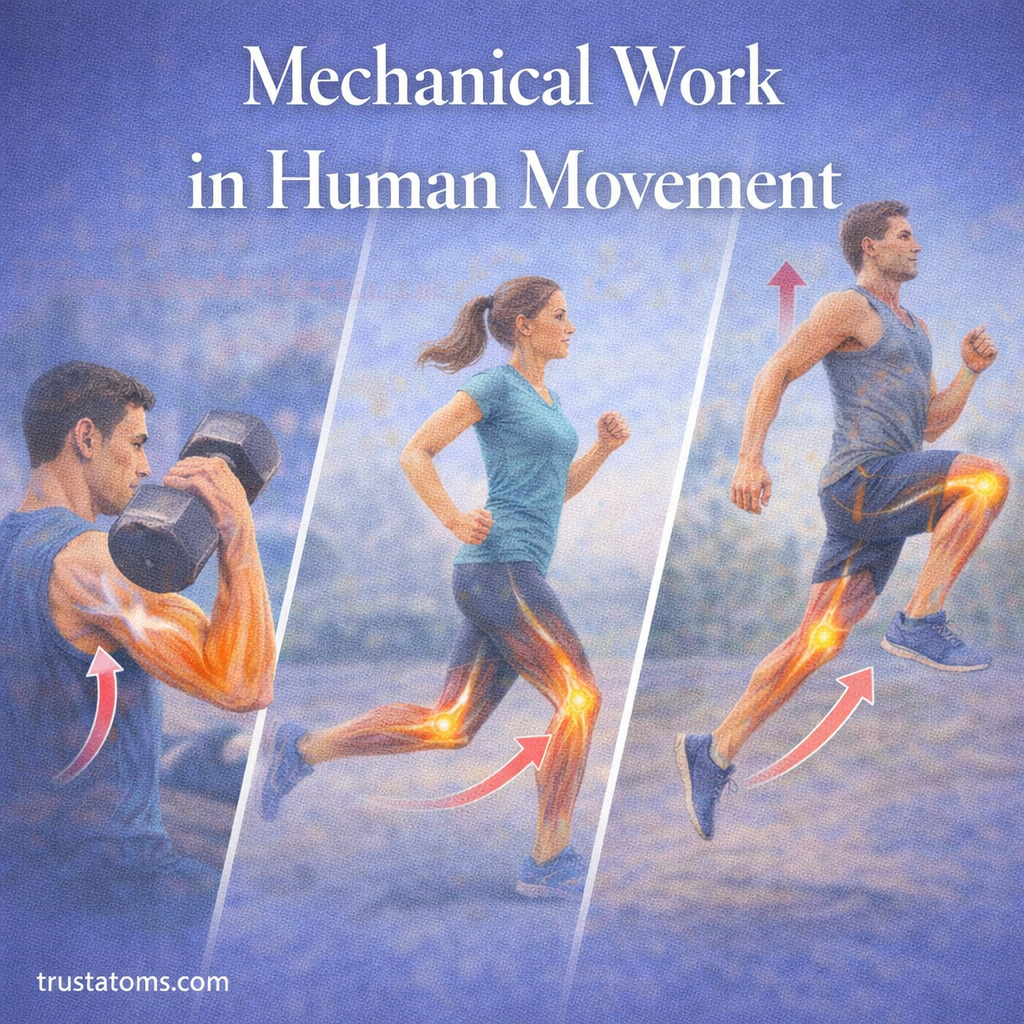
Every time you walk, lift an object, or climb stairs, your body is performing mechanical work. This concept comes from physics but applies directly to human anatomy and movement. Understanding mechanical work helps explain how muscles generate force, how energy is used, and how movement becomes more efficient.
What Is Mechanical Work?
Mechanical work occurs when a force is applied to move an object over a distance. In the human body, muscles generate force to move bones, which act as levers.
Simple Definition
- Work = Force × Distance
If there is no movement (distance), no mechanical work is done—even if effort is applied.
How Mechanical Work Applies to the Human Body
In human movement:
- Muscles produce force
- Bones act as levers
- Joints act as pivot points (fulcrums)
This system allows the body to convert energy into movement.
Example
- Lifting a dumbbell
- Muscles contract → force is applied
- The arm moves upward → distance is covered
- Mechanical work is performed
Types of Mechanical Work in Movement
Not all movement involves the same type of work. The body performs different forms depending on the direction and control of motion.
Positive Work (Concentric Contraction)
- Muscle shortens while producing force
- Example: Lifting a weight
Negative Work (Eccentric Contraction)
- Muscle lengthens while resisting force
- Example: Lowering a weight slowly
Isometric Work
- Muscle produces force without changing length
- No movement occurs, so technically no mechanical work is done
The Role of Energy in Mechanical Work
Mechanical work requires energy, which comes from the body’s metabolic systems.
Main Energy Sources
- ATP (immediate energy)
- Glycogen (stored carbohydrates)
- Fat (long-term energy source)
Energy Conversion
- Chemical energy → Mechanical energy
This conversion is not 100% efficient—some energy is lost as heat.
Efficiency in Human Movement
Efficiency refers to how well the body converts energy into useful work.
Factors That Improve Efficiency
- Proper technique
- Muscle coordination
- Training and conditioning
- Good posture and alignment
Why Efficiency Matters
- Reduces fatigue
- Improves performance
- Minimizes energy waste
Levers in the Human Body
The body uses lever systems to perform mechanical work.
Components of a Lever
- Fulcrum – Joint
- Effort – Muscle force
- Load – Resistance or weight
Types of Levers
- First-class lever
- Fulcrum between effort and load
- Example: Neck movement
- Second-class lever
- Load between fulcrum and effort
- Example: Standing on toes
- Third-class lever
- Effort between fulcrum and load
- Example: Biceps curl (most common in the body)
Mechanical Work in Everyday Activities
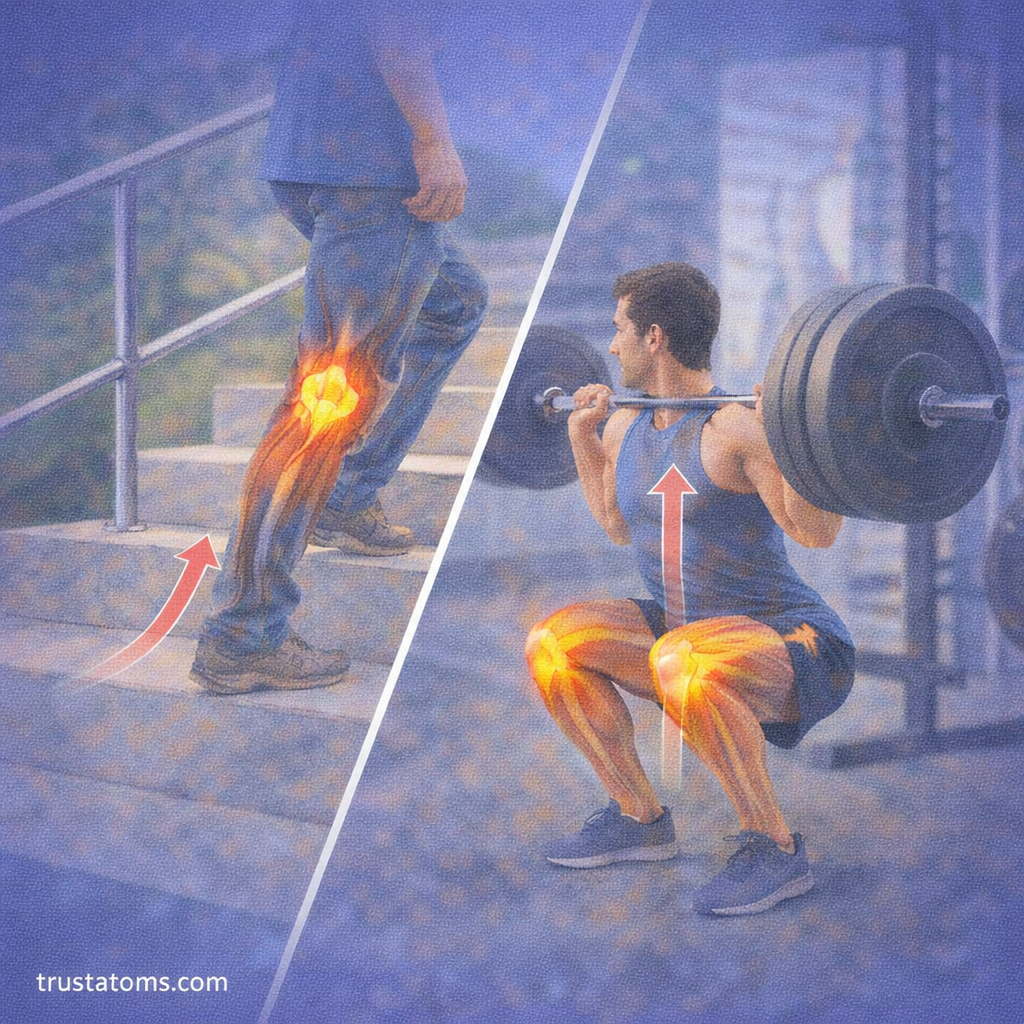
Mechanical work occurs in simple daily movements:
- Walking or running
- Carrying groceries
- Climbing stairs
- Pushing or pulling objects
Each action involves force applied over a distance.
Mechanical Work in Exercise and Sports
In physical activity, mechanical work becomes more noticeable.
Examples
- Weightlifting
- High force over shorter distances
- Running
- Repeated force over longer distances
- Jumping
- Rapid force applied to propel the body upward
Athletes often train to maximize useful work while minimizing wasted energy.
Factors That Affect Mechanical Work
Several variables influence how much work the body performs.
Key Factors
- Amount of force applied
- Distance moved
- Speed of movement
- Body mechanics and technique
Changes in any of these can increase or decrease work output.
Common Misconceptions
Understanding mechanical work helps clarify common misunderstandings:
- Holding a weight still feels hard but involves no mechanical work
- Faster movement doesn’t always mean more work
- More effort doesn’t always equal more efficiency
How to Improve Mechanical Efficiency
Improving how your body performs work can enhance both performance and comfort.
Practical Tips
- Focus on proper form during movement
- Build strength through resistance training
- Improve coordination and timing
- Avoid unnecessary movements
- Maintain good posture
Mechanical Work and Injury Prevention
Efficient movement reduces strain on the body.
Benefits
- Less stress on joints
- Balanced muscle use
- Reduced risk of overuse injuries
Poor mechanics can lead to excessive force in the wrong areas.
Final Thoughts
Mechanical work is a fundamental concept that connects physics to human anatomy. Every movement you perform involves muscles applying force to move your body through space.
By understanding how mechanical work operates, you can move more efficiently, reduce fatigue, and improve performance. Whether in daily life or exercise, optimizing how your body performs work leads to better results and long-term health.