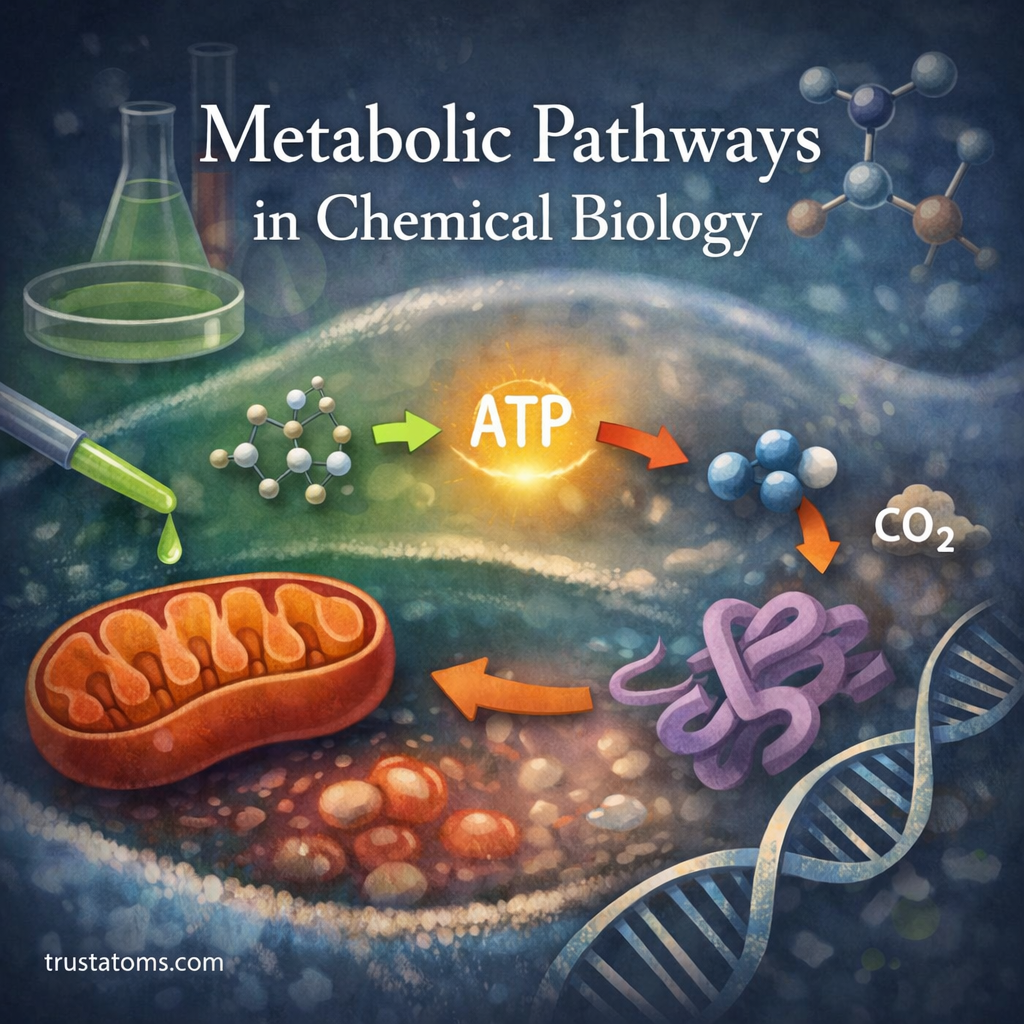
Metabolic pathways are the complex networks of chemical reactions that sustain life. Inside every cell, thousands of reactions occur in coordinated sequences that convert nutrients into energy, build essential molecules, and remove waste products. In chemical biology, scientists study these pathways by combining principles of chemistry and biology to understand how molecular reactions drive biological processes.
Understanding metabolic pathways helps researchers explain how cells function, how diseases develop, and how drugs can target specific biochemical reactions.
What Are Metabolic Pathways?
A metabolic pathway is a series of chemical reactions where the product of one reaction becomes the substrate for the next. These reactions are typically controlled by specialized proteins called enzymes, which speed up chemical transformations.
Each pathway performs a specific task within the cell, such as generating energy or synthesizing important biomolecules.
Key characteristics of metabolic pathways include:
- Step-by-step chemical reactions
- Enzyme-driven transformations
- Specific starting molecules and final products
- Regulation to maintain cellular balance
These pathways form interconnected networks rather than isolated chains, allowing cells to adapt to changing environmental conditions.
Why Metabolic Pathways Matter in Chemical Biology
Chemical biology focuses on understanding biological systems through molecular and chemical perspectives. Metabolic pathways are central to this field because they reveal how chemical reactions control life processes.
Studying metabolic pathways helps scientists:
- Understand how cells produce energy
- Identify molecular causes of disease
- Develop drugs that target specific biochemical steps
- Design metabolic engineering strategies for biotechnology
- Investigate how organisms adapt to environmental stress
By analyzing the chemical mechanisms within these pathways, researchers can manipulate biological systems in precise ways.
Two Major Types of Metabolic Pathways
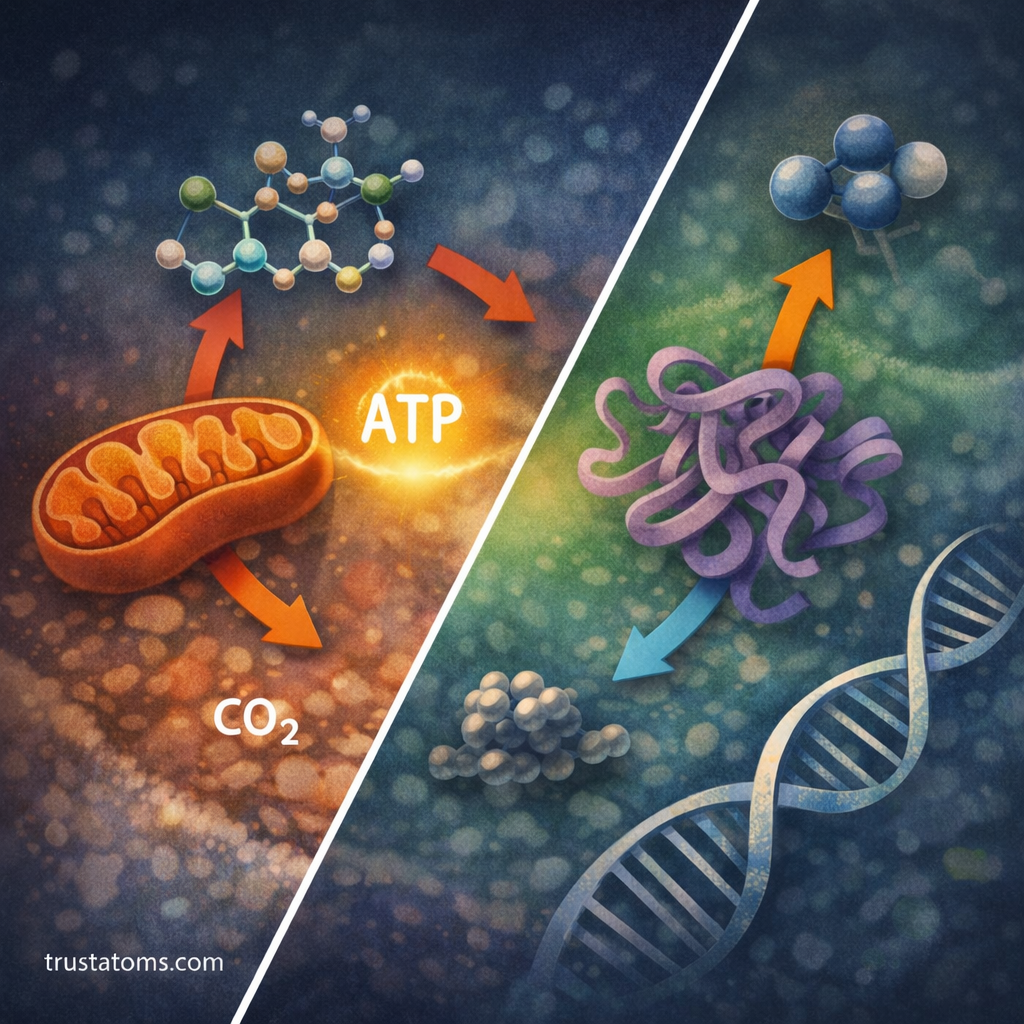
Metabolism is generally divided into two broad categories depending on whether molecules are broken down or built up.
Catabolic Pathways
Catabolic pathways break down large molecules into smaller ones while releasing energy.
Common features include:
- Breakdown of complex nutrients
- Energy production (often stored as ATP)
- Release of small molecular products such as carbon dioxide
Examples include:
- Cellular respiration
- Glycolysis
- Fatty acid oxidation
These pathways provide the energy that powers most cellular activities.
Anabolic Pathways
Anabolic pathways build larger molecules from smaller components. These reactions usually require energy.
Typical roles include:
- Synthesizing proteins
- Producing nucleic acids
- Constructing cellular membranes
- Creating storage molecules like glycogen
Examples include:
- Protein synthesis
- Photosynthesis
- Fatty acid synthesis
Together, anabolic and catabolic pathways maintain the balance of molecules inside the cell.
Key Components of Metabolic Pathways
Several essential components allow metabolic pathways to function efficiently.
Enzymes
Enzymes act as catalysts that accelerate biochemical reactions without being consumed. Each enzyme typically recognizes a specific substrate and performs a specific chemical transformation.
Important enzyme characteristics include:
- High specificity
- Ability to lower activation energy
- Regulation through inhibitors or activators
Metabolites
Metabolites are the molecules that participate in metabolic reactions. They may serve as:
- Starting materials
- Intermediate compounds
- Final products
Examples of common metabolites include glucose, pyruvate, amino acids, and ATP.
Energy Carriers
Cells rely on specialized molecules to store and transfer energy.
Common energy carriers include:
- ATP (adenosine triphosphate)
- NADH
- FADH₂
These molecules allow energy released in one reaction to be used in another.
Examples of Important Metabolic Pathways
Many metabolic pathways are essential to life. A few of the most widely studied include the following.
Glycolysis
Glycolysis is a ten-step pathway that breaks down glucose into pyruvate. It occurs in the cytoplasm and produces small amounts of ATP and NADH.
Key features:
- Does not require oxygen
- Provides energy quickly
- Supplies intermediates for other pathways
The Citric Acid Cycle
Also known as the Krebs cycle, this pathway occurs in the mitochondria and continues the breakdown of glucose-derived molecules.
It generates:
- NADH
- FADH₂
- Carbon dioxide
These molecules feed into the electron transport chain to produce large amounts of ATP.
The Electron Transport Chain
This pathway uses electrons from NADH and FADH₂ to generate ATP through oxidative phosphorylation.
Key characteristics include:
- Located in the inner mitochondrial membrane
- Generates the majority of cellular ATP
- Requires oxygen as the final electron acceptor
Regulation of Metabolic Pathways
Cells must carefully regulate metabolic pathways to avoid wasting energy or producing harmful imbalances.
Several mechanisms help control metabolic activity:
Feedback Inhibition
In feedback inhibition, the final product of a pathway inhibits an earlier enzyme in the pathway. This prevents unnecessary production when sufficient product is already available.
Enzyme Modification
Cells can alter enzyme activity through chemical modifications such as phosphorylation. These changes can quickly activate or deactivate enzymes.
Gene Expression Control
Cells may increase or decrease the production of enzymes by regulating gene expression. This allows longer-term adjustments to metabolic needs.
Metabolic Pathways and Human Health
Disruptions in metabolic pathways can lead to many diseases. Because metabolism controls fundamental chemical reactions in cells, even small changes can have significant consequences.
Examples of metabolism-related conditions include:
- Diabetes
- Metabolic syndrome
- Certain inherited metabolic disorders
- Cancer metabolism changes
Chemical biology research helps scientists identify how these pathways malfunction and how therapies can correct them.
Applications in Biotechnology and Medicine
Understanding metabolic pathways has practical benefits across multiple scientific fields.
Drug Development
Many medications work by targeting enzymes within metabolic pathways. By blocking or modifying specific reactions, drugs can alter disease-related processes.
Metabolic Engineering
Scientists can redesign metabolic pathways in microorganisms to produce useful compounds such as:
- Biofuels
- Pharmaceuticals
- Industrial chemicals
- Nutritional supplements
Personalized Medicine
Advances in metabolic research are helping doctors tailor treatments based on individual biochemical differences.
Final Thoughts
Metabolic pathways represent the chemical backbone of life. Through interconnected sequences of enzyme-driven reactions, cells convert nutrients into energy, build essential molecules, and maintain internal balance.
Chemical biology provides powerful tools for studying these pathways at the molecular level. By understanding how metabolic reactions operate and interact, researchers can develop new therapies, engineer biological systems, and uncover deeper insights into how living organisms function.