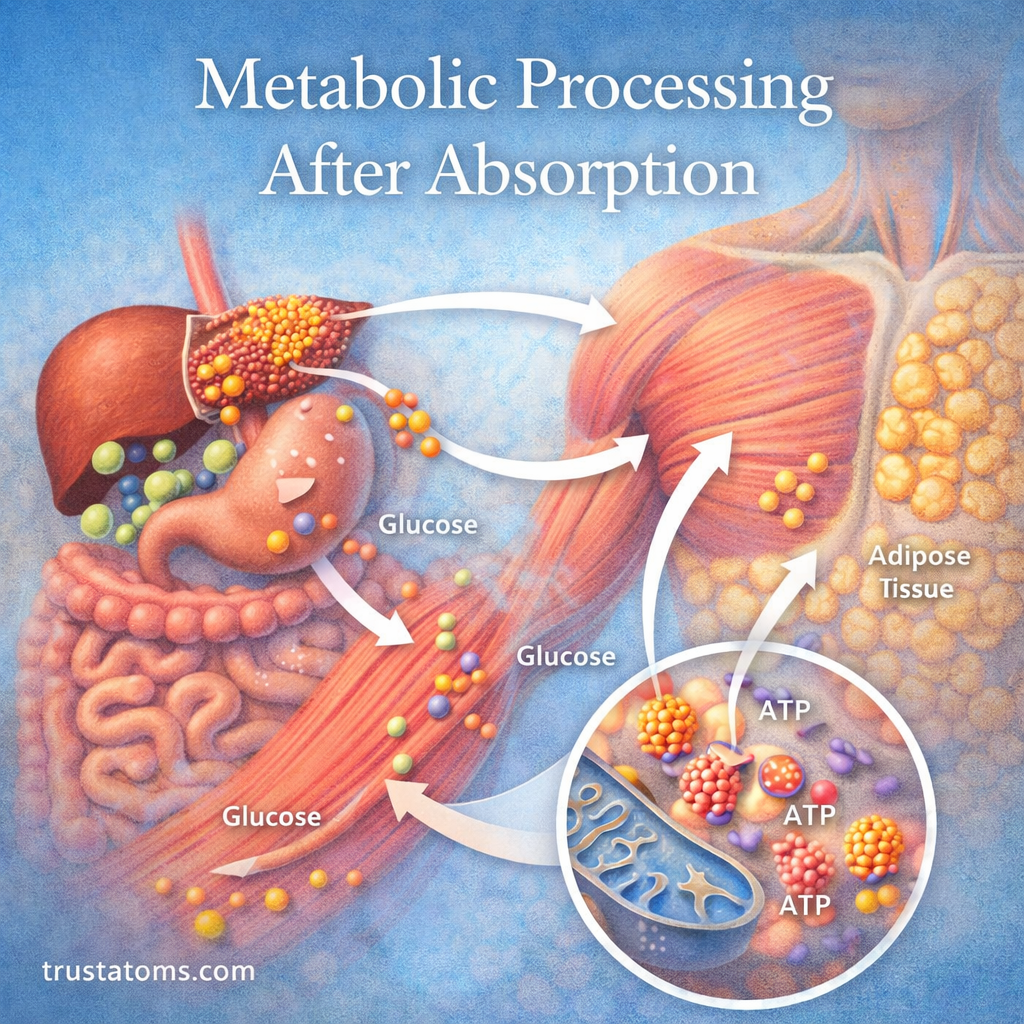
After nutrients are absorbed from the digestive system into the bloodstream, the body begins a complex process known as metabolic processing. This stage determines how nutrients are used, stored, or transformed to support energy production, growth, and repair.
Understanding what happens after absorption helps explain how the body turns food into usable energy and essential biological components.
What Is Metabolic Processing?
Metabolic processing refers to the chemical reactions that occur in the body after nutrients enter circulation. These reactions fall into two main categories:
- Catabolism: Breaking down molecules to release energy
- Anabolism: Building new molecules for growth and repair
Together, these processes make up metabolism, which sustains all bodily functions.
Where Metabolic Processing Occurs
Although metabolism happens throughout the body, several key organs play major roles:
Liver
- Primary processing center for nutrients
- Regulates blood sugar levels
- Detoxifies substances
- Converts nutrients into usable forms
Muscle Tissue
- Uses glucose and fatty acids for energy
- Stores glycogen for later use
Adipose (Fat) Tissue
- Stores excess energy as fat
- Releases fatty acids when needed
Cells Throughout the Body
- Carry out energy production (ATP generation)
- Use nutrients for maintenance and repair
The Role of the Liver After Absorption
Once nutrients enter the bloodstream, many are directed to the liver through the hepatic portal vein.
Key Functions of the Liver
- Converts glucose into glycogen for storage
- Releases glucose when blood sugar is low
- Processes amino acids for protein synthesis
- Converts excess nutrients into fat
- Removes toxins and harmful substances
The liver acts as a central hub, ensuring nutrients are balanced before entering general circulation.
Carbohydrate Metabolism
Carbohydrates are primarily broken down into glucose, which serves as the body’s main energy source.
What Happens to Glucose?
- Used immediately for energy (ATP production)
- Stored as glycogen in the liver and muscles
- Converted into fat if excess is present
Blood Sugar Regulation
Hormones play a key role:
- Insulin lowers blood glucose by promoting uptake into cells
- Glucagon raises blood glucose by stimulating glycogen breakdown
This balance ensures stable energy availability.
Protein Metabolism
Proteins are broken down into amino acids, which serve as building blocks for the body.
Functions of Amino Acids
- Tissue repair and growth
- Enzyme and hormone production
- Immune system support
Excess Amino Acids
- Cannot be stored directly
- Converted into glucose or fat
- Nitrogen is removed and excreted as urea
This process mainly occurs in the liver.
Fat Metabolism
Fats are absorbed as fatty acids and glycerol, then processed for energy or storage.
Key Roles of Fats
- Long-term energy storage
- Insulation and protection of organs
- Formation of cell membranes
- Production of certain hormones
What Happens After Absorption?
- Stored in adipose tissue
- Broken down into fatty acids for energy
- Used during prolonged physical activity or fasting
Fat metabolism is slower but provides more sustained energy than carbohydrates.
Energy Production (ATP)
At the cellular level, nutrients are converted into energy in the form of ATP (adenosine triphosphate).
This occurs through:
- Cellular respiration in mitochondria
- Breakdown of glucose, fats, or amino acids
- Oxygen-dependent processes
ATP powers nearly every function in the body, including:
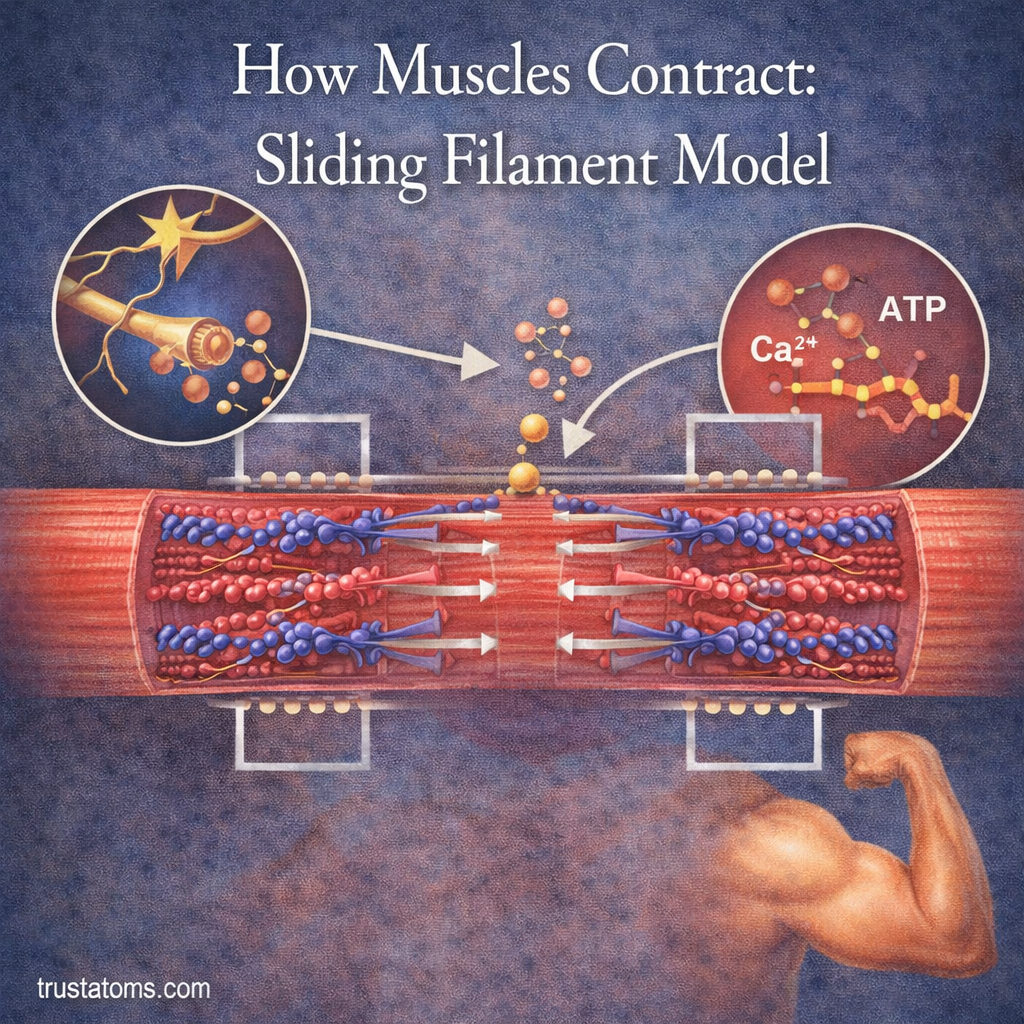
- Muscle contraction
- Nerve signaling
- Cellular repair
Storage vs Immediate Use
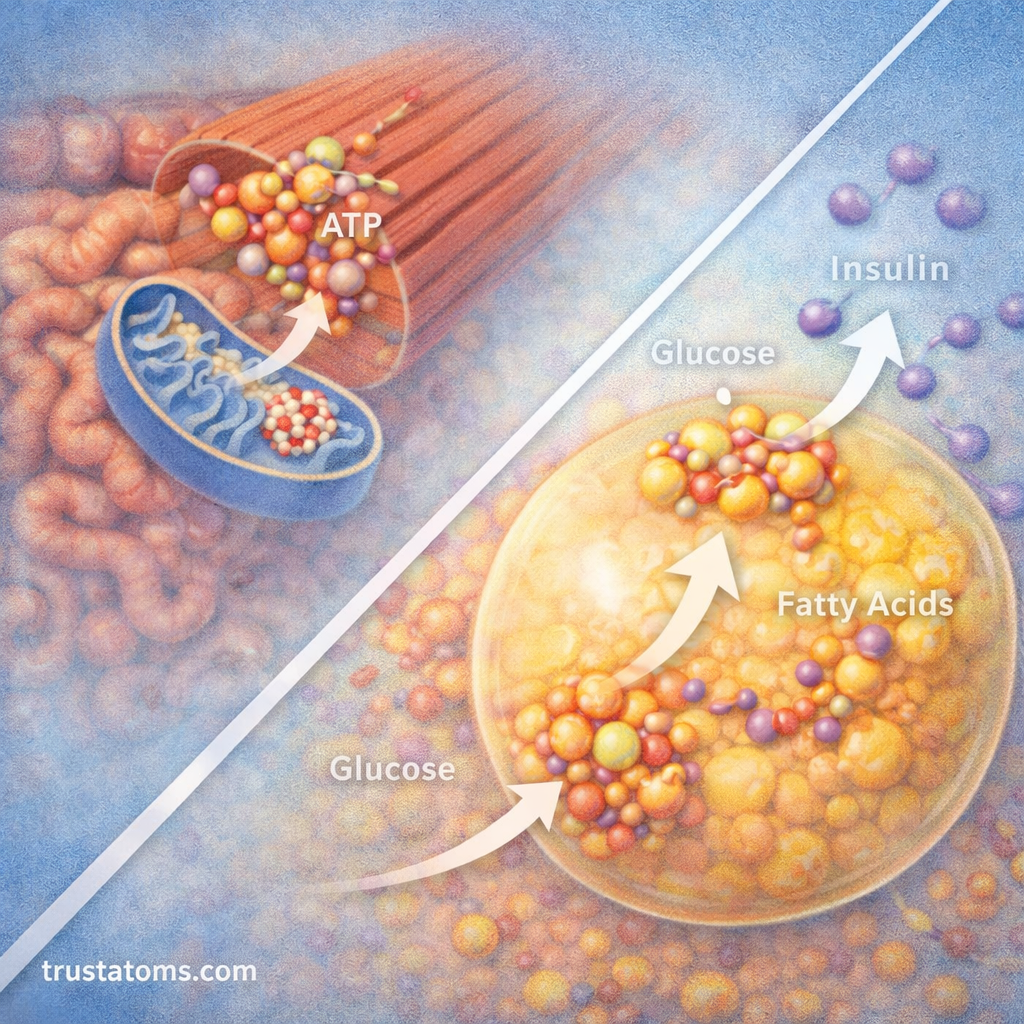
The body constantly decides whether to use nutrients immediately or store them for later.
Immediate Use
- When energy demand is high
- During physical activity
- After fasting
Storage
- When intake exceeds energy needs
- Stored as glycogen or fat
This balance helps maintain energy stability throughout the day.
Hormonal Regulation of Metabolism
Hormones coordinate metabolic processing to maintain balance.
Key Hormones
- Insulin: Promotes nutrient storage and uptake
- Glucagon: Stimulates release of stored energy
- Cortisol: Increases energy availability during stress
- Thyroid hormones: Regulate overall metabolic rate
These signals ensure that energy production matches the body’s needs.
Waste Products of Metabolism
Metabolic processes produce waste that must be removed from the body.
Common byproducts include:
- Carbon dioxide (removed via lungs)
- Urea (excreted by kidneys)
- Heat (released to regulate body temperature)
The circulatory system plays a key role in transporting these waste products for elimination.
Factors That Influence Metabolic Processing
Metabolism varies from person to person and is influenced by:
- Age and genetics
- Physical activity level
- Hormonal balance
- Diet and nutrient intake
- Overall health
These factors determine how efficiently the body processes nutrients.
Tips to Support Healthy Metabolism
You can support metabolic processing through simple lifestyle habits:
- Eat balanced meals with carbohydrates, proteins, and fats
- Stay physically active to boost energy use
- Maintain proper hydration
- Get adequate sleep to regulate hormones
- Avoid excessive processed foods
These habits promote efficient nutrient use and energy balance.
Final Thoughts
Metabolic processing after absorption is a vital step in turning food into energy, building materials, and stored reserves. Through coordinated actions in the liver, muscles, and cells, the body carefully manages how nutrients are used and distributed.
By understanding these processes, you gain insight into how nutrition, activity, and lifestyle choices directly influence overall health and energy levels.