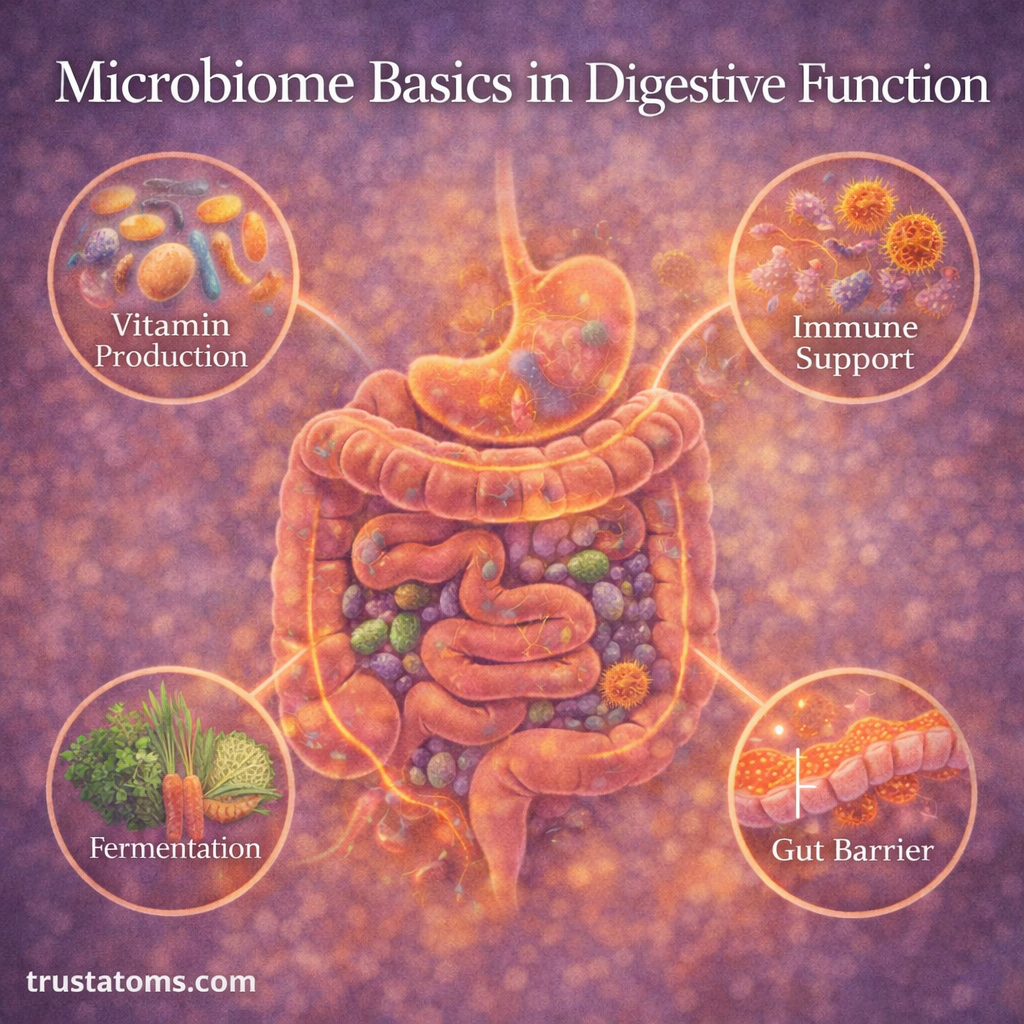
The human digestive system is home to trillions of microorganisms collectively known as the gut microbiome. These bacteria, viruses, and fungi play a critical role in digestion, nutrient absorption, and overall health.
Rather than being harmful, many of these microbes are essential for maintaining balance within the body. Understanding the basics of the microbiome in digestive function can help explain how your gut supports everything from metabolism to immunity.
What Is the Gut Microbiome?
The gut microbiome refers to the community of microorganisms living primarily in the large intestine.
Key Characteristics
- Contains trillions of microbes
- Includes bacteria, viruses, fungi, and other microorganisms
- Unique to each individual
- Influenced by diet, lifestyle, and environment
A healthy microbiome is diverse and balanced, with beneficial microbes outnumbering harmful ones.
How the Microbiome Supports Digestion
The microbiome plays a direct role in breaking down food and supporting digestive processes.
Key Functions
- Ferments indigestible carbohydrates (fiber)
- Produces short-chain fatty acids (SCFAs)
- Helps break down complex nutrients
- Assists in bile metabolism
These processes allow the body to extract more nutrients from food that would otherwise be difficult to digest.
Role in Nutrient Absorption
The microbiome contributes to the production and absorption of essential nutrients.
Important Contributions
- Synthesizes certain vitamins (e.g., vitamin K and some B vitamins)
- Enhances mineral absorption
- Supports the integrity of the intestinal lining
A well-functioning microbiome improves the body’s ability to absorb and utilize nutrients efficiently.
The Microbiome and Gut Barrier Function
The gut lining acts as a protective barrier, and the microbiome plays a key role in maintaining it.
How It Helps
- Strengthens tight junctions between intestinal cells
- Prevents harmful substances from entering the bloodstream
- Supports mucus production in the gut
A healthy gut barrier is essential for preventing inflammation and maintaining digestive health.
Interaction with the Immune System
A large portion of the body’s immune system is located in the gut, and the microbiome plays a central role in its regulation.
Key Functions
- Trains the immune system to distinguish between harmful and harmless substances
- Reduces excessive inflammation
- Helps defend against pathogens
This interaction helps maintain immune balance and overall health.
The Microbiome and the Gut–Brain Connection
The microbiome is closely linked to the gut–brain axis.
How It Influences the Brain
- Produces neurotransmitters like serotonin
- Affects stress response and mood
- Communicates with the brain through neural and chemical signals
This connection highlights the role of gut health in mental well-being.
Factors That Shape the Microbiome
The composition of the microbiome can change based on various factors.
1. Diet
- High-fiber diets promote beneficial bacteria
- Processed foods may reduce microbial diversity
2. Antibiotics and Medications
- Antibiotics can disrupt microbial balance
- Some medications may alter gut bacteria composition
3. Lifestyle and Environment
- Stress levels
- Sleep patterns
- Exposure to different environments
All of these can influence microbiome diversity and stability.
4. Age
- The microbiome evolves throughout life
- Diversity tends to decrease with age
What Is Dysbiosis?
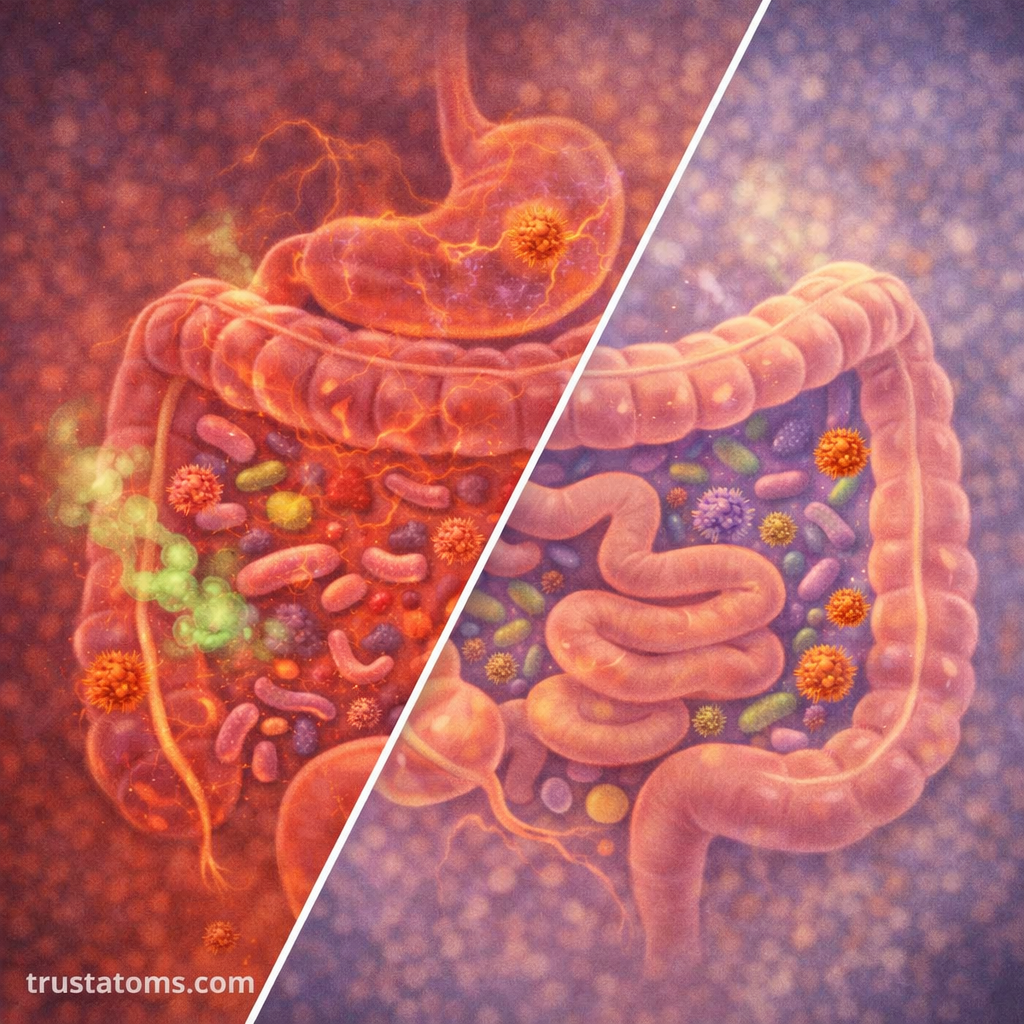
Dysbiosis refers to an imbalance in the gut microbiome.
Common Causes
- Poor diet
- Chronic stress
- Illness or infection
- Overuse of antibiotics
Potential Effects
- Digestive issues (bloating, diarrhea, constipation)
- Increased inflammation
- Reduced nutrient absorption
- Weakened immune function
Maintaining balance is key to preventing these issues.
Signs of an Unhealthy Microbiome
When the microbiome is disrupted, it may lead to noticeable symptoms.
Possible Indicators
- Frequent digestive discomfort
- Food intolerances
- Low energy levels
- Skin issues
- Frequent illness
These signs can vary depending on the degree of imbalance.
Tips to Support a Healthy Microbiome
Supporting your microbiome can improve digestion and overall health.
Practical Strategies
- Eat a variety of fiber-rich foods (fruits, vegetables, whole grains)
- Include fermented foods like yogurt, kefir, and sauerkraut
- Limit highly processed foods and added sugars
- Stay physically active
- Manage stress effectively
Consistency is key to maintaining a balanced microbiome.
Final Thoughts
The gut microbiome is a powerful and essential part of digestive function. From breaking down food to supporting immunity and influencing the brain, these microorganisms play a vital role in overall health.
By understanding microbiome basics, you can take steps to support a healthier digestive system and improve your well-being from the inside out.