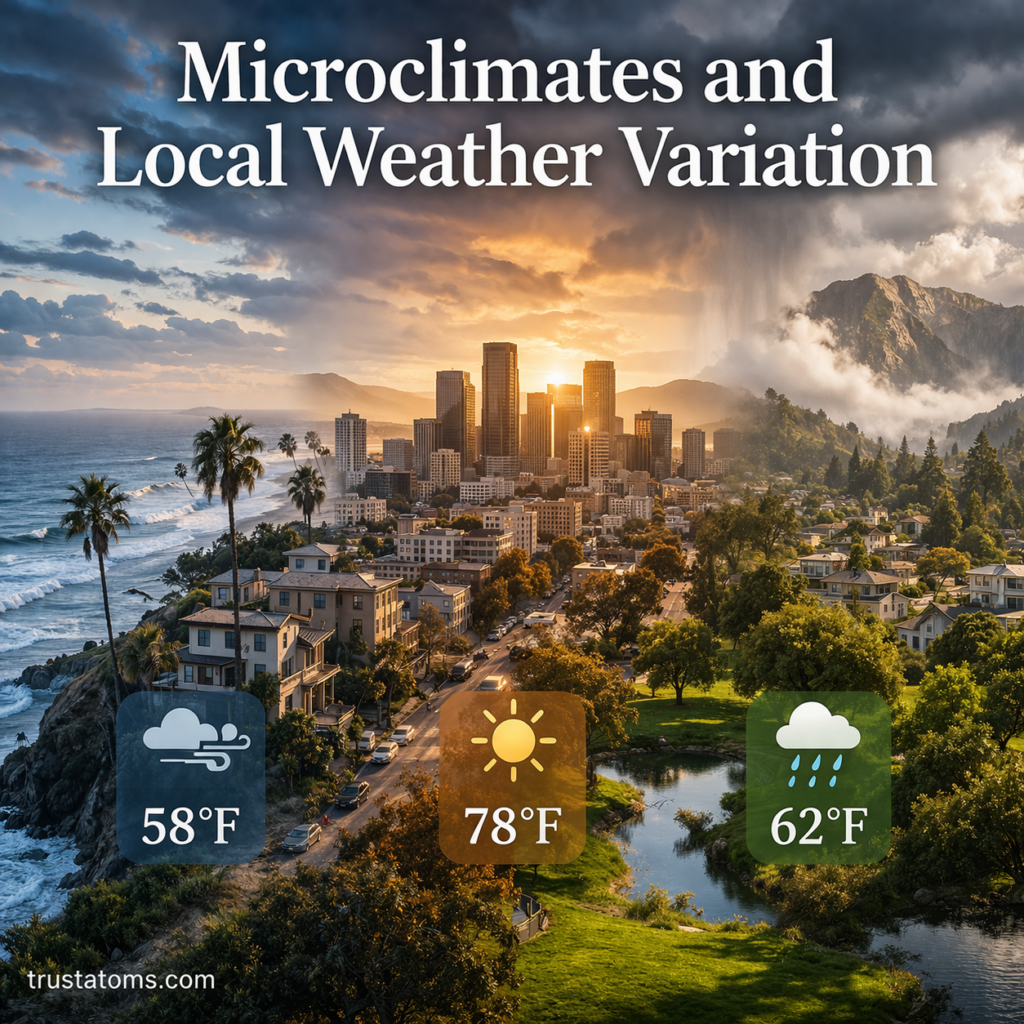
Weather can vary dramatically over short distances—even within the same city or neighborhood. These localized differences are known as microclimates, and they play an important role in shaping everyday weather conditions.
From cooler coastal breezes to warmer urban centers, microclimates explain why two nearby areas can experience very different temperatures, humidity levels, and weather patterns at the same time.
What Is a Microclimate?
A microclimate is a small-scale climate zone where weather conditions differ from the surrounding area.
Key Characteristics
- Occurs over short distances (yards, neighborhoods, or cities)
- Influenced by local features like terrain and buildings
- Can vary in temperature, humidity, wind, and precipitation
Microclimates are essentially localized versions of climate, shaped by specific environmental conditions.
What Causes Microclimates?
Microclimates form due to variations in how the Earth’s surface interacts with sunlight, air, and moisture.
Main Influencing Factors
- Sunlight Exposure
- Areas receiving more direct sunlight are warmer
- Surface Materials
- Concrete absorbs heat differently than vegetation
- Elevation
- Higher elevations tend to be cooler
- Water Bodies
- Lakes and oceans moderate temperature
- Wind Patterns
- Buildings and terrain can block or redirect airflow
These factors combine to create unique weather conditions in small areas.
Urban Heat Islands: A Common Microclimate
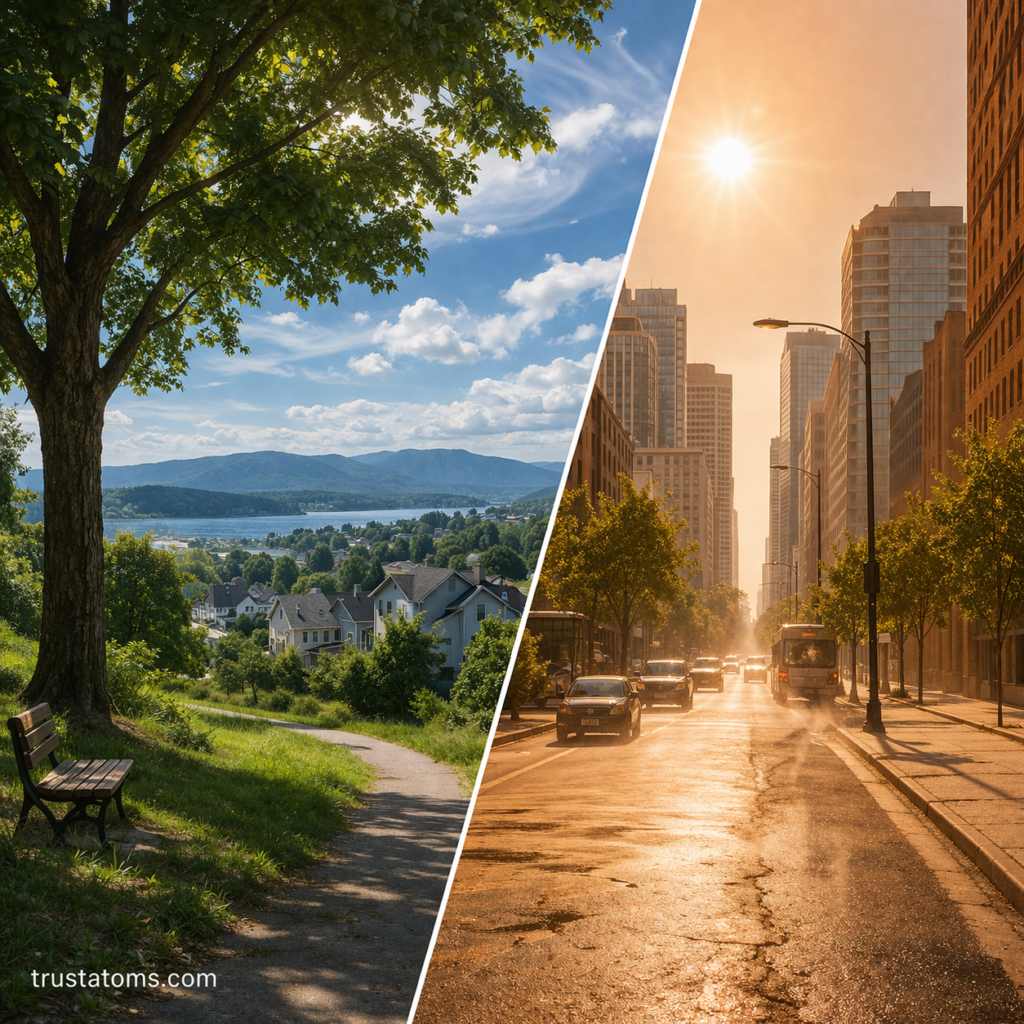
One of the most well-known examples of a microclimate is the urban heat island effect.
Why Cities Are Warmer
- Asphalt and concrete absorb and retain heat
- Limited vegetation reduces cooling
- Buildings trap heat and reduce airflow
As a result, cities can be several degrees warmer than surrounding rural areas—especially at night.
Coastal vs. Inland Microclimates
Proximity to water creates noticeable microclimate differences.
Coastal Areas
- Cooler during the day
- Warmer at night
- More stable temperatures
Inland Areas
- Greater temperature extremes
- Hotter summers and colder winters
Water acts as a temperature regulator, reducing rapid changes.
Mountain and Valley Effects
Topography plays a major role in microclimate formation.
Mountain Microclimates
- Cooler temperatures at higher elevations
- Increased precipitation on windward sides
- Dry conditions on leeward sides (rain shadow effect)
Valley Microclimates
- Cold air settles in valleys at night
- Can lead to frost pockets
- Warmer during the day if sheltered from wind
Vegetation and Land Cover
Plants and land surfaces significantly influence local weather.
Effects of Vegetation
- Provides shade and cooling
- Releases moisture through transpiration
- Reduces temperature extremes
Bare or Dry Land
- Heats up quickly
- Retains less moisture
- Contributes to hotter microclimates
This is why parks often feel cooler than nearby streets.
Microclimates in Everyday Life
Microclimates affect daily experiences more than many people realize.
Common Examples
- A shaded backyard vs. a sunny driveway
- A park vs. a downtown street
- A coastal neighborhood vs. an inland suburb
Even small differences in surroundings can create noticeable changes in temperature and comfort.
How Microclimates Affect Weather and Climate
Microclimates can influence larger weather patterns in subtle ways.
Impacts
- Localized rainfall variations
- Fog formation near water bodies
- Wind pattern changes
- Temperature differences within cities
These localized effects can add complexity to weather forecasting.
Microclimates and Agriculture
Farmers often rely on microclimates to optimize crop growth.
Agricultural Benefits
- Selecting ideal planting locations
- Protecting crops from frost
- Using natural windbreaks
- Managing irrigation more effectively
Understanding microclimates can improve crop yields and reduce risk.
Can Microclimates Be Managed?
In some cases, humans can influence or create microclimates.
Examples
- Planting trees for shade and cooling
- Using reflective materials to reduce heat
- Designing buildings to improve airflow
- Creating green spaces in urban areas
These strategies are often used in urban planning and environmental design.
Key Takeaways
- Microclimates are localized climate variations within a small area
- They are influenced by sunlight, terrain, water, vegetation, and human structures
- Urban heat islands are a major example of microclimates
- Microclimates affect daily weather, agriculture, and city planning
- Even small environmental changes can create noticeable differences
Final Thoughts
Microclimates highlight how complex and dynamic Earth’s weather systems can be—even at the smallest scales. While global climate patterns shape broad conditions, local factors fine-tune the environment we experience every day.
By understanding microclimates, we gain a deeper appreciation for how our surroundings influence temperature, comfort, and weather patterns right where we live.