Monsoons are powerful seasonal wind patterns that bring dramatic changes in weather, especially in regions like South Asia, Africa, and parts of Australia. Often associated with heavy rainfall, monsoons are essential to agriculture and water supply—but they can also lead to flooding and extreme weather.
At their core, monsoons are driven by seasonal wind shifts caused by differences in how land and water heat and cool.
What Is a Monsoon?
A monsoon is a seasonal reversal of wind direction that leads to distinct wet and dry periods.
Key Features
- Seasonal wind shift
- Strong connection to land–sea temperature differences
- Associated with large-scale rainfall patterns
Monsoons are not just storms—they are long-term climate patterns.
Why Monsoons Occur
Monsoons are driven by the way land and water heat differently throughout the year.
Land vs. Water Heating
- Land heats up and cools down faster than water
- Water retains heat longer and changes temperature more slowly
This difference creates pressure changes that drive seasonal winds.
The Basic Monsoon Cycle
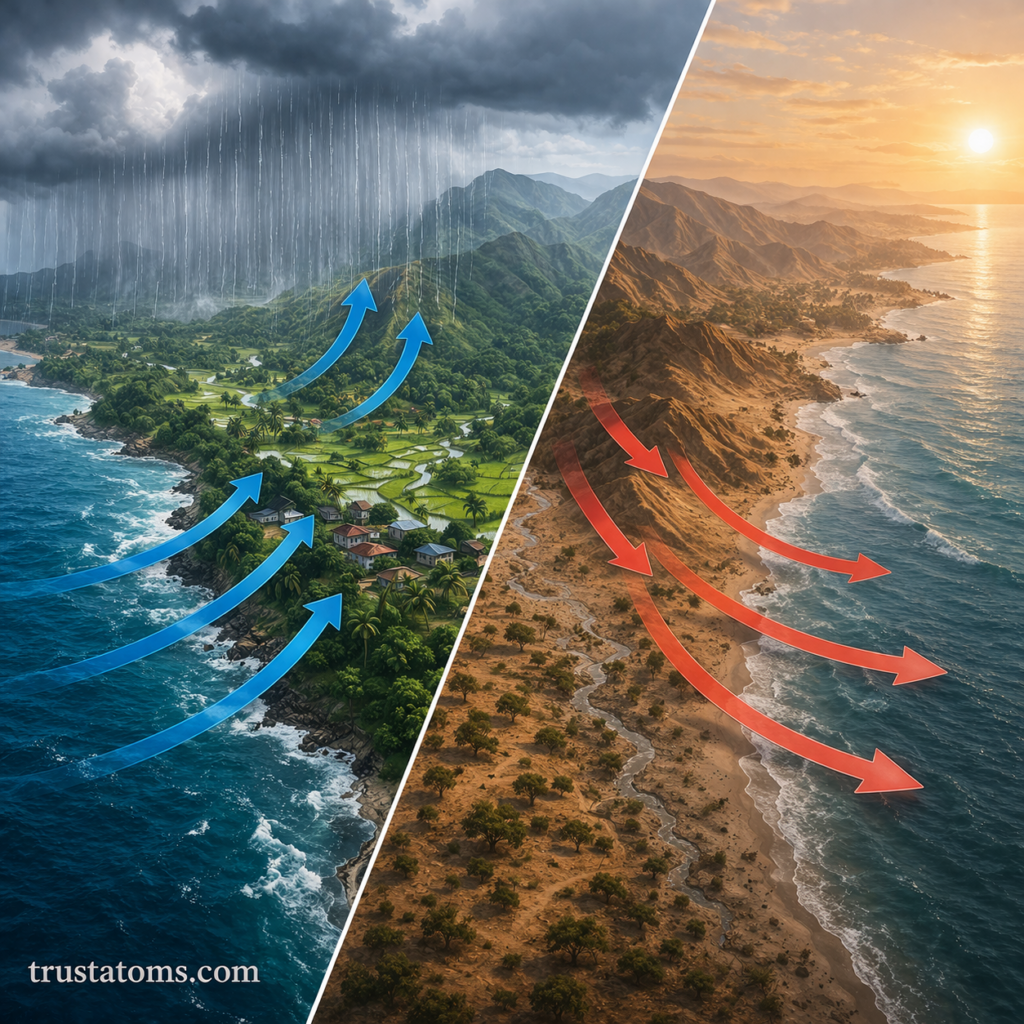
Monsoons typically follow a yearly cycle with two main phases.
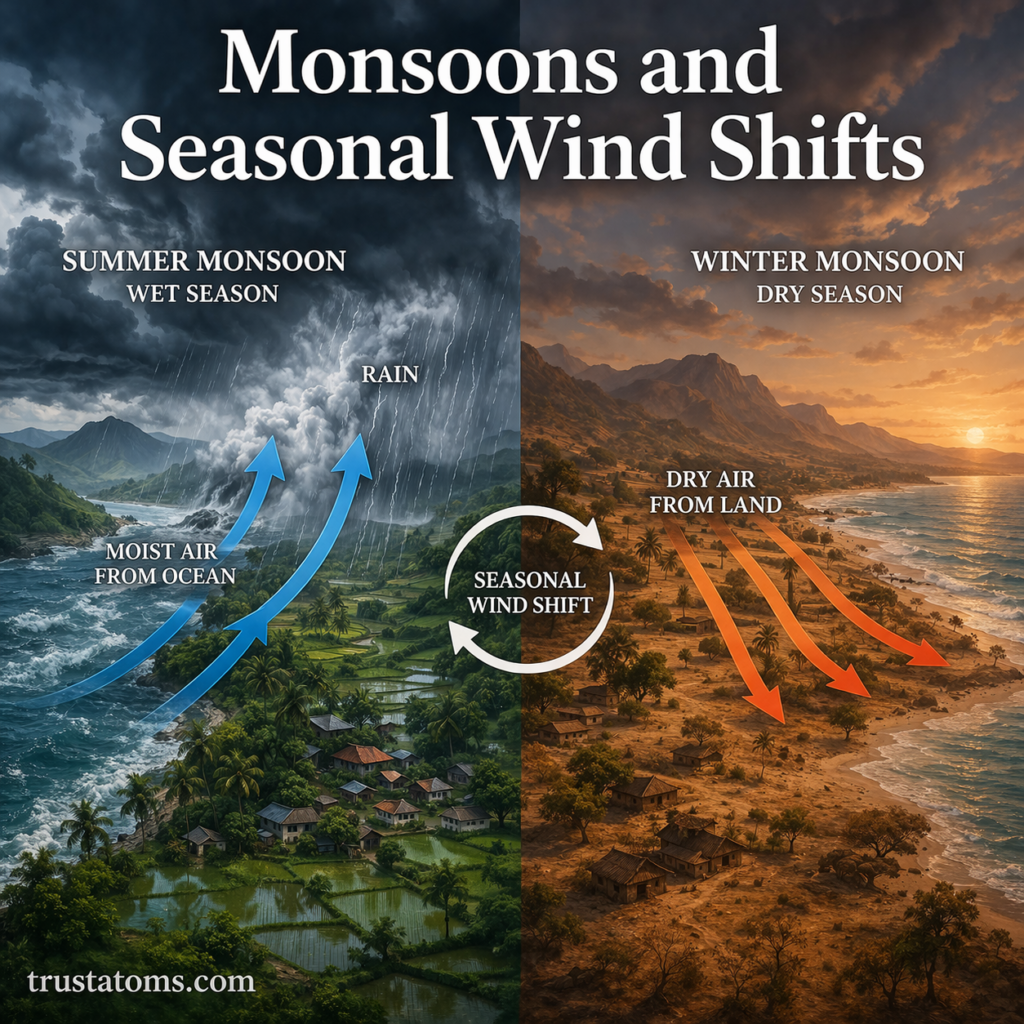
1. Summer Monsoon (Wet Season)
- Land heats up quickly
- Warm air rises over land (low pressure)
- Cooler, moist air flows in from the ocean
- Heavy rainfall develops
This phase brings intense and sustained precipitation.
2. Winter Monsoon (Dry Season)
- Land cools down faster than the ocean
- High pressure forms over land
- Dry air flows from land toward the ocean
- Little to no rainfall
This phase is typically dry and cooler.
How Seasonal Wind Shifts Work
The direction of wind changes based on pressure differences between land and ocean.
Summer Pattern
- Wind blows from ocean to land
- Moist air leads to cloud formation and rain
Winter Pattern
- Wind blows from land to ocean
- Dry air results in clear conditions
These seasonal reversals define monsoon climates.
Regions Affected by Monsoons
Monsoons impact several major regions around the world.
Key Monsoon Regions
- South Asia (India, Bangladesh, Pakistan)
- Southeast Asia (Thailand, Vietnam, Philippines)
- West Africa
- Northern Australia
Each region experiences monsoons differently based on geography and climate.
Impacts of Monsoons
Monsoons play both beneficial and harmful roles.
Positive Impacts
- Provide water for agriculture
- Replenish rivers, lakes, and groundwater
- Support ecosystems and food production
Negative Impacts
- Flooding and landslides
- Infrastructure damage
- Disruption to transportation and daily life
The timing and intensity of monsoons are critical for communities.
Monsoons and Climate Systems
Monsoons are part of larger global climate patterns.
Influencing Factors
- Ocean temperatures (such as El Niño and La Niña)
- Atmospheric circulation
- Topography (mountains can enhance rainfall)
Changes in these factors can strengthen or weaken monsoons.
Monsoons vs. Other Weather Systems
Monsoons differ from typical weather systems in several ways:
- Occur over months, not hours or days
- Involve large-scale wind patterns
- Affect entire regions rather than localized areas
They are seasonal climate systems rather than individual storms.
Why Monsoons Matter
Monsoons are essential to billions of people worldwide.
Importance
- Determine agricultural success or failure
- Influence water availability
- Impact economies and food security
Accurate forecasting is crucial for managing risks and resources.
Final Thoughts
Monsoons and seasonal wind shifts are powerful examples of how Earth’s climate system operates on a large scale. Driven by temperature differences between land and ocean, these systems bring life-sustaining rainfall—but also the potential for extreme weather.
By understanding how monsoons work, we gain insight into one of the most important climate patterns on the planet.