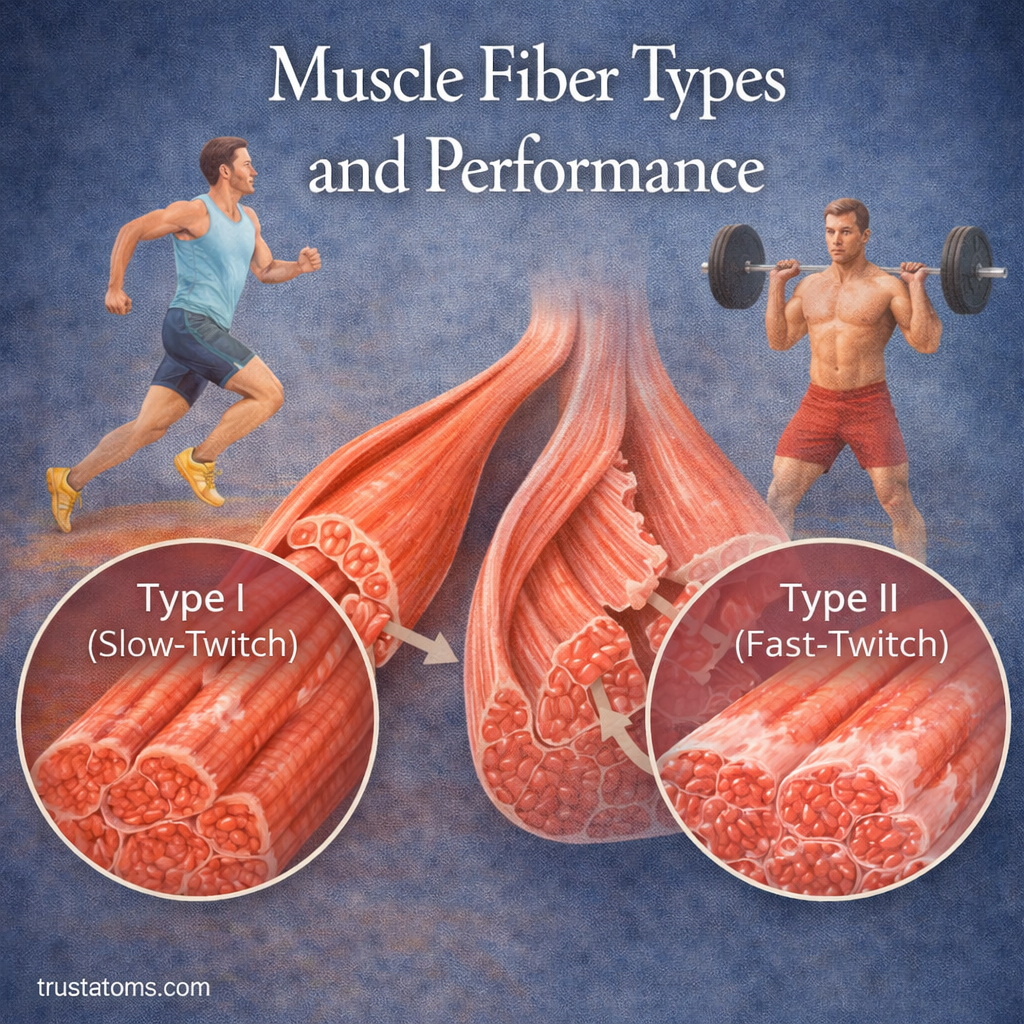
Not all muscles perform the same way. Some are built for endurance, while others are designed for speed and power. These differences come down to muscle fiber types.
Understanding muscle fiber types can help explain athletic performance, training adaptations, and why some people naturally excel at certain physical activities.
What Are Muscle Fibers?
Muscle fibers are individual muscle cells that make up skeletal muscles. Each fiber has specific characteristics that affect how it contracts, how quickly it fatigues, and how much force it can produce.
There are two primary categories:
- Type I (slow-twitch fibers)
- Type II (fast-twitch fibers)
Fast-twitch fibers are further divided into subtypes, but the main distinction is between endurance and power.
Type I Muscle Fibers (Slow-Twitch)
Type I fibers are designed for endurance and sustained activity.
Key Characteristics
- Contract slowly
- Highly resistant to fatigue
- Use oxygen efficiently (aerobic metabolism)
- Rich in mitochondria and blood supply
Best For
- Long-distance running
- Cycling
- Swimming
- Maintaining posture
These fibers allow you to perform activities over long periods without tiring quickly.
Type II Muscle Fibers (Fast-Twitch)
Type II fibers are built for speed, strength, and explosive movements.
Key Characteristics
- Contract quickly and powerfully
- Fatigue more rapidly
- Use less oxygen (anaerobic metabolism)
- Generate greater force
Best For
- Sprinting
- Weightlifting
- Jumping
- High-intensity sports
These fibers are ideal for short bursts of activity requiring strength and speed.
Subtypes of Fast-Twitch Fibers
Fast-twitch fibers can be further divided into:
Type IIa (Intermediate)
- Combination of endurance and power
- Moderate fatigue resistance
- Can adapt with training
Type IIb (or IIx)
- Maximum القوة and speed
- Fatigue very quickly
- Used for explosive, short-duration movements
These subtypes provide flexibility in performance depending on training and activity level.
Key Differences Between Fiber Types
Understanding how these fibers differ helps explain performance outcomes.
Speed of Contraction
- Type I: Slow
- Type II: Fast
Fatigue Resistance
- Type I: High
- Type II: Low
Energy Use
- Type I: Aerobic (oxygen-based)
- Type II: Anaerobic (energy without oxygen)
Force Production
- Type I: Lower force
- Type II: Higher force
How Muscle Fiber Types Affect Performance
Your muscle fiber composition plays a major role in how you perform physically.
Endurance Athletes
- Higher percentage of Type I fibers
- Better stamina and fatigue resistance
Power Athletes
- Higher percentage of Type II fibers
- Greater strength and explosive ability
Mixed Athletes
- Balanced fiber distribution
- Versatility in performance
Genetics influence fiber type distribution, but training can enhance how fibers function.
Can Muscle Fiber Types Change?
While you can’t completely change your genetic fiber type ratio, training can influence how fibers behave.
Adaptations Through Training
- Endurance training improves efficiency of Type I fibers
- Strength training increases size and power of Type II fibers
- Type IIa fibers can shift toward endurance or power depending on training
This adaptability allows individuals to improve performance in different activities.
Training Based on Muscle Fiber Types
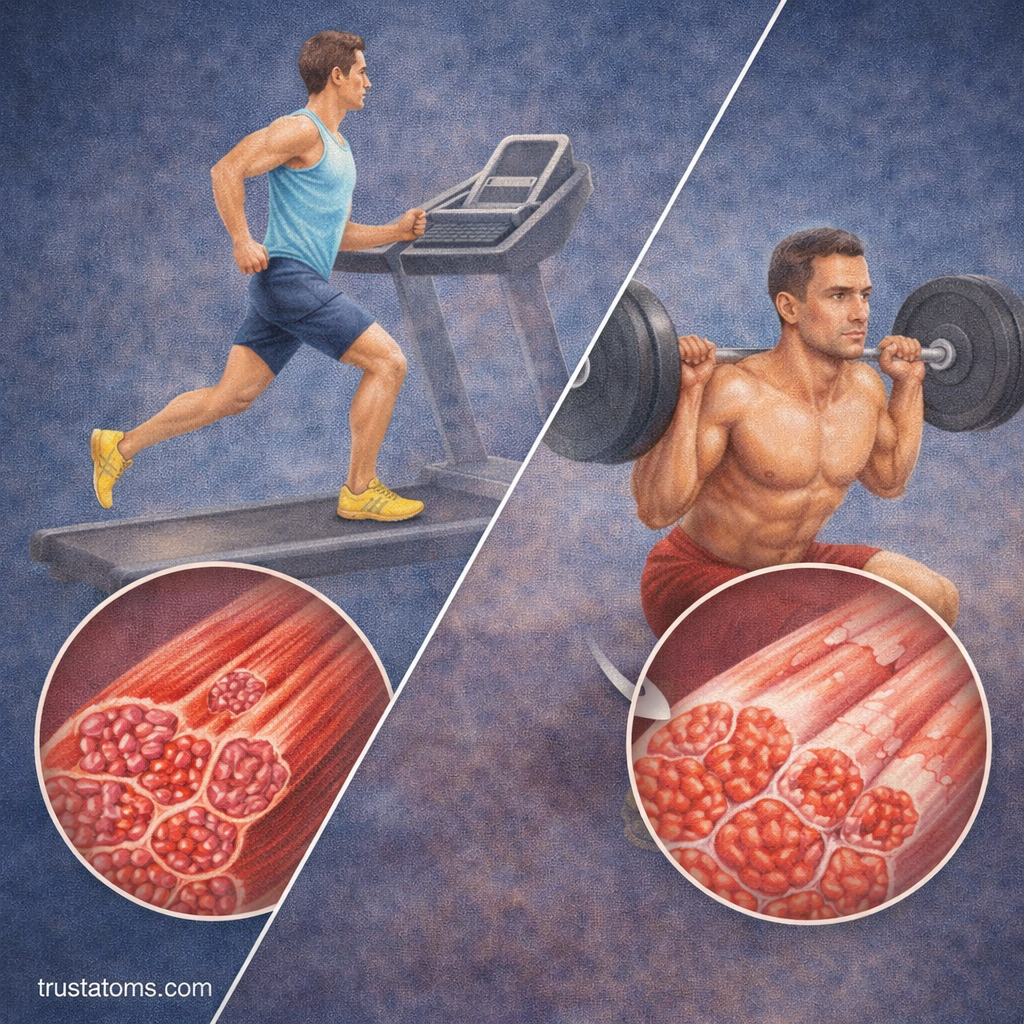
Different training methods target different fiber types.
Endurance Training
- Long-duration, low-intensity exercise
- Improves oxygen use and stamina
- Targets Type I fibers
Strength and Power Training
- Short bursts of high-intensity effort
- Builds muscle size and القوة
- Targets Type II fibers
Balanced Training
- Combines both approaches
- Improves overall fitness and versatility
Factors That Influence Muscle Performance
Muscle performance is not determined by fiber type alone.
Additional Factors
- Nutrition (especially protein and energy intake)
- Hydration
- Rest and recovery
- Age and hormonal levels
- Training consistency
All of these contribute to how effectively muscles perform.
Why Muscle Fiber Types Matter
Understanding muscle fiber types can help you:
- Choose the right training program
- Improve athletic performance
- Prevent injury by training appropriately
- Set realistic fitness goals
It also explains why some people naturally gravitate toward endurance sports, while others excel in strength-based activities.
Final Thoughts
Muscle fiber types play a crucial role in how your body performs during physical activity. Type I fibers support endurance, while Type II fibers provide power and speed.
Although genetics determine your baseline, targeted training can enhance your strengths and improve overall performance. By understanding how your muscles work, you can train smarter and achieve better results.