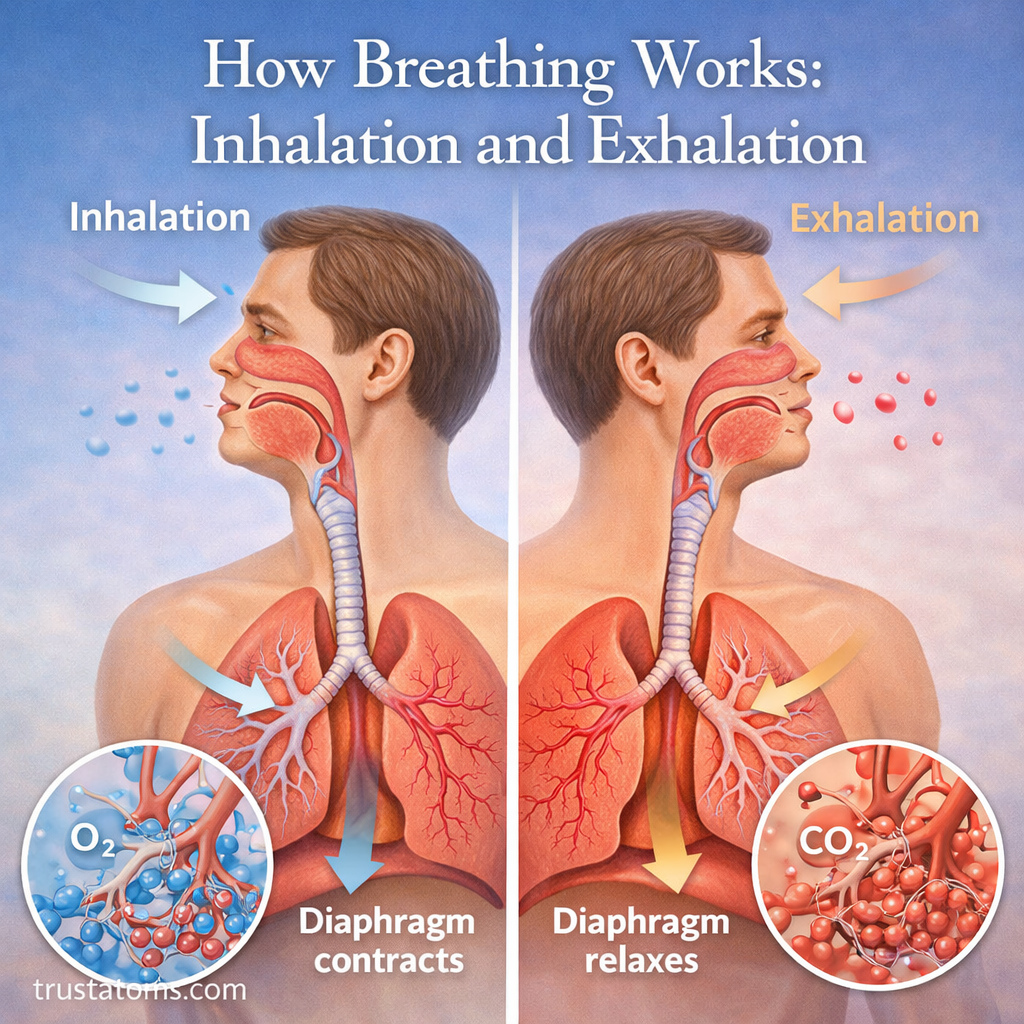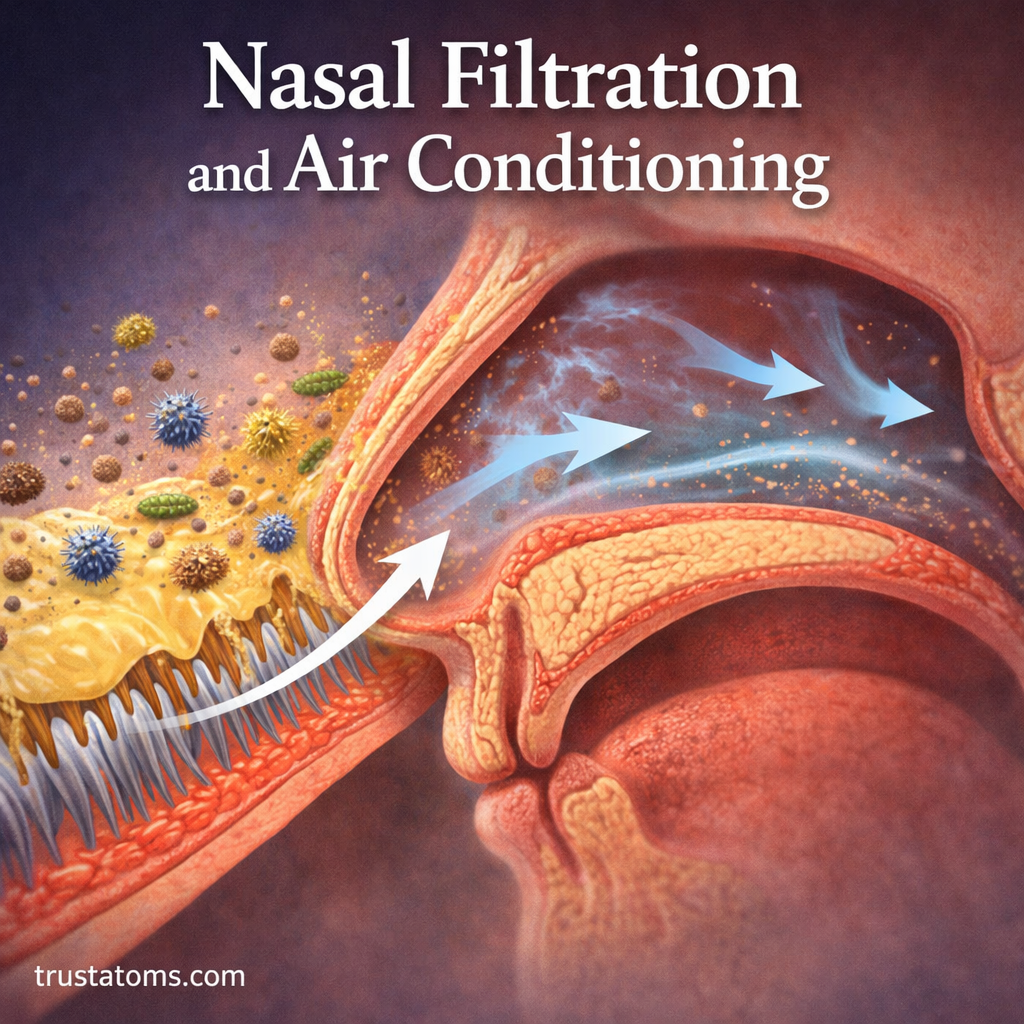
Every breath you take passes through a highly efficient system designed to protect and prepare air before it reaches your lungs. The nose does far more than just allow airflow—it acts as a natural filter, humidifier, and temperature regulator.
This process, known as nasal filtration and air conditioning, is essential for maintaining respiratory health and preventing damage to sensitive lung tissues.
How the Nose Filters Air
The nasal passages are the first line of defense against airborne particles such as dust, pollen, bacteria, and pollutants.
Key Structures Involved
- Nasal hairs (vibrissae)
- Located at the entrance of the nostrils
- Trap larger particles like dust and debris
- Mucus layer
- Sticky surface lining the nasal cavity
- Captures smaller particles, including microbes
- Cilia
- Tiny hair-like structures
- Move mucus and trapped particles toward the throat
What Gets Filtered?
- Dust and dirt
- Pollen
- Bacteria and viruses
- Airborne pollutants
This layered filtration system prevents harmful substances from reaching deeper parts of the respiratory tract.
The Role of the Nasal Cavity
The nasal cavity is a complex, hollow space lined with specialized tissues that optimize air processing.
Key Features
- Rich blood supply
- Moist mucosal lining
- Curved structures called turbinates (nasal conchae)
These features work together to modify the air before it enters the lungs.
Air Warming: Temperature Regulation
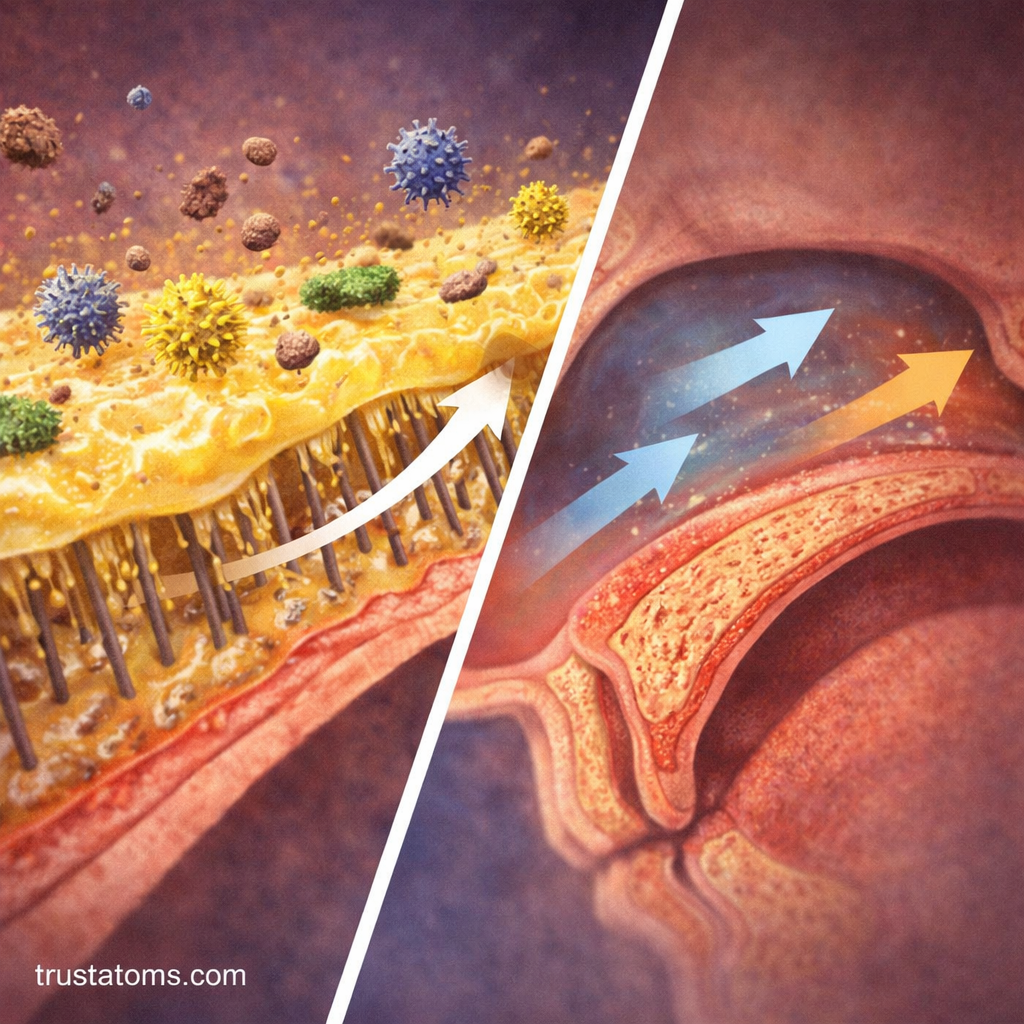
One of the nose’s primary roles is to adjust the temperature of inhaled air.
How It Works
- Blood vessels in the nasal lining release heat
- Incoming air is warmed to near body temperature
- Turbinates increase surface area for heat exchange
Why It Matters
- Prevents irritation of lung tissues
- Maintains optimal conditions for gas exchange
- Protects against cold, dry air damage
Breathing through the nose ensures that air reaching the lungs is properly conditioned.
Air Humidification: Adding Moisture
Dry air can irritate and damage the respiratory tract. The nose helps prevent this by humidifying incoming air.
How Moisture Is Added
- Mucous membranes release water vapor
- Air passing through the nasal cavity becomes humidified
- Turbulent airflow increases contact with moist surfaces
Benefits of Humidification
- Keeps airways hydrated
- Prevents dryness and irritation
- Supports effective mucus function
The Importance of Turbinates
Turbinates are curved, bony structures inside the nasal cavity that play a major role in air conditioning.
Functions of Turbinates
- Increase airflow turbulence
- Enhance contact between air and mucosal surfaces
- Improve filtering, warming, and humidifying efficiency
Without turbinates, the nose would be far less effective at conditioning air.
Nasal Breathing vs. Mouth Breathing
While both the nose and mouth allow airflow, they are not equally effective.
Nasal Breathing Advantages
- Filters air more effectively
- Warms and humidifies air
- Reduces risk of infection
- Supports better lung function
Mouth Breathing Limitations
- Bypasses filtration system
- Allows cold, dry, unfiltered air into lungs
- Can lead to throat dryness and irritation
What Happens When Nasal Function Is Impaired?
Several conditions can interfere with proper nasal filtration and air conditioning.
Common Issues
- Nasal congestion (e.g., colds, allergies)
- Deviated septum
- Chronic sinusitis
- Inflammation of nasal tissues
Possible Effects
- Reduced airflow
- Poor air conditioning
- Increased exposure to irritants
- Greater risk of respiratory infections
Supporting Healthy Nasal Function
Maintaining nasal health helps ensure effective air filtration and conditioning.
Simple Habits
- Stay hydrated to keep mucus thin
- Avoid excessive exposure to pollutants
- Use a humidifier in dry environments
- Practice good hygiene to reduce infections
Final Thoughts
Nasal filtration and air conditioning are essential processes that protect the lungs and optimize breathing. From trapping harmful particles to warming and humidifying incoming air, the nose plays a critical role in respiratory health.
Understanding how this system works highlights the importance of nasal breathing and maintaining healthy nasal function as part of overall well-being.