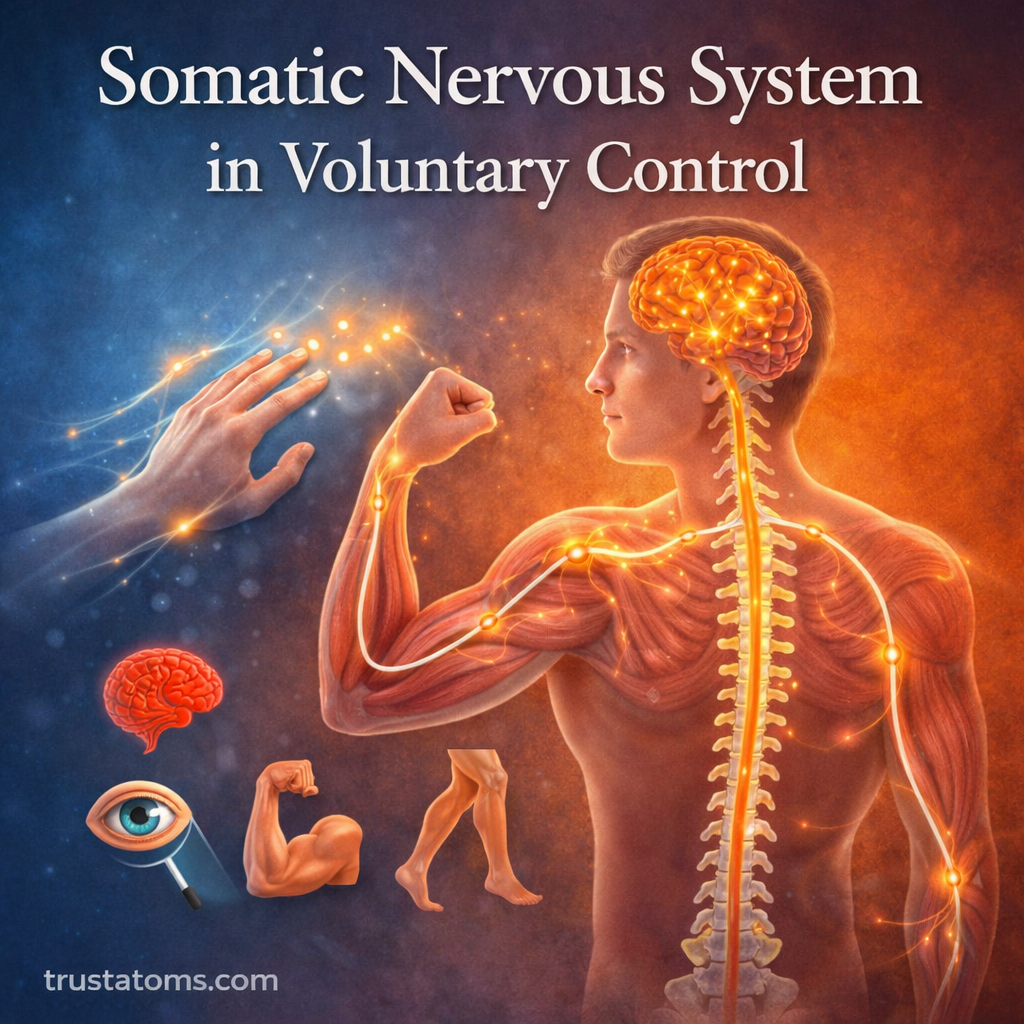
Breathing is one of the most vital and continuous processes in the human body. While it often feels automatic, it is tightly regulated by complex neural circuits that ensure oxygen enters the body and carbon dioxide is removed efficiently.
The neural control of breathing involves coordinated activity between the brainstem, sensory receptors, and respiratory muscles—allowing us to breathe without conscious effort while still giving us the ability to control it when needed.
What Is Neural Control of Breathing?
Neural control of breathing refers to how the nervous system regulates the rhythm, depth, and rate of respiration.
This system:
- Maintains consistent breathing automatically
- Adjusts breathing based on activity and environment
- Responds to changes in oxygen and carbon dioxide levels
It operates continuously, even during sleep or unconsciousness.
Key Brain Regions Involved
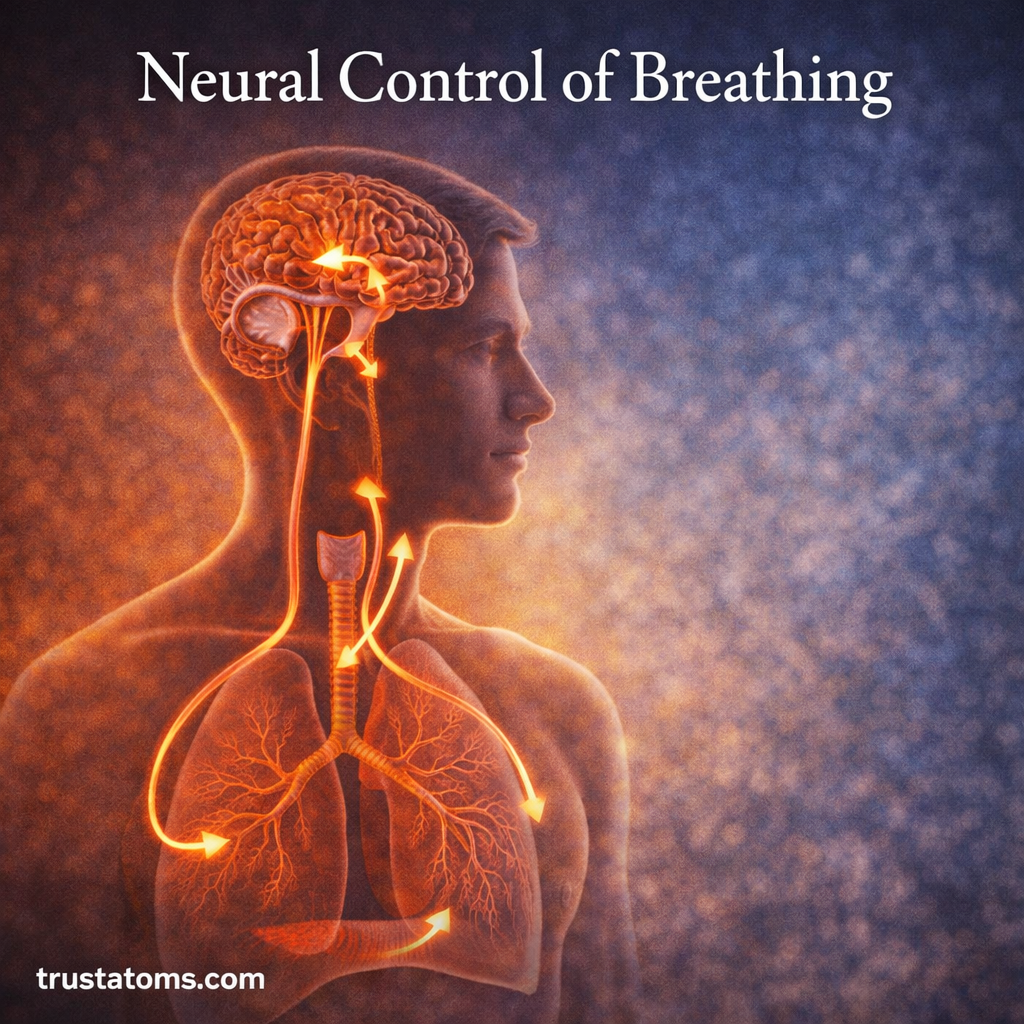
Breathing is primarily controlled by centers located in the brainstem.
Medulla Oblongata
The medulla is the main respiratory control center.
- Generates the basic rhythm of breathing
- Sends signals to respiratory muscles
- Controls involuntary breathing
Pons
The pons helps fine-tune breathing patterns.
- Regulates the transition between inhalation and exhalation
- Adjusts breathing rate
- Smooths respiratory rhythms
Together, the medulla and pons ensure stable and coordinated breathing.
Respiratory Rhythm Generation
Breathing follows a rhythmic cycle driven by specialized neural networks.
Central Pattern Generators (CPGs)
- Located in the brainstem
- Produce automatic, rhythmic breathing patterns
- Function without conscious input
These circuits continuously generate signals that control inhalation and exhalation.
Breathing Cycle
- Inhalation begins as neurons stimulate the diaphragm
- The diaphragm contracts and moves downward
- Air flows into the lungs
- Neurons reduce stimulation
- The diaphragm relaxes
- Exhalation occurs passively
This cycle repeats automatically throughout life.
Role of Respiratory Muscles
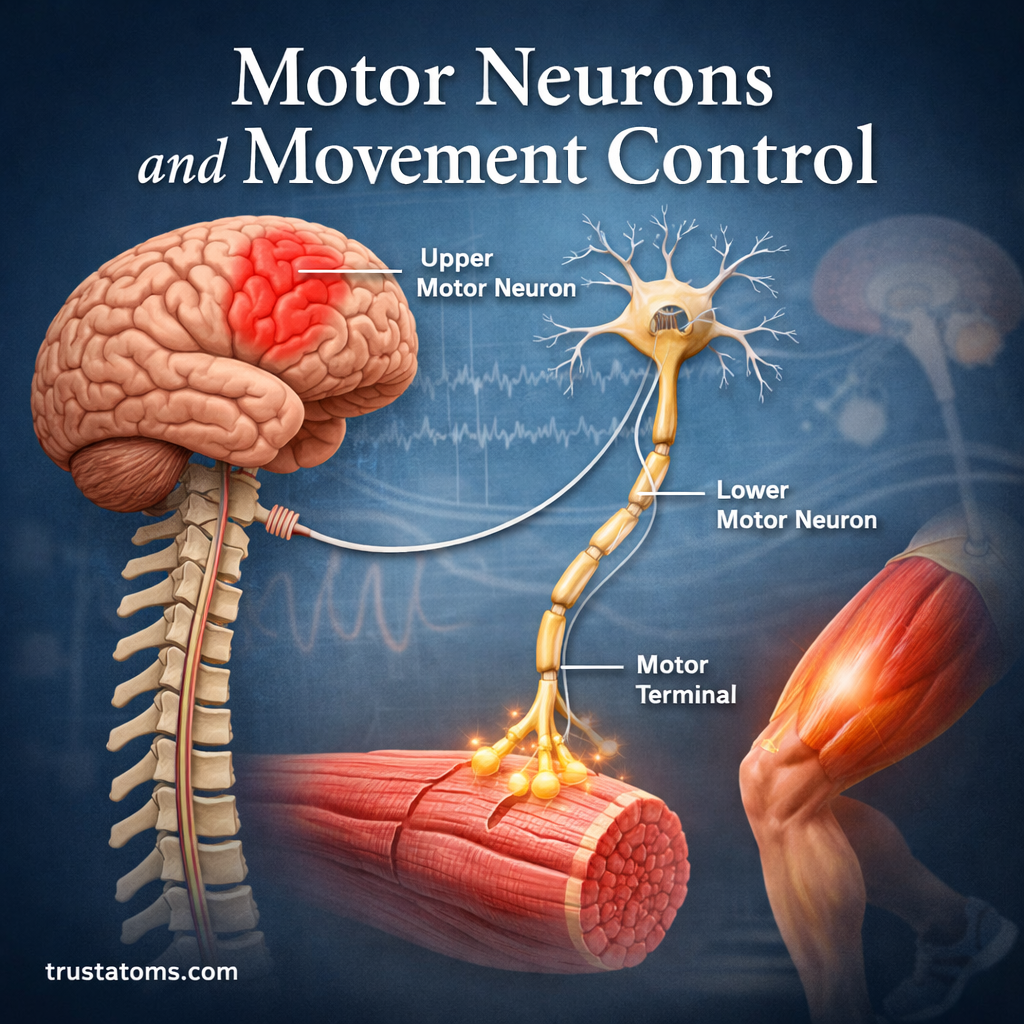
Neural signals from the brainstem control key muscles involved in breathing.
Primary Muscles
- Diaphragm – main muscle for inhalation
- Intercostal muscles – assist in expanding and contracting the chest
Neural Pathways
- Signals travel through the spinal cord
- Motor neurons activate respiratory muscles
- Muscle contractions change lung volume
This coordination allows efficient airflow in and out of the lungs.
Sensory Feedback and Regulation
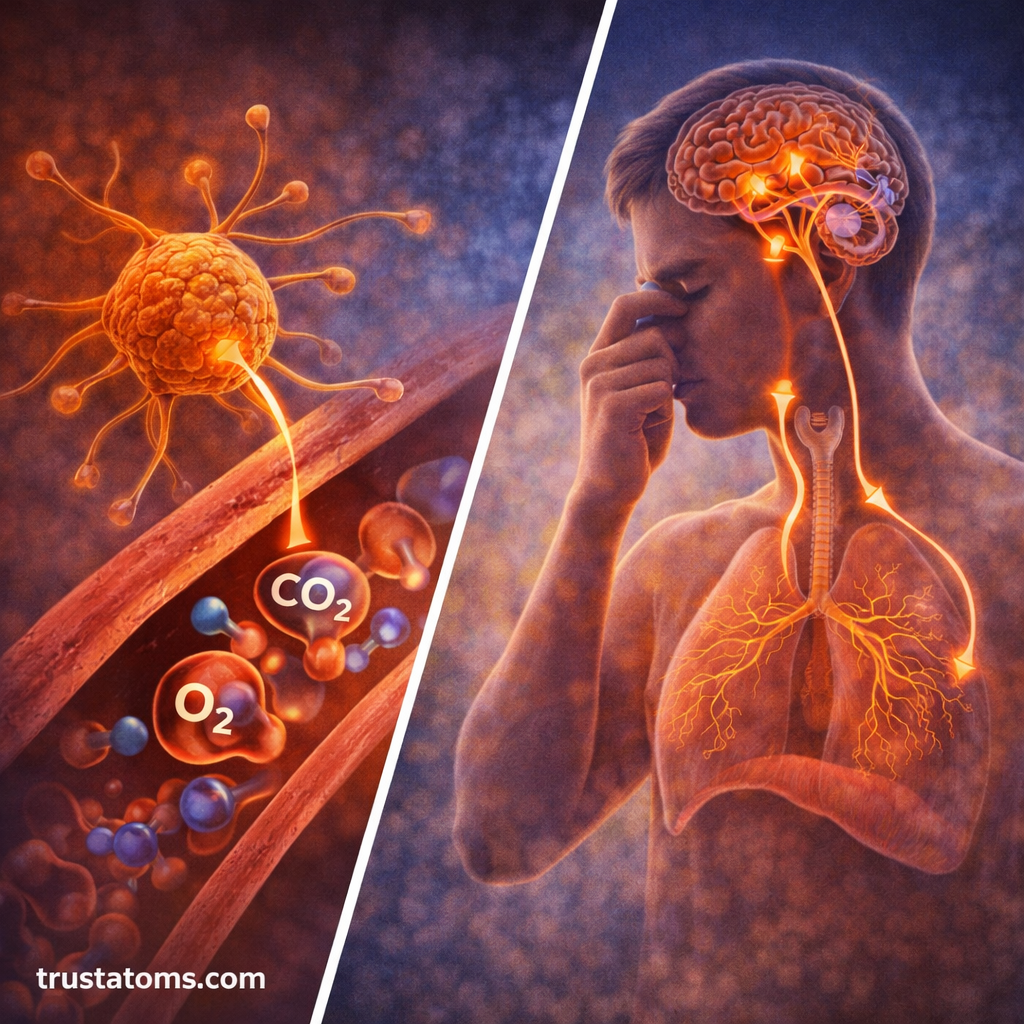
Breathing is constantly adjusted based on feedback from the body.
Chemoreceptors
These receptors detect changes in blood chemistry.
- Monitor carbon dioxide (CO₂) levels
- Monitor oxygen (O₂) levels
- Detect blood pH
Response to CO₂ Levels
Carbon dioxide is the primary driver of breathing.
- High CO₂ levels → increased breathing rate
- Low CO₂ levels → decreased breathing rate
This helps maintain proper gas balance in the blood.
Voluntary Control of Breathing
Although breathing is automatic, it can also be consciously controlled.
Examples of Voluntary Control
- Holding your breath
- Speaking or singing
- Controlled breathing during exercise
- Breathing techniques in meditation
Brain Involvement
- The cerebral cortex allows conscious control
- Overrides automatic breathing temporarily
However, automatic control eventually resumes if necessary (e.g., during prolonged breath-holding).
Breathing During Exercise
Physical activity significantly affects breathing patterns.
Changes During Exercise
- Increased breathing rate
- Deeper breaths
- Greater oxygen demand
- Faster removal of carbon dioxide
Neural Coordination
- Signals from muscles and joints inform the brain
- The brain adjusts respiratory output accordingly
This ensures the body meets increased energy demands.
Breathing During Sleep
Breathing patterns change during sleep but remain automatic.
Key Features
- Reduced breathing rate
- Decreased metabolic demand
- Continued brainstem control
In certain sleep stages, breathing may become irregular, but it remains regulated by neural circuits.
Clinical Significance
Disruptions in neural control of breathing can lead to serious health issues.
Respiratory Disorders
- Sleep apnea (interrupted breathing during sleep)
- Central hypoventilation (reduced neural drive to breathe)
- Chronic respiratory diseases
Neurological Conditions
- Brainstem injuries can impair breathing control
- Neurodegenerative diseases may affect respiratory function
Emergency Situations
- Damage to respiratory centers can be life-threatening
- Mechanical ventilation may be required
Factors That Influence Breathing Control
Several factors can affect how breathing is regulated.
Internal Factors
- Blood gas levels (O₂ and CO₂)
- pH balance
- Body temperature
External Factors
- Altitude
- Physical activity
- Air quality
Lifestyle Influences
- Fitness level
- Smoking
- Stress levels
Healthy habits support efficient respiratory control.
Key Takeaways
- Breathing is controlled by neural circuits in the brainstem
- The medulla generates the basic breathing rhythm
- The pons refines and stabilizes breathing patterns
- Central pattern generators produce automatic respiratory cycles
- Chemoreceptors regulate breathing based on CO₂ and O₂ levels
- Breathing can be both automatic and voluntary
- Proper neural control is essential for survival
Final Thoughts
The neural control of breathing is a powerful example of how the body balances automatic function with voluntary control. Without conscious effort, your brain continuously adjusts breathing to meet your body’s needs—whether you are resting, exercising, or sleeping.
By understanding how this system works, we gain insight into both normal respiratory function and the importance of maintaining healthy neural and respiratory systems.