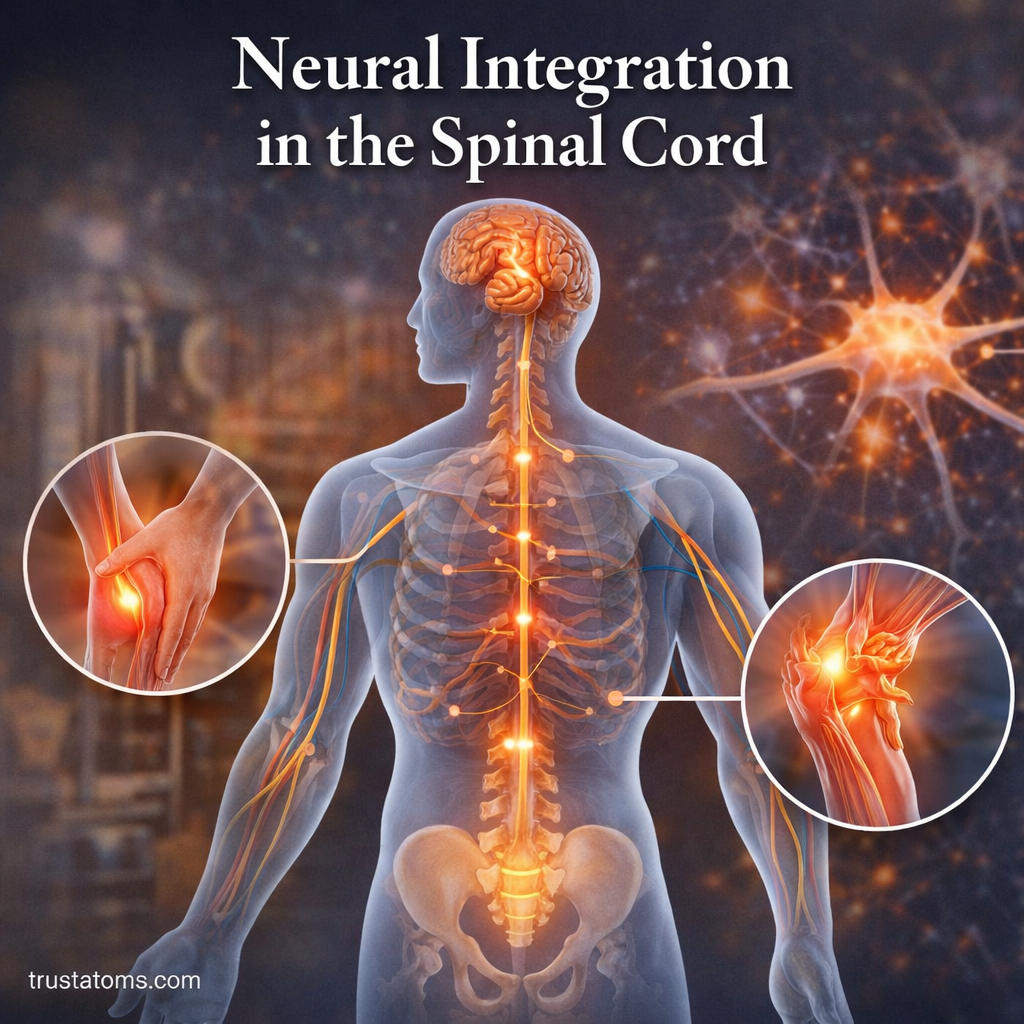
The spinal cord is more than just a pathway that carries signals between the brain and the body. It also acts as an important processing center that integrates sensory information and coordinates motor responses.
Neural integration in the spinal cord allows the body to respond quickly to stimuli, maintain posture, and coordinate movement without always needing direct involvement from the brain. This ability is especially important for reflexes and rapid protective responses.
Understanding how the spinal cord processes and integrates neural signals helps explain how the nervous system manages both automatic and voluntary actions.
What Is Neural Integration?
Neural integration refers to the process of combining and processing information from multiple neurons to generate an appropriate response.
Within the spinal cord, this integration occurs when:
- Sensory neurons deliver information from the body
- Interneurons process and interpret that information
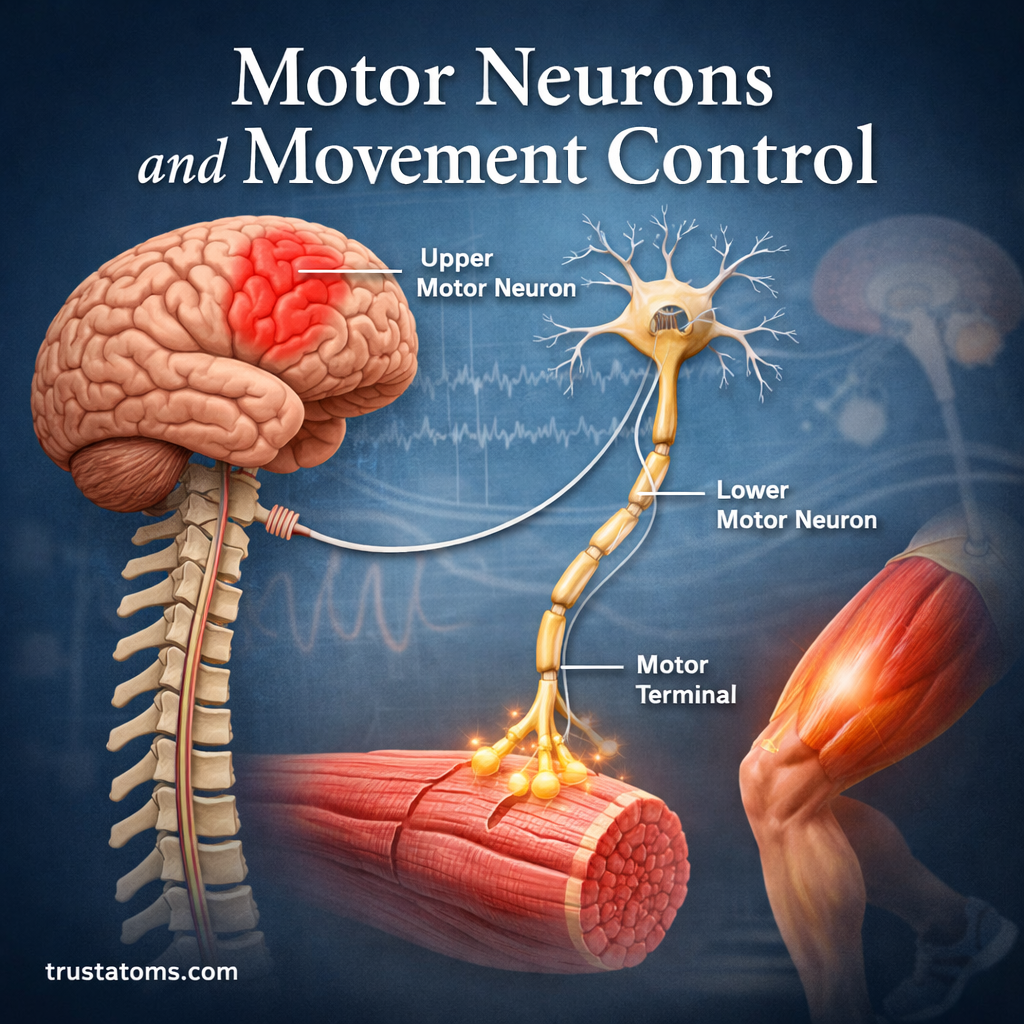
- Motor neurons send commands to muscles or glands
This system allows the spinal cord to act as a local decision-making center, producing fast responses that help maintain safety and stability.
Basic Structure of the Spinal Cord
The spinal cord extends from the base of the brain down through the vertebral column. It is divided into several regions:
- Cervical
- Thoracic
- Lumbar
- Sacral
- Coccygeal
Each region contains spinal nerves that connect the central nervous system to specific parts of the body.
Inside the spinal cord, two main types of tissue play key roles in neural integration.
Gray Matter
Gray matter forms the inner region of the spinal cord and contains:
- Neuron cell bodies
- Interneurons
- Synapses where signals are processed
This is where most neural integration occurs.
White Matter
White matter surrounds the gray matter and contains bundles of nerve fibers called tracts.
These tracts carry signals:
- Upward to the brain (ascending pathways)
- Downward from the brain (descending pathways)
While white matter mainly transmits signals, gray matter processes them.
The Role of Interneurons
Interneurons are specialized neurons located entirely within the central nervous system.
They play a critical role in spinal cord integration by:
- Connecting sensory neurons to motor neurons
- Processing incoming signals
- Coordinating complex reflex responses
A single sensory signal may activate multiple interneurons, which allows the spinal cord to organize coordinated movements across several muscles.
Interneurons make spinal processing highly efficient and flexible.
Sensory Input and Signal Processing
Neural integration begins when sensory receptors detect changes in the body or environment.
Examples of sensory inputs include:
- Touch
- Temperature
- Pain
- Muscle stretch
- Joint movement
These signals travel along sensory neurons into the spinal cord through the dorsal root.
Once inside the spinal cord, sensory signals may:
- Travel upward to the brain for conscious perception
- Trigger a reflex through local spinal circuits
- Influence motor control signals
This layered processing allows the nervous system to balance speed and accuracy in responding to stimuli.
Motor Output and Response Coordination
After sensory information is processed, the spinal cord generates appropriate responses through motor neurons.
Motor neurons exit the spinal cord through the ventral root and transmit signals to muscles.
Motor responses may include:
- Muscle contraction
- Muscle relaxation
- Postural adjustments
- Protective withdrawal movements
Because the spinal cord integrates signals locally, these responses can occur much faster than if the brain handled every decision.
Reflex Arcs: A Key Example of Spinal Integration
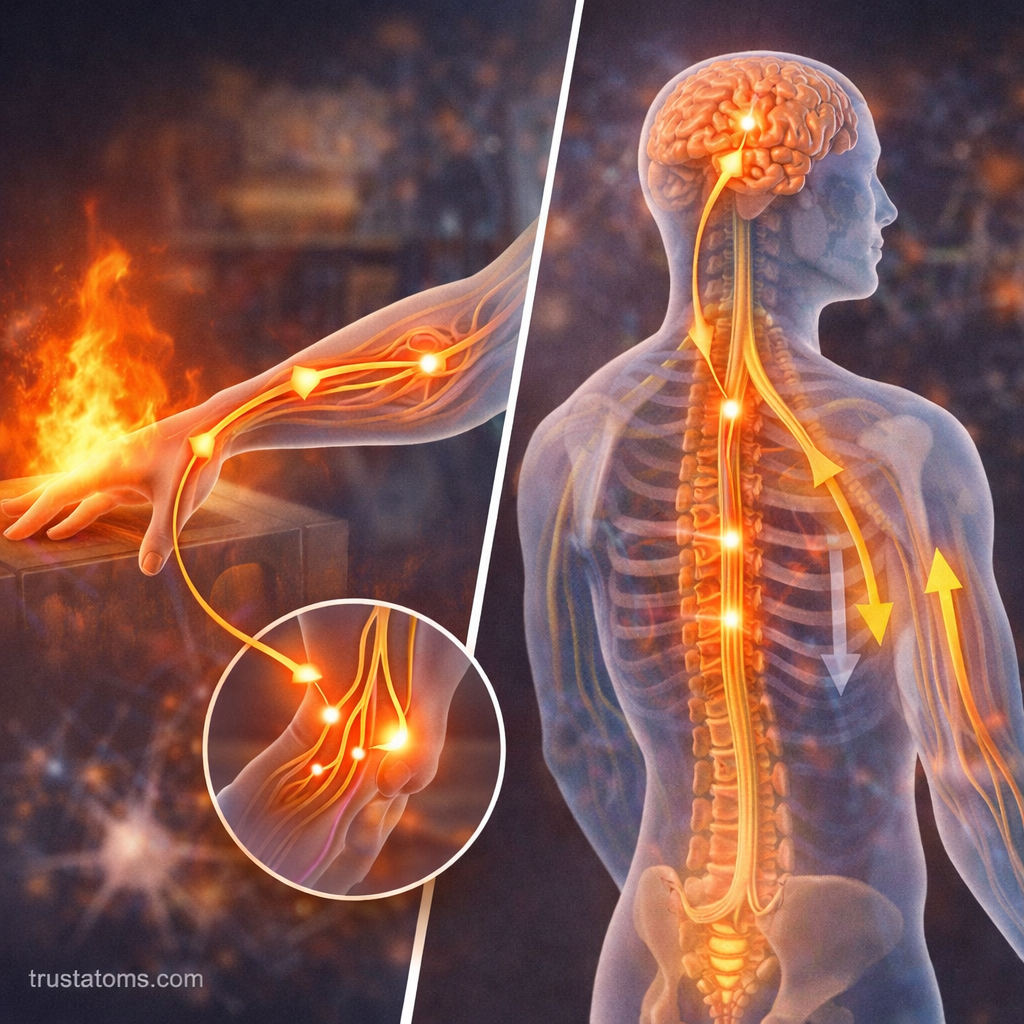
One of the most well-known examples of spinal cord integration is the reflex arc.
A reflex arc is a rapid, automatic response to a stimulus that occurs without conscious brain involvement.
Steps in a Reflex Arc
- A receptor detects a stimulus (such as heat or pain)
- A sensory neuron carries the signal to the spinal cord
- Interneurons process the signal
- Motor neurons send commands to muscles
- The body produces a quick response
For example, when you touch a hot surface, the spinal cord immediately triggers a withdrawal reflex that pulls your hand away before the brain fully processes the pain.
Types of Spinal Reflexes
Several reflex types demonstrate how the spinal cord integrates neural signals.
Stretch Reflex
The stretch reflex helps maintain muscle length and posture.
Examples include:
- The knee-jerk reflex during a medical exam
- Automatic muscle adjustments during standing
This reflex prevents muscles from overstretching.
Withdrawal Reflex
The withdrawal reflex removes a body part from a painful stimulus.
For example:
- Pulling your hand away from a hot object
- Stepping off a sharp object
This reflex protects the body from injury.
Crossed-Extensor Reflex
This reflex works together with the withdrawal reflex.
When one leg withdraws from pain, the opposite leg extends to maintain balance.
This coordination allows the body to stay upright even during sudden reactions.
Communication Between the Brain and Spinal Cord
Although the spinal cord can process many responses independently, it constantly communicates with the brain.
Ascending pathways send sensory information to the brain for:
- Conscious perception
- Decision-making
- Voluntary movement planning
Descending pathways send commands from the brain to:
- Control voluntary movement
- Adjust reflex sensitivity
- Coordinate complex motor actions
This two-way communication allows both automatic responses and conscious control to work together.
Why Neural Integration in the Spinal Cord Matters
Neural integration within the spinal cord is essential for efficient movement and survival.
This system allows the body to:
- React quickly to danger
- Maintain posture and balance
- Coordinate complex muscle movements
- Reduce the workload on the brain
- Support both reflex and voluntary actions
Without spinal integration, the nervous system would be much slower and less capable of managing rapid physical responses.
Final Thoughts
Neural integration in the spinal cord plays a crucial role in how the body processes sensory information and generates motor responses. By combining signals from sensory neurons, interneurons, and motor neurons, the spinal cord can quickly coordinate reflexes and movement.
This integration allows the nervous system to respond rapidly to environmental changes while still communicating with the brain for higher-level control. Through this balance of local processing and brain coordination, the spinal cord helps maintain safety, stability, and efficient movement throughout the body.