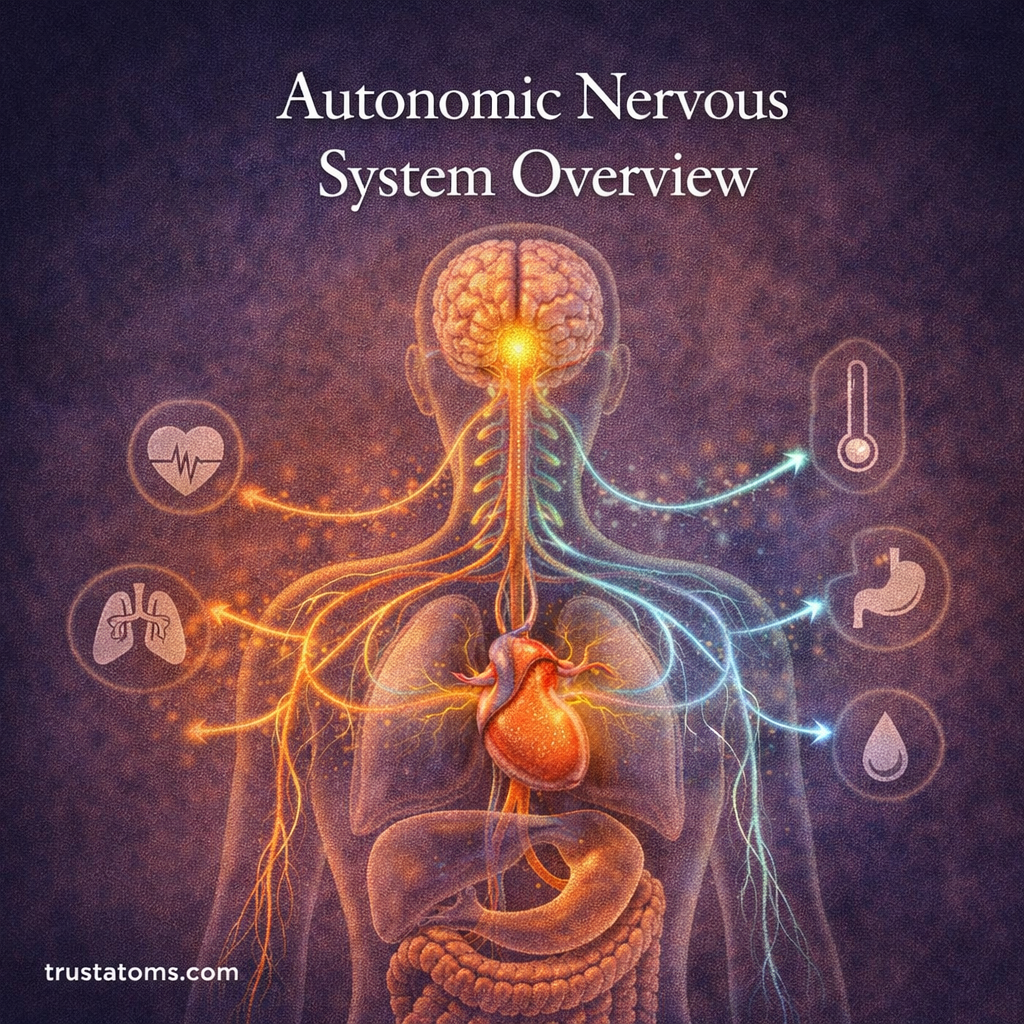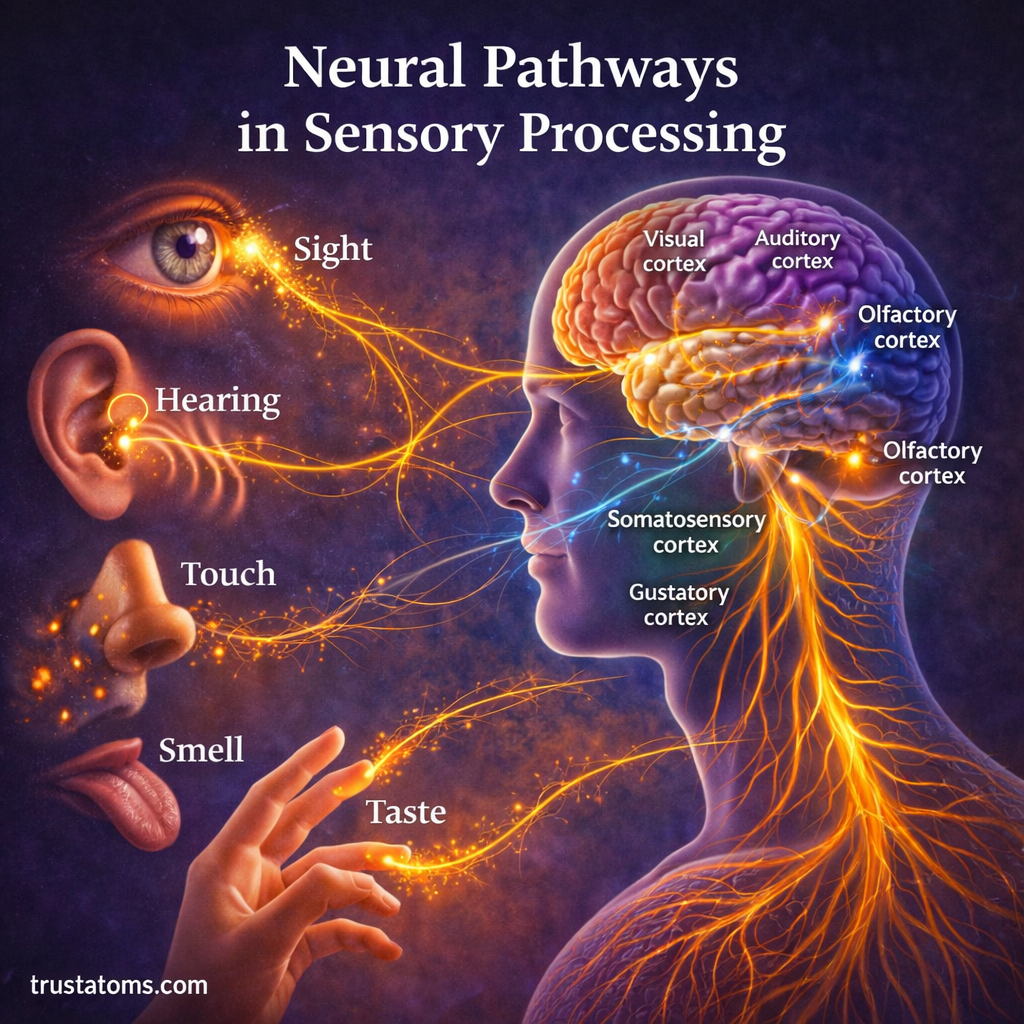
Every moment, the human body receives information from the environment through the senses. Light, sound, touch, temperature, smell, and taste all generate signals that travel through the nervous system to the brain.
These signals move through neural pathways, which are organized networks of neurons that transmit sensory information from receptors in the body to specific regions of the brain.
Neural pathways allow the brain to interpret sensory input, recognize patterns, and generate appropriate responses. Without these pathways, the brain would not be able to process the constant stream of information coming from the outside world.
What Are Neural Pathways?
Neural pathways are chains of connected neurons that carry signals from one part of the nervous system to another. In sensory processing, these pathways transmit signals from sensory receptors to the brain.
A typical sensory pathway includes:
- Sensory receptors that detect stimuli
- Sensory neurons that transmit signals
- Interneurons in the spinal cord or brain that process information
- Brain regions that interpret the signal
Each type of sensory information travels along specific pathways designed for that particular sense.
How Sensory Information Begins
Sensory processing starts when specialized cells called sensory receptors detect changes in the environment.
These receptors convert physical stimuli into electrical signals that neurons can transmit.
Examples of stimuli include:
- Light entering the eyes
- Vibrations detected by the ears
- Pressure on the skin
- Chemical molecules responsible for taste or smell
- Temperature changes
This process of converting physical stimuli into electrical signals is known as sensory transduction.
The Pathway From Receptors to the Brain
Once sensory receptors generate a signal, it travels through the nervous system along a structured pathway.
The typical sequence involves several steps.
1. Detection by Sensory Receptors
Specialized receptors located in sensory organs detect environmental stimuli.
Examples include:
- Photoreceptors in the retina
- Mechanoreceptors in the skin
- Hair cells in the inner ear
- Chemoreceptors in the nose and tongue
These receptors convert stimuli into electrical signals.
2. Transmission Through Sensory Neurons
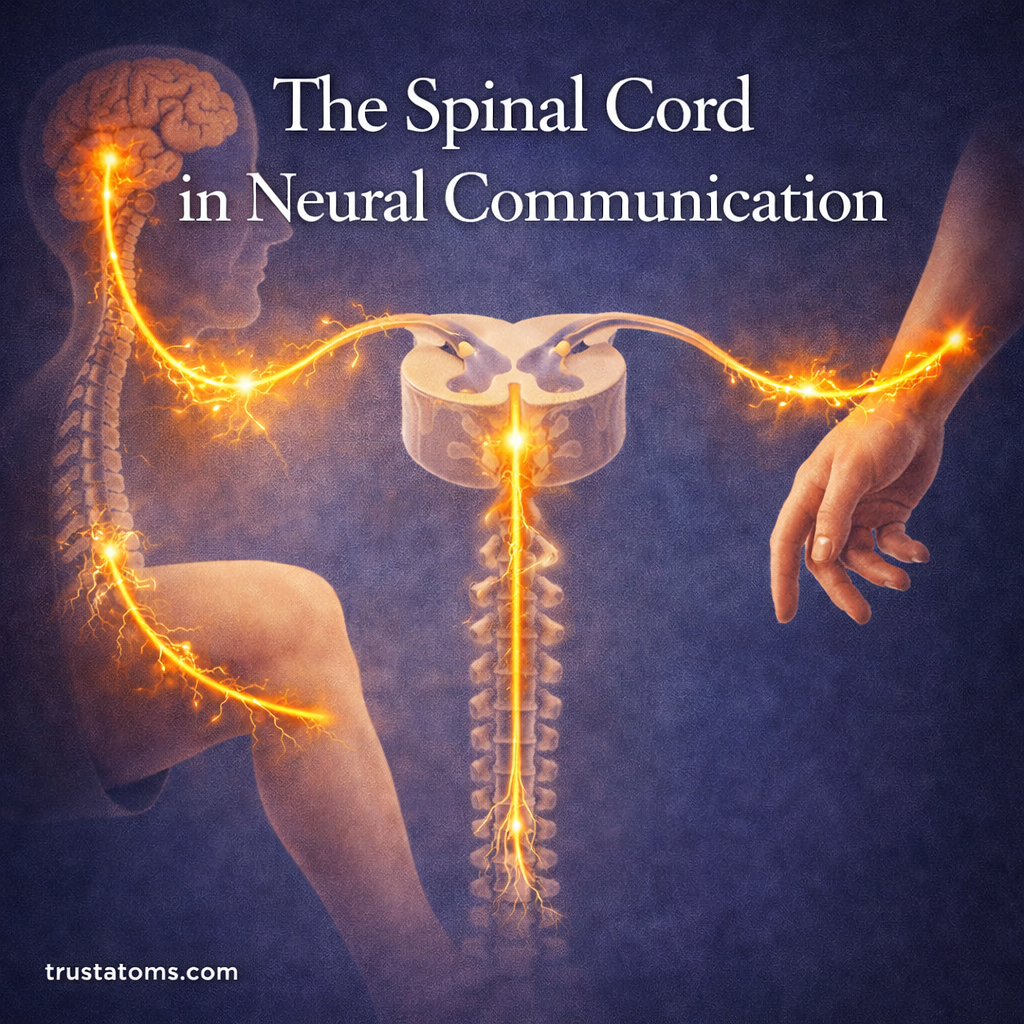
The electrical signals produced by receptors are carried by sensory neurons toward the central nervous system.
These neurons transmit information through peripheral nerves into the spinal cord or brainstem.
The signals travel rapidly, allowing the body to react quickly to changes in the environment.
3. Processing in the Spinal Cord or Brainstem
Some sensory signals are first processed in the spinal cord or brainstem before reaching higher brain centers.
This stage may involve:
- Reflex responses
- Initial signal filtering
- Routing information to appropriate brain regions
In some cases, reflex actions occur before the brain consciously perceives the stimulus.
4. Interpretation in the Brain
After passing through early processing centers, signals travel to specialized areas of the brain responsible for interpreting sensory information.
Important regions include:
- Visual cortex for sight
- Auditory cortex for sound
- Somatosensory cortex for touch and body position
- Olfactory cortex for smell
- Gustatory cortex for taste
These brain regions analyze the incoming signals and create the sensations we consciously experience.
Major Sensory Neural Pathways
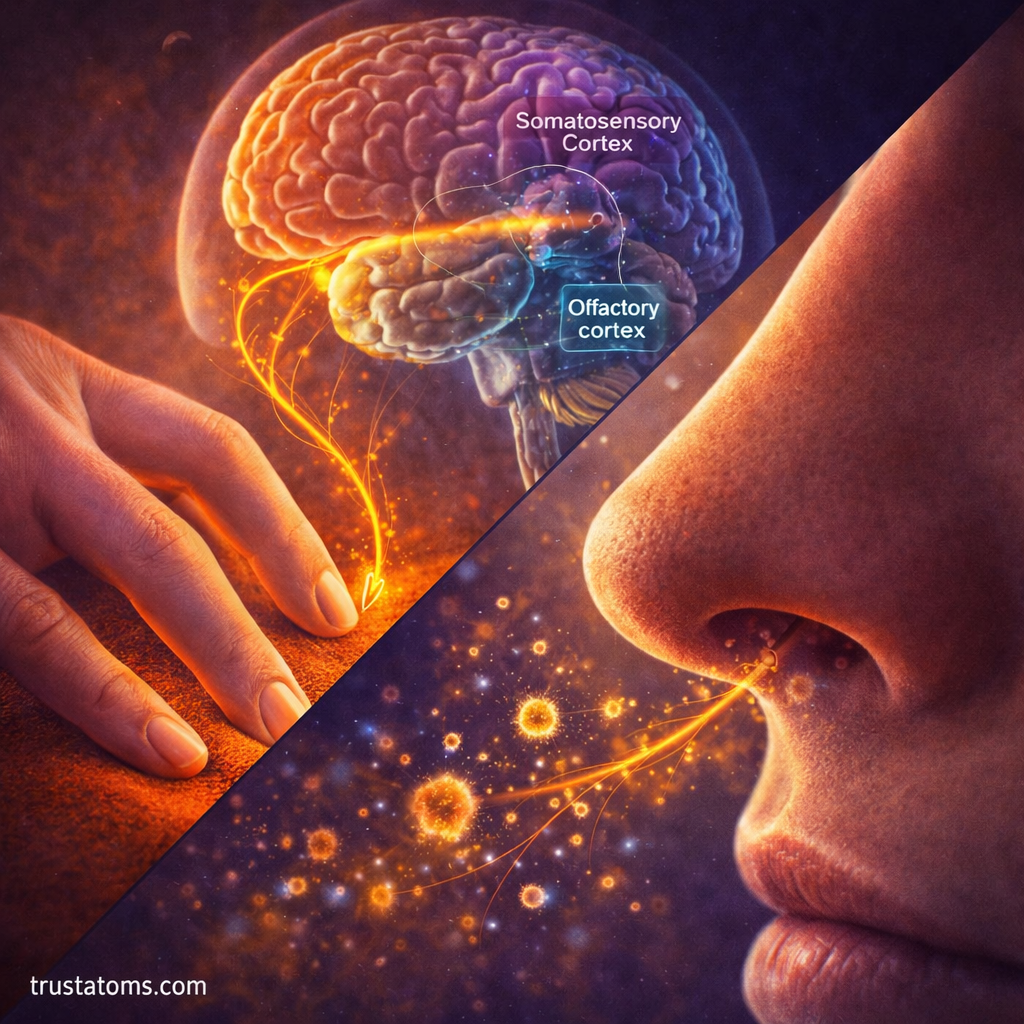
Different sensory systems rely on specialized neural pathways that transmit information to the brain.
Visual Pathway
The visual pathway carries signals from the eyes to the brain.
The sequence includes:
- Photoreceptors in the retina detect light
- Signals pass to retinal neurons
- Information travels through the optic nerve
- Signals reach the visual cortex in the occipital lobe
This pathway allows the brain to interpret images, motion, and color.
Auditory Pathway
The auditory pathway processes sound.
Key steps include:
- Sound vibrations enter the ear
- Hair cells in the inner ear convert vibrations into electrical signals
- Signals travel through the auditory nerve
- Information reaches the auditory cortex
This pathway allows the brain to recognize pitch, volume, and speech.
Somatosensory Pathway
The somatosensory system processes sensations from the body.
These include:
- Touch
- Pressure
- Pain
- Temperature
- Body position (proprioception)
Signals travel through sensory nerves to the spinal cord and then to the somatosensory cortex in the brain.
Olfactory Pathway
The olfactory system is responsible for the sense of smell.
Unlike most sensory pathways, smell signals travel directly to the brain without passing through the thalamus first.
Steps include:
- Odor molecules bind to receptors in the nasal cavity
- Signals travel through the olfactory nerve
- Information reaches the olfactory bulb and brain regions involved in smell perception
This pathway is closely linked to memory and emotion.
Gustatory Pathway
The gustatory system processes taste.
Taste receptors on the tongue detect five primary taste categories:
- Sweet
- Sour
- Salty
- Bitter
- Umami
Signals travel through cranial nerves to the brainstem and then to the gustatory cortex.
The Role of the Thalamus
The thalamus acts as a central relay station for most sensory signals traveling to the brain.
Its functions include:
- Routing sensory information to appropriate brain regions
- Filtering unnecessary signals
- Coordinating communication between brain areas
Almost all sensory signals pass through the thalamus before reaching the cerebral cortex, except for olfactory signals.
Integration of Sensory Information
The brain rarely processes sensory signals in isolation. Instead, it integrates multiple sources of sensory information to form a complete understanding of the environment.
For example, when interacting with an object, the brain may combine:
- Visual information about shape and color
- Tactile information about texture and temperature
- Auditory information from movement or impact
This integration allows the brain to interpret complex sensory experiences.
Neural Plasticity and Sensory Processing
Neural pathways are not fixed structures. The nervous system can adapt and reorganize its connections through a process known as neuroplasticity.
Neuroplasticity allows the brain to:
- Strengthen frequently used pathways
- Adapt to injury
- Learn new sensory skills
- Improve perception with practice
This adaptability is essential for learning and recovery after nervous system damage.
Why Neural Pathways Matter
Neural pathways play a critical role in how humans interact with the world.
They allow the nervous system to:
- Detect environmental stimuli
- Interpret sensory experiences
- Guide behavior and movement
- Maintain awareness of body position and surroundings
Disruptions in sensory pathways can affect perception and may lead to neurological conditions that alter how the brain processes sensory information.
Final Thoughts
Neural pathways are essential communication routes that allow sensory information to travel from receptors in the body to the brain. Through these pathways, the nervous system converts environmental stimuli into meaningful experiences.
By transmitting signals through specialized networks of neurons, the brain can interpret sights, sounds, textures, tastes, and smells. Understanding neural pathways in sensory processing provides insight into how the brain perceives and interacts with the world.