The human nervous system relies on precise communication between billions of neurons. While electrical signals travel along nerve cells, the actual communication between neurons happens chemically through substances called neurotransmitters. These chemical messengers allow the brain and nervous system to regulate everything from movement and mood to memory and attention.
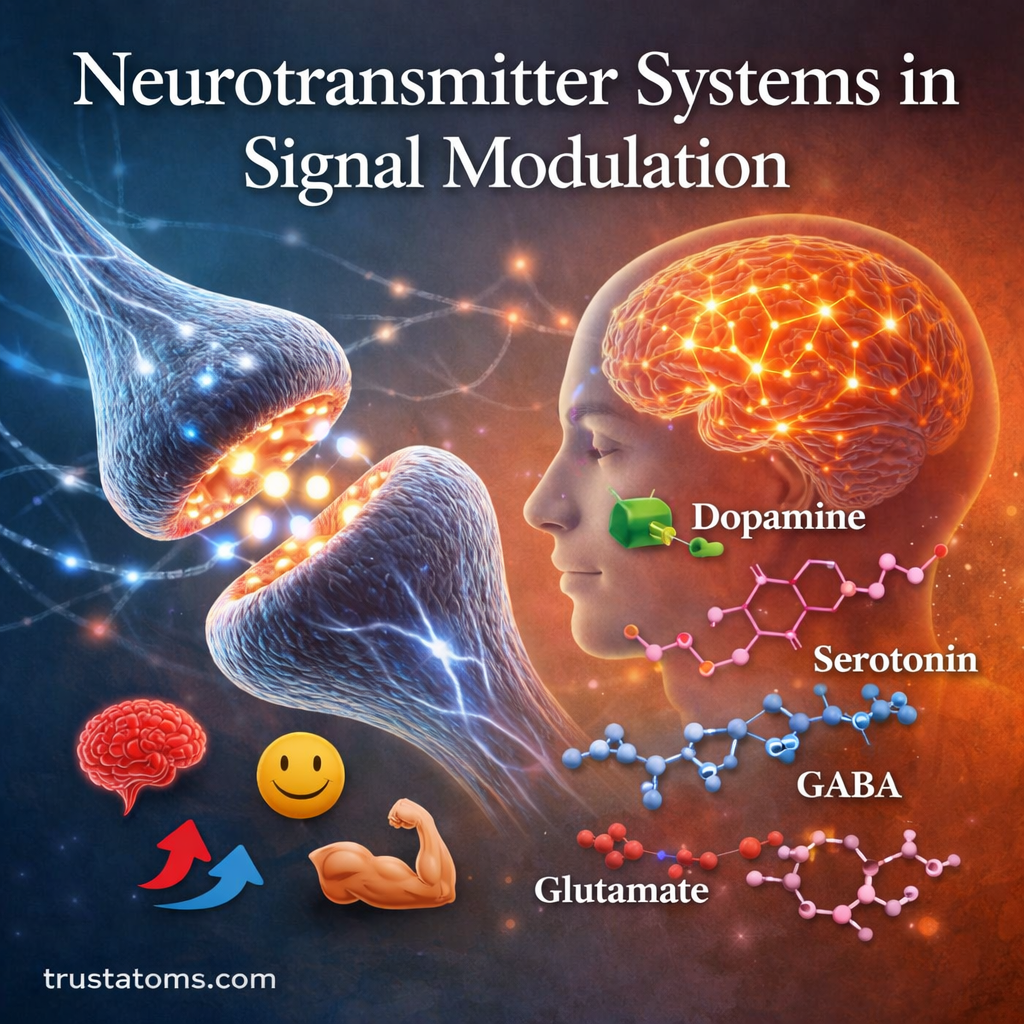
Neurotransmitter systems play a crucial role in signal modulation, meaning they influence how strongly or weakly signals are transmitted across neural networks. Rather than simply turning signals “on” or “off,” neurotransmitters fine-tune communication throughout the brain.
Understanding how these systems work helps explain many aspects of human behavior, cognition, and neurological health.
What Are Neurotransmitters?
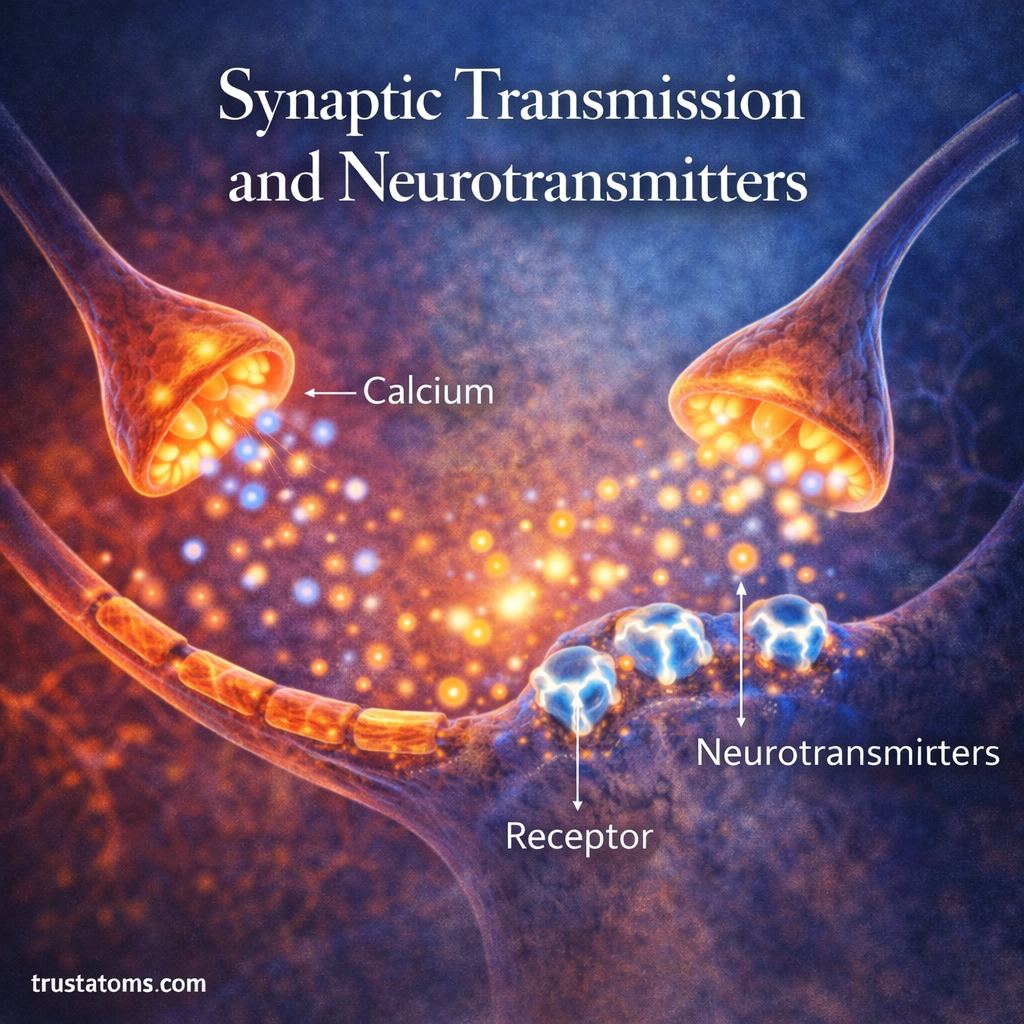
Neurotransmitters are chemical molecules released by neurons to transmit signals to other neurons, muscle cells, or glands. They travel across tiny gaps called synapses, which separate one neuron from another.
When an electrical impulse reaches the end of a neuron, neurotransmitters are released into the synapse. They then bind to receptors on the receiving cell, influencing whether that cell will continue transmitting the signal.
This process allows the nervous system to coordinate complex functions such as:
- Thinking and learning
- Muscle contraction
- Emotional responses
- Hormone regulation
- Sensory processing
The strength, speed, and duration of neural signals depend heavily on the neurotransmitter systems involved.
How Signal Modulation Works in the Nervous System
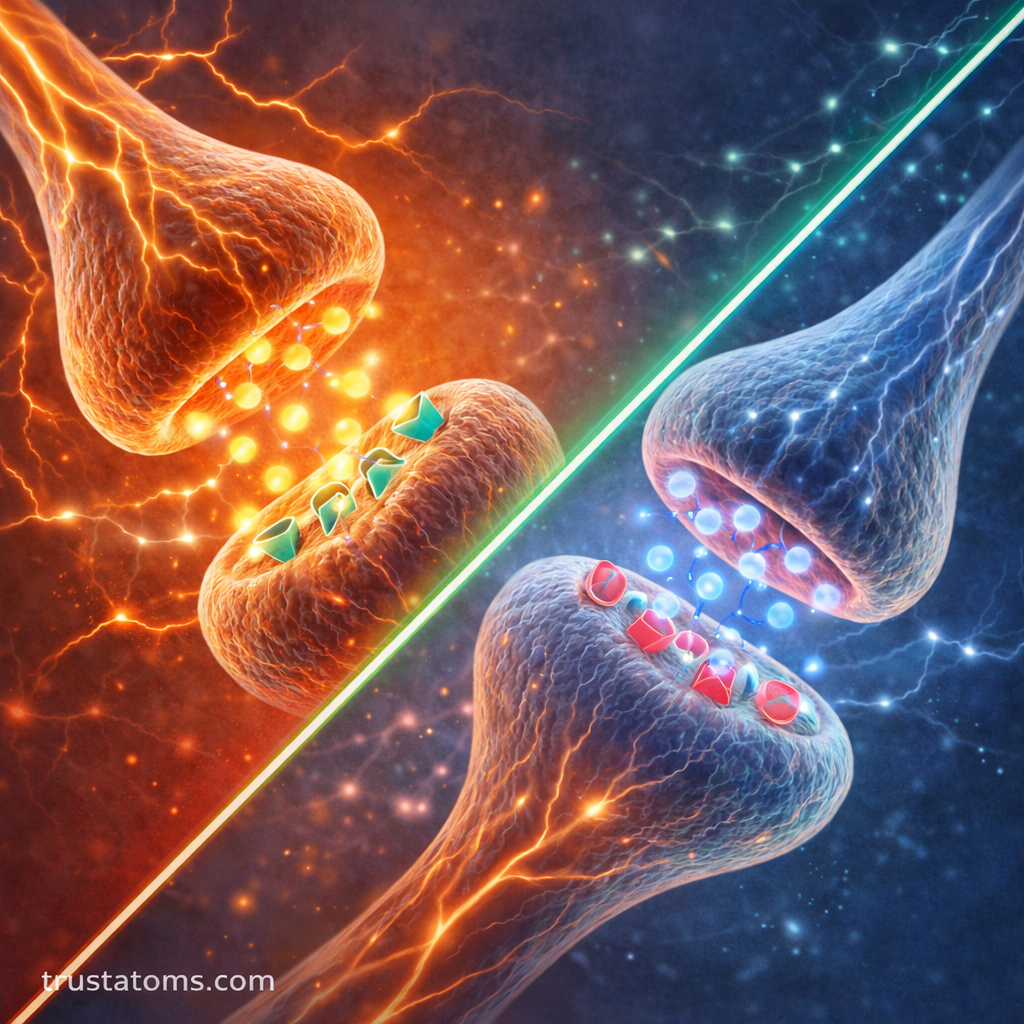
Signal modulation refers to the process of adjusting neural communication to control how signals spread through networks of neurons.
Neurotransmitters influence this process in several ways:
1. Excitation of Neurons
Some neurotransmitters increase the likelihood that a neuron will fire an electrical signal. These are known as excitatory neurotransmitters.
Their effects include:
- Increasing electrical activity in neurons
- Amplifying neural communication
- Promoting signal transmission across neural circuits
A common example is glutamate, the brain’s primary excitatory neurotransmitter.
2. Inhibition of Neural Activity
Other neurotransmitters reduce the probability that a neuron will send a signal. These are called inhibitory neurotransmitters.
Their role includes:
- Preventing excessive neural activity
- Stabilizing neural circuits
- Balancing excitatory signals
Gamma-aminobutyric acid (GABA) is the main inhibitory neurotransmitter in the central nervous system.
3. Neuromodulation
Some neurotransmitters do not directly excite or inhibit neurons. Instead, they modulate how neurons respond to other signals.
Neuromodulators often affect:
- Signal strength
- Synaptic sensitivity
- Long-term neural activity patterns
These systems influence attention, motivation, and emotional regulation.
Major Neurotransmitter Systems
Several major neurotransmitter systems operate throughout the brain and spinal cord. Each system involves neurons that produce a specific neurotransmitter and influence particular neural functions.
Dopamine System
The dopamine system is involved in motivation, reward, and movement control.
Key roles include:
- Regulating pleasure and reward pathways
- Supporting motor coordination
- Influencing learning and reinforcement
Dopamine neurons are concentrated in regions such as the substantia nigra and ventral tegmental area.
Serotonin System
Serotonin plays an important role in emotional regulation and overall brain balance.
Functions include:
- Mood stabilization
- Sleep regulation
- Appetite control
- Cognitive flexibility
Serotonin-producing neurons are primarily located in the raphe nuclei of the brainstem.
Norepinephrine System
Norepinephrine helps regulate alertness and the body’s response to stress.
Its effects include:
- Increasing attention and focus
- Enhancing vigilance
- Supporting the “fight-or-flight” response
This neurotransmitter is produced mainly in the locus coeruleus, a small structure in the brainstem.
Acetylcholine System
Acetylcholine is essential for learning, memory, and muscle activation.
Important roles include:
- Activating skeletal muscles
- Supporting attention and memory formation
- Modulating cortical activity in the brain
Acetylcholine neurons are found in both the central nervous system and the peripheral nervous system.
Glutamate System
Glutamate is the most abundant excitatory neurotransmitter in the brain.
Key functions include:
- Facilitating learning and memory
- Supporting synaptic plasticity
- Enabling rapid neural communication
It plays a central role in processes such as long-term potentiation, a mechanism associated with memory formation.
GABA System
GABA acts as the brain’s primary inhibitory neurotransmitter.
Its functions include:
- Preventing excessive neural firing
- Maintaining neural stability
- Promoting relaxation and calmness
Balanced GABA activity helps protect the brain from overstimulation.
Interaction Between Neurotransmitter Systems
Neurotransmitter systems rarely operate in isolation. Instead, they form complex networks that influence each other.
For example:
- Dopamine pathways interact with glutamate circuits in reward processing.
- Serotonin can influence dopamine activity in mood regulation.
- GABA helps balance excitatory glutamate signaling.
These interactions allow the brain to dynamically adjust neural communication depending on internal and external conditions.
Because of this interconnected structure, small changes in one neurotransmitter system can affect multiple brain functions.
Neurotransmitters and Brain Plasticity
Neurotransmitter systems also contribute to neuroplasticity, the brain’s ability to reorganize and adapt over time.
This includes processes such as:
- Learning new skills
- Forming memories
- Adapting to environmental changes
- Recovering from neural injury
Glutamate and dopamine are particularly important for plasticity because they influence how synapses strengthen or weaken with experience.
Neurotransmitter Imbalances and Health
Balanced neurotransmitter activity is essential for normal brain function. Disruptions in these systems can affect neural communication and contribute to neurological or psychological conditions.
Examples of associations include:
- Dopamine imbalance in Parkinson’s disease
- Serotonin disruptions linked to mood disorders
- Reduced acetylcholine activity in Alzheimer’s disease
- Altered GABA signaling in seizure disorders
Research continues to explore how neurotransmitter systems influence brain health and behavior.
Final Thoughts
Neurotransmitter systems form the chemical foundation of neural communication. By modulating signals across synapses, these chemical messengers regulate how neurons interact and coordinate complex biological processes.
Through excitatory, inhibitory, and modulatory effects, neurotransmitters shape everything from movement and attention to emotion and learning. Their interactions across neural networks enable the brain to maintain balance, adapt to new experiences, and respond to changing environments.
Understanding these systems provides important insight into how the nervous system functions and why chemical signaling is essential for human cognition and behavior.