Digestion doesn’t end when food is broken down. The real goal is absorption—getting nutrients from your digestive system into your bloodstream so your body can use them.
In this guide, you’ll learn how nutrients move from the intestines into the blood, the pathways involved, and why this process is essential for energy, growth, and overall health.
What Is Nutrient Absorption?
Nutrient absorption is the process by which digested food molecules pass through the intestinal wall and enter circulation.
Where absorption occurs:
- Primarily in the small intestine
- Specifically in structures called villi and microvilli
What gets absorbed:
- Carbohydrates (as glucose)
- Proteins (as amino acids)
- Fats (as fatty acids and monoglycerides)
- Vitamins and minerals
- Water
This process allows nutrients to reach cells throughout the body.
Structure of the Small Intestine
The small intestine is specially designed for efficient absorption.
Key features:
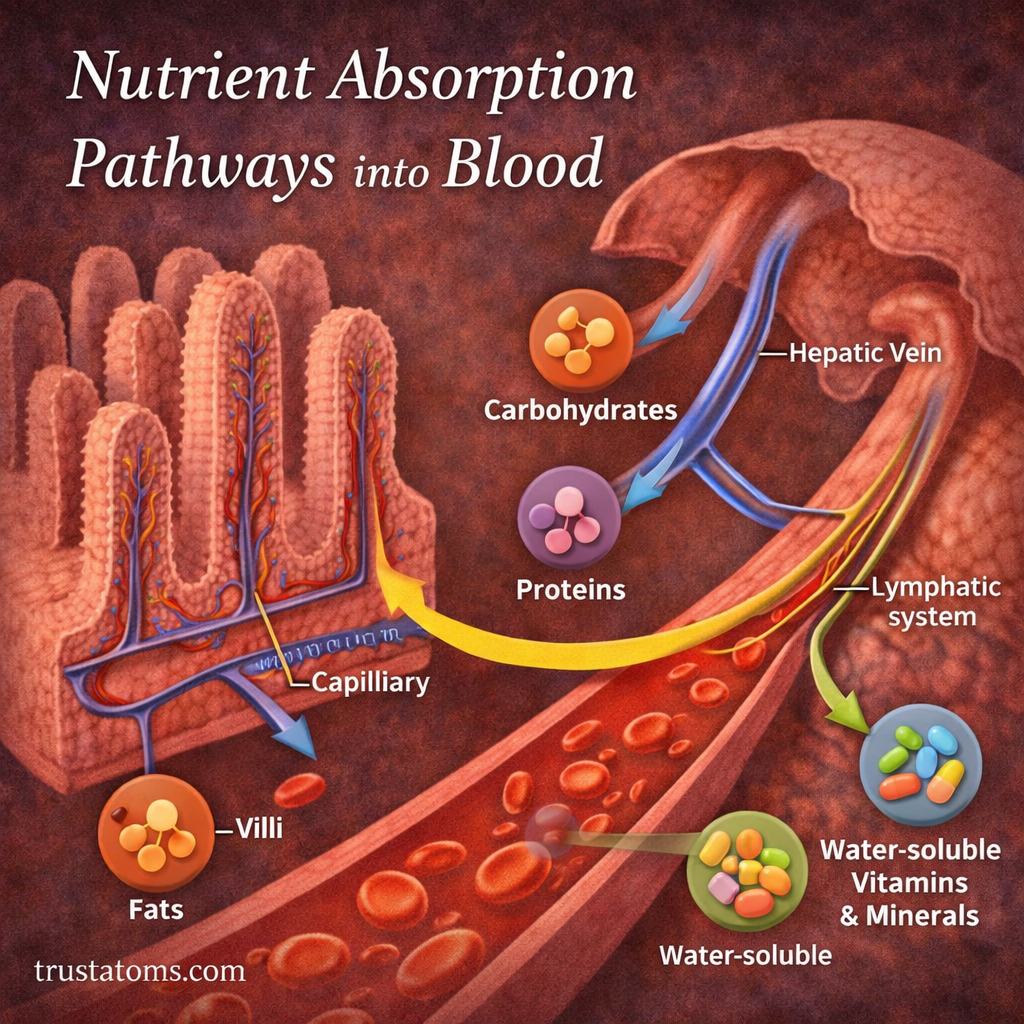
- Villi: Finger-like projections that increase surface area
- Microvilli: Tiny extensions on cells that further expand surface area
- Capillaries: Small blood vessels inside villi
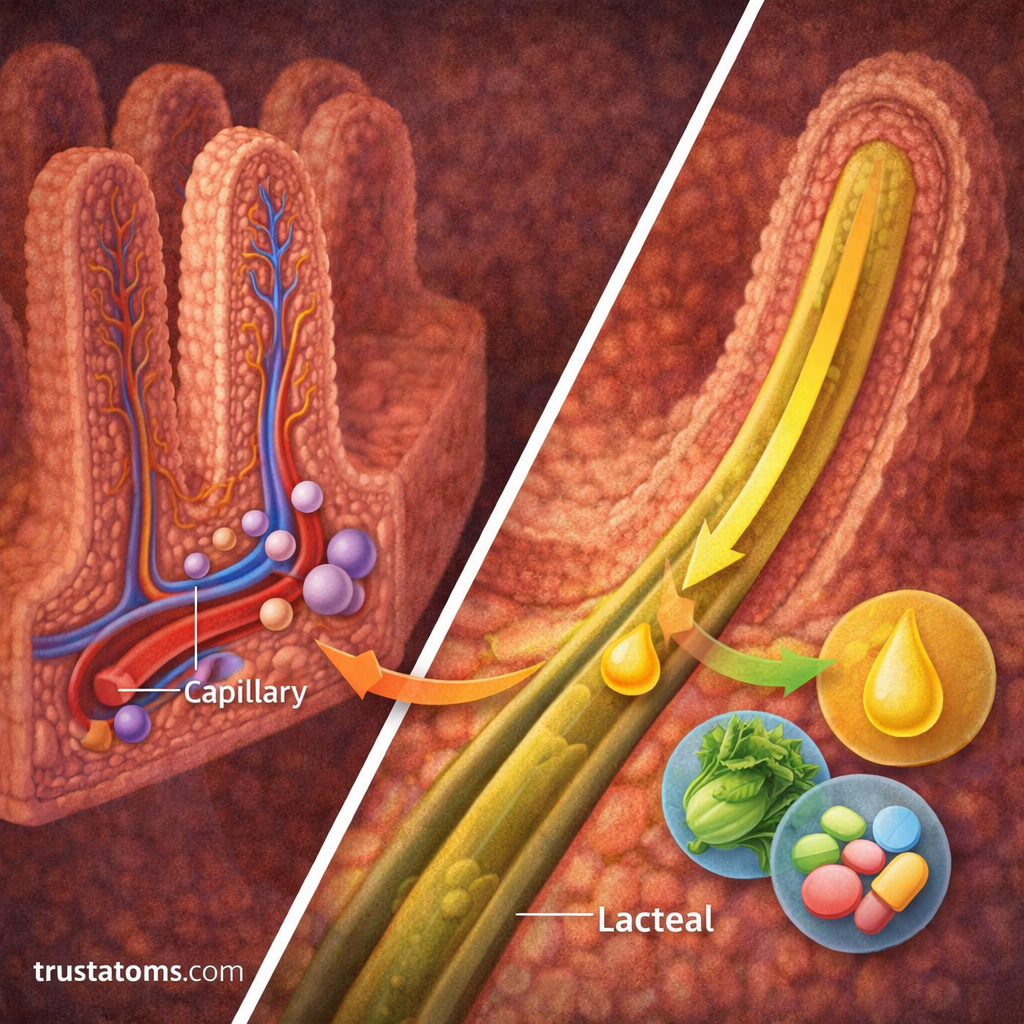
- Lacteals: Lymphatic vessels for fat absorption
This structure maximizes the body’s ability to absorb nutrients quickly and efficiently.
How Nutrients Enter the Bloodstream
Different nutrients use different pathways to enter circulation.
General process:
- Nutrients reach the small intestine after digestion
- They pass through the intestinal lining
- Enter either blood capillaries or lymphatic vessels
- Are transported to the liver or bloodstream
- Distributed to cells for use
Carbohydrate Absorption Pathway
Carbohydrates are broken down into simple sugars like glucose.
How they enter the blood:
- Absorbed through intestinal cells
- Enter capillaries within villi
- Transported via the hepatic portal vein
- Delivered directly to the liver
Why the liver matters:
The liver regulates blood sugar levels before nutrients enter general circulation.
Protein Absorption Pathway
Proteins are broken down into amino acids.
Absorption process:
- Amino acids pass through intestinal cells
- Enter capillaries in the villi
- Travel through the hepatic portal vein
- Processed by the liver
These amino acids are then used to build and repair tissues.
Fat Absorption Pathway
Fat absorption is more complex than other nutrients.
Step-by-step:
- Fats are broken into fatty acids and monoglycerides
- They enter intestinal cells
- Reassembled into triglycerides
- Packaged into chylomicrons
- Enter lacteals (lymphatic vessels)
- Travel through the lymphatic system
- Eventually enter the bloodstream
Key difference:
Unlike carbohydrates and proteins, fats bypass the liver initially and enter circulation via the lymphatic system.
Vitamin and Mineral Absorption
Vitamins and minerals follow different absorption pathways depending on their type.
Fat-soluble vitamins (A, D, E, K):
- Absorbed with fats
- Enter lymphatic system
Water-soluble vitamins (B, C):
- Enter directly into the bloodstream
Minerals:
- Absorbed through specialized transport mechanisms
- Enter blood circulation
Each nutrient type uses the most efficient pathway for absorption.
The Role of the Liver in Nutrient Distribution
The liver acts as a processing center for absorbed nutrients.
Key functions:
- Regulates glucose levels
- Stores vitamins and minerals
- Detoxifies harmful substances
- Distributes nutrients to the body
Nearly all nutrients (except most fats initially) pass through the liver first.
What Affects Nutrient Absorption?
Several factors can influence how well your body absorbs nutrients.
Key factors:
- Health of the intestinal lining
- Enzyme availability
- Blood flow to the intestines
- Presence of digestive disorders
- Diet composition
Poor absorption can lead to deficiencies and health issues.
Why Nutrient Absorption Is Essential
Without proper absorption, your body cannot use the nutrients you consume.
Key benefits:
- Provides energy for daily activities
- Supports growth and repair
- Maintains immune function
- Regulates body processes
Efficient absorption is just as important as proper digestion.
Final Thoughts
Nutrient absorption pathways are a critical part of the digestive process, allowing your body to take in and use essential nutrients. From the small intestine to the bloodstream, this system ensures that what you eat is transformed into energy, structure, and function.
Understanding these pathways helps highlight how interconnected digestion and overall health truly are.