What Is Resonance?

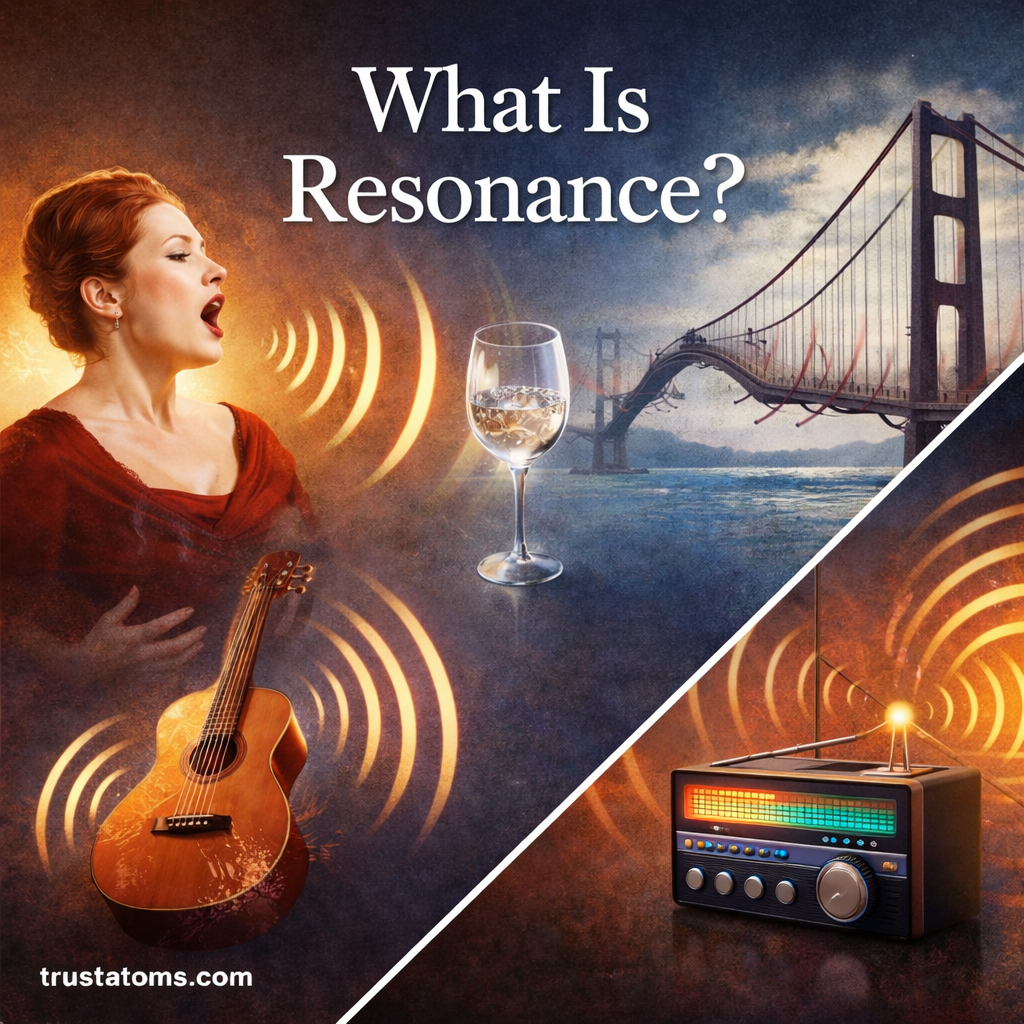
Illustration showing resonance with a singer causing a glass to vibrate, a swaying bridge, a guitar body amplifying sound, and a radio tuned to a frequency.
Visual explanation of resonance showing amplified vibrations in sound, structures, and radio tuning. trustatoms.com

Resonance is the phenomenon that occurs when an object vibrates at its natural frequency after being exposed to matching vibrations from an external source.

In simple terms:

When something is pushed at just the right rhythm, it vibrates more strongly.

Resonance explains why a singer can shatter glass, why bridges can wobble dramatically, and why musical instruments produce rich sound.

In this guide, you’ll learn:

  • What resonance means in physics
  • What natural frequency is
  • Everyday examples
  • Why resonance can be powerful — and sometimes dangerous
  • How resonance is used in science and engineering
Continue reading “What Is Resonance?”

What Is the Doppler Effect?

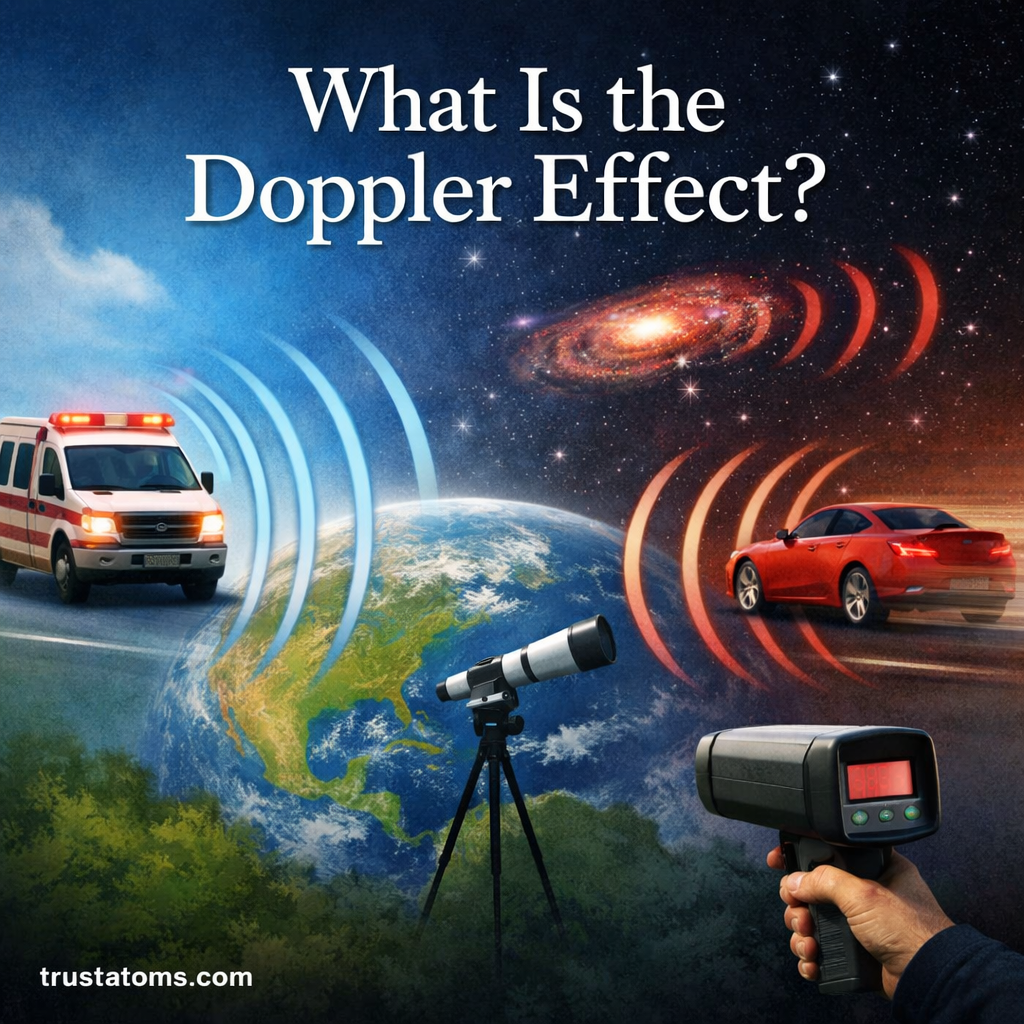
Illustrated diagram explaining the Doppler Effect with compressed waves in front of a moving ambulance and stretched waves behind a moving car, showing frequency shift.
Illustration demonstrating the Doppler Effect with compressed and stretched waves from moving objects. trustatoms.com

The Doppler Effect is the change in frequency (or wavelength) of a wave as the source of the wave and the observer move relative to each other.

You’ve experienced it many times — even if you didn’t realize it.

When an ambulance drives past you, the siren sounds higher-pitched as it approaches and lower-pitched as it moves away. That shift in sound is the Doppler Effect in action.

In this guide, you’ll learn:

  • What the Doppler Effect is
  • Why it happens
  • Real-life examples
  • How it applies to sound and light
  • Why it matters in astronomy, weather, and medicine
Continue reading “What Is the Doppler Effect?”

Types of Waves in Physics

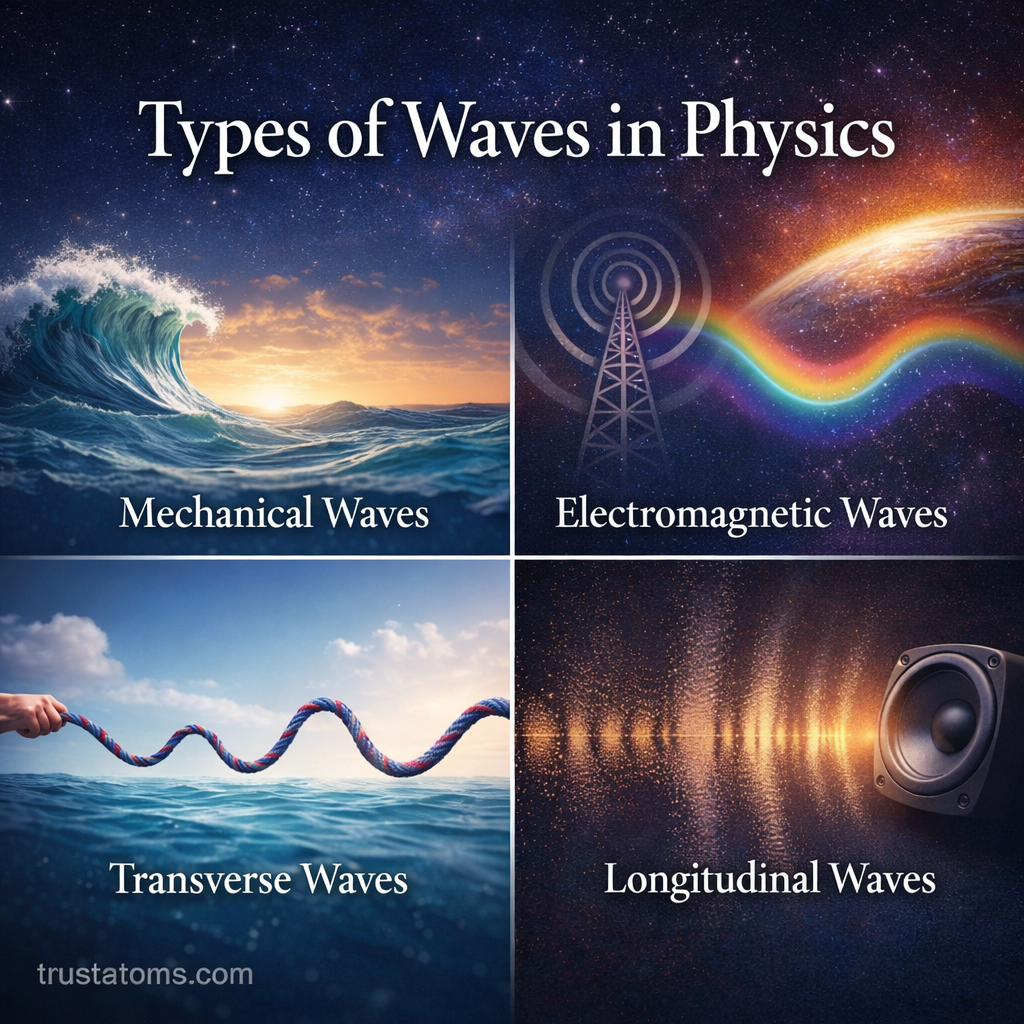
Illustration showing types of waves in physics including mechanical waves, electromagnetic waves, transverse waves, and longitudinal waves.
Visual overview of the main types of waves in physics. trustatoms.com

Waves are one of the most important concepts in physics because they explain how energy travels through space and matter.

From ocean swells and sound vibrations to light from distant stars, waves allow energy to move without permanently transporting material.

In this guide, you’ll learn:

  • The main types of waves in physics
  • How waves are classified
  • Real-world examples of each type
  • Why understanding wave types matters
Continue reading “Types of Waves in Physics”

What Is a Wave in Physics?

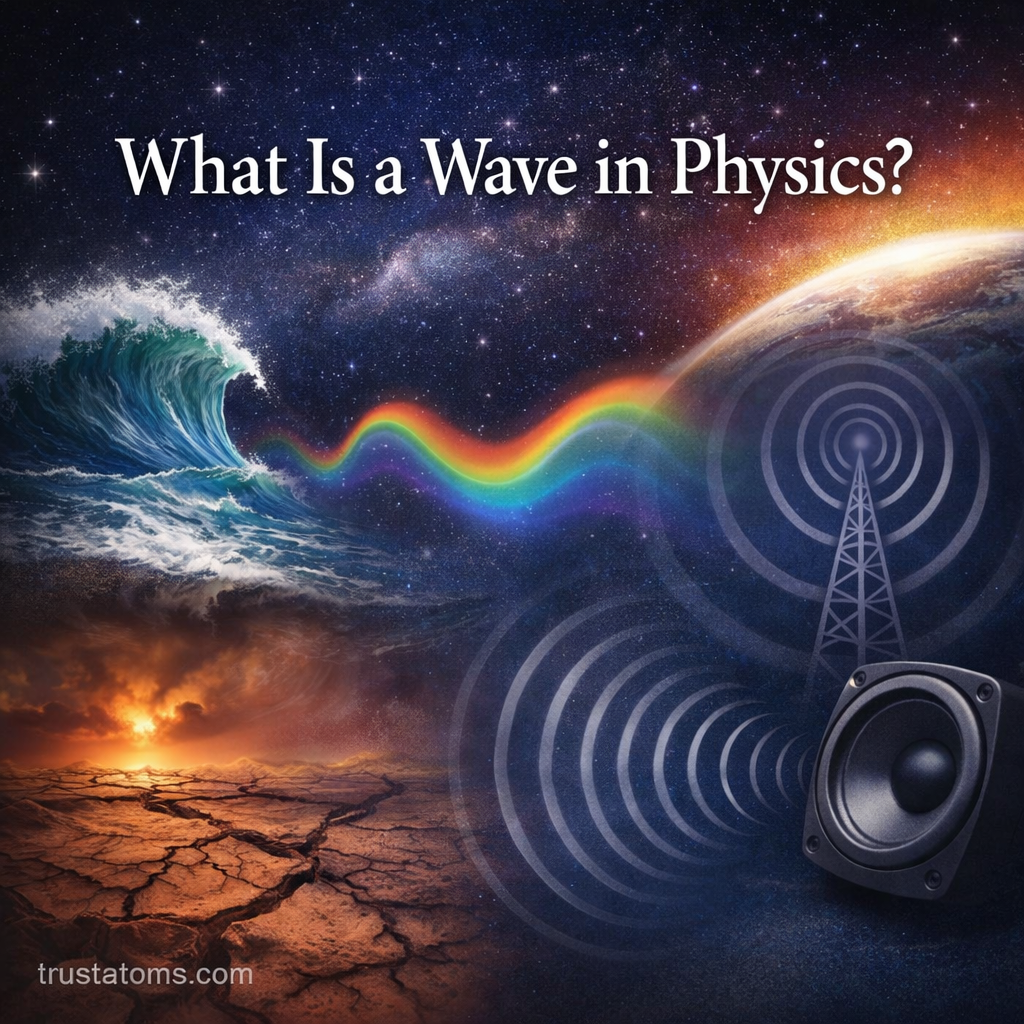
Illustration explaining waves in physics with ocean waves, sound waves from a speaker, radio waves, and light waves in space.
Visual overview of mechanical and electromagnetic waves in physics. trustatoms.com

A wave is one of the most fundamental concepts in physics. From ocean swells and sound vibrations to light from the Sun, waves are everywhere.

In simple terms, a wave is a way that energy moves through space or through a medium without permanently moving the material itself.

In this guide, you’ll learn:

  • The definition of a wave in physics
  • The different types of waves
  • How waves transfer energy
  • Key wave properties
  • Real-world examples
Continue reading “What Is a Wave in Physics?”

What Is Wavelength?

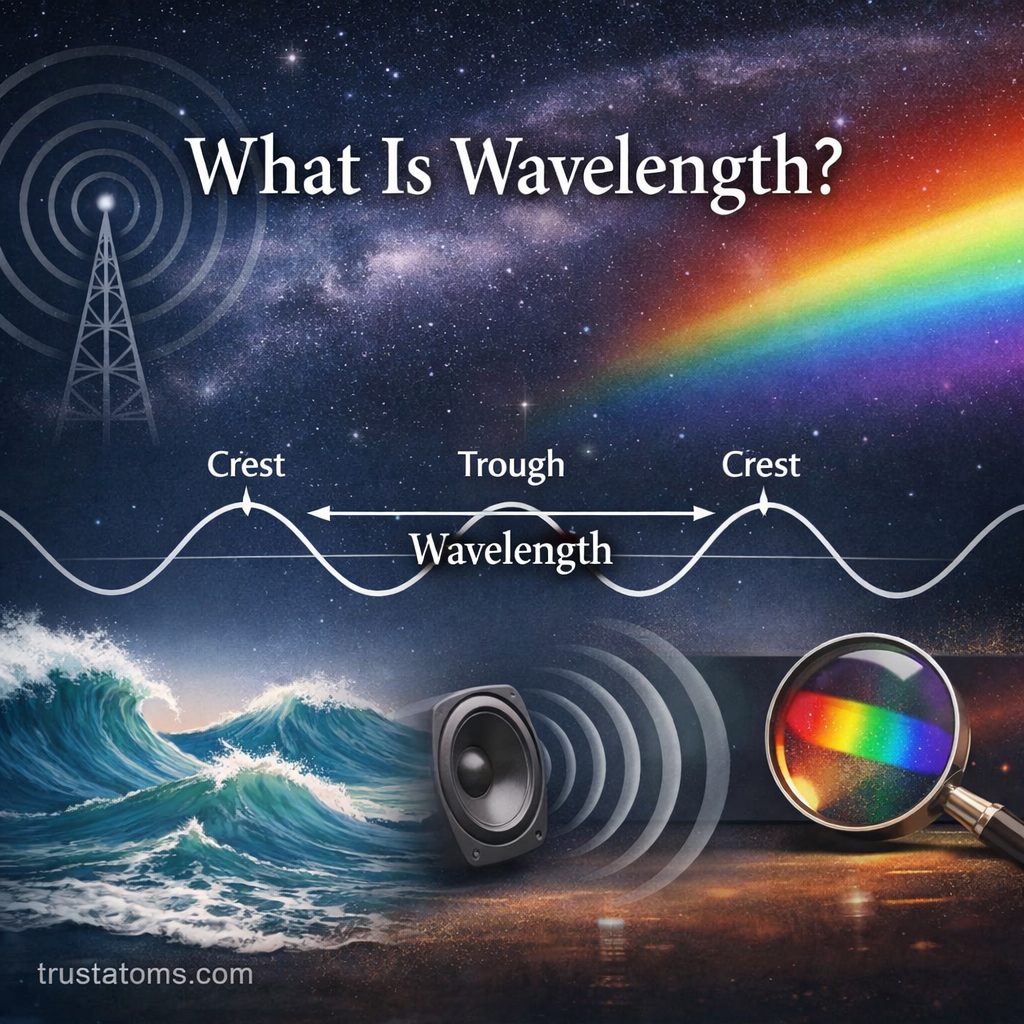
Illustration explaining wavelength with labeled wave crests and troughs, rainbow light spectrum, ocean waves, and sound waves.
Illustration showing the concept of wavelength across light, sound, and water waves. trustatoms.com

Wavelength is one of the most important concepts in physics because it helps us understand how waves behave — from light and sound to water and radio signals.

If you’ve ever seen ripples on water, heard music from a speaker, or noticed different colors of light, you’ve experienced wavelength in action.

In this guide, you’ll learn:

  • What wavelength means
  • How it’s measured
  • How it relates to frequency
  • Real-world examples
  • Why it matters in science and technology
Continue reading “What Is Wavelength?”

What Is Frequency?

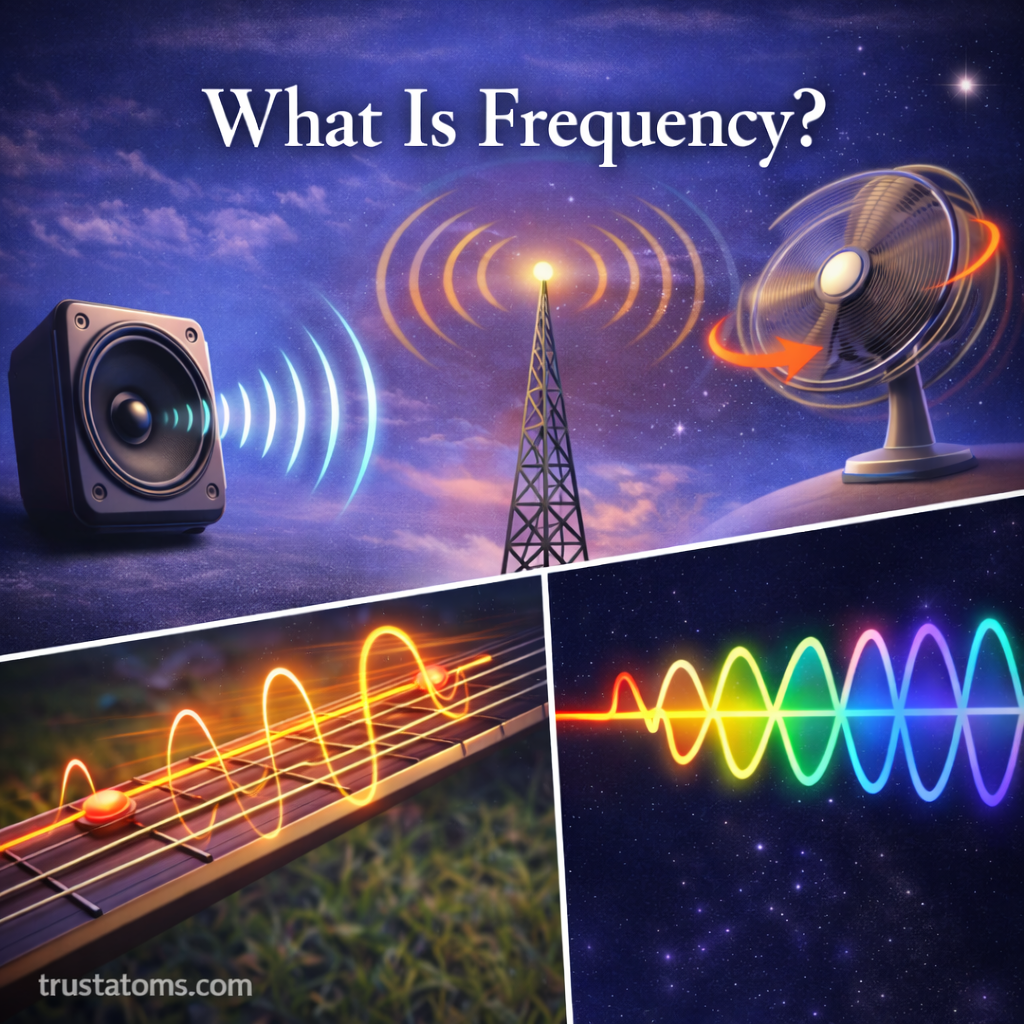
Illustration showing sound waves from a speaker, radio waves from a tower, a rotating fan, a vibrating guitar string, and light waves to explain frequency, with title What Is Frequency? and trustatoms.com watermark.
Visual examples of frequency in sound, radio waves, rotation, vibration, and light. trustatoms.com

Frequency measures how often something happens within a specific amount of time.

In physics, frequency usually describes how many cycles, waves, vibrations, or oscillations occur per second. From sound waves to radio signals to rotating fans, frequency is a fundamental concept that helps us understand repeating motion.

In this guide, you’ll learn:

  • What frequency means in physics
  • The unit of frequency
  • The frequency formula
  • How frequency relates to wavelength and period
  • Real-world examples
Continue reading “What Is Frequency?”

What Is Rotational Motion?

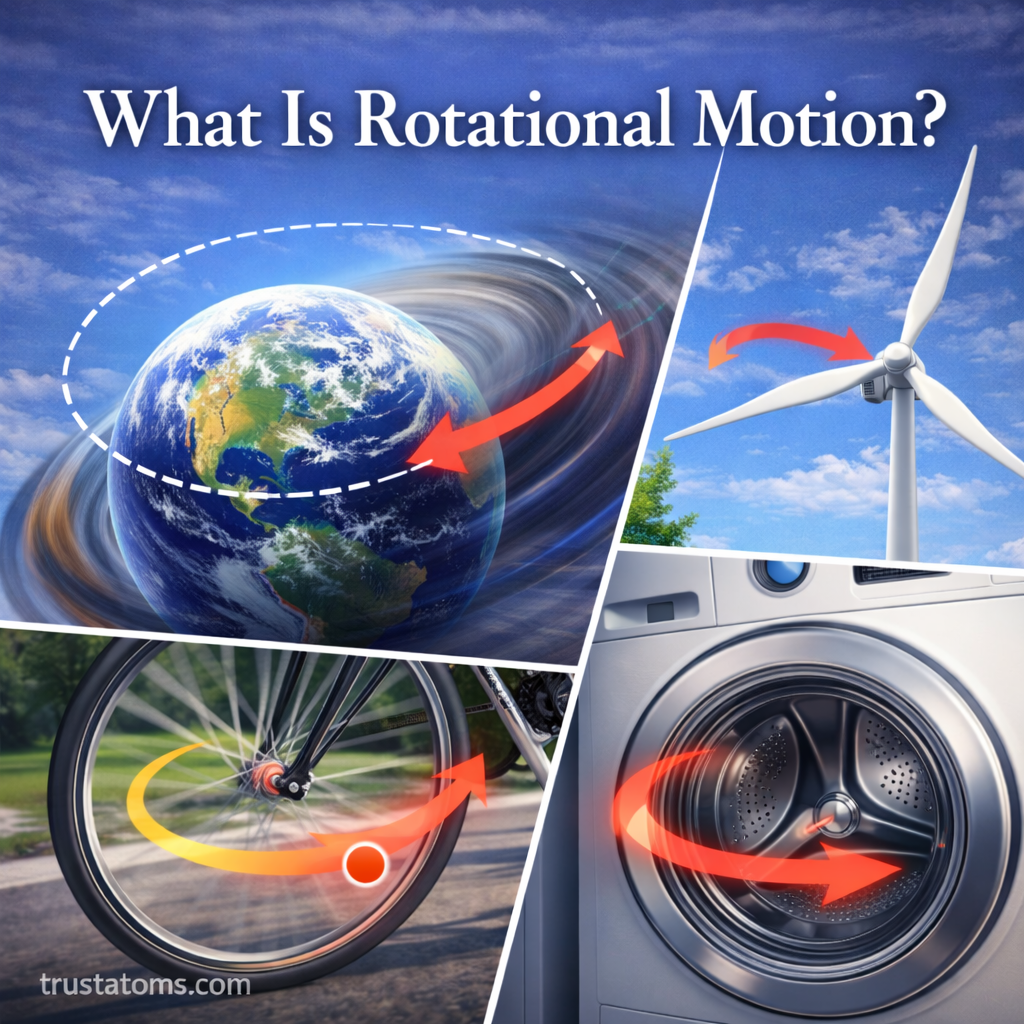
Illustration showing Earth rotating, a bicycle wheel spinning, a wind turbine turning, and a washing machine drum rotating, with title What Is Rotational Motion? and trustatoms.com watermark.
Examples of rotational motion including Earth, a wheel, a wind turbine, and a washing machine. trustatoms.com

Rotational motion is the movement of an object as it spins around an axis.

From a turning wheel to the rotation of Earth, rotational motion is everywhere. Unlike straight-line (linear) motion, rotational motion involves circular movement around a fixed point or axis.

Understanding rotational motion is essential in physics, engineering, astronomy, and everyday mechanics.

In this guide, you’ll learn:

  • What rotational motion means
  • The difference between linear and rotational motion
  • Key rotational quantities
  • Real-world examples
  • Why rotational motion matters
Continue reading “What Is Rotational Motion?”

Centripetal Force Explained

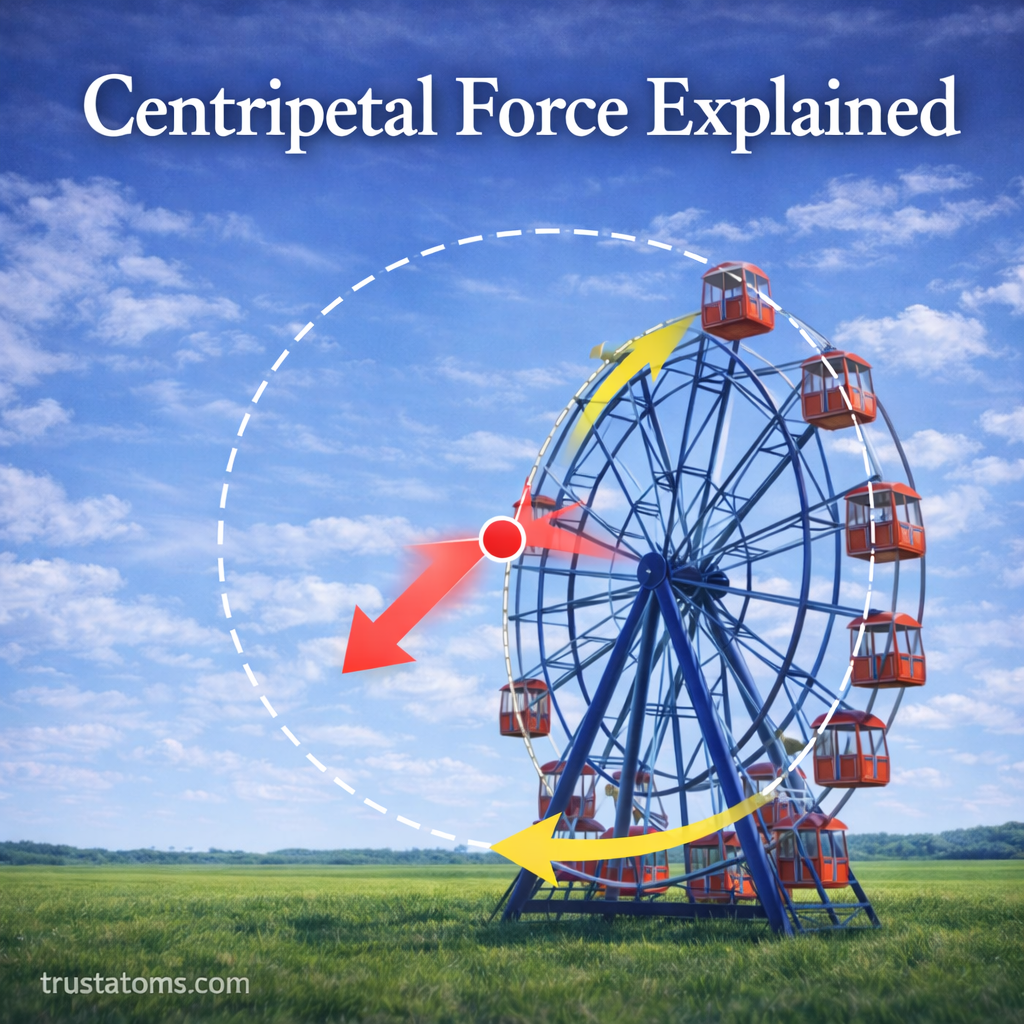
Illustration of a Ferris wheel demonstrating inward centripetal force in circular motion, with title Centripetal Force Explained and trustatoms.com watermark.
Ferris wheel illustration showing inward force required for circular motion. trustatoms.com

Centripetal force is the inward force that keeps an object moving in a circular path.

Without it, objects would move in straight lines due to inertia. From a car turning on a curved road to planets orbiting the Sun, centripetal force is what makes circular motion possible.

In this guide, you’ll learn:

  • What centripetal force really means
  • Why it’s not a “new” type of force
  • The formula and how it works
  • Real-world examples
  • Common mistakes students make
Continue reading “Centripetal Force Explained”

What Is Circular Motion?

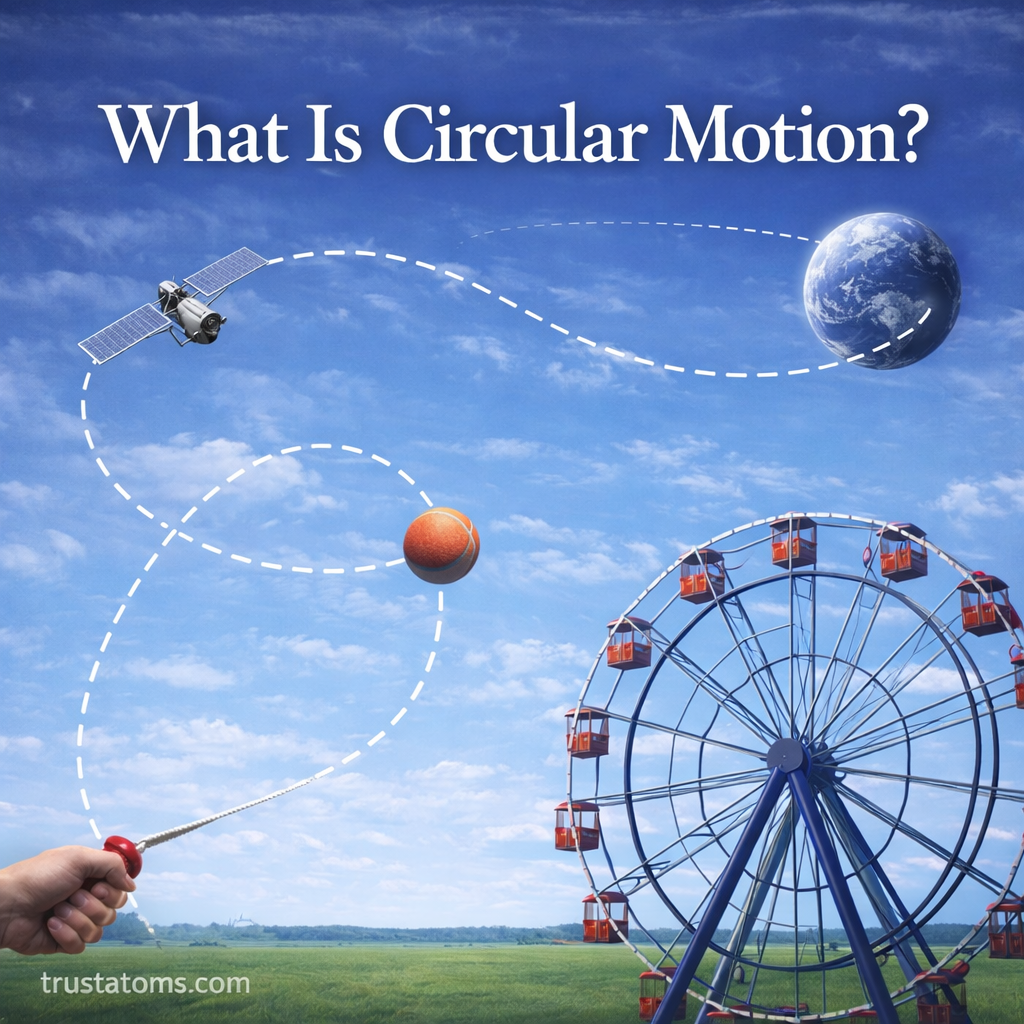
Illustration showing a satellite orbiting Earth, a Ferris wheel, and a ball on a string to demonstrate circular motion, with title What Is Circular Motion? and trustatoms.com watermark.
Illustration of everyday and space examples demonstrating circular motion paths. trustatoms.com

Circular motion is the movement of an object along a circular path.

From a spinning fan blade to a planet orbiting a star, circular motion appears everywhere in physics. Even though the object may move at a constant speed, its direction is always changing — and that means forces are involved.

In this guide, you’ll learn:

  • What circular motion is
  • The difference between speed and velocity
  • What centripetal force means
  • Key formulas
  • Real-world examples
Continue reading “What Is Circular Motion?”

What Is Projectile Motion?

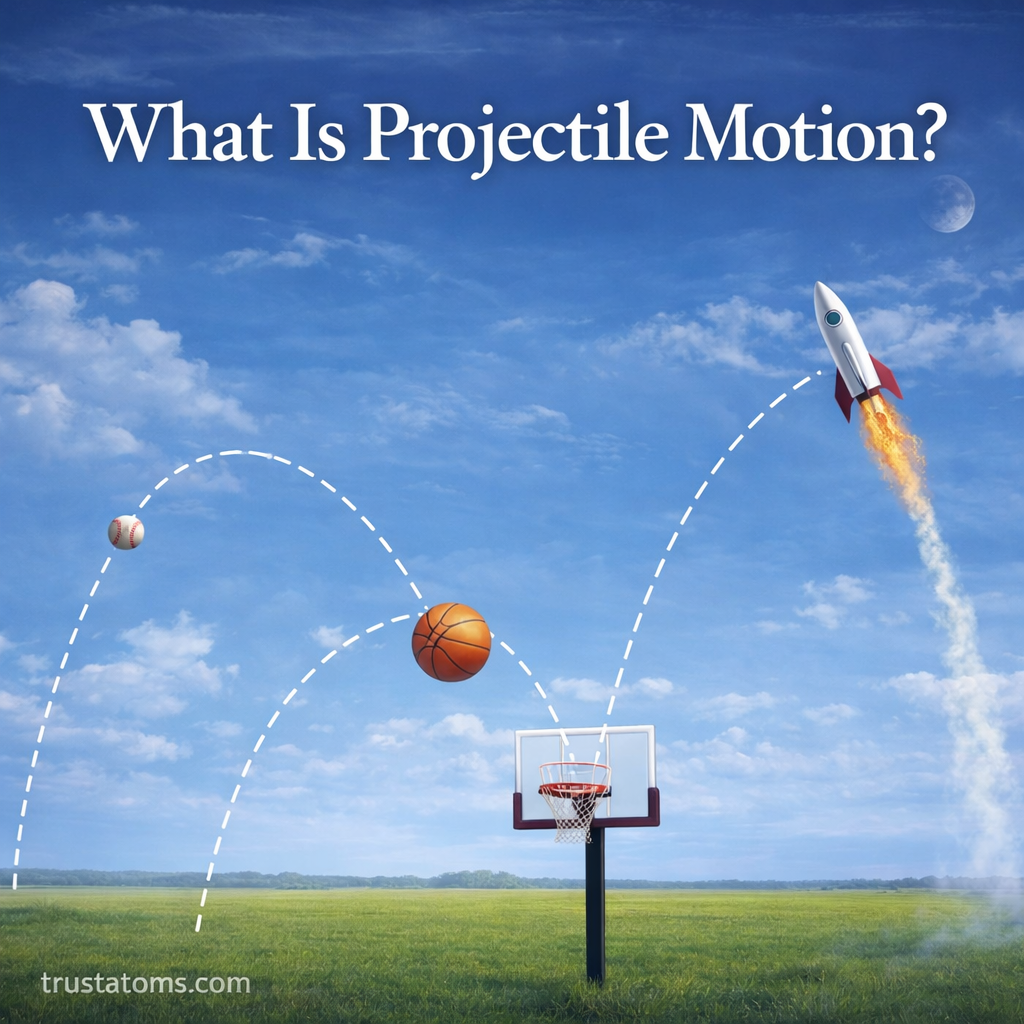
Illustration showing a baseball, basketball, and rocket following curved paths to demonstrate projectile motion, with title What Is Projectile Motion? and trustatoms.com watermark.
Illustration of curved projectile paths in sports and rocketry demonstrating motion under gravity. trustatoms.com

Projectile motion describes how an object moves through the air when it is launched and influenced only by gravity (ignoring air resistance).

From a thrown baseball to a launched rocket, projectile motion explains the curved path objects follow when they move under gravity alone.

In this guide, you’ll learn:

  • What projectile motion is
  • Why the path is curved
  • The two components of motion
  • Key formulas
  • Real-world examples
Continue reading “What Is Projectile Motion?”