Antibiotic Resistance in Bacterial Populations

Scientific illustration showing bacteria developing antibiotic resistance with DNA exchange and antibiotic capsules interacting with bacterial cells.
Educational illustration showing antibiotic resistance in bacterial populations, highlighting how bacteria survive antibiotic exposure through genetic adaptations. trustatoms.com.

Antibiotics transformed modern medicine by making it possible to treat bacterial infections that were once deadly. However, over time many bacteria have developed the ability to survive these drugs. This phenomenon is known as antibiotic resistance.

Antibiotic resistance occurs when bacterial populations evolve mechanisms that allow them to withstand medications designed to kill them or stop their growth. As resistant bacteria spread, infections become harder to treat and require stronger or alternative medications.

Understanding how antibiotic resistance develops and spreads within bacterial populations is essential for protecting global health and preserving the effectiveness of antibiotics.

Continue reading “Antibiotic Resistance in Bacterial Populations”
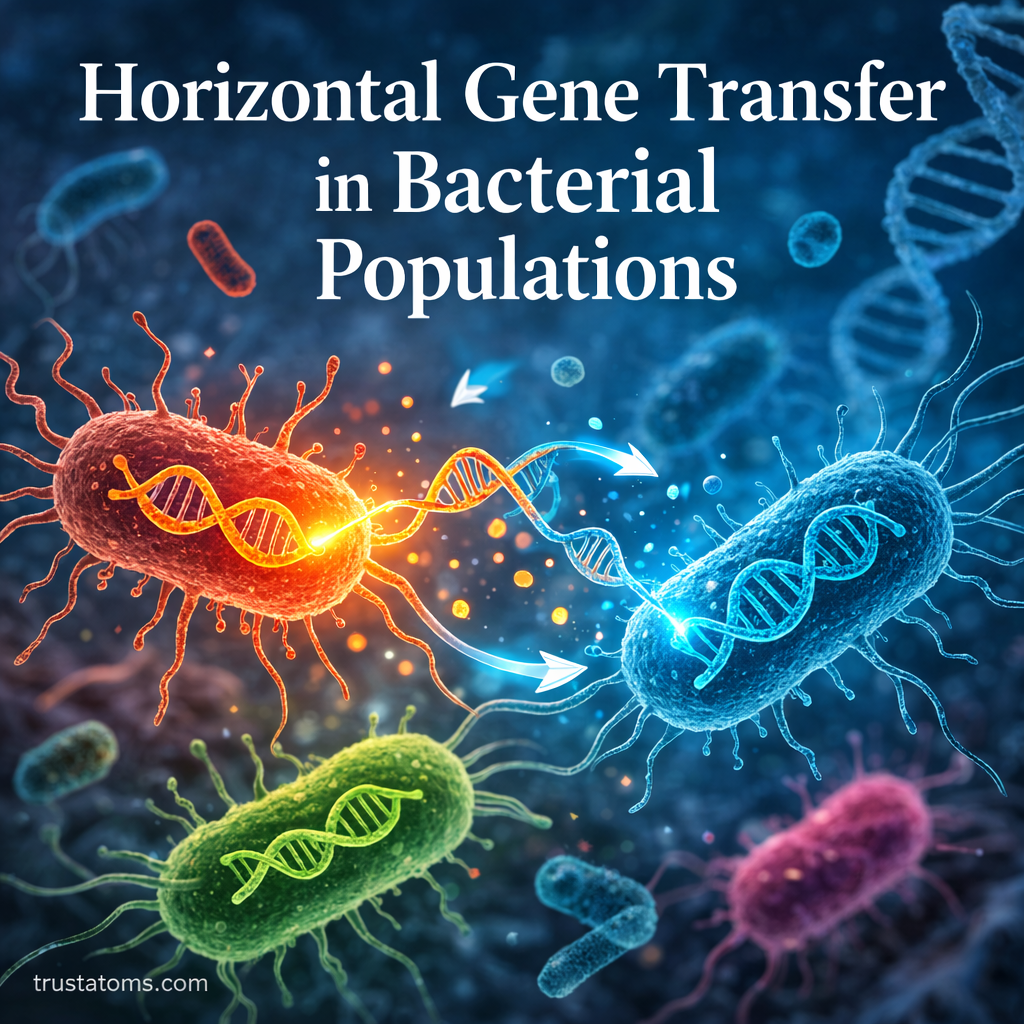
Horizontal Gene Transfer in Bacterial Populations

Scientific illustration showing bacteria exchanging DNA through horizontal gene transfer within a bacterial population.
Educational illustration showing horizontal gene transfer occurring between bacteria in a microbial population, highlighting DNA exchange and microbial evolution. trustatoms.com.

Bacteria are among the most adaptable organisms on Earth. One reason for their rapid adaptation is a process known as horizontal gene transfer (HGT). Unlike traditional inheritance, where genetic material passes from parent to offspring, horizontal gene transfer allows bacteria to exchange genes directly with neighboring cells.

This ability enables bacterial populations to rapidly acquire new traits, including antibiotic resistance, metabolic capabilities, and environmental adaptations. As a result, horizontal gene transfer plays a major role in microbial evolution, medical microbiology, and environmental biology.

Understanding how gene exchange occurs within bacterial populations helps scientists better predict microbial behavior, track disease outbreaks, and develop new treatment strategies.

Continue reading “Horizontal Gene Transfer in Bacterial Populations”

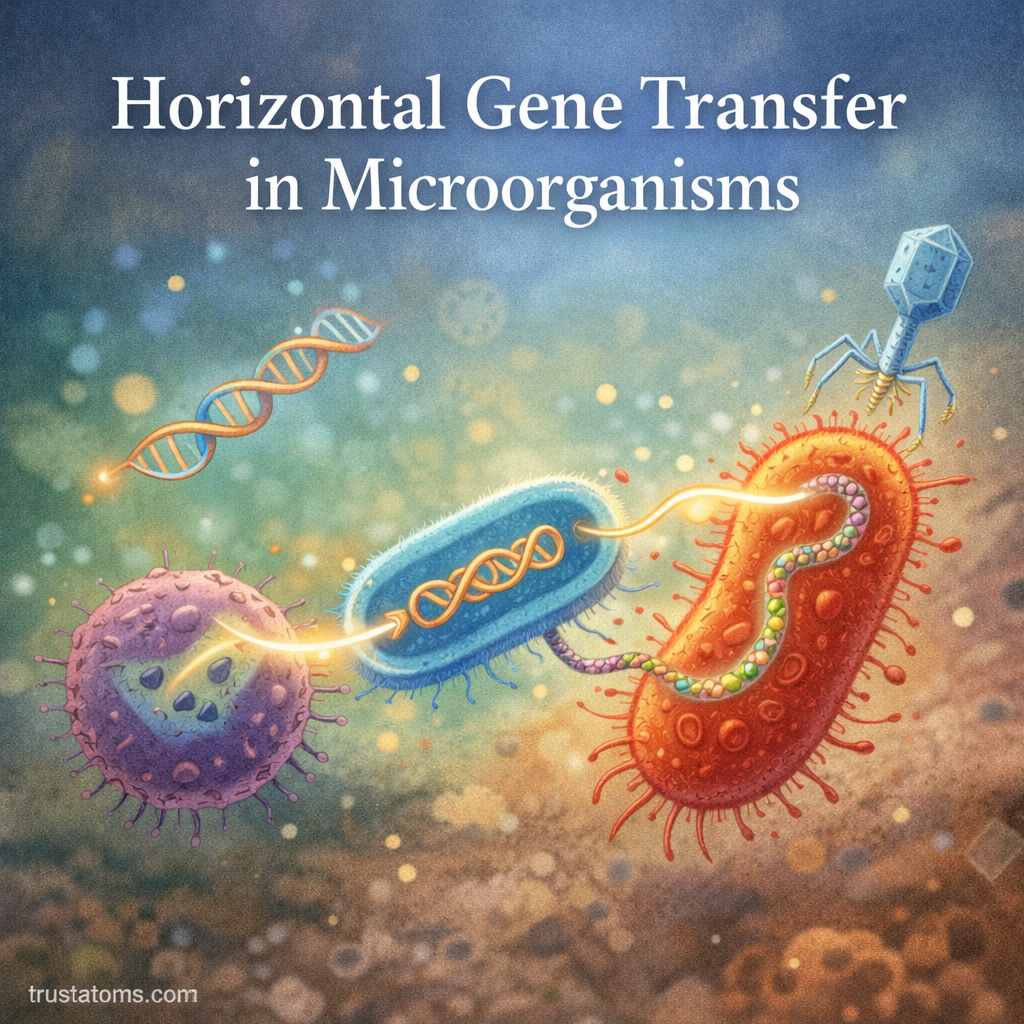
Horizontal Gene Transfer in Microorganisms

Educational illustration showing horizontal gene transfer between bacteria with DNA strands, bacteriophage virus, and microbial cells exchanging genetic material.
Scientific illustration depicting horizontal gene transfer in microorganisms, showing DNA exchange between bacteria through transformation, transduction, and conjugation. trustatoms.com.

Microorganisms evolve and adapt at remarkable speeds. One reason for this rapid evolution is a process called horizontal gene transfer (HGT). Unlike traditional inheritance, where genes pass from parent to offspring, horizontal gene transfer allows microorganisms to exchange genetic material directly with unrelated organisms.

This process plays a major role in microbial evolution, antibiotic resistance, and environmental adaptation. By sharing genes across species boundaries, microorganisms can quickly acquire new abilities that help them survive in changing conditions.

Understanding horizontal gene transfer provides important insights into microbiology, medicine, and biotechnology.

Continue reading “Horizontal Gene Transfer in Microorganisms”

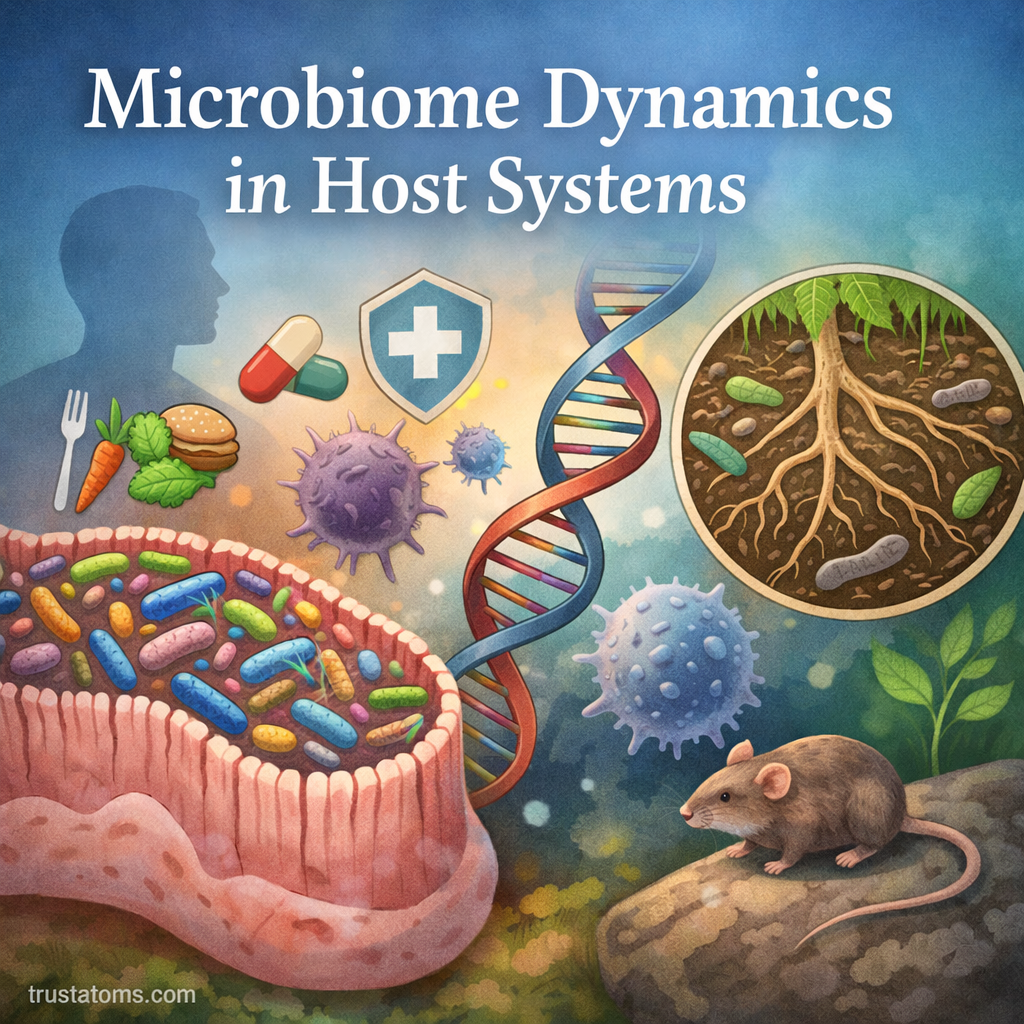
Microbiome Dynamics in Host Systems

Illustrated diagram showing microbiome dynamics in host systems with microbes in the gut, DNA strand, immune symbols, and environmental influences.
Educational illustration representing microbiome dynamics in host systems, showing microbial communities interacting with host biology and environmental factors. trustatoms.com.

Microorganisms live in and on nearly every living organism. These communities—collectively known as the microbiome—play essential roles in digestion, immunity, metabolism, and even behavior. Rather than being static populations, microbial communities constantly change in response to diet, environment, immune activity, and host physiology.

Understanding microbiome dynamics in host systems helps scientists explain how microbes and hosts coexist, how imbalances lead to disease, and how microbial ecosystems can be restored or optimized for health.

Continue reading “Microbiome Dynamics in Host Systems”

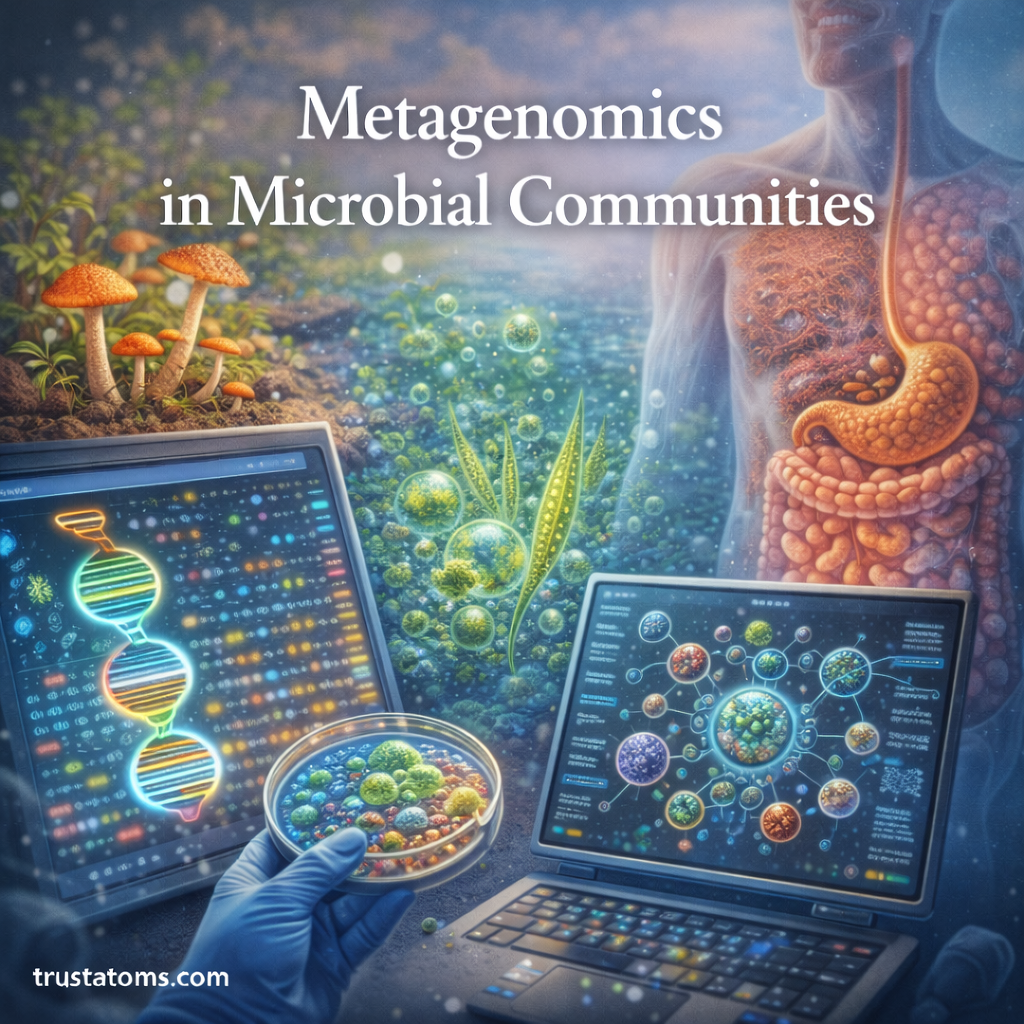
Metagenomics in Microbial Communities

Illustration showing DNA sequencing and analysis of microbial communities from soil, water, and the human microbiome.
Educational illustration showing metagenomic analysis of microbial communities from environments such as soil, aquatic systems, and the human microbiome. trustatoms.com.

Metagenomics is a powerful scientific approach used to study the genetic material of entire microbial communities directly from environmental samples. Instead of isolating and growing individual microorganisms in a laboratory, metagenomics analyzes all the DNA present in a sample, allowing scientists to understand the diversity and function of microbes living together in complex ecosystems.

This approach has transformed microbiology and environmental science by revealing the vast number of microorganisms that cannot easily be cultured using traditional laboratory techniques.

Continue reading “Metagenomics in Microbial Communities”

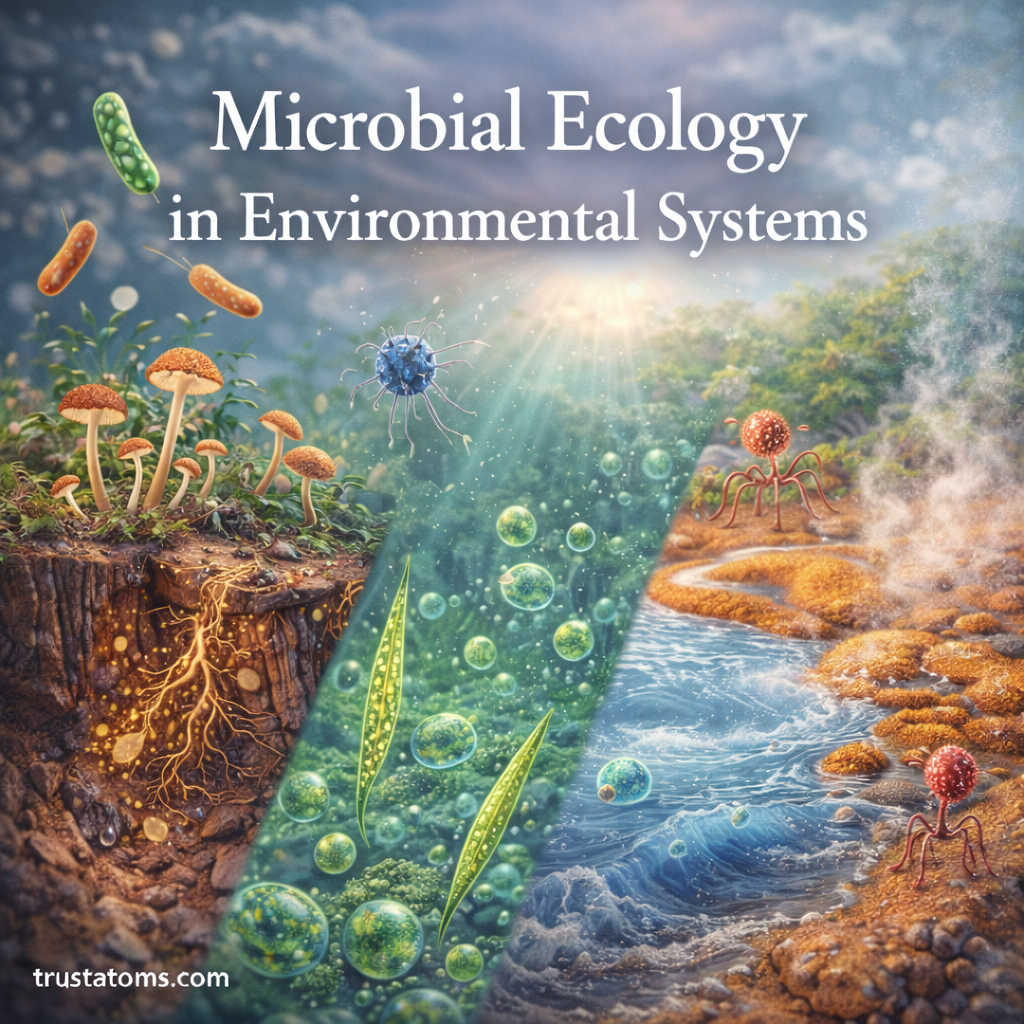
Microbial Ecology in Environmental Systems

Illustration showing microorganisms in soil, aquatic environments, and extreme habitats representing microbial ecology in environmental systems.
Educational illustration showing microbes across environmental systems such as soil ecosystems, aquatic habitats, and extreme environments. trustatoms.com.

Microbial ecology is the study of how microorganisms interact with each other and with their surrounding environments. In environmental systems, microbes play critical roles in nutrient cycling, ecosystem stability, and energy flow. These microscopic organisms—such as bacteria, fungi, protists, and some viruses—are essential for maintaining the balance of natural ecosystems.

Microbes exist in almost every environment on Earth, including soil, oceans, freshwater systems, extreme environments, and even within living organisms. By studying microbial ecology, scientists gain insight into how ecosystems function and how environmental changes affect microbial communities.

Continue reading “Microbial Ecology in Environmental Systems”

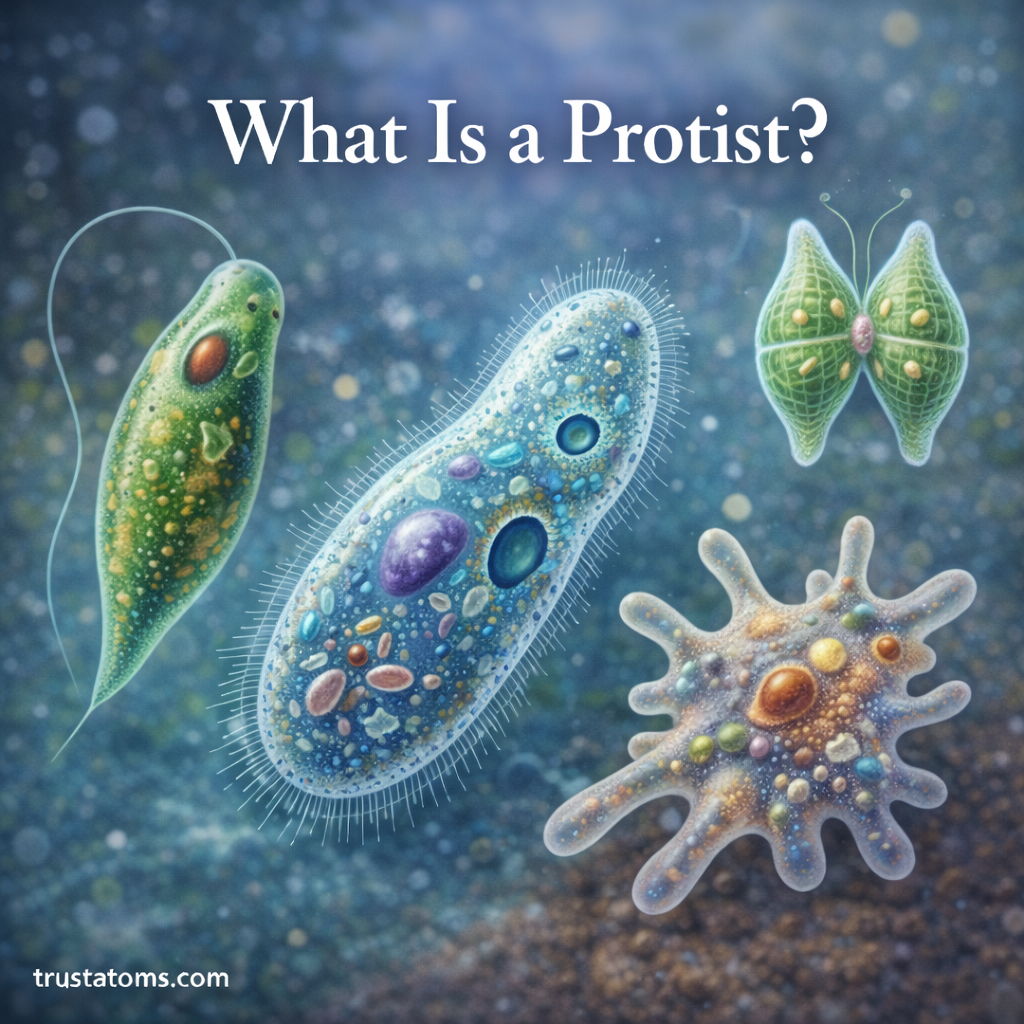
What Is a Protist?

Educational illustration showing different protists including amoeba, paramecium, euglena, and algae-like protists.
Educational biology illustration showing several protists such as amoeba, paramecium, and euglena to explain what protists are. trustatoms.com.

Protists are a diverse group of mostly microscopic organisms that belong to the kingdom Protista. They are eukaryotic organisms, meaning their cells contain a nucleus and other specialized structures called organelles. Protists are incredibly varied and include organisms that resemble plants, animals, and fungi.

Many protists live in aquatic environments such as oceans, lakes, and ponds, while others inhabit moist soil or live inside other organisms. Despite their diversity, most protists share one common trait: they are not classified as plants, animals, or fungi, but still belong to the broader domain of eukaryotic life.

Studying protists helps scientists better understand the evolution of complex life and the functioning of ecosystems.

Continue reading “What Is a Protist?”

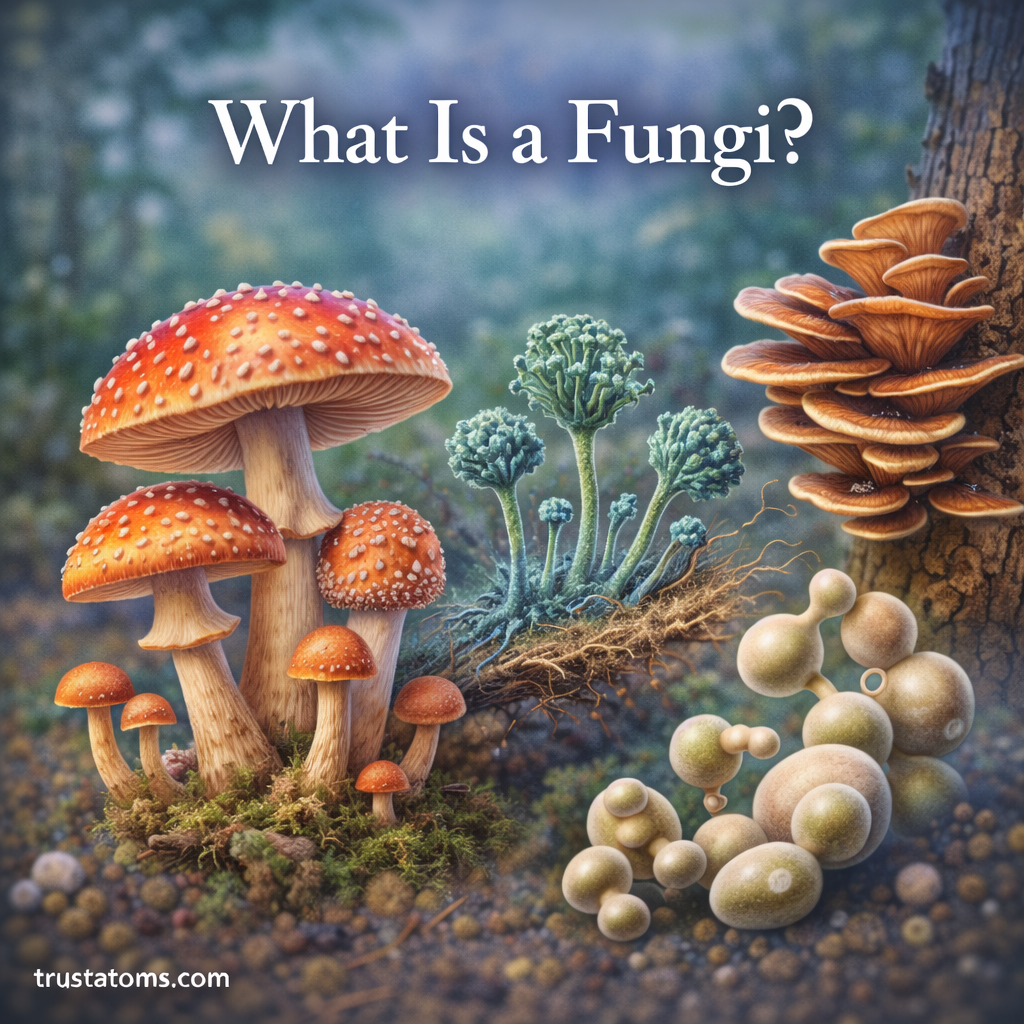
What Is a Fungi?

Educational illustration showing different types of fungi including mushrooms, mold structures, and yeast cells.
Educational illustration showing common fungi such as mushrooms, mold, and yeast used to explain what fungi are in biology. trustatoms.com.

Fungi are a group of living organisms that include mushrooms, molds, yeasts, and other microscopic species. They belong to their own biological kingdom, separate from plants, animals, and bacteria. Fungi play essential roles in ecosystems by decomposing organic matter, recycling nutrients, and forming symbiotic relationships with plants and animals.

Although fungi often resemble plants, they differ in many important ways. For example, fungi do not perform photosynthesis and instead obtain nutrients by absorbing organic material from their surroundings.

Understanding fungi is an important part of biology, microbiology, medicine, and environmental science.

Continue reading “What Is a Fungi?”

Viral Replication in Host Cells

Educational diagram showing a virus entering a host cell, replicating genetic material, assembling new viruses, and releasing viral particles.
Educational illustration showing the stages of viral replication inside a host cell, including entry, genome replication, assembly, and release of new viruses. trustatoms.com.

Viral replication is the process by which viruses reproduce inside the cells of a host organism. Unlike bacteria or other living cells, viruses cannot reproduce on their own. Instead, they must infect a host cell and use its biological machinery to create new virus particles.

Understanding viral replication is essential in microbiology, medicine, and virology. By studying how viruses replicate, scientists can develop vaccines, antiviral medications, and strategies to control infectious diseases.

Continue reading “Viral Replication in Host Cells”

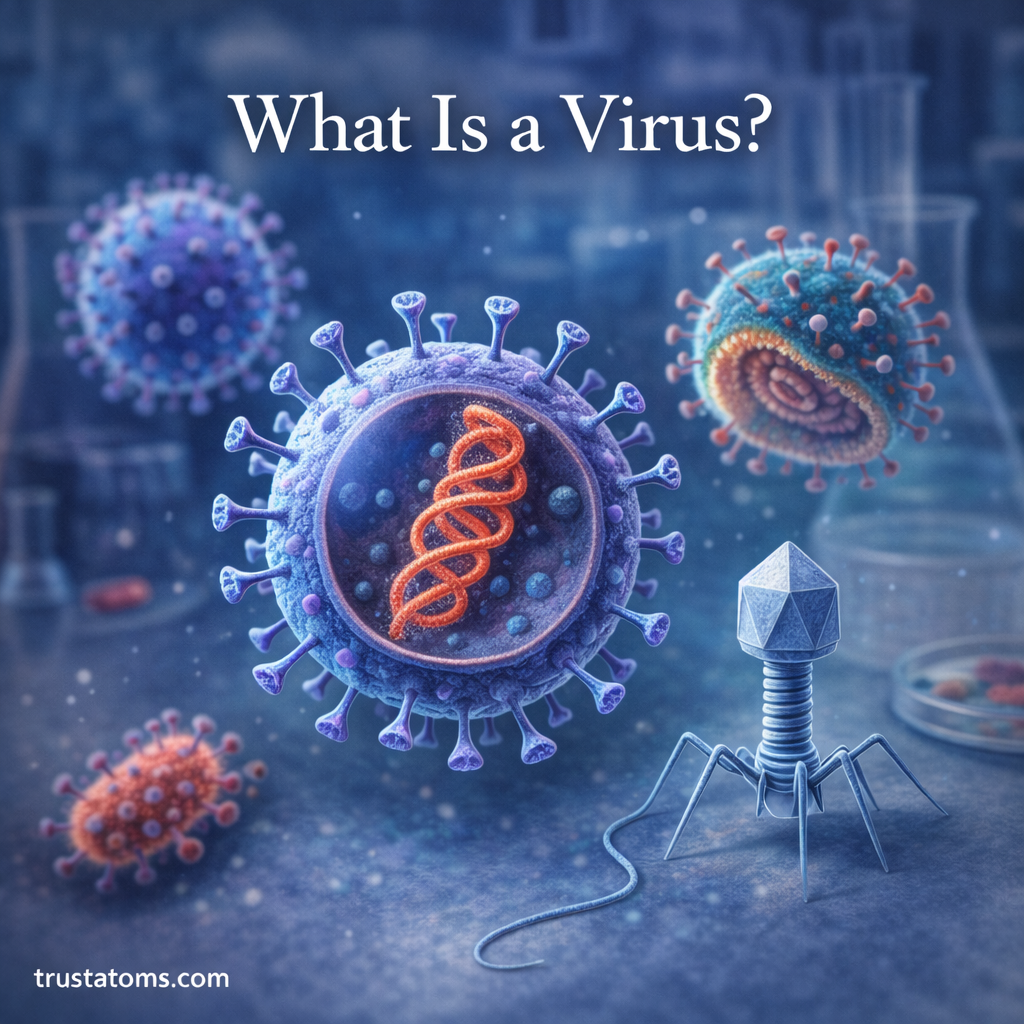
What Is a Virus?

Educational illustration showing different virus types including a spherical virus and a bacteriophage with visible genetic material.
Educational illustration showing different virus structures including a spherical virus and a bacteriophage used to explain what viruses are in microbiology. trustatoms.com.

A virus is an extremely small infectious particle that can only reproduce inside the cells of living organisms. Viruses infect animals, plants, fungi, bacteria, and even other microorganisms. Because they cannot grow or reproduce independently, viruses are often described as being on the border between living and nonliving entities.

Viruses play important roles in biology, medicine, and ecology. Some viruses cause diseases in humans and animals, while others influence ecosystems or are used in scientific research and biotechnology.

Continue reading “What Is a Virus?”