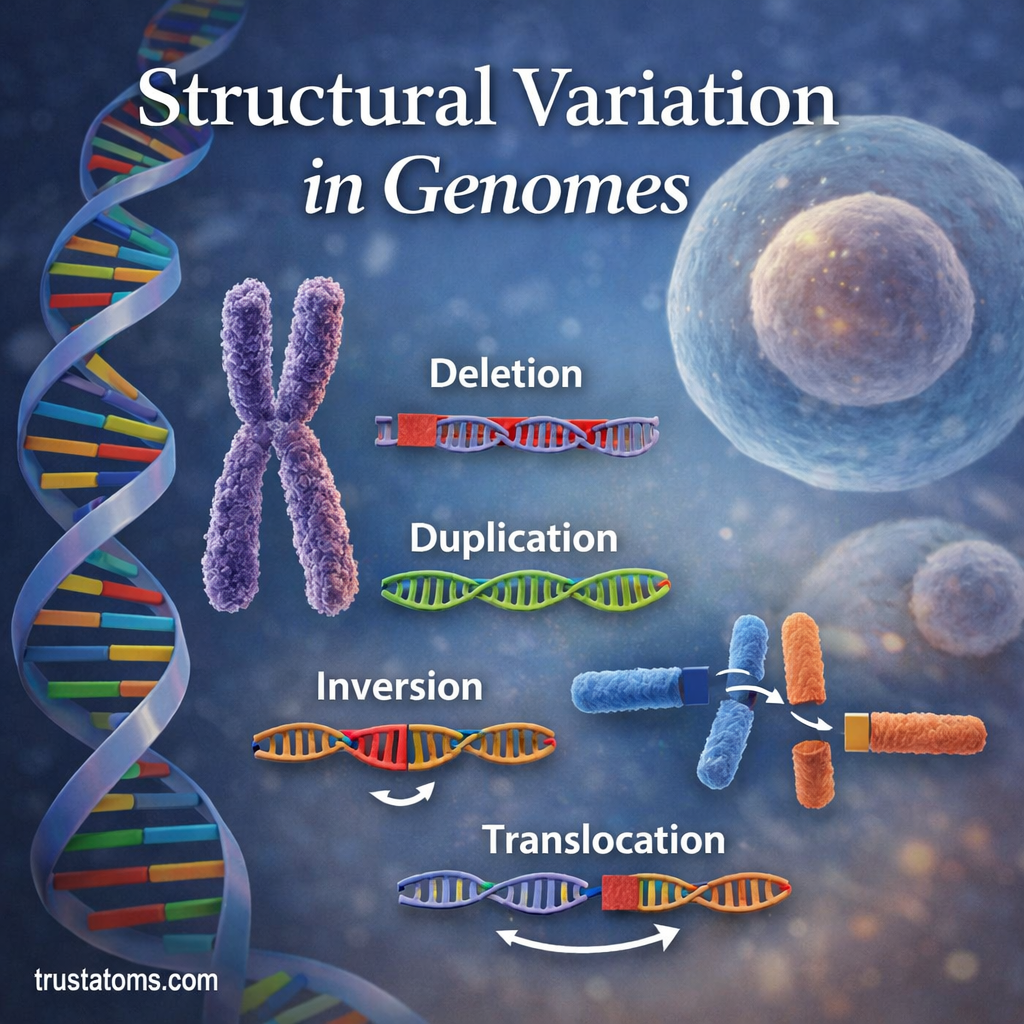
Genomes are not static blueprints. While many people think of genetic differences as small changes in DNA letters (mutations), large-scale alterations also play a major role in shaping organisms. These larger changes are known as structural variations (SVs)—significant rearrangements of DNA segments within or between chromosomes.
Structural variations can affect thousands to millions of DNA base pairs and often have a greater biological impact than single nucleotide mutations. They influence evolution, genetic diversity, disease susceptibility, and how genes function inside cells.
Understanding structural variation has become increasingly important in modern biology, especially with advances in genome sequencing technologies that allow scientists to detect complex genomic rearrangements across populations.
Continue reading “Structural Variation in Genomes”