Crystal Lattice Structures in Solid State Physics

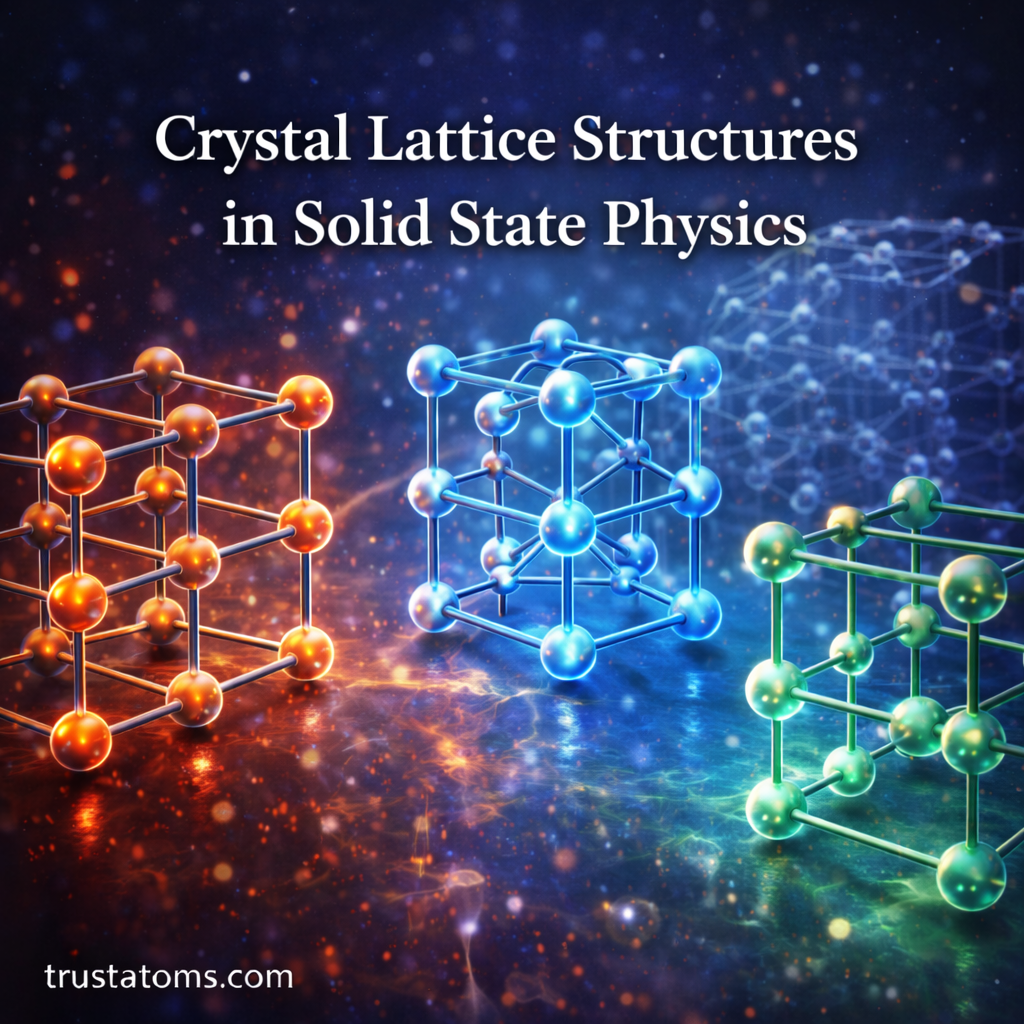
Illustration of crystal lattice structures in solid state physics showing cubic and hexagonal atomic arrangements with trustatoms.com watermark.
Conceptual diagram of crystal lattice structures in solid state physics, highlighting repeating atomic arrangements in crystalline solids. trustatoms.com.

At the microscopic level, solid materials are not random collections of atoms. Instead, their atoms are arranged in highly ordered, repeating patterns known as crystal lattice structures.

These structures determine many of a material’s physical properties — including strength, conductivity, hardness, and optical behavior. In solid state physics, understanding crystal lattices is essential for explaining how metals conduct electricity, how semiconductors power electronics, and how diamonds achieve extreme hardness.

In this article, we’ll explore what crystal lattice structures are, how they form, and why they are foundational to modern physics and materials science.

Continue reading “Crystal Lattice Structures in Solid State Physics”

Superconductivity in Condensed Matter

Illustration of superconductivity in condensed matter showing magnetic levitation above magnets with trustatoms.com watermark.
Conceptual illustration of superconductivity in condensed matter demonstrating magnetic levitation and the Meissner effect. trustatoms.com.

Superconductivity is one of the most fascinating phenomena in condensed matter physics. It describes a state in which certain materials conduct electricity with zero electrical resistance and expel magnetic fields when cooled below a critical temperature.

Discovered over a century ago, superconductivity continues to reshape our understanding of matter and promises transformative applications in energy, medicine, and transportation.

In this article, we’ll explore what superconductivity is, how it works at the atomic level, why it only occurs under special conditions, and where it’s already changing the world.

Continue reading “Superconductivity in Condensed Matter”

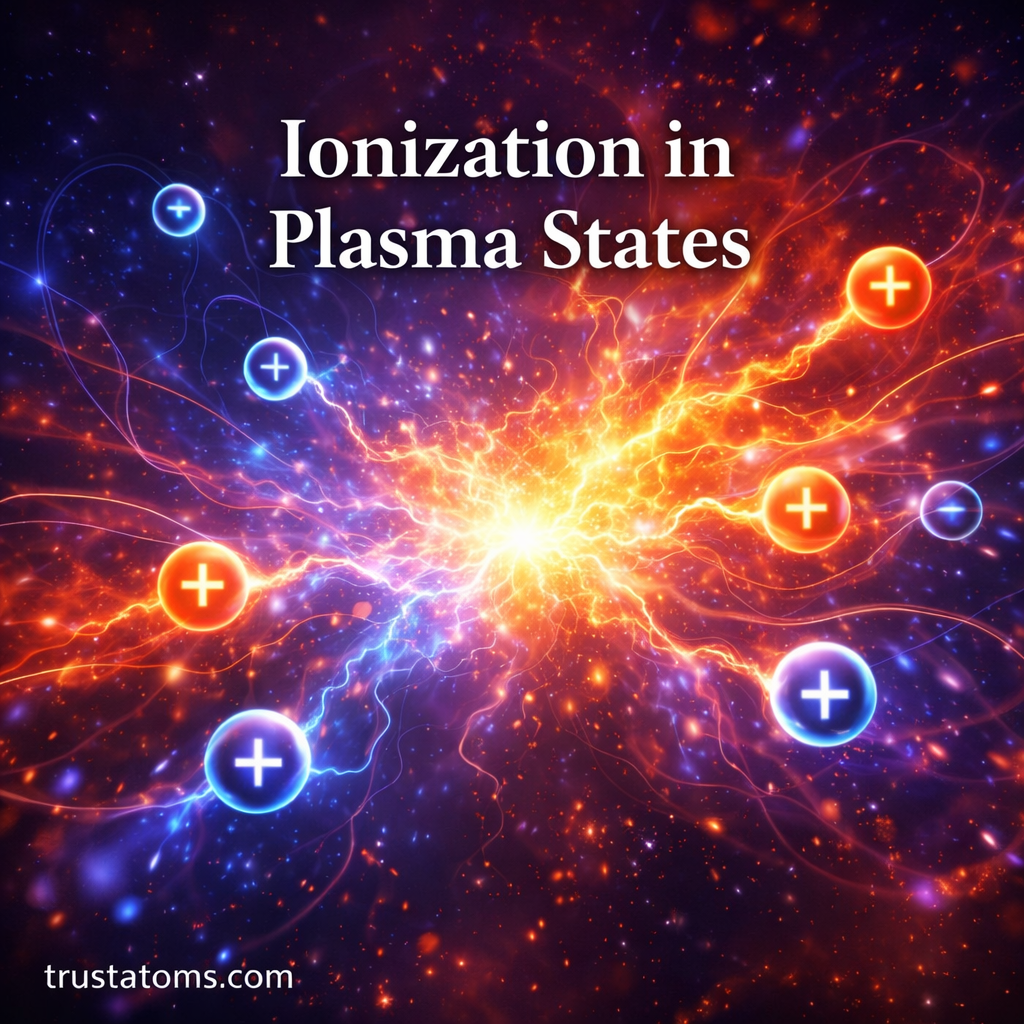
Ionization in Plasma States

Illustration showing ionization in plasma states with charged particles and glowing plasma field, featuring trustatoms.com watermark.
Conceptual illustration of ionization in plasma states, showing how atoms become charged and form electrically conductive plasma. trustatoms.com.

When most people think of matter, they think of solids, liquids, and gases. But there’s a fourth fundamental state that dominates the visible universe: plasma.

Plasma is often described as an “ionized gas,” but what does that actually mean? And how does ionization transform ordinary matter into something that behaves completely differently?

In this article, we’ll explore ionization in plasma states, how it happens, where plasma exists, and why it plays a critical role in physics, energy research, and space science.

Continue reading “Ionization in Plasma States”

Nuclear Fusion and Energy Generation

Illustration of nuclear fusion and energy generation showing a fusion reactor, the Sun, and a power plant with trustatoms.com watermark.
Conceptual illustration of nuclear fusion and energy generation, showing how star-powered reactions could produce clean electricity on Earth. trustatoms.com.

Nuclear fusion is often called the “holy grail” of clean energy. It promises virtually limitless power, minimal environmental impact, and no long-lived radioactive waste. But despite decades of research, fusion power plants are not yet supplying electricity to our homes.

So what exactly is nuclear fusion? How does it work? And why is it so difficult to harness?

Let’s break it down in clear, practical terms.

Continue reading “Nuclear Fusion and Energy Generation”

Radioactive Half-Life in Nuclear Decay

Illustration showing unstable atomic nuclei undergoing radioactive decay over successive half-life intervals.
Conceptual illustration of radioactive half-life demonstrating progressive nuclear decay over time. trustatoms.com

Radioactive half-life is one of the most important concepts in nuclear physics. It explains how unstable atomic nuclei transform over time and how quickly radioactive materials decay.

From carbon dating in archaeology to nuclear medicine and power generation, half-life plays a central role in science and technology.

In this guide, you’ll learn what radioactive half-life means, how nuclear decay works, and why this concept is essential in physics.

Continue reading “Radioactive Half-Life in Nuclear Decay”

Quantum Entanglement in Multi-Particle Systems

Illustration of multiple glowing particles connected by light paths to represent quantum entanglement in a multi-particle system.
Conceptual illustration showing interconnected particles representing quantum entanglement in a multi-particle system. trustatoms.com

Quantum entanglement is one of the most intriguing and counterintuitive phenomena in modern physics. When particles become entangled, their properties are linked in such a way that measuring one instantly affects the state of another — no matter how far apart they are.

While entanglement between two particles is already fascinating, multi-particle entanglement opens the door to even deeper insights into quantum mechanics, quantum computing, and fundamental physics.

In this guide, we’ll explore how quantum entanglement works in multi-particle systems, why it matters, and how it’s shaping the future of technology.

Continue reading “Quantum Entanglement in Multi-Particle Systems”

Gravitational Lensing in Relativistic Systems

Illustration showing light bending around a massive galaxy to demonstrate gravitational lensing in curved spacetime.
Conceptual illustration of gravitational lensing caused by spacetime curvature around a massive galaxy. trustatoms.com

Gravitational lensing is one of the most fascinating predictions of modern physics. It occurs when massive objects bend the path of light traveling through space.

This phenomenon is a direct consequence of Einstein’s theory of general relativity and provides powerful evidence that gravity is not just a force — but a curvature of spacetime itself.

In this guide, you’ll learn how gravitational lensing works, why it happens in relativistic systems, and how scientists use it to study the universe.

Continue reading “Gravitational Lensing in Relativistic Systems”

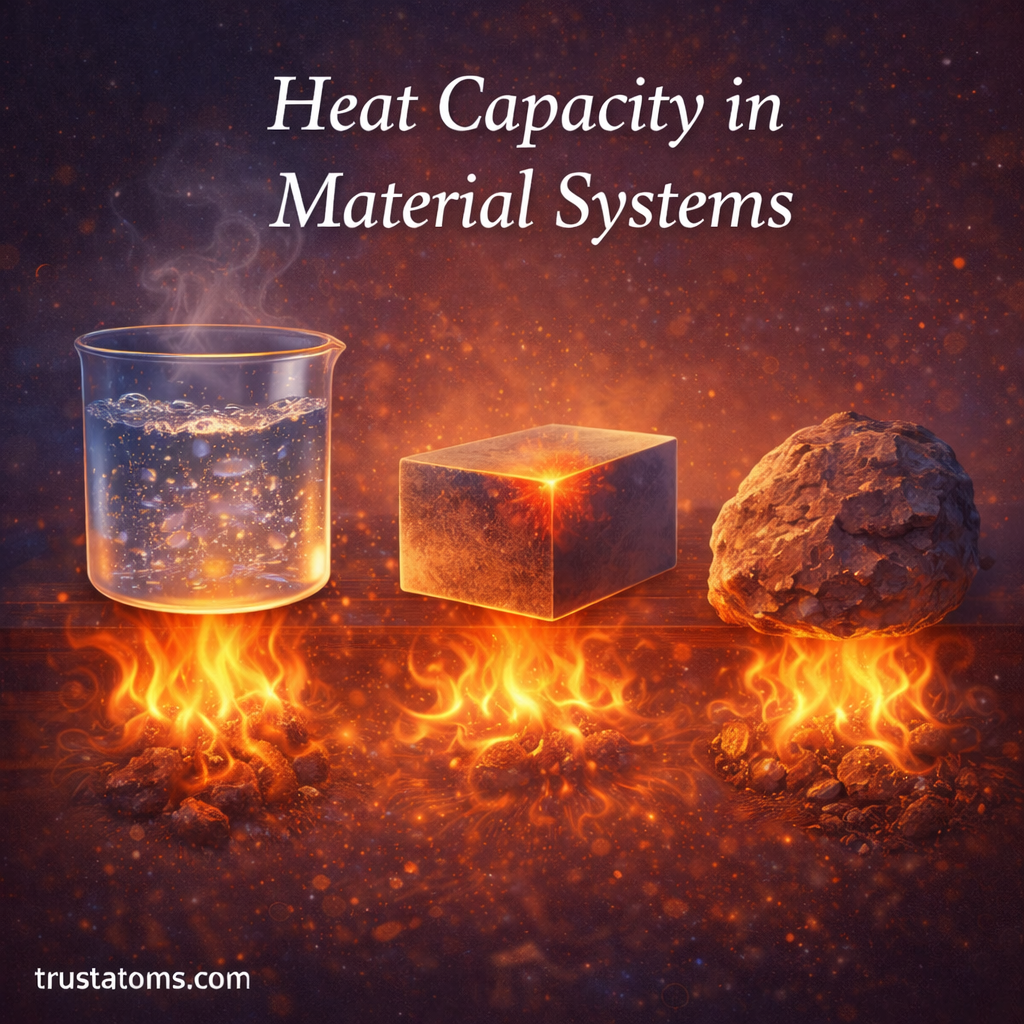
Heat Capacity in Material Systems

Illustration showing water, a metal block, and a rock being heated to demonstrate differences in heat capacity among materials.
Illustration comparing how different materials absorb heat based on their heat capacity. trustatoms.com

Heat capacity is one of the most important concepts in thermodynamics and materials science. It explains how materials absorb, store, and release thermal energy — and why some substances heat up quickly while others change temperature slowly.

From cooking utensils and building insulation to planetary science and industrial engineering, heat capacity plays a central role in how systems behave under temperature changes.

In this guide, you’ll learn what heat capacity is, how it works in material systems, and why it matters in real-world applications.

Continue reading “Heat Capacity in Material Systems”

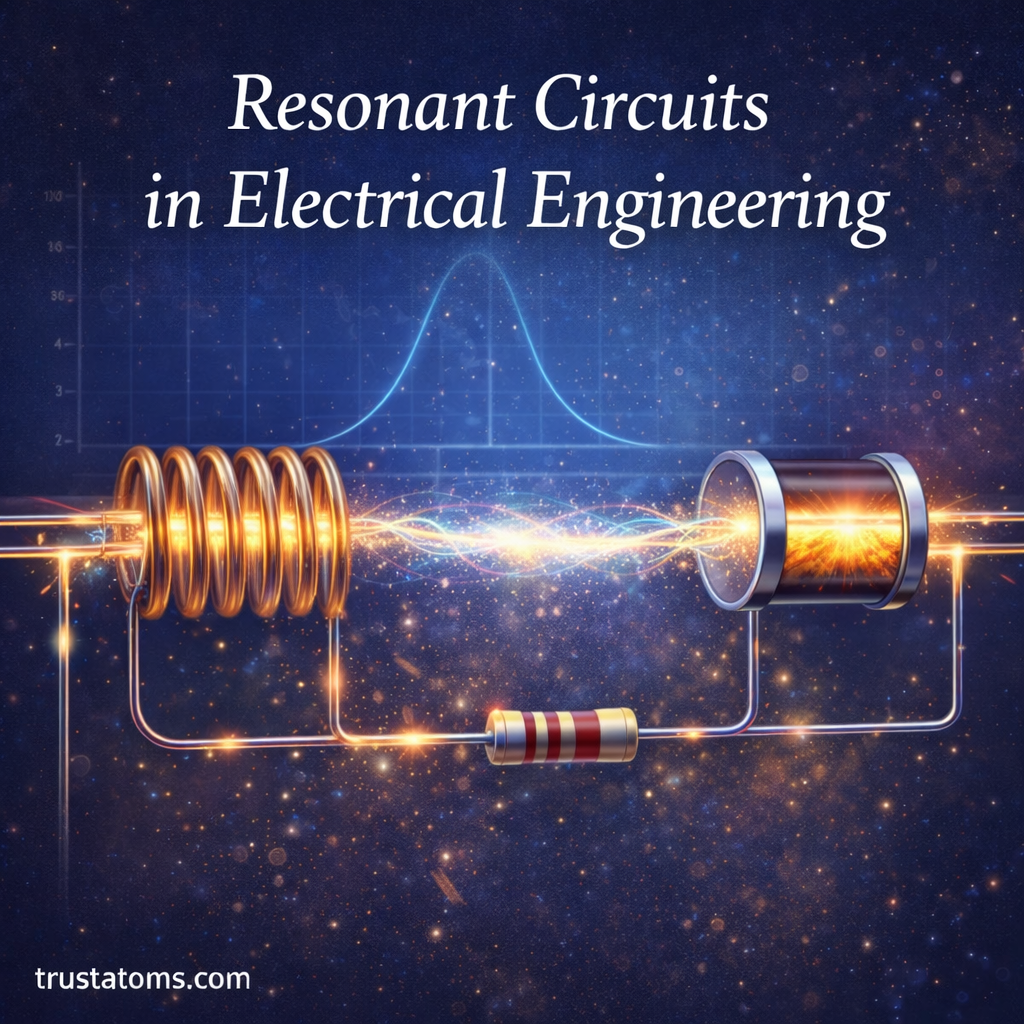
Resonant Circuits in Electrical Engineering

Illustration of a resonant LC circuit showing an inductor and capacitor exchanging energy with a highlighted frequency response curve in the background.
Conceptual illustration of a resonant circuit demonstrating energy exchange between an inductor and capacitor. trustatoms.com

Resonant circuits are a foundational concept in electrical engineering and physics. They allow electrical systems to select specific frequencies, amplify signals, filter noise, and transfer energy efficiently.

From radios and wireless communication to power systems and signal processing, resonant circuits are everywhere.

In this guide, you’ll learn how resonant circuits work, why resonance occurs, and how they are used in real-world electrical systems.

Continue reading “Resonant Circuits in Electrical Engineering”

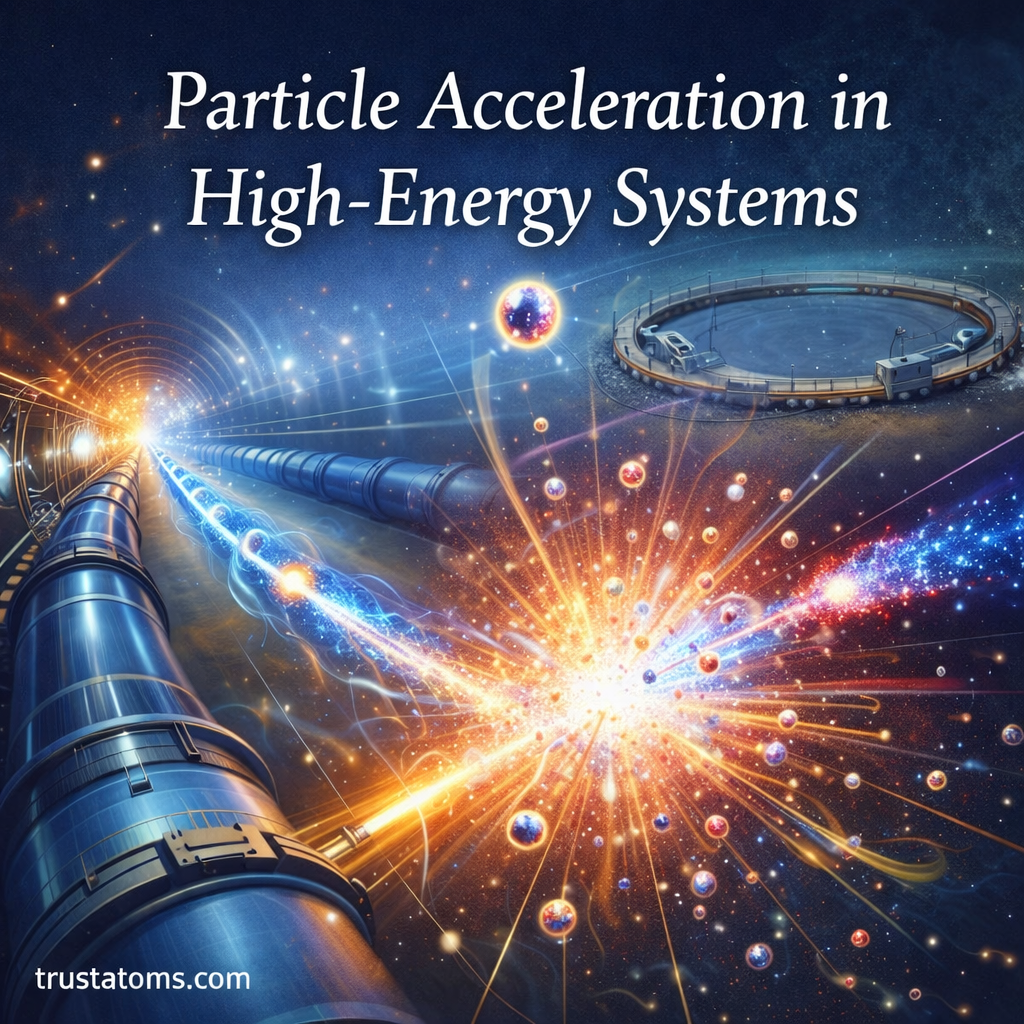
Particle Acceleration in High-Energy Systems

Illustration of particle acceleration in a high-energy system showing a linear accelerator beam and a circular collider with a particle collision burst.
Conceptual illustration of particle acceleration in high-energy systems featuring beam acceleration and particle collision. trustatoms.com

Particle acceleration in high-energy systems is one of the most powerful tools in modern physics. It allows scientists to probe the fundamental structure of matter, recreate conditions from the early universe, and develop advanced medical and industrial technologies.

From giant underground accelerators to compact hospital machines, particle acceleration plays a central role in both research and real-world applications.

This guide explains how particle acceleration works, the types of high-energy systems used today, and why it matters.

Continue reading “Particle Acceleration in High-Energy Systems”