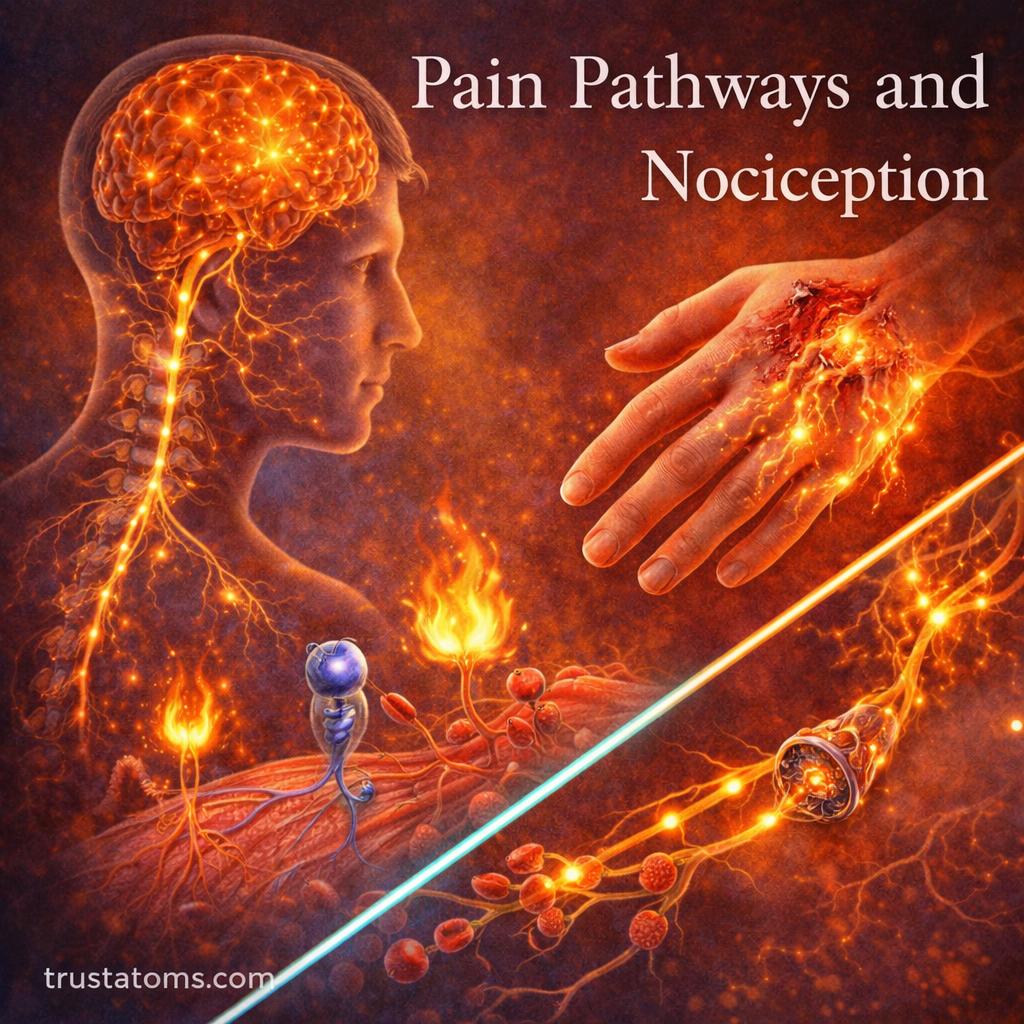
Pain is one of the body’s most important protective signals. When tissues are injured or exposed to potentially harmful conditions, the nervous system activates specialized pathways that alert the brain to danger. This process helps the body avoid further injury and initiate protective responses.
The biological detection and processing of harmful stimuli is known as nociception. Pain pathways carry these signals from sensory receptors in the body to the brain, where they are interpreted as the sensation of pain.
Understanding how nociception and pain pathways work provides insight into how the body detects injury, protects itself, and regulates responses to harmful stimuli.
What Is Nociception?
Nociception refers to the neural process of detecting and transmitting signals related to potentially damaging stimuli. It begins when specialized sensory receptors called nociceptors respond to physical or chemical threats.
These receptors are activated by stimuli that may damage tissue, such as:
- Extreme heat or cold
- Mechanical injury (cuts, pressure, trauma)
- Chemical irritation
- Inflammation
Nociception is not exactly the same as pain. Nociception describes the biological signaling process, while pain refers to the subjective experience interpreted by the brain.
Nociceptors: Pain-Sensing Receptors
Nociceptors are specialized sensory neurons located throughout the body. They are found in:
- Skin
- Muscles
- Joints
- Internal organs
- Connective tissues
These receptors detect harmful stimuli and convert them into electrical signals that travel through sensory neurons.
Types of Nociceptors
Nociceptors can be classified according to the type of stimulus they detect.
Mechanical nociceptors respond to:
- Pressure
- Tissue deformation
- Physical injury
Thermal nociceptors respond to:
- Extreme heat
- Extreme cold
Chemical nociceptors respond to substances released during tissue damage, including inflammatory molecules.
Many nociceptors are polymodal, meaning they can respond to several types of harmful stimuli.
The Pain Signal Pathway
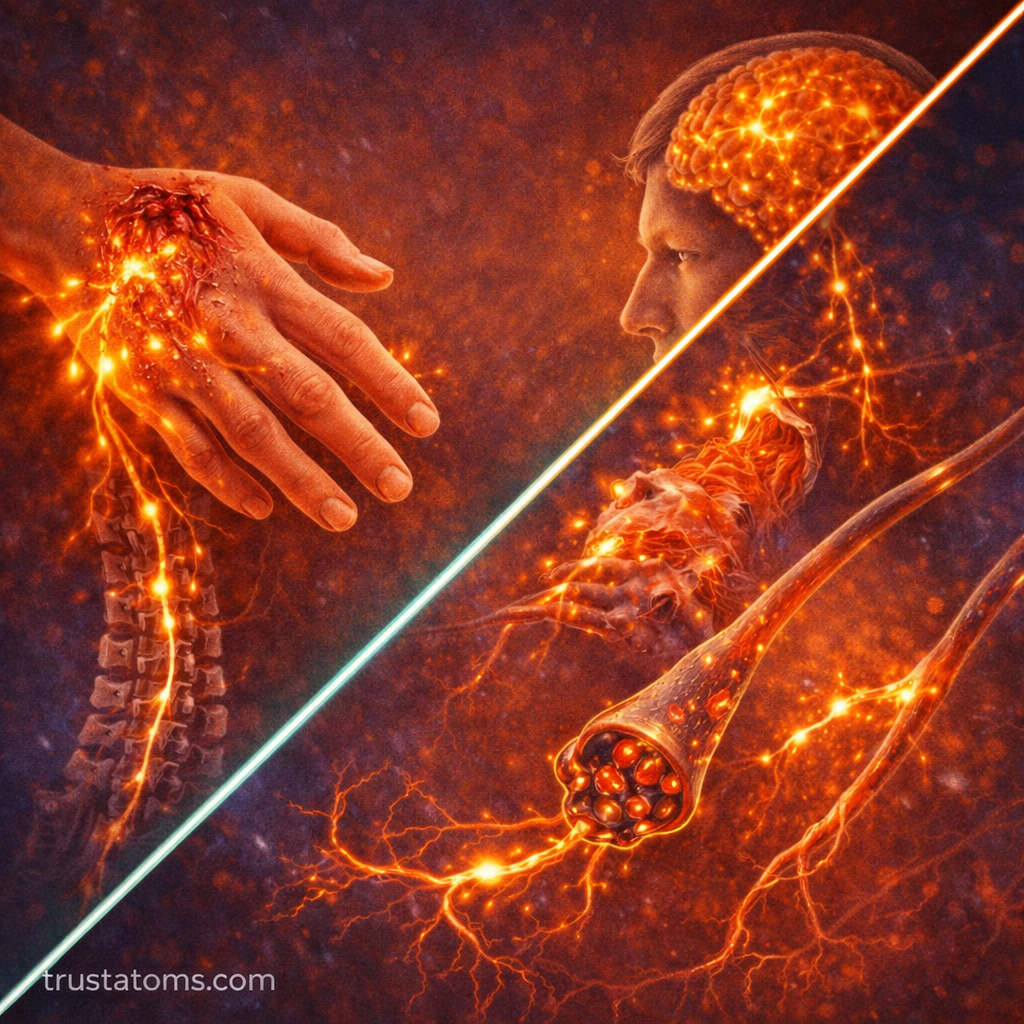
Pain signals travel through a multi-step pathway from the site of injury to the brain. This pathway allows the nervous system to detect danger and produce protective responses.
1. Transduction
The process begins at the nociceptor.
When tissue damage occurs:
- Chemical signals are released
- Nociceptors become activated
- The stimulus is converted into an electrical signal
This conversion of harmful stimuli into nerve impulses is known as transduction.
2. Transmission
Once activated, nociceptors send signals through peripheral sensory neurons toward the spinal cord.
Two main nerve fiber types carry pain signals:
A-delta fibers:
- Conduct signals quickly
- Produce sharp, immediate pain
C fibers:
- Conduct signals more slowly
- Produce dull, aching pain
These signals enter the spinal cord through sensory nerve roots.
3. Spinal Cord Processing
Within the spinal cord, pain signals are processed and transmitted to higher brain centers.
Neurons in the spinal cord relay the signals upward through pathways such as the spinothalamic tract.
This stage can also involve modulation, where signals are amplified or suppressed before reaching the brain.
4. Perception in the Brain
Pain signals eventually reach several brain regions responsible for interpretation.
Important structures include:
- The thalamus
- The somatosensory cortex
- The limbic system
Together, these regions determine:
- The location of pain
- The intensity of pain
- The emotional response to pain
At this stage, nociceptive signals become the conscious experience of pain.
Types of Pain
Pain can be categorized based on its origin and duration.
Acute Pain
Acute pain is short-term and typically occurs immediately after injury.
Characteristics include:
- Rapid onset
- Clear cause
- Temporary duration
Examples include pain from cuts, burns, or muscle injuries.
Chronic Pain
Chronic pain persists for longer periods, sometimes lasting months or years.
It may develop due to:
- Long-term inflammation
- Nerve damage
- Persistent disease conditions
Chronic pain involves complex changes in the nervous system that can alter how pain signals are processed.
Pain Modulation in the Nervous System
The nervous system does not simply transmit pain signals. It also regulates them through a process known as pain modulation.
Certain brain regions can send signals downward to the spinal cord to influence pain transmission.
These descending pathways may:
- Reduce pain signal intensity
- Block signal transmission
- Adjust pain perception
Neurotransmitters involved in pain modulation include:
- Endorphins
- Serotonin
- Norepinephrine
These chemicals help regulate how strongly pain signals are perceived.
Protective Role of Pain
Pain serves an essential biological purpose. It acts as an early warning system that helps prevent further injury.
Protective functions include:
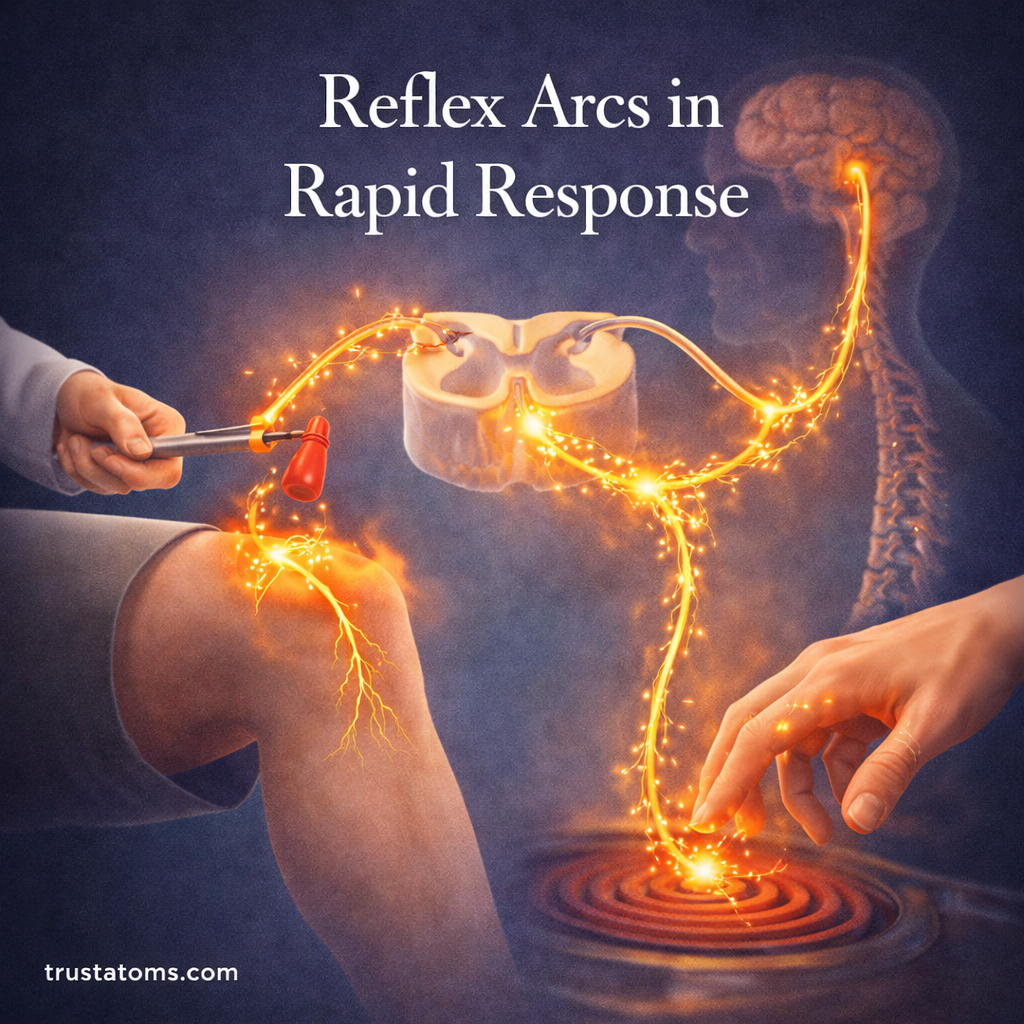
- Triggering withdrawal reflexes
- Encouraging rest and recovery
- Alerting individuals to harmful conditions
- Promoting healing behaviors
Without the ability to feel pain, injuries could go unnoticed and cause serious damage.
Pain Pathways and Nervous System Disorders
In some cases, pain pathways may become disrupted or overly sensitive. This can lead to abnormal pain experiences.
Examples include:
- Neuropathic pain caused by nerve damage
- Increased sensitivity to stimuli
- Persistent pain without obvious injury
Research in neuroscience continues to explore how pain pathways function and how abnormal pain processing can be treated.
Final Thoughts
Pain pathways and nociception are critical components of the human nervous system. By detecting harmful stimuli and transmitting signals to the brain, nociceptors help the body respond quickly to injury and protect itself from further harm.
The complex journey from tissue damage to pain perception involves multiple steps, including signal transduction, neural transmission, spinal processing, and brain interpretation. Together, these processes allow the nervous system to monitor potential threats and guide protective behavior.
Understanding how pain signals travel through the body provides valuable insight into the biological mechanisms that support survival and recovery.