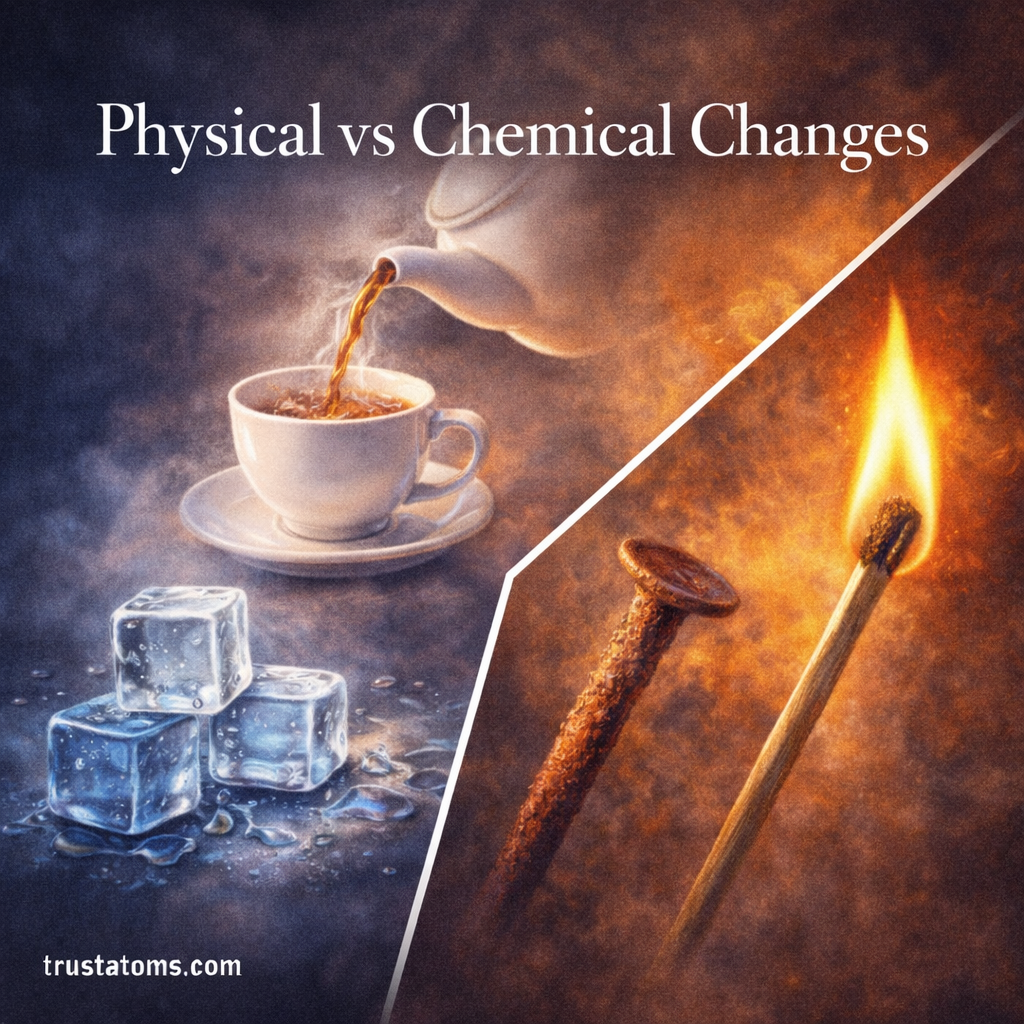
Matter is constantly changing. Ice melts into water, metal rusts, wood burns, and food cooks. In chemistry, these transformations are classified into two main types: physical changes and chemical changes.
Understanding the difference between physical and chemical changes helps scientists explain how substances behave, how reactions occur, and how materials interact with energy.
This guide explains what physical and chemical changes are, how they differ, and how to recognize each type in everyday life.
What Are Physical and Chemical Changes?
A change in matter occurs when a substance transforms in appearance, structure, or composition.
Chemists group these changes into two main categories:
- Physical changes – changes in form or state that do not create a new substance
- Chemical changes – changes that produce one or more new substances
The key difference lies in whether the chemical identity of the substance changes.
What Is a Physical Change?
A physical change alters the appearance, shape, or state of a substance without changing its chemical composition.
In other words, the substance remains the same material, even though it may look different.
Characteristics of Physical Changes
Physical changes typically involve:
- Changes in size or shape
- Changes in state of matter
- Changes in texture or appearance
- No formation of a new substance
These changes often occur when energy such as heat or pressure is applied.
Examples of Physical Changes
Common examples include:
- Ice melting into water
- Water freezing into ice
- Paper being cut or torn
- Salt dissolving in water
- Crushing a can
- Breaking glass
In each case, the original substance still exists—it has simply changed form.
Phase Changes as Physical Changes
Changes between solid, liquid, and gas are known as phase changes, and they are physical changes because the substance remains chemically identical.
Common phase changes include:
- Melting – solid to liquid
- Freezing – liquid to solid
- Evaporation – liquid to gas
- Condensation – gas to liquid
- Sublimation – solid to gas
For example, when ice melts into water, the molecules remain H₂O. Only their arrangement changes.
What Is a Chemical Change?
A chemical change occurs when one or more substances transform into entirely new substances with different chemical properties.
During a chemical change, atoms rearrange to form new molecules.
Characteristics of Chemical Changes
Chemical changes typically involve:
- Formation of new substances
- Rearrangement of atoms
- Changes in chemical bonds
- Energy being released or absorbed
These changes often produce noticeable effects such as heat, light, gas, or color changes.
Examples of Chemical Changes
Common examples include:
- Rusting of iron
- Burning wood
- Baking bread
- Cooking an egg
- Digestion of food
- Fermentation
In each case, the original substance changes into something chemically different.
Signs That a Chemical Change Has Occurred
Chemists often look for specific indicators that a chemical reaction has taken place.
Common Signs of Chemical Change
These include:
- Color change
- Gas production (bubbles or fumes)
- Formation of a solid precipitate
- Temperature change without external heating
- Emission of light
- New odor
For example, when iron rusts, it reacts with oxygen to form iron oxide, a completely new substance.
Key Differences Between Physical and Chemical Changes
Although both types of changes affect matter, they differ in important ways.
Physical Changes
- Do not create new substances
- Usually reversible
- Involve changes in form or state
- Do not alter chemical bonds
Chemical Changes
- Produce new substances
- Often irreversible
- Involve breaking and forming chemical bonds
- Change chemical composition
These differences are central to understanding chemical reactions.
Comparison of Physical and Chemical Changes
The following comparisons help clarify how these two processes differ.
Composition
- Physical change: substance remains the same
- Chemical change: new substances form
Energy
- Physical change: small energy changes
- Chemical change: often involves larger energy changes
Reversibility
- Physical change: usually reversible
- Chemical change: often difficult or impossible to reverse
Atomic Structure
- Physical change: atoms stay the same arrangement
- Chemical change: atoms rearrange to form new molecules
Everyday Examples of Physical vs Chemical Changes
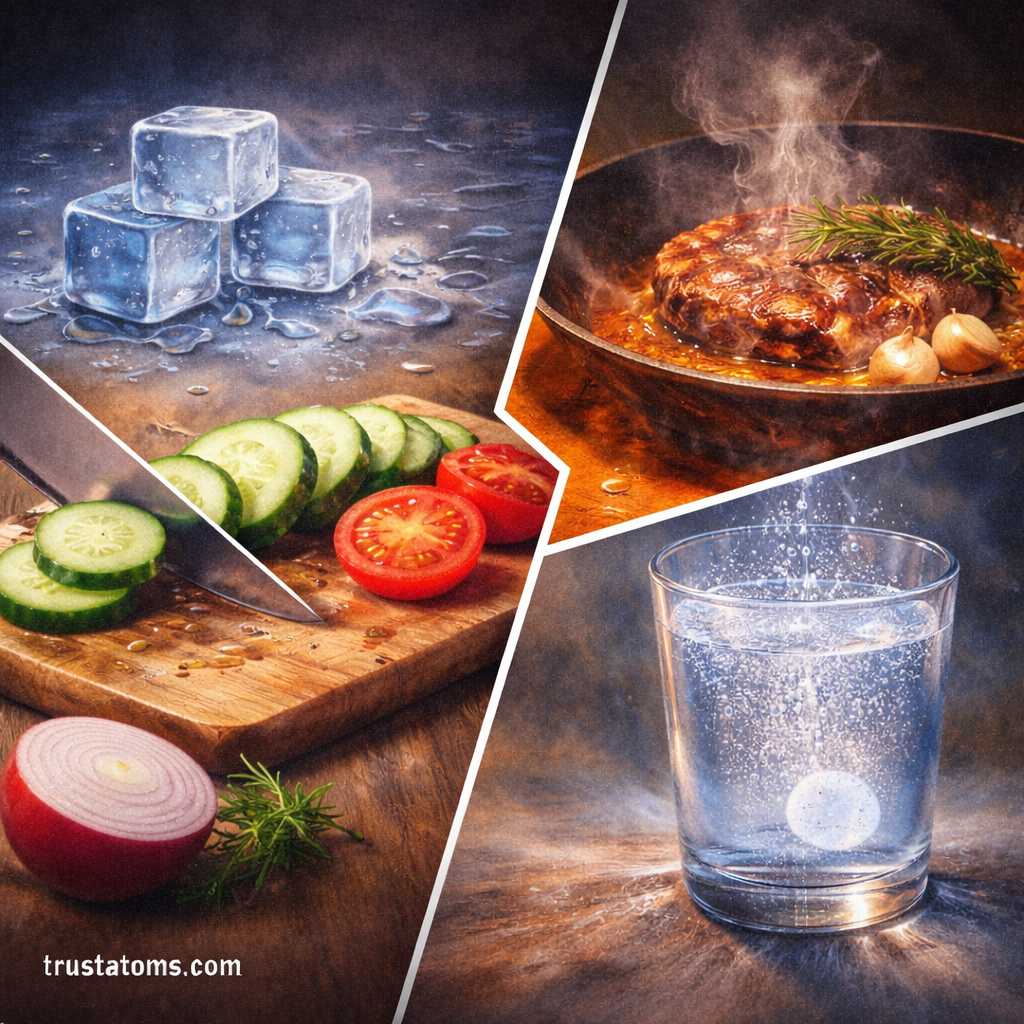
Physical and chemical changes happen constantly in daily life.
Physical Change Examples
- Ice melting in a drink
- Water boiling in a kettle
- Cutting vegetables
- Dissolving sugar in tea
- Inflating a balloon
Chemical Change Examples
- Burning a candle
- Cooking meat
- Rust forming on metal
- Baking a cake
- Fuel burning in a car engine
These examples demonstrate how both types of changes shape everyday processes.
Why Understanding These Changes Matters
The distinction between physical and chemical changes is essential in chemistry because it helps scientists understand how matter behaves.
This knowledge is important in many fields, including:
- Medicine – understanding drug reactions
- Environmental science – studying pollution and chemical cycles
- Engineering – developing new materials
- Food science – improving cooking and preservation
- Energy production – understanding combustion and fuel reactions
Recognizing these changes helps scientists predict and control chemical processes.
Final Thoughts
Physical and chemical changes describe two different ways that matter can transform. Physical changes alter a substance’s form or state without changing its chemical identity, while chemical changes create entirely new substances through the rearrangement of atoms.
From melting ice to burning fuel, these processes occur constantly in both natural environments and human activities. Understanding the difference between physical and chemical changes provides a foundation for studying chemical reactions and the behavior of matter.