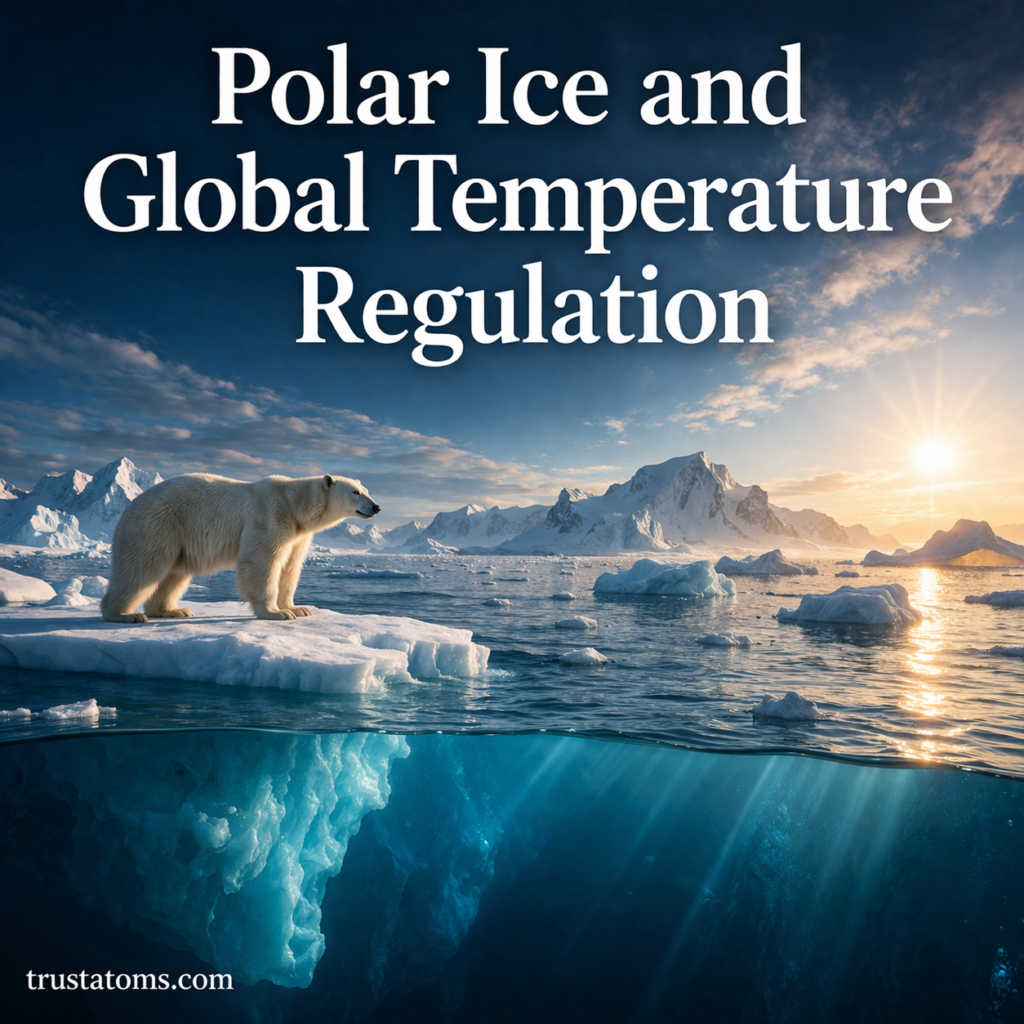
Polar ice plays a critical role in regulating Earth’s climate. Found in the Arctic and Antarctic regions, ice sheets, glaciers, and sea ice act as natural climate stabilizers—helping control temperature, ocean circulation, and atmospheric patterns.
As global temperatures rise, changes in polar ice are becoming one of the clearest indicators of climate change. Understanding how polar ice functions is key to understanding Earth’s overall climate system.
What Is Polar Ice?
Polar ice includes all frozen water in Earth’s high-latitude regions.
Main Types of Polar Ice
- Ice sheets: Massive, land-based ice formations (Greenland and Antarctica)
- Sea ice: Frozen ocean water that expands and contracts seasonally
- Glaciers: Slow-moving rivers of ice found in polar and mountainous regions
Each type plays a different role in climate regulation.
The Albedo Effect: Reflecting Solar Energy
One of the most important functions of polar ice is its ability to reflect sunlight.
What Is Albedo?
Albedo refers to how much sunlight a surface reflects:
- Ice and snow reflect 80–90% of sunlight
- Dark ocean water absorbs most sunlight
Why It Matters
- High reflectivity keeps polar regions cool
- Helps regulate global temperatures
- Prevents excessive heat absorption
When ice melts, darker surfaces are exposed, increasing heat absorption and accelerating warming.
Polar Ice and Global Temperature Balance
Polar ice acts like Earth’s natural cooling system.
Key Functions
- Reflects solar radiation back into space
- Helps maintain stable temperature gradients between equator and poles
- Reduces heat buildup in oceans and atmosphere
This balance is essential for maintaining predictable climate patterns worldwide.
Ocean Circulation and Polar Ice
Polar ice influences global ocean currents, which distribute heat around the planet.
Thermohaline Circulation
This system is driven by differences in temperature and salinity:
- Cold, salty water near the poles sinks
- This sinking water drives deep ocean currents
- Warmer water moves toward the poles to replace it
Role of Ice
- Ice formation increases water salinity (salt is left behind)
- Melting ice adds freshwater, reducing salinity
Changes in polar ice can disrupt these currents, affecting global climate systems.
Seasonal Ice Changes
Polar ice naturally expands and contracts throughout the year.
Arctic Cycle
- Winter: Sea ice expands
- Summer: Ice melts and retreats
Antarctic Cycle
- Similar seasonal pattern, but larger fluctuations due to surrounding ocean
These cycles help regulate heat exchange between the ocean and atmosphere.
Impact of Melting Polar Ice
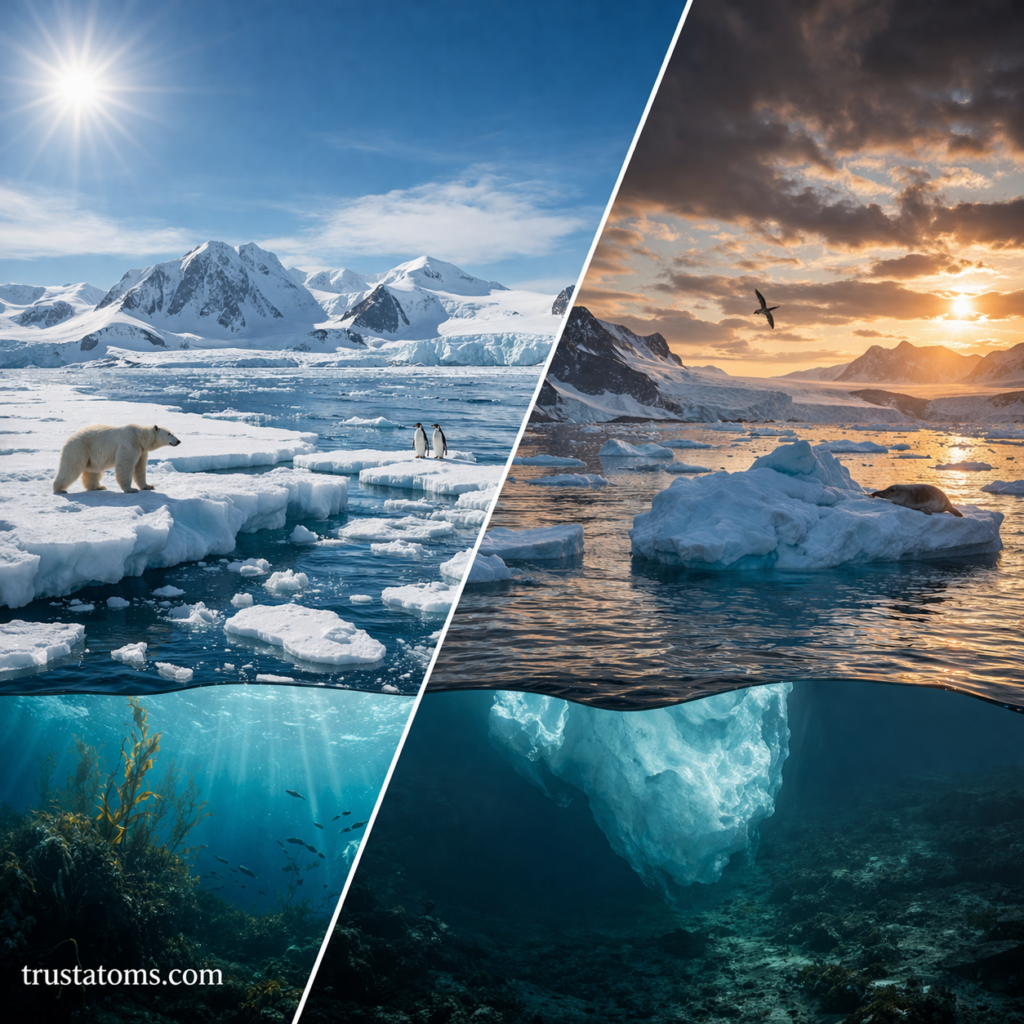
Rising global temperatures are causing polar ice to melt at accelerated rates.
1. Increased Global Warming
- Less ice → lower albedo → more heat absorbed
- Creates a positive feedback loop that speeds up warming
2. Rising Sea Levels
- Melting land ice (especially from Greenland and Antarctica) adds water to oceans
- Leads to coastal flooding and erosion
3. Disrupted Weather Patterns
- Changes in temperature gradients affect atmospheric circulation
- Can influence jet streams and storm systems
Feedback Loops and Climate Acceleration
Polar ice loss triggers feedback mechanisms that intensify climate change.
Ice-Albedo Feedback
- Melting ice exposes darker surfaces
- More heat is absorbed
- Leads to further melting
Ocean Feedback
- Warmer oceans melt ice from below
- Reduced ice allows more heat storage
These feedback loops make polar regions especially sensitive to climate change.
Polar Ice and Wildlife
Polar ice is essential for many ecosystems.
Arctic Species
- Polar bears rely on sea ice for hunting
- Seals use ice for resting and breeding
Antarctic Species
- Penguins depend on stable ice conditions
- Krill populations are linked to sea ice availability
Changes in ice conditions can disrupt entire food chains.
Measuring Polar Ice Changes
Scientists monitor polar ice using advanced technologies:
Satellite Observations
- Track ice extent and thickness
- Provide global coverage over time
Ice Core Analysis
- Reveal historical climate data
- Show long-term temperature and CO₂ trends
Field Research
- Direct measurements of ice thickness and movement
- Study melting rates and structural changes
Why Polar Ice Matters Globally
Even though polar regions are far from most populations, their impact is global.
Global Effects Include
- Sea level rise affecting coastal cities
- Changes in weather patterns worldwide
- Altered ocean circulation systems
- Increased frequency of extreme climate events
Polar ice is deeply connected to Earth’s overall climate stability.
The Future of Polar Ice
Climate projections suggest continued ice loss if current trends continue.
Possible Outcomes
- Ice-free Arctic summers within decades
- Accelerated melting of major ice sheets
- Greater impact on global climate systems
Mitigation Efforts
- Reducing greenhouse gas emissions
- Protecting polar ecosystems
- Advancing climate research and monitoring
Key Takeaways
- Polar ice regulates Earth’s temperature through reflection and cooling
- The albedo effect is critical in maintaining climate balance
- Ice influences ocean circulation and global weather patterns
- Melting ice contributes to warming, sea level rise, and climate disruption
- Protecting polar ice is essential for global environmental stability
Conclusion
Polar ice is more than just frozen water—it is a cornerstone of Earth’s climate system. From reflecting sunlight to driving ocean currents, its influence extends far beyond the polar regions.
As climate change accelerates, preserving polar ice becomes increasingly important. Understanding its role helps highlight the urgency of global efforts to stabilize the climate and protect the planet for future generations.