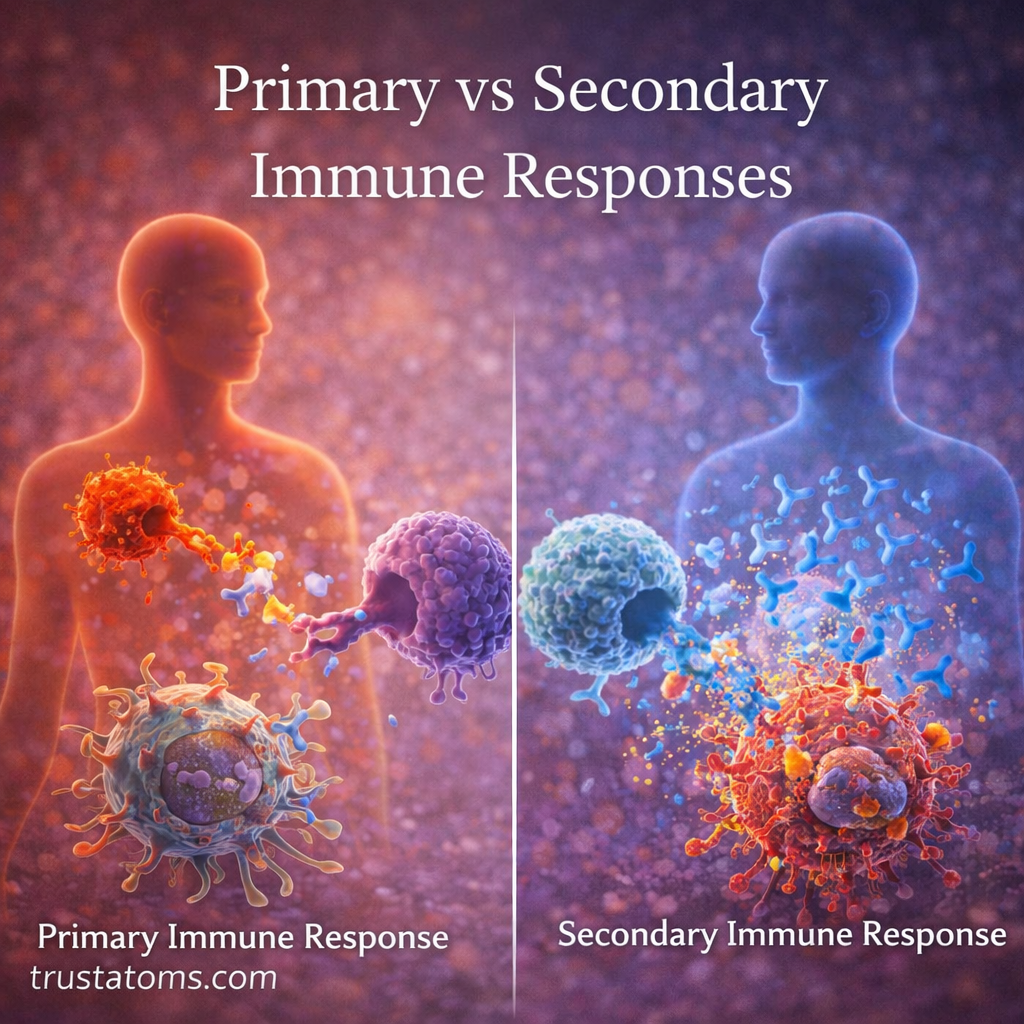
The immune system is designed not only to defend the body but also to learn from past encounters. This ability allows it to respond more effectively to repeated infections. Two key concepts that explain this process are primary immune response and secondary immune response.
These responses differ in speed, strength, and efficiency—and understanding them is essential to grasp how immunity, vaccinations, and long-term protection work.
What Is an Immune Response?
An immune response occurs when the body recognizes and reacts to a foreign substance (antigen), such as a virus or bacteria.
This process involves:
- Detection of the antigen
- Activation of immune cells
- Elimination of the threat
- Formation of immune memory (in some cases)
The type of response depends on whether the body has encountered the antigen before.
What Is the Primary Immune Response?
The primary immune response is the body’s first encounter with a specific antigen.
Key Characteristics:
- Slower to develop (typically several days)
- Moderate strength
- Limited initial efficiency
- Leads to formation of memory cells
How It Works:
- Antigen enters the body
- Antigen-presenting cells process and present it
- T cells and B cells are activated
- B cells produce antibodies (mainly IgM initially)
- Memory cells are generated
Why It’s Slower
During the primary response:
- The immune system must first recognize the antigen
- Specific lymphocytes must be selected and activated
- Clonal expansion takes time
This delay is known as the lag phase.
What Is the Secondary Immune Response?
The secondary immune response occurs when the body is exposed to the same antigen again.
Key Characteristics:
- Much faster response (often within hours to a few days)
- Stronger and more efficient
- Produces higher levels of antibodies
- Dominated by memory cells
How It Works:
- Memory cells recognize the antigen immediately
- Rapid activation of immune pathways
- Quick production of antibodies (mainly IgG)
- Faster elimination of the pathogen
Why It’s Faster and Stronger
The immune system has already “learned” the antigen.
- Memory B and T cells are pre-programmed
- No need for initial recognition or selection
- Response is amplified and targeted
Key Differences Between Primary and Secondary Responses
Primary Immune Response:
- First exposure to antigen
- Slower onset
- Lower antibody levels
- IgM is the main antibody
- Memory cells are created
Secondary Immune Response:
- Repeated exposure to same antigen
- Faster onset
- Higher antibody levels
- IgG is the dominant antibody
- Stronger and more efficient
Role of Memory Cells
Memory cells are the foundation of secondary immune responses.
Types of Memory Cells:
- Memory B cells: Quickly produce antibodies upon re-exposure
- Memory T cells: Rapidly activate immune responses
Functions:
- Provide long-term immunity
- Reduce severity of future infections
- Enable faster immune activation
Antibody Differences in Each Response
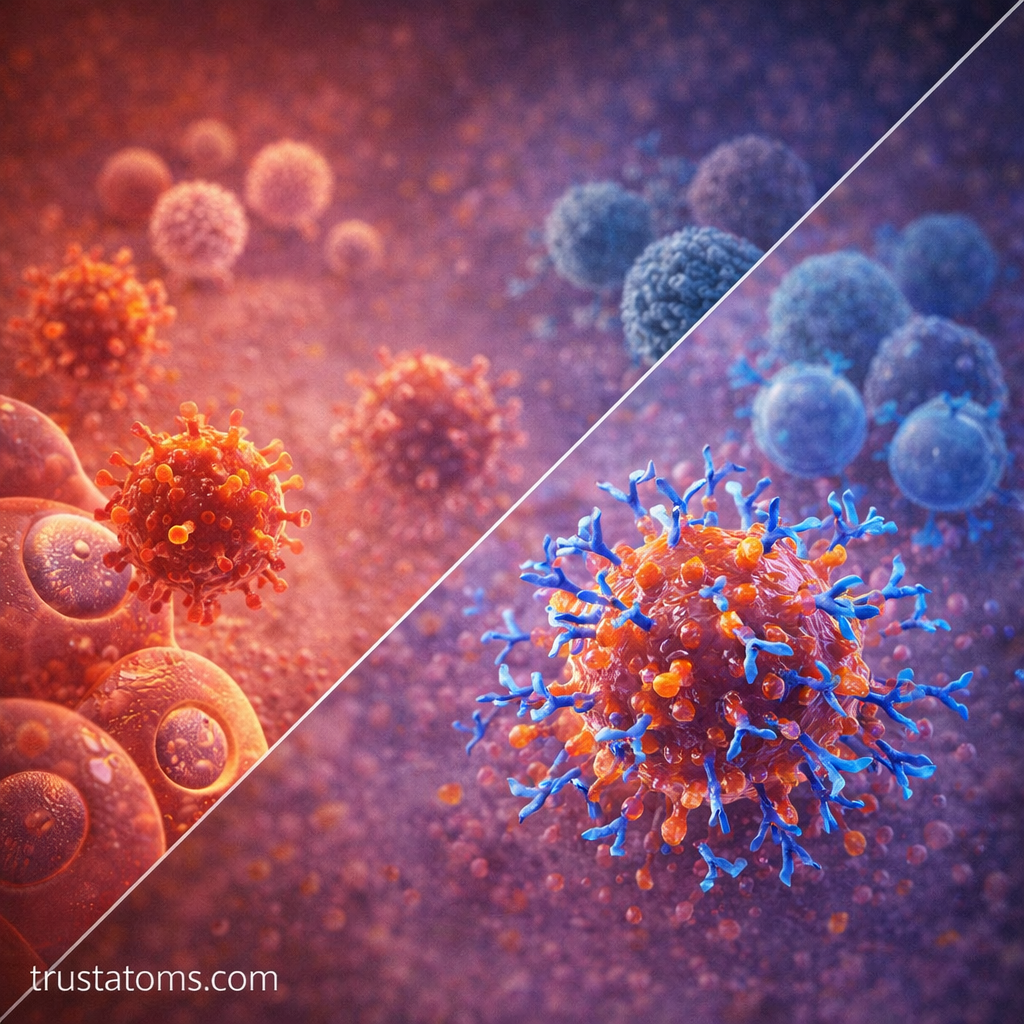
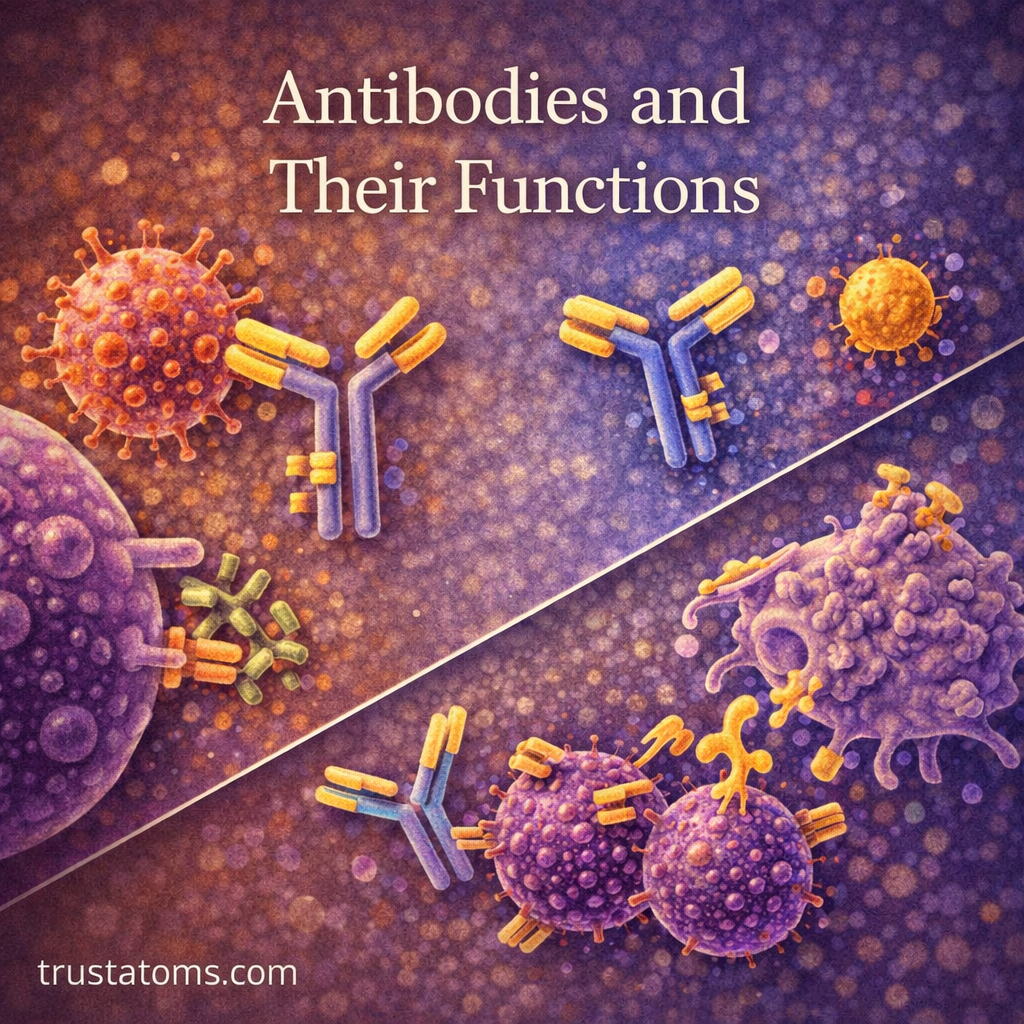
Antibodies play a key role in both responses, but their behavior differs.
Primary Response:
- IgM antibodies appear first
- Lower overall antibody concentration
- Slower production
Secondary Response:
- IgG antibodies dominate
- Higher affinity for the antigen
- Rapid and abundant production
Importance in Vaccination
Vaccines rely on the principles of primary and secondary immune responses.
How Vaccines Work:
- Introduce a harmless form of an antigen
- Trigger a primary immune response
- Generate memory cells
Booster Shots:
- Reinforce the secondary response
- Increase antibody levels
- Extend long-term protection
Real-World Example
Consider a viral infection:
First Exposure:
- Symptoms may be more severe
- Immune system takes time to respond
- Primary response is activated
Second Exposure:
- Faster immune reaction
- Symptoms are milder or absent
- Secondary response prevents illness
Why These Responses Matter
Understanding primary and secondary immune responses explains:
- How immunity develops over time
- Why some diseases are only experienced once
- How vaccines provide protection
- Why booster doses are sometimes needed
When the System Doesn’t Work Properly
Disruptions in immune responses can lead to problems.
Weak Primary Response:
- Poor initial defense
- Increased susceptibility to infections
Impaired Secondary Response:
- Reduced memory function
- Recurrent infections
Overactive Response:
- Can contribute to autoimmune diseases
- May cause excessive inflammation
Key Functions at a Glance
- Primary response initiates immune learning
- Secondary response provides rapid protection
- Memory cells store information about pathogens
- Antibodies neutralize threats efficiently
- Adaptive immunity improves over time
Final Thoughts
Primary and secondary immune responses are essential components of adaptive immunity. Together, they allow the immune system to not only defend the body but also improve with experience.
The primary response lays the foundation by identifying threats and creating memory. The secondary response builds on that foundation, delivering faster and stronger protection.
This remarkable ability to learn and adapt is what makes the immune system one of the most powerful and efficient systems in the human body.