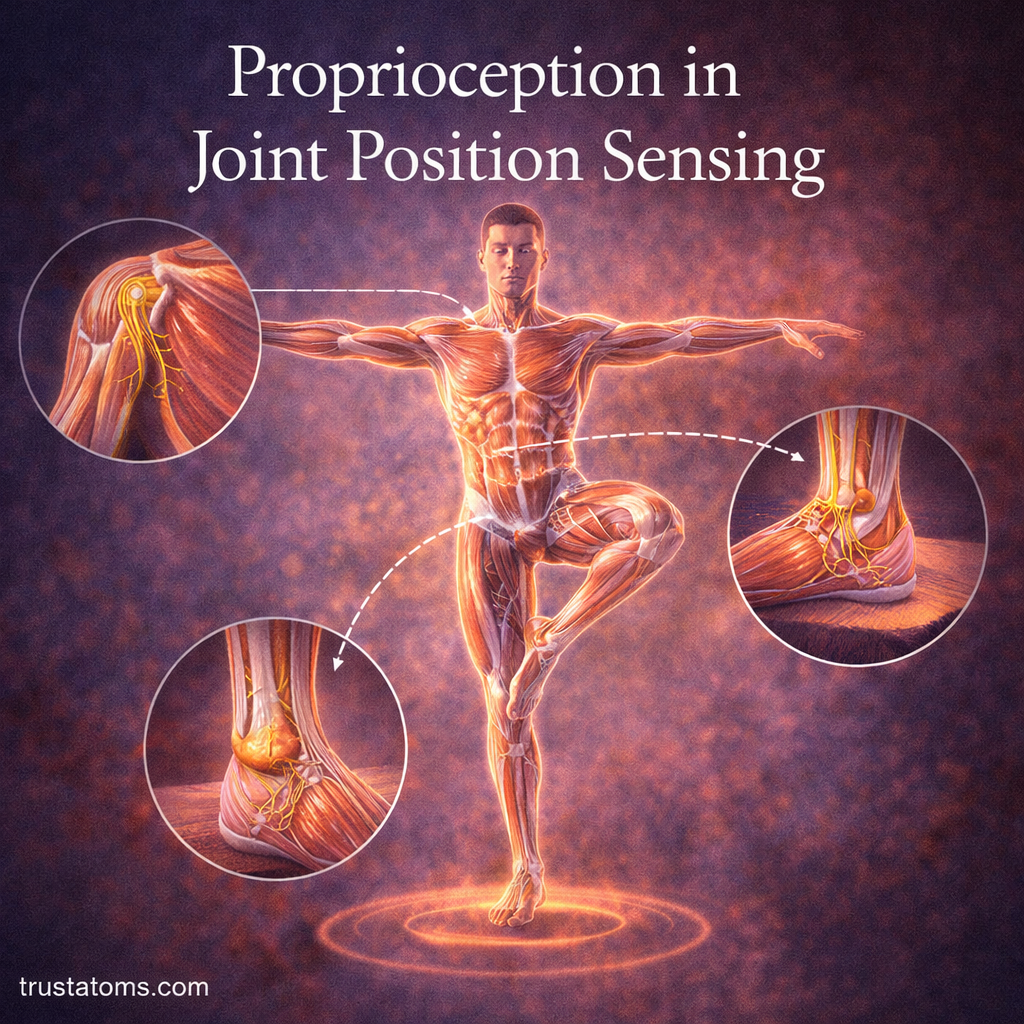
Have you ever touched your nose with your eyes closed or walked without constantly looking at your feet? These actions are possible because of proprioception—your body’s ability to sense its position, movement, and orientation in space.
Proprioception plays a critical role in joint position sensing, coordination, balance, and injury prevention.
What Is Proprioception?
Proprioception is often called the “sixth sense” because it allows you to perceive the position and movement of your body without visual input.
Key Functions
- Detects joint position
- Monitors movement and speed
- Helps maintain balance
- Coordinates muscle activity
It operates continuously, even when you’re not consciously aware of it.
What Is Joint Position Sensing?
Joint position sensing is a specific aspect of proprioception.
Definition
It refers to your ability to:
- Know where your joints are in space
- Replicate specific joint angles
- Adjust movement based on position
Example
- Raising your arm to a certain height without looking
- Walking upstairs without watching every step
How Proprioception Works
Proprioception relies on specialized sensory receptors located throughout the body.
Key Proprioceptors
- Muscle Spindles
- Golgi Tendon Organs
- Joint Receptors
These receptors send information to the brain about body position and movement.
1. Muscle Spindles
- Located within muscles
- Detect muscle stretch and length
- Help regulate muscle contraction
Role
- Prevent overstretching
- Maintain muscle tone
2. Golgi Tendon Organs
- Found in tendons
- Detect tension in muscles
Role
- Protect muscles from excessive force
- Help regulate strength of contraction
3. Joint Receptors
- Located in joint capsules and ligaments
- Detect joint angle and movement
Role
- Provide information about joint position
- Support stability and coordination
The Role of the Nervous System
Proprioceptive signals travel through the nervous system to the brain.
Process
- Receptors detect changes in position or movement
- Signals are sent to the spinal cord and brain
- The brain processes the information
- Adjustments are made in real time
This process happens rapidly and continuously.
Proprioception and Movement Control
Proprioception allows your body to move smoothly and efficiently.
Benefits
- Improves coordination
- Enhances accuracy of movement
- Maintains balance
- Reduces unnecessary muscle effort
Proprioception in Everyday Activities
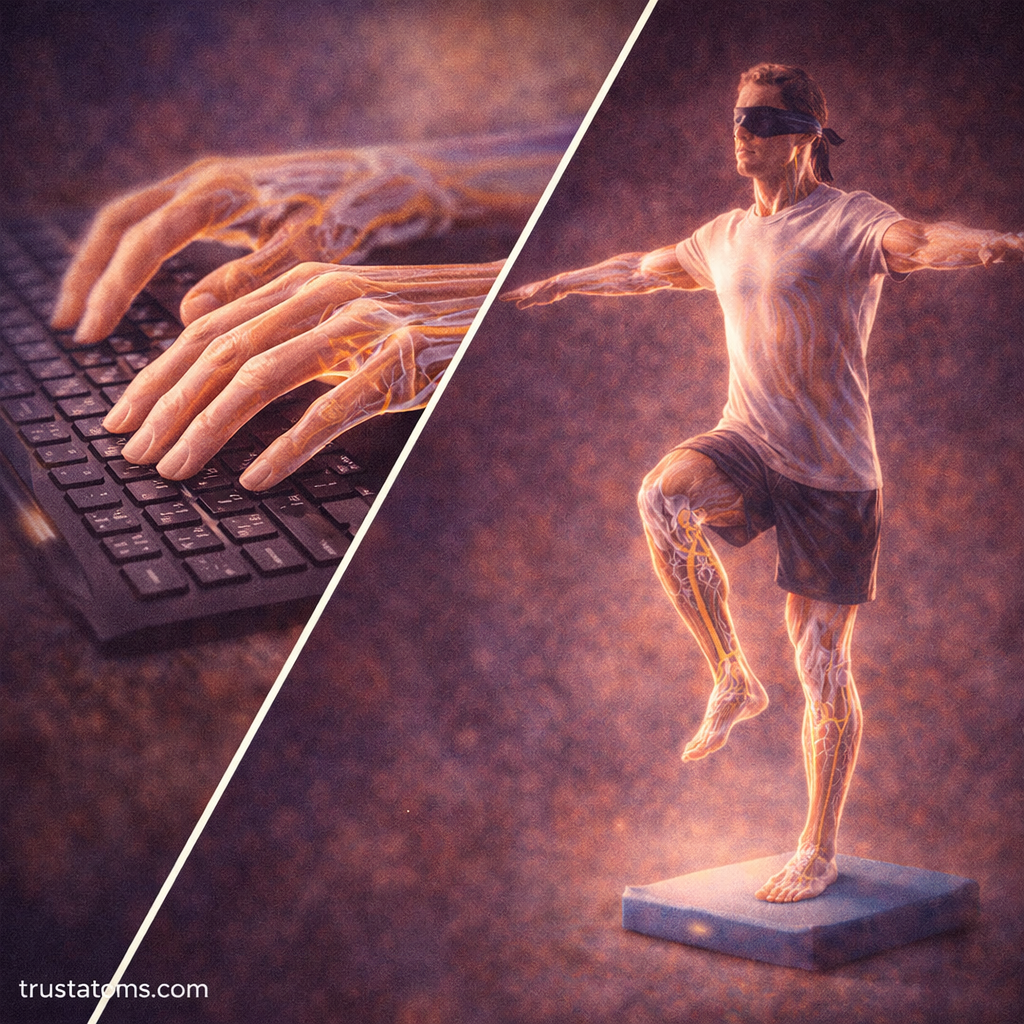
Proprioception is involved in nearly all daily movements.
Examples
- Walking without looking at your feet
- Typing on a keyboard without watching your hands
- Maintaining balance while standing
Proprioception and Athletic Performance
Athletes rely heavily on proprioception for performance and safety.
Key Advantages
- Faster reaction times
- Better balance and stability
- Improved movement precision
- Reduced injury risk
Examples
- Adjusting body position mid-jump
- Stabilizing joints during rapid direction changes
Proprioception and Injury Prevention
Strong proprioception helps protect joints from injury.
How It Helps
- Detects unstable positions
- Activates stabilizing muscles
- Prevents excessive joint movement
When Proprioception Is Impaired
- Increased risk of sprains and strains
- Poor coordination
- Reduced balance
Factors That Affect Proprioception
Several factors influence proprioceptive ability.
1. Fatigue
- Slows response time
- Reduces accuracy
2. Injury
- Damages receptors
- Impairs joint awareness
3. Aging
- Decreases sensory feedback
- Affects balance and coordination
Improving Proprioception
Proprioception can be trained and improved over time.
Effective Methods
- Balance exercises (e.g., standing on one leg)
- Stability training (e.g., balance boards)
- Functional movements (e.g., lunges, squats)
- Closed-eye exercises
Common Misconceptions
“Proprioception is the same as balance”
Not exactly.
- Balance is one outcome
- Proprioception is the underlying sensory system
“It only matters for athletes”
False.
- Everyone relies on proprioception for daily movement
Why Proprioception Matters in Human Anatomy
Proprioception is essential for:
- Joint stability
- Movement coordination
- Injury prevention
- Efficient body control
It allows your body to function smoothly without constant visual monitoring.
Final Thoughts
Proprioception is a fundamental part of how your body senses and controls movement. By continuously monitoring joint position and muscle activity, it enables precise, coordinated actions in both everyday life and athletic performance.
Understanding proprioception gives deeper insight into how the body maintains balance, stability, and control in every movement.