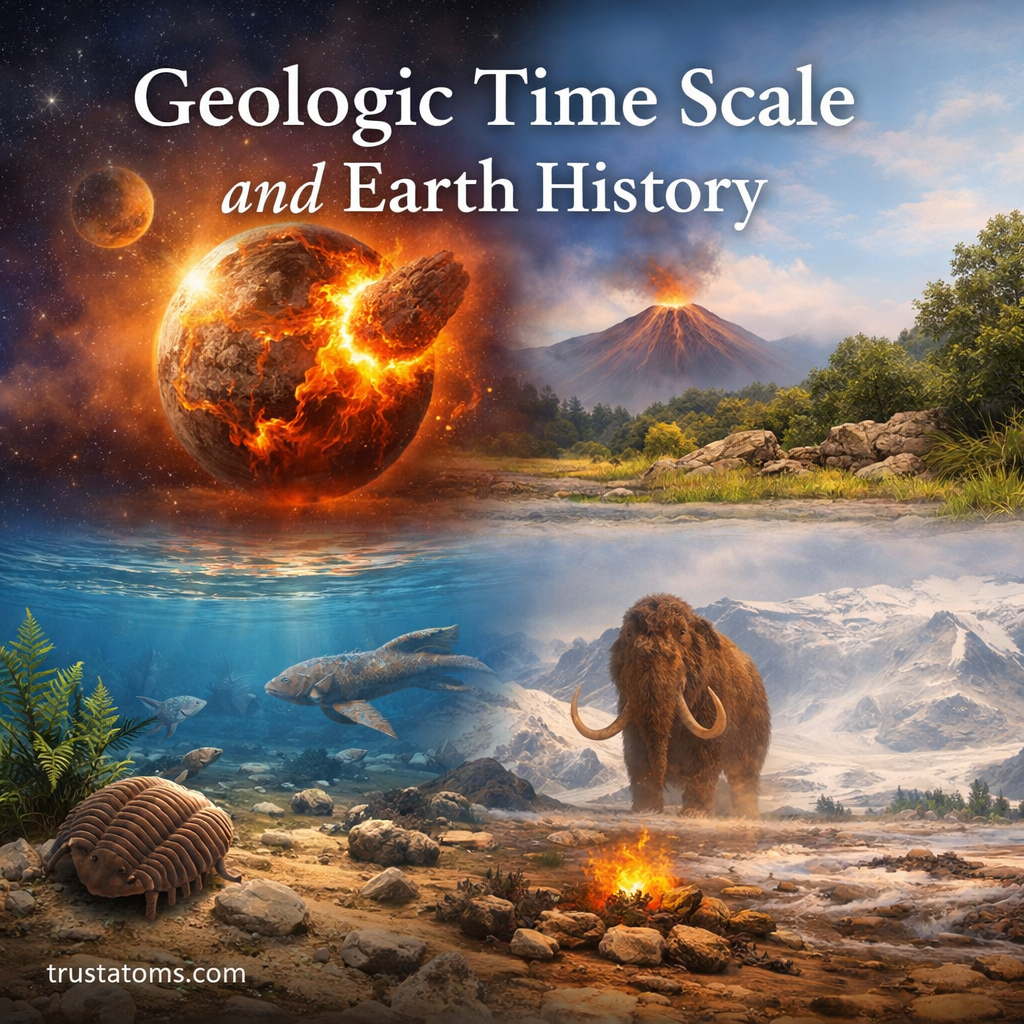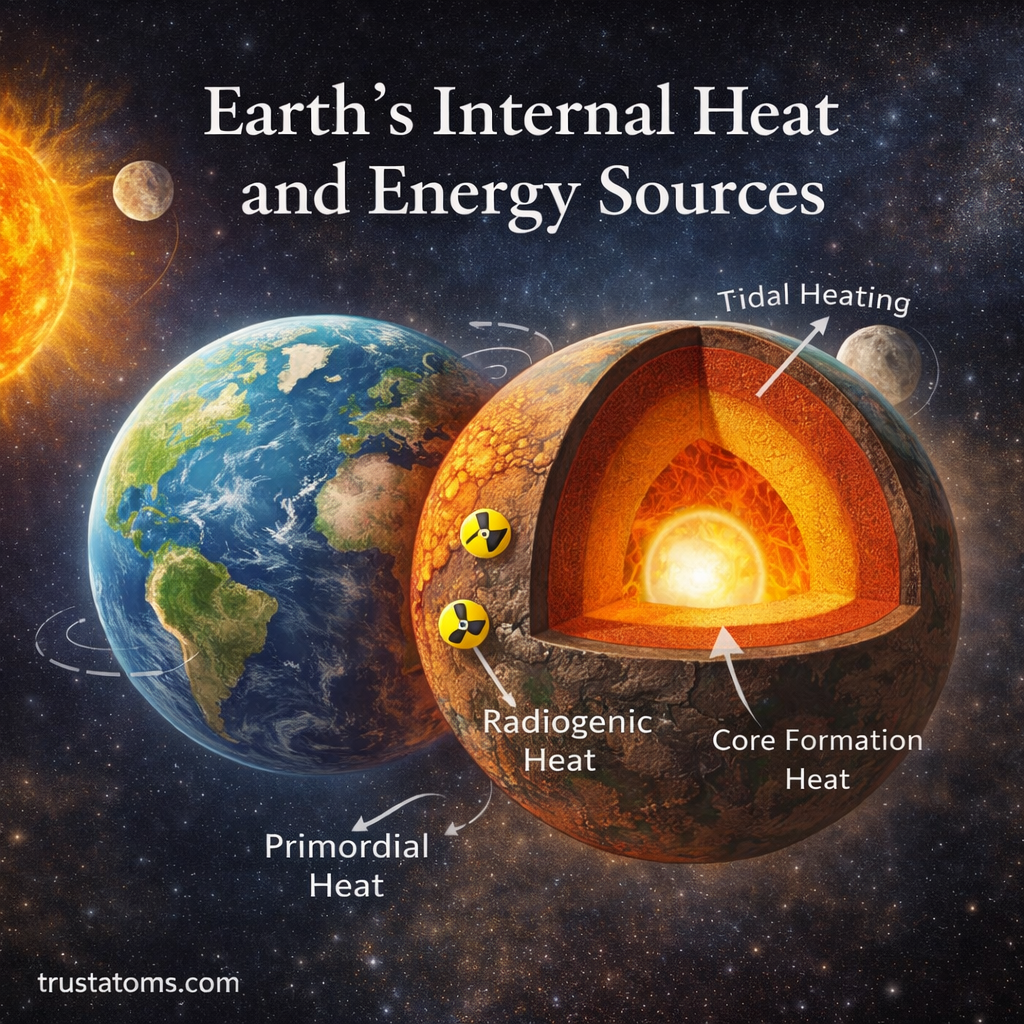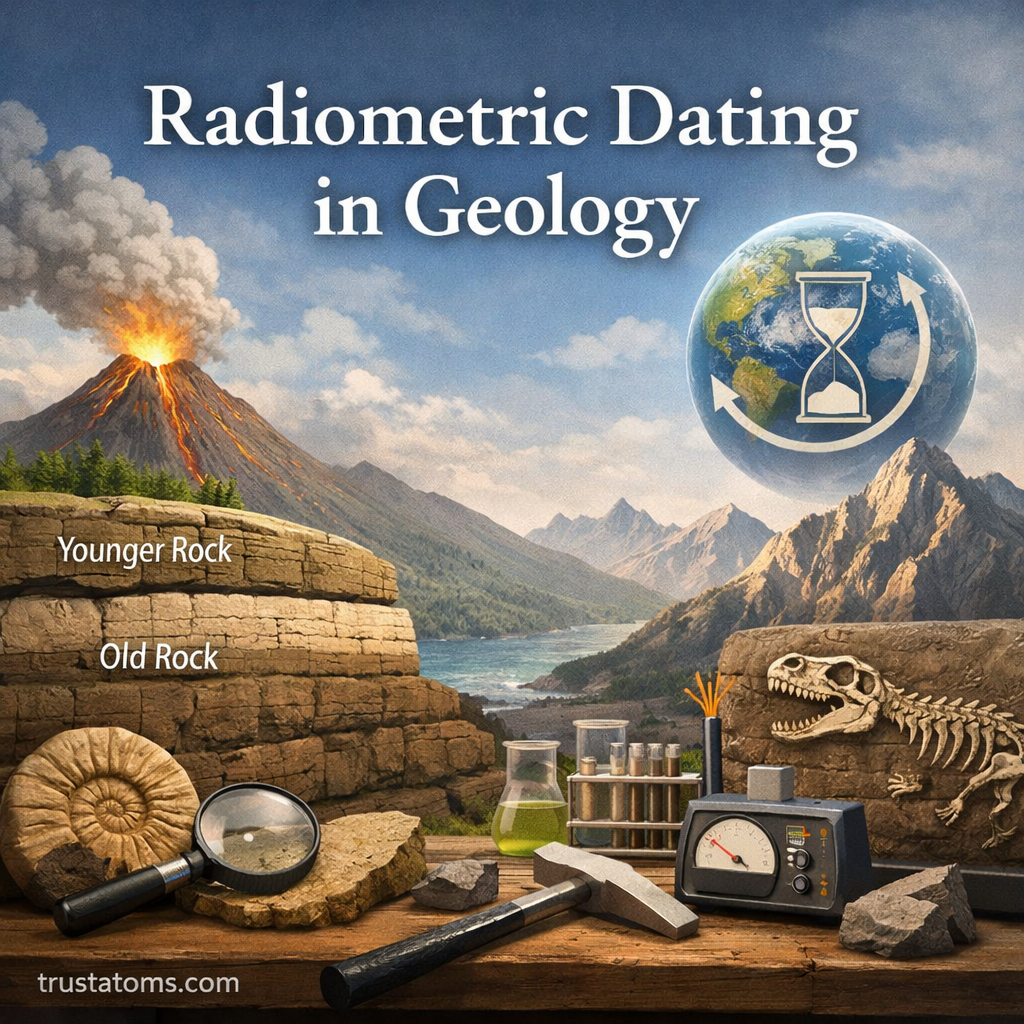
Radiometric dating is one of the most important tools geologists use to understand Earth’s history. It allows scientists to estimate the age of rocks, minerals, and geological events by measuring naturally occurring changes in certain elements over time.
Rather than relying on guesswork, this method uses consistent, measurable processes built into the structure of matter itself. As a result, it provides a reliable framework for interpreting the timeline of Earth’s formation, major geological events, and the development of landscapes we see today.
What Is Radiometric Dating?
Radiometric dating is a technique used to determine the age of materials based on the predictable transformation of unstable atoms into more stable forms.
These unstable atoms are known as radioactive isotopes. Over time, they change (or “decay”) into stable isotopes at a steady, measurable rate.
Key idea:
- Each radioactive isotope decays at a fixed rate
- This rate is not affected by external conditions like temperature or pressure
- By measuring how much of the original material remains, scientists can estimate age
Understanding Half-Life
A central concept in radiometric dating is half-life.
Half-life is the amount of time it takes for half of a radioactive isotope to decay into a stable form.
For example:
- After one half-life → 50% remains
- After two half-lives → 25% remains
- After three half-lives → 12.5% remains
This predictable pattern allows geologists to work backward and estimate how long the decay process has been occurring.
Common Radiometric Dating Methods
Different isotopes are used depending on the age and type of material being studied. Each method is suited for specific time ranges.
Uranium–Lead Dating
- One of the oldest and most reliable methods
- Often used on zircon crystals in igneous rocks
- Can date materials billions of years old
Potassium–Argon Dating
- Useful for volcanic rocks
- Measures the decay of potassium into argon gas
- Commonly used for dating lava flows and ash layers
Carbon-Based Dating
- Used for more recent materials
- Effective for organic remains like wood or plant material
- Limited to relatively recent geological time compared to other methods
How Radiometric Dating Works Step-by-Step
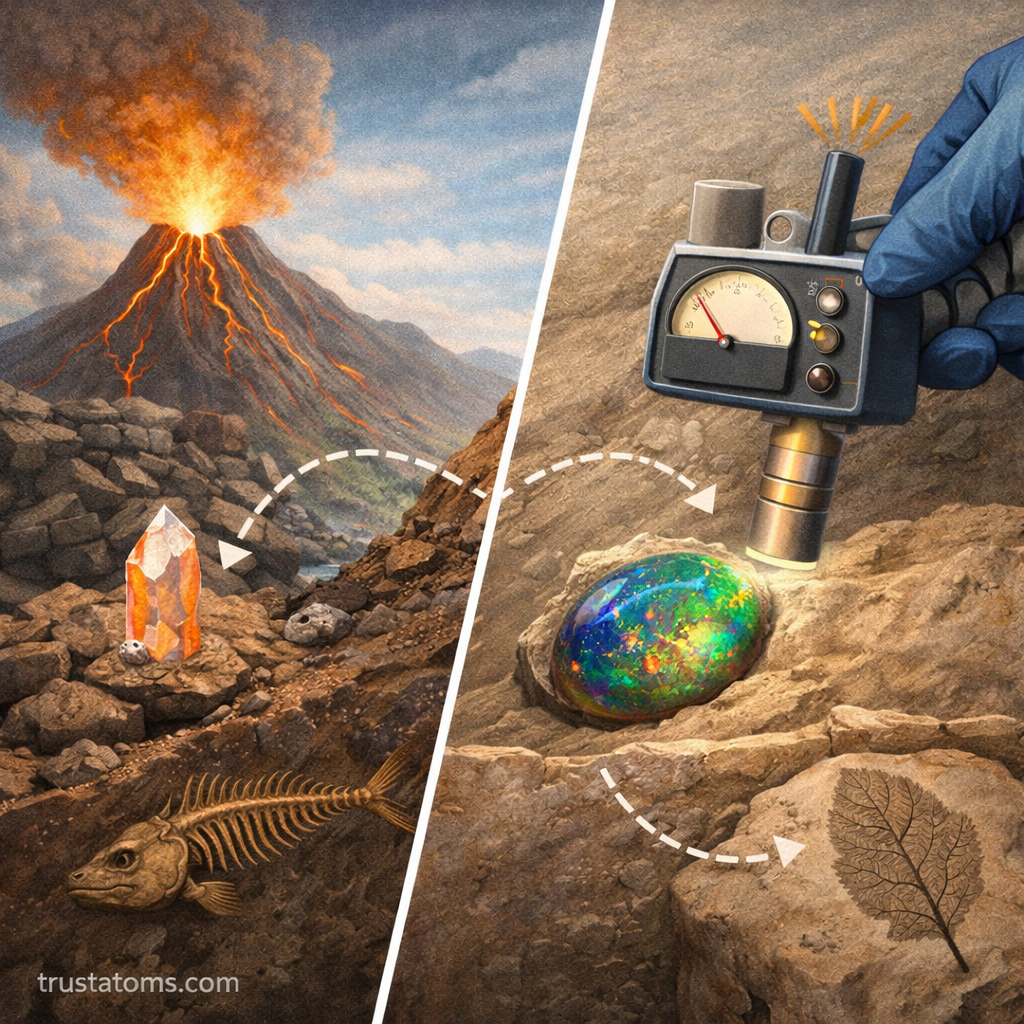
- A rock or mineral forms, locking in radioactive isotopes
- Over time, these isotopes begin to decay at a known rate
- Scientists measure:
- The remaining parent isotope
- The amount of daughter (decayed) product
- Using known decay rates, they calculate the age of the sample
This process relies on careful lab measurements and cross-checking with multiple methods when possible.
Why Radiometric Dating Is Important
Radiometric dating plays a key role in building a timeline of Earth’s history.
It helps scientists:
- Determine the age of rocks and minerals
- Understand the timing of geological events (volcanic eruptions, mountain formation)
- Correlate rock layers across different regions
- Build a consistent framework for Earth’s past
Without this method, it would be much harder to place events in a meaningful chronological order.
Assumptions Behind Radiometric Dating
Like all scientific methods, radiometric dating relies on certain assumptions:
- The decay rate has remained constant over time
- The system (rock/mineral) has remained closed (no loss or gain of isotopes)
- The initial conditions can be reasonably estimated
Geologists address these by:
- Using multiple dating methods
- Comparing results across different samples
- Testing consistency within rock layers
Limitations and Considerations
While radiometric dating is powerful, it is not applied blindly.
Important considerations include:
- Some rocks cannot be dated directly (e.g., sedimentary rocks)
- Contamination can affect measurements
- Different methods are needed for different time scales
Because of this, scientists often combine radiometric dating with other geological evidence, such as rock layering and mineral composition.
Radiometric Dating and the Geologic Timeline
Radiometric dating has helped establish the structure of the geologic time scale, organizing Earth’s history into:
- Eons
- Eras
- Periods
By dating key rock formations around the world, scientists can align geological events into a consistent sequence, helping us understand how Earth’s surface has changed over time.
Key Takeaways
- Radiometric dating measures the natural decay of radioactive isotopes
- Half-life is the foundation of age calculations
- Different isotopes are used for different materials and time ranges
- The method provides a structured way to understand Earth’s history
- Results are strengthened by using multiple techniques and cross-checking data
Final Thoughts
Radiometric dating is a cornerstone of modern geology, offering a systematic way to study the age of Earth materials. By relying on measurable, repeatable processes, it allows scientists to construct a timeline of geological events with clarity and consistency.
While it involves careful assumptions and limitations, its strength lies in the combination of precise measurement and cross-verification, making it one of the most widely used tools in Earth science.