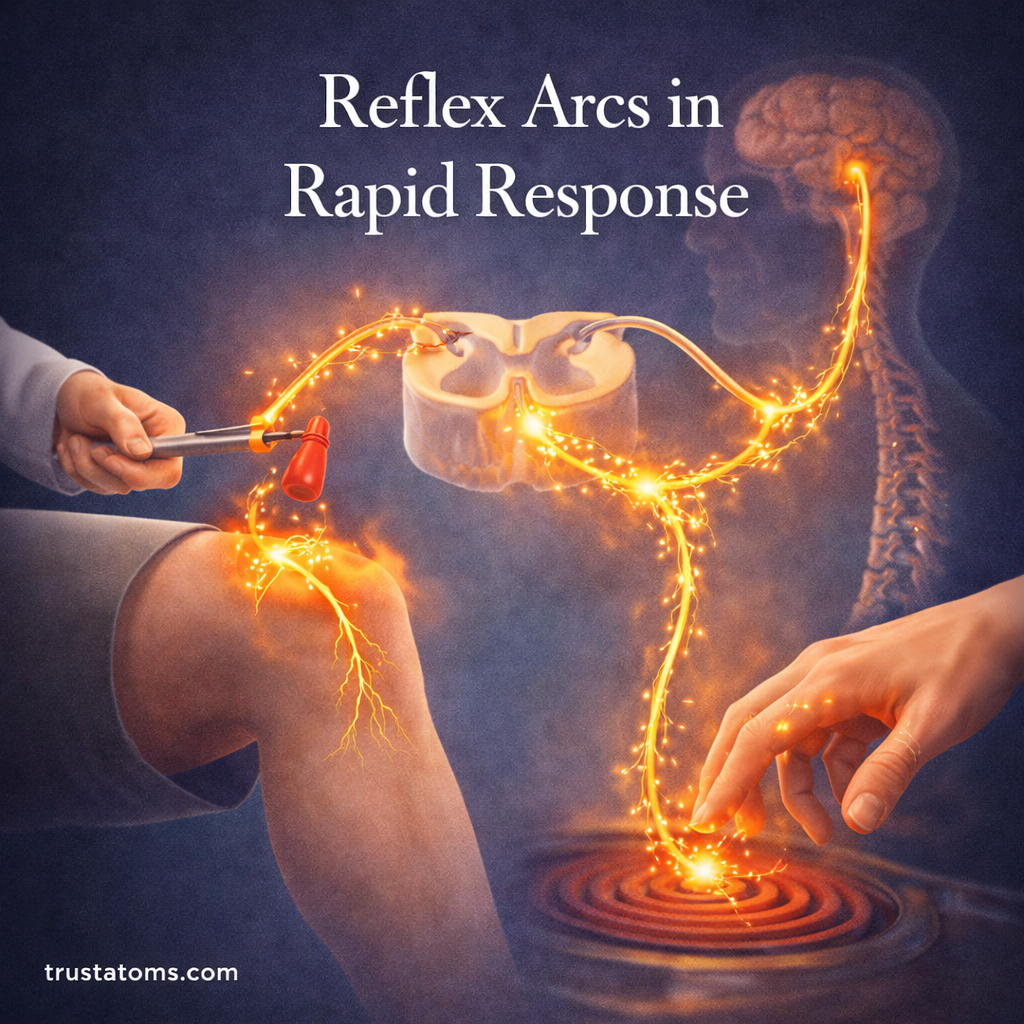
The human body is constantly exposed to potential dangers such as heat, sharp objects, and sudden changes in balance. To respond quickly and protect itself, the nervous system uses specialized pathways called reflex arcs. These neural circuits allow the body to react to stimuli almost instantly, often before the brain becomes fully aware of the situation.
Reflex arcs are responsible for rapid responses like pulling your hand away from a hot surface or quickly adjusting posture to prevent falling. By processing signals through the spinal cord instead of the brain, reflex arcs reduce reaction time and help protect the body from injury.
Understanding how reflex arcs work reveals how the nervous system balances speed and coordination to maintain safety and stability.
What Is a Reflex Arc?
A reflex arc is a neural pathway that produces an automatic response to a stimulus. Unlike voluntary movements that require conscious thought, reflexes occur automatically and rapidly.
Reflex arcs are designed to:
- Protect the body from injury
- Maintain posture and balance
- Regulate internal body functions
- Enable fast responses to environmental changes
Because reflexes bypass complex brain processing, they can occur within milliseconds.
The Five Components of a Reflex Arc
A typical reflex arc involves five main parts working together to detect and respond to a stimulus.
1. Sensory Receptor
The reflex begins when a sensory receptor detects a stimulus.
Examples include:
- Heat receptors in the skin
- Stretch receptors in muscles
- Pain receptors activated by injury
These receptors convert physical stimuli into electrical signals.
2. Sensory Neuron
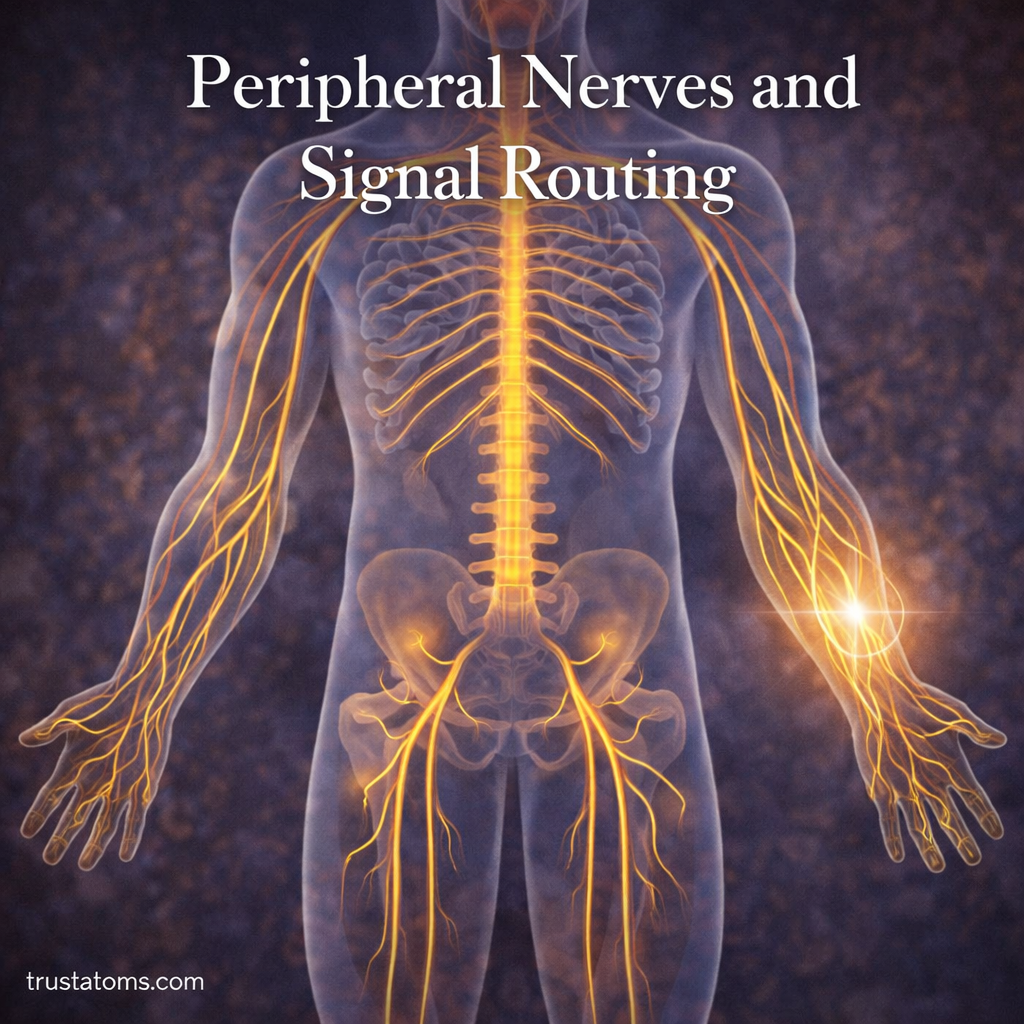
The sensory neuron carries the signal from the receptor to the spinal cord.
This neuron is responsible for transmitting information about the stimulus to the central nervous system.
3. Interneuron
Inside the spinal cord, the signal is often passed to an interneuron.
Interneurons act as connectors that:
- Process the incoming signal
- Determine the appropriate response
- Relay the signal to motor neurons
Some simple reflexes may skip this step and connect directly to a motor neuron.
4. Motor Neuron
The motor neuron carries the outgoing signal from the spinal cord to the effector organ.
Motor neurons activate muscles or glands to produce a response.
5. Effector
The effector is the structure that performs the action.
Effectors can include:
- Skeletal muscles
- Smooth muscles
- Glands
In many reflexes, muscles contract to move the body away from danger.
How a Reflex Arc Works
The process of a reflex arc follows a clear sequence of events.
- A stimulus activates a sensory receptor.
- A sensory neuron sends a signal to the spinal cord.
- Interneurons process the signal within the spinal cord.
- A motor neuron carries the response signal.
- The effector organ performs the reflex action.
This entire process can happen extremely quickly because the signal travels through a short neural pathway.
Example: The Withdrawal Reflex
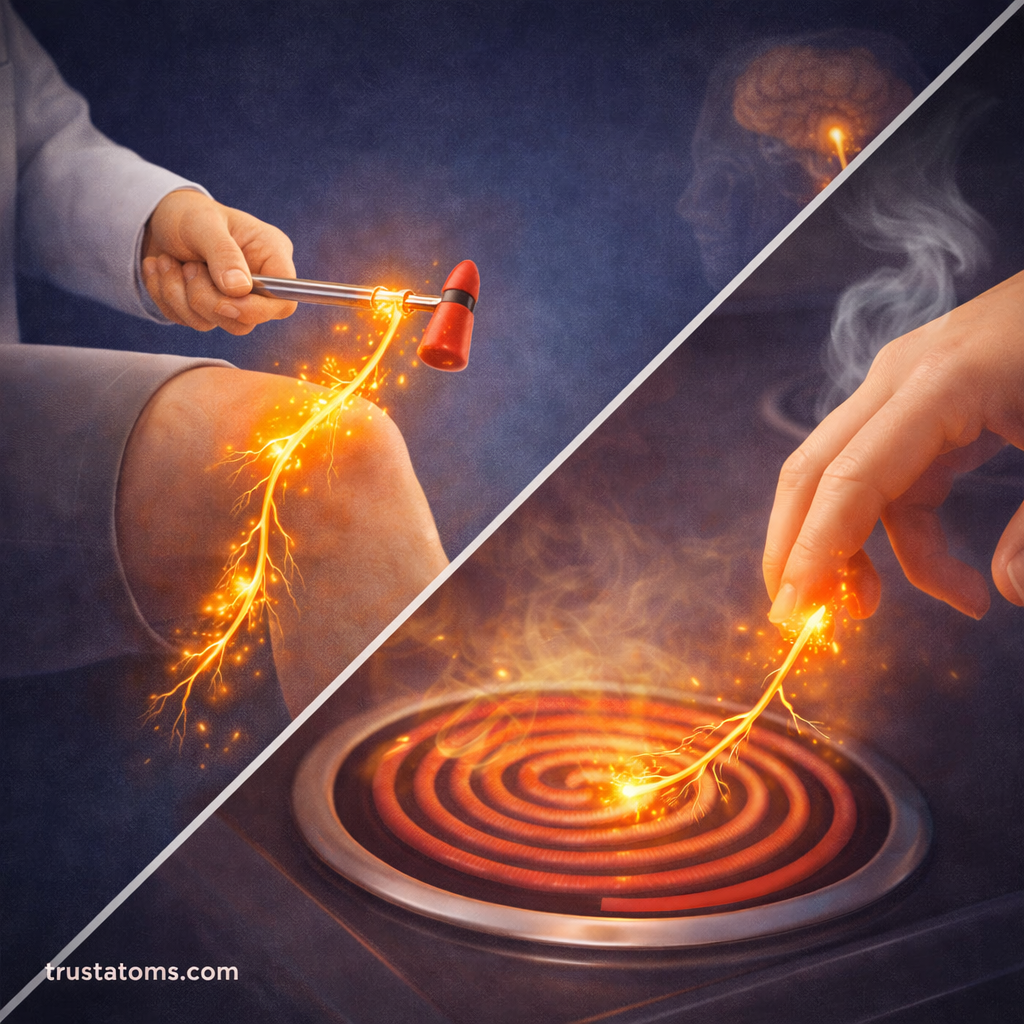
One of the most familiar reflexes is the withdrawal reflex, which occurs when touching something painful or extremely hot.
The sequence works like this:
- Pain receptors in the skin detect the harmful stimulus.
- Sensory neurons send signals to the spinal cord.
- Interneurons quickly activate motor neurons.
- Motor neurons signal the muscles to contract.
- The hand withdraws from the hot object.
Only after this action occurs does the brain fully interpret the sensation of pain.
The Knee-Jerk Reflex
Another well-known reflex is the knee-jerk reflex, also called the patellar reflex.
During a medical exam, a doctor taps the tendon just below the kneecap. This action stretches the quadriceps muscle.
The reflex occurs in the following steps:
- Stretch receptors detect the sudden muscle stretch.
- Sensory neurons send signals to the spinal cord.
- Motor neurons immediately activate the quadriceps muscle.
- The lower leg kicks forward.
This reflex helps maintain posture and balance while standing or walking.
Doctors often test this reflex to evaluate nervous system function.
Types of Reflex Arcs
Reflex arcs can be classified based on their structure and function.
Monosynaptic Reflex
A monosynaptic reflex involves only one synapse between the sensory neuron and the motor neuron.
Characteristics include:
- Very fast response
- Simple neural pathway
- No interneuron involved
The knee-jerk reflex is a classic example of a monosynaptic reflex.
Polysynaptic Reflex
A polysynaptic reflex involves one or more interneurons between sensory and motor neurons.
Features include:
- More complex processing
- Ability to coordinate multiple muscle groups
- Slightly slower response than monosynaptic reflexes
The withdrawal reflex is an example of a polysynaptic reflex.
Reflex Arcs and the Spinal Cord
The spinal cord plays a central role in reflex actions.
Instead of sending signals to the brain for processing first, the spinal cord can:
- Receive sensory input
- Process the signal
- Activate motor responses
This localized processing dramatically reduces response time.
However, the brain still receives information about the reflex after it occurs. This allows conscious awareness of what happened.
The Role of Reflexes in Everyday Movement
Reflex arcs are not only used in emergencies. They also help regulate everyday body functions.
Examples include:
- Maintaining posture while standing
- Adjusting muscle tension during movement
- Regulating breathing and swallowing
- Stabilizing joints during motion
These reflexes operate continuously without conscious effort.
Protective Reflexes in the Body
Several reflexes exist specifically to protect the body.
Common protective reflexes include:
- Blink reflex: protects the eyes from foreign objects
- Cough reflex: clears irritants from the airways
- Gag reflex: prevents choking
- Withdrawal reflex: protects from painful stimuli
These reflexes help maintain the body’s safety and proper function.
Why Reflex Arcs Are Important
Reflex arcs provide several important advantages for survival and physical coordination.
They allow the body to:
- Respond to danger rapidly
- Protect tissues from injury
- Maintain balance and posture
- Coordinate movement efficiently
Without reflex arcs, the nervous system would rely solely on slower brain processing, increasing the risk of injury.
Final Thoughts
Reflex arcs are essential components of the nervous system’s rapid response network. By creating direct communication pathways between sensory input and motor output, they allow the body to react instantly to potential threats.
Through the coordinated activity of sensory neurons, interneurons, motor neurons, and effectors, reflex arcs enable protective responses, maintain posture, and support everyday movement. These automatic reactions demonstrate the remarkable efficiency of the nervous system in keeping the body safe and responsive to its environment.