Digestion begins the moment food enters your mouth. While it may seem simple, the early stages of digestion are essential for preparing food for the rest of the digestive process. One of the key players in this stage is saliva.
Saliva is more than just moisture—it contains enzymes and compounds that begin breaking down food, making swallowing easier and supporting overall digestive efficiency.
What Is Saliva?
Saliva is a clear fluid produced by salivary glands in the mouth. It is made up mostly of water, but also contains important substances that aid digestion.
Main Components of Saliva
- Water (about 99%)
- Enzymes (such as amylase)
- Mucus
- Electrolytes (sodium, potassium, chloride)
- Antibacterial compounds
These components work together to start digestion and protect oral health.
The Role of Salivary Glands
Saliva is produced by three major pairs of salivary glands:
Major Salivary Glands
- Parotid glands – located near the cheeks
- Submandibular glands – beneath the jaw
- Sublingual glands – under the tongue
Function
- Secrete saliva into the mouth
- Adjust saliva production based on food type and chewing
The amount of saliva increases when you eat, smell, or even think about food.
How Saliva Begins Digestion
Saliva plays a critical role in the earliest phase of digestion.
Mechanical Support
- Moistens food for easier chewing
- Helps form food into a bolus (a soft, swallowable mass)
- Lubricates the mouth and throat for smooth swallowing
Chemical Digestion
Saliva contains enzymes that begin breaking down nutrients.
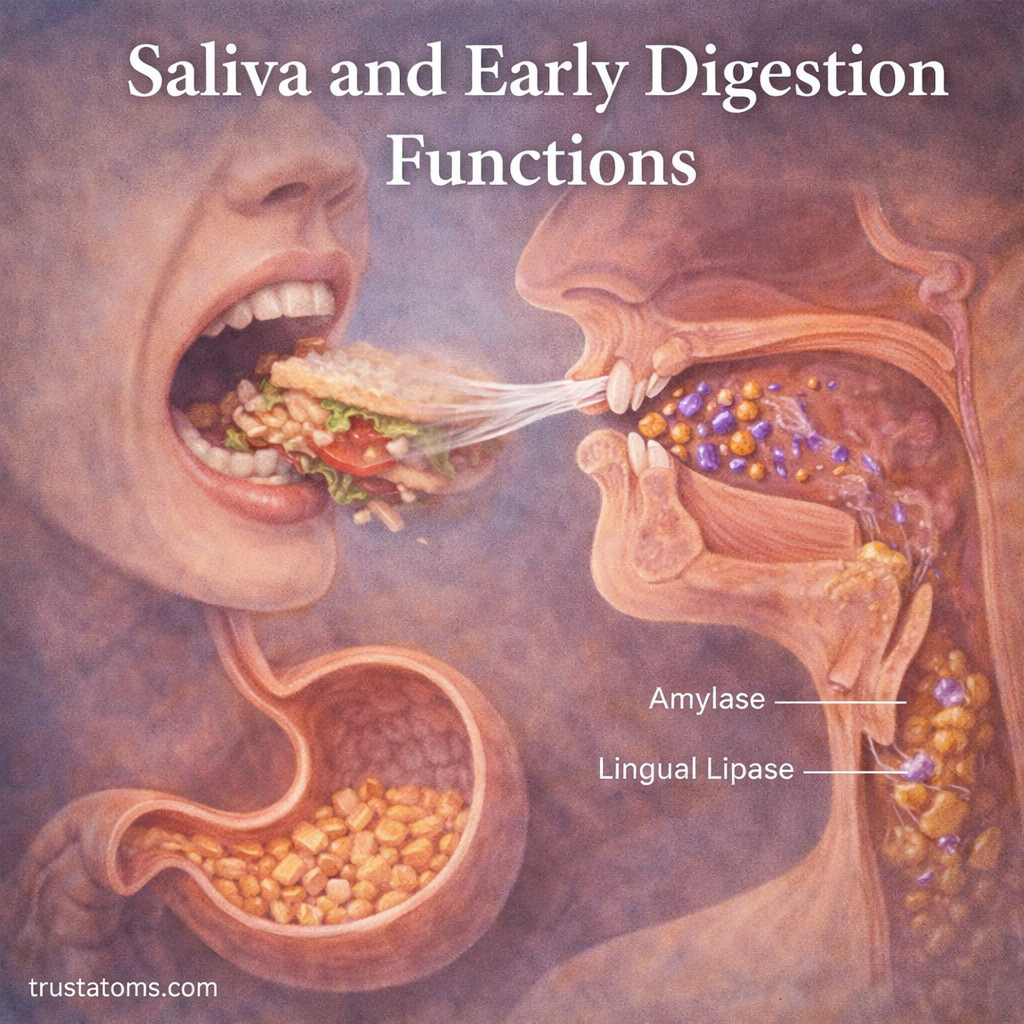
Salivary Amylase
- Starts the digestion of carbohydrates
- Breaks starch into simpler sugars
Lingual Lipase (minor role early on)
- Begins fat digestion
- Becomes more active in the stomach
The Process of Early Digestion in the Mouth
The mouth is where both mechanical and chemical digestion begin working together.
Step-by-Step Process
- Food enters the mouth
- Teeth break food into smaller pieces
- Saliva mixes with food
- Enzymes begin breaking down carbohydrates
- The tongue forms the food into a bolus
- The bolus is pushed toward the throat for swallowing
This process prepares food for efficient digestion in the stomach and intestines.
Importance of Chewing in Saliva Function
Chewing (mastication) is closely linked to saliva production and effectiveness.
Why Chewing Matters
- Increases saliva secretion
- Improves enzyme contact with food
- Reduces particle size for easier digestion
Poor chewing can lead to:
- Slower digestion
- Reduced nutrient absorption
- Increased digestive discomfort
Protective Functions of Saliva
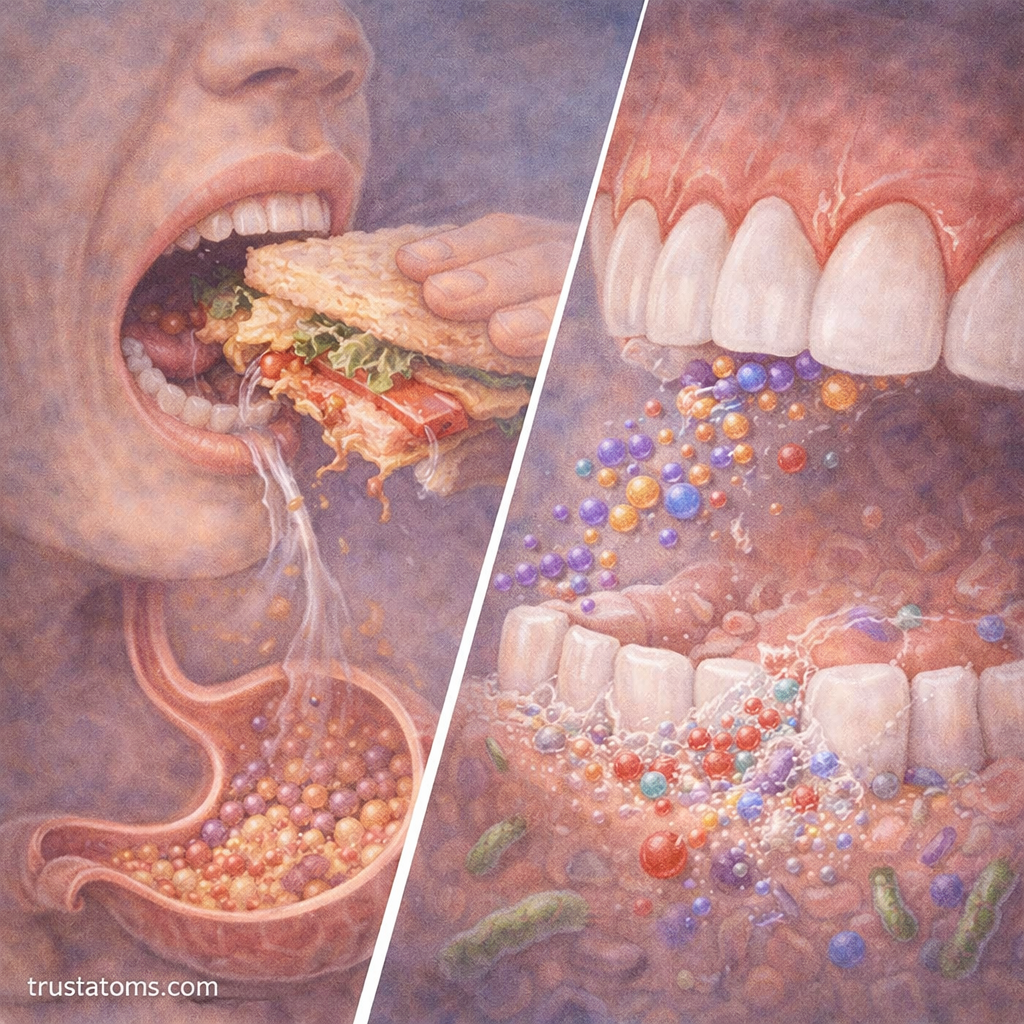
In addition to digestion, saliva plays a protective role in oral and digestive health.
Key Protective Benefits
- Washes away food particles
- Neutralizes acids in the mouth
- Contains antibacterial agents
- Helps prevent tooth decay and infections
Saliva acts as a first line of defense against harmful microbes.
Factors That Affect Saliva Production
Saliva production can vary depending on several factors.
Common Influences
- Hydration levels
- Diet and food texture
- Medications
- Stress and anxiety
- Age
Low saliva production (dry mouth) can interfere with digestion and oral health.
What Happens When Saliva Is Reduced?
A lack of saliva can impact both digestion and comfort.
Possible Effects
- Difficulty chewing and swallowing
- Reduced breakdown of carbohydrates
- Increased risk of cavities
- Dry or sticky mouth sensation
This condition, known as xerostomia, can affect daily life and digestion.
Tips to Support Healthy Saliva Function
Maintaining proper saliva production supports early digestion and oral health.
Helpful Habits
- Stay well hydrated
- Chew food thoroughly
- Eat a balanced diet
- Limit excessive caffeine and alcohol
Lifestyle Support
- Manage stress levels
- Maintain good oral hygiene
- Stimulate saliva with sugar-free gum if needed
Why Early Digestion Matters
The processes that occur in the mouth set the stage for the rest of digestion.
Key Benefits
- Improves efficiency of later digestive stages
- Enhances nutrient absorption
- Reduces strain on the stomach and intestines
A strong start in the mouth leads to smoother digestion overall.
Final Thoughts
Saliva plays a vital role in early digestion, combining mechanical support with chemical breakdown to prepare food for the rest of the digestive system. Though often overlooked, this first step is essential for efficient nutrient processing and overall health.
By understanding how saliva functions, you can make simple changes—like chewing thoroughly and staying hydrated—that significantly improve digestion.