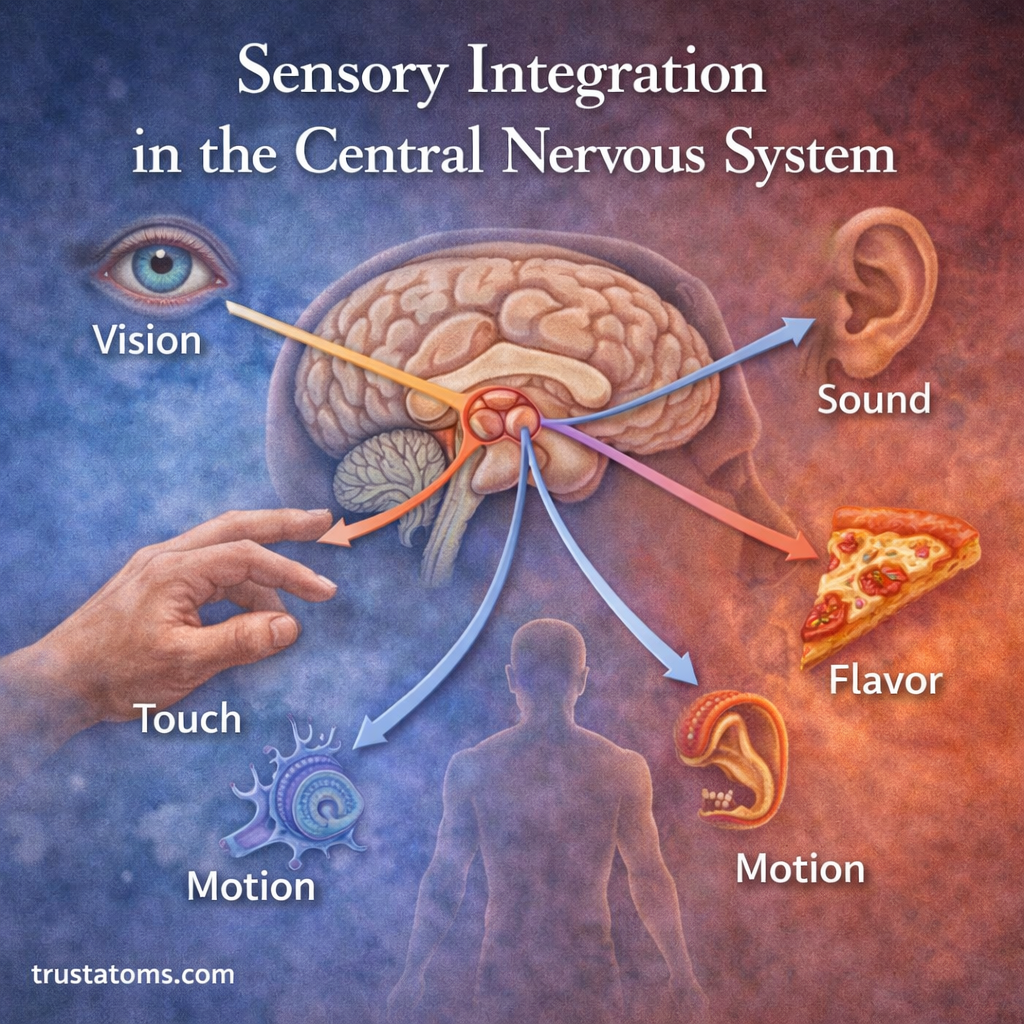
Every second, your body receives a constant stream of sensory information—touch, sound, sight, temperature, and more. The central nervous system (CNS) is responsible for organizing and interpreting this data so you can respond effectively to your environment.
This process, known as sensory integration, allows the brain to combine multiple sensory inputs into a unified experience.
What Is Sensory Integration?
Sensory integration is the process by which the brain:
- Receives sensory input from the body and environment
- Organizes and filters that information
- Interprets it to produce meaningful responses
Without sensory integration, the world would feel chaotic and disconnected. Instead of a smooth experience, you would perceive separate, uncoordinated sensations.
The Role of the Central Nervous System
The central nervous system includes:
- The brain
- The spinal cord
These structures act as the control center for processing sensory input and coordinating responses.
Key Functions
- Integrating signals from multiple sensory systems
- Prioritizing important stimuli
- Coordinating motor responses
- Maintaining balance and body awareness
Major Sensory Systems Involved
Sensory integration relies on multiple systems working together.
Visual System
- Processes light and visual information
- Helps identify objects, movement, and spatial relationships
Auditory System
- Interprets sound
- Supports communication and environmental awareness
Somatosensory System
- Detects touch, pressure, pain, and temperature
- Provides information about body position
Vestibular System
- Located in the inner ear
- Controls balance and spatial orientation
Proprioceptive System
- Detects body position and movement
- Uses signals from muscles and joints
These systems do not work independently—they are constantly interacting.
How Sensory Integration Works
The process of sensory integration involves several coordinated steps.
1. Sensory Input
- Receptors detect stimuli (light, sound, touch, etc.)
- Signals are sent to the CNS via sensory neurons
2. Transmission to the Brain
- Signals travel through the spinal cord
- Relayed to different brain regions for processing
3. Processing and Interpretation
- The brain organizes incoming data
- Identifies patterns and assigns meaning
4. Response Generation
- The brain sends signals to muscles or glands
- Produces appropriate actions (movement, speech, reflexes)
Key Brain Areas in Sensory Integration
Different parts of the brain specialize in processing and integrating sensory information.
Thalamus
- Acts as the main relay station
- Directs sensory signals to appropriate brain regions
Cerebral Cortex
- Responsible for conscious perception
- Integrates information across senses
Important regions include:
- Somatosensory cortex (touch and body awareness)
- Visual cortex (vision)
- Auditory cortex (hearing)
Cerebellum
- Coordinates movement and balance
- Integrates sensory input for smooth, precise actions
Brainstem
- Handles basic sensory processing
- Controls reflexes and automatic responses
Multisensory Integration
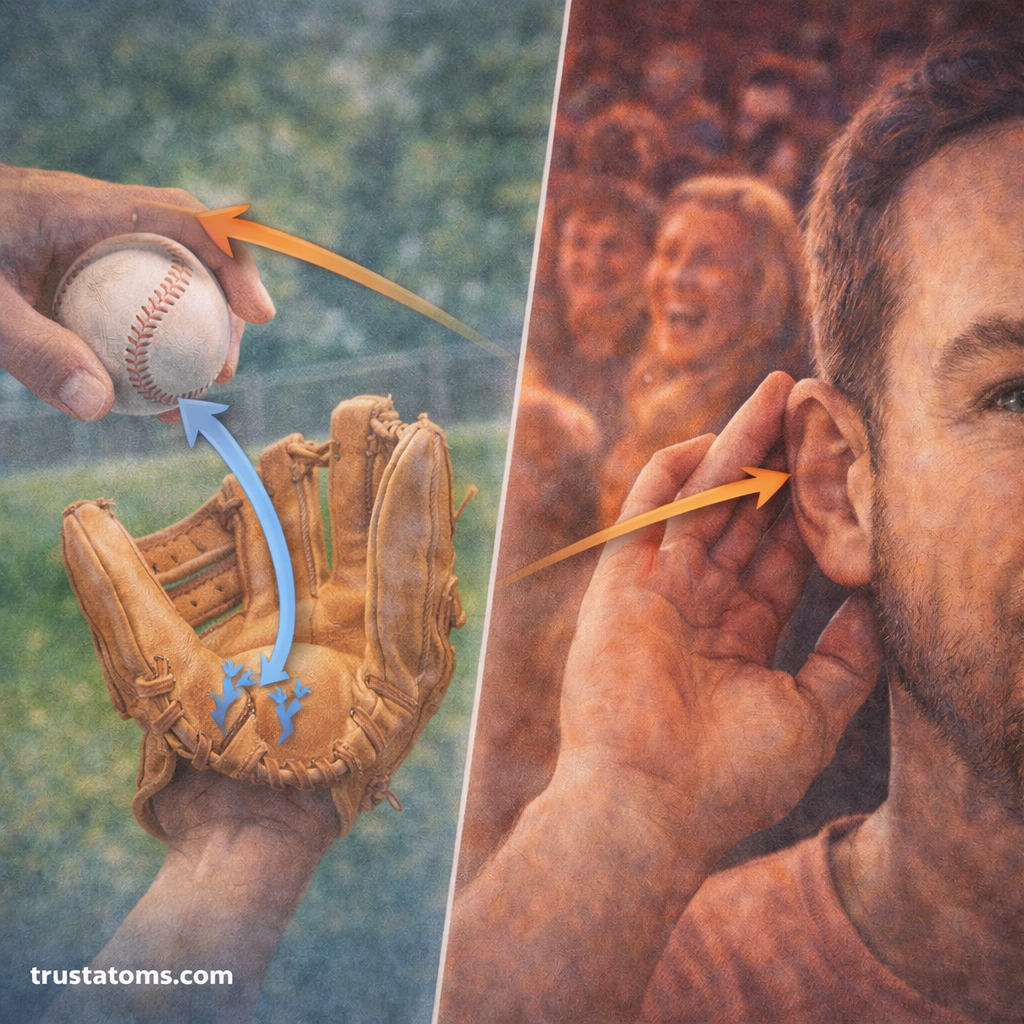
Multisensory integration refers to the brain’s ability to combine information from different senses into a single experience.
Example
Catching a ball involves:
- Seeing the ball (visual input)
- Hearing it move through the air (auditory input)
- Feeling your hand position (proprioceptive input)
The brain merges these signals to guide accurate movement.
Sensory Filtering and Attention
Not all sensory information is equally important. The brain filters incoming data to focus on what matters.
Selective Attention
- Allows you to concentrate on specific stimuli
- Example: hearing a friend’s voice in a noisy room
Sensory Gating
- Reduces unnecessary or repetitive input
- Prevents overload of the nervous system
This filtering process is essential for efficient functioning.
Development of Sensory Integration
Sensory integration develops over time, especially during childhood.
Early Development
- Infants rely heavily on touch and movement
- Sensory experiences shape brain connections
Learning and Adaptation
- Repeated exposure improves coordination
- The brain becomes more efficient at processing input
This development supports skills like walking, speaking, and problem-solving.
Disorders of Sensory Integration
When sensory integration is disrupted, individuals may have difficulty processing sensory information.
Common Conditions
- Sensory Processing Disorder (SPD)
Difficulty responding appropriately to sensory input - Autism Spectrum Disorder (ASD)
Often involves sensory sensitivities or differences - Attention-Deficit/Hyperactivity Disorder (ADHD)
May include challenges with sensory filtering
Possible Symptoms
- Overreaction to sounds, textures, or lights
- Under-responsiveness to sensory input
- Difficulty with coordination or balance
- Trouble focusing in stimulating environments
Clinical Applications
Understanding sensory integration is important in healthcare and therapy.
Occupational Therapy
- Helps individuals improve sensory processing
- Uses structured activities to build tolerance and coordination
Rehabilitation
- Supports recovery after brain injury or stroke
- Re-trains the brain to integrate sensory signals
Everyday Importance of Sensory Integration
Sensory integration plays a role in nearly every daily activity.
Examples
- Walking without losing balance
- Reading while ignoring background noise
- Driving while monitoring multiple stimuli
- Eating and recognizing food textures
Without proper integration, even simple tasks would become difficult.
Final Thoughts
Sensory integration is a fundamental function of the central nervous system that allows you to interact smoothly with the world. By combining input from multiple sensory systems, the brain creates a cohesive and meaningful experience.
From basic reflexes to complex behaviors, this process underlies everything from movement and coordination to attention and perception.