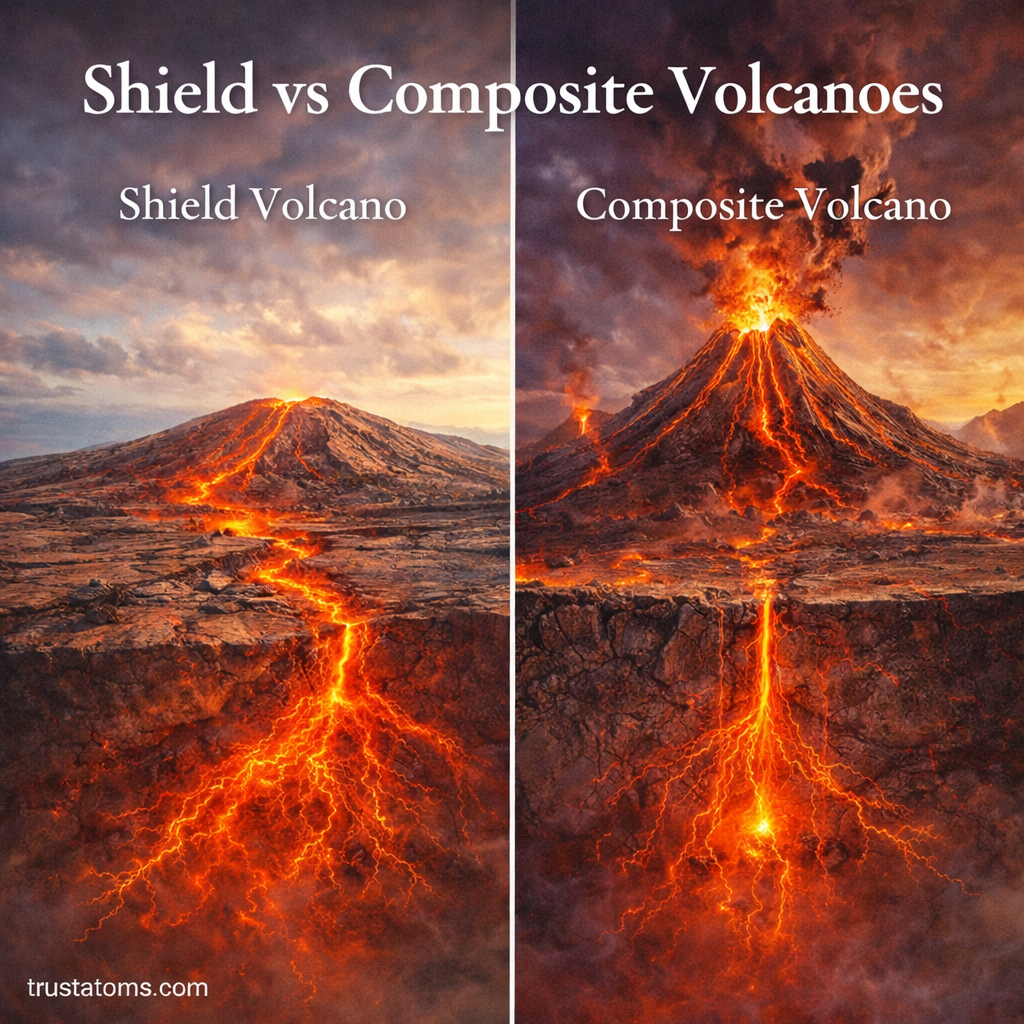
Volcanoes come in different shapes and eruption styles, but two of the most well-known types are shield volcanoes and composite volcanoes. While both are formed by magma rising from beneath the Earth’s surface, they differ significantly in structure, behavior, and level of danger.
In this guide, we’ll break down the differences between shield and composite volcanoes, how they form, and why their eruptions vary so much.
What Is a Shield Volcano?
A shield volcano is a broad, gently sloping volcano formed by the slow flow of low-viscosity lava. These volcanoes resemble a warrior’s shield laid flat on the ground—hence the name.
Key Characteristics of Shield Volcanoes
- Wide, low-profile shape
- Gentle slopes that extend for miles
- Formed by fluid, basaltic lava
- Typically produce non-explosive eruptions
Shield volcanoes build up over time as layer upon layer of lava flows outward in all directions.
What Is a Composite Volcano?
A composite volcano, also known as a stratovolcano, is a tall, steep-sided volcano built from alternating layers of lava, ash, and volcanic debris.
Key Characteristics of Composite Volcanoes
- Steep, cone-shaped structure
- Built from layers of hardened lava and ash
- Higher viscosity magma
- Known for explosive eruptions
These volcanoes often produce dramatic and dangerous eruptions due to trapped gases within thick magma.
How They Form
Both types of volcanoes originate from magma rising beneath the Earth’s crust, but their formation processes differ based on magma composition and tectonic setting.
Shield Volcano Formation
- Typically form at hotspots or divergent boundaries
- Lava flows easily due to low viscosity
- Eruptions are frequent but less violent
- Layers spread out over large areas
Composite Volcano Formation
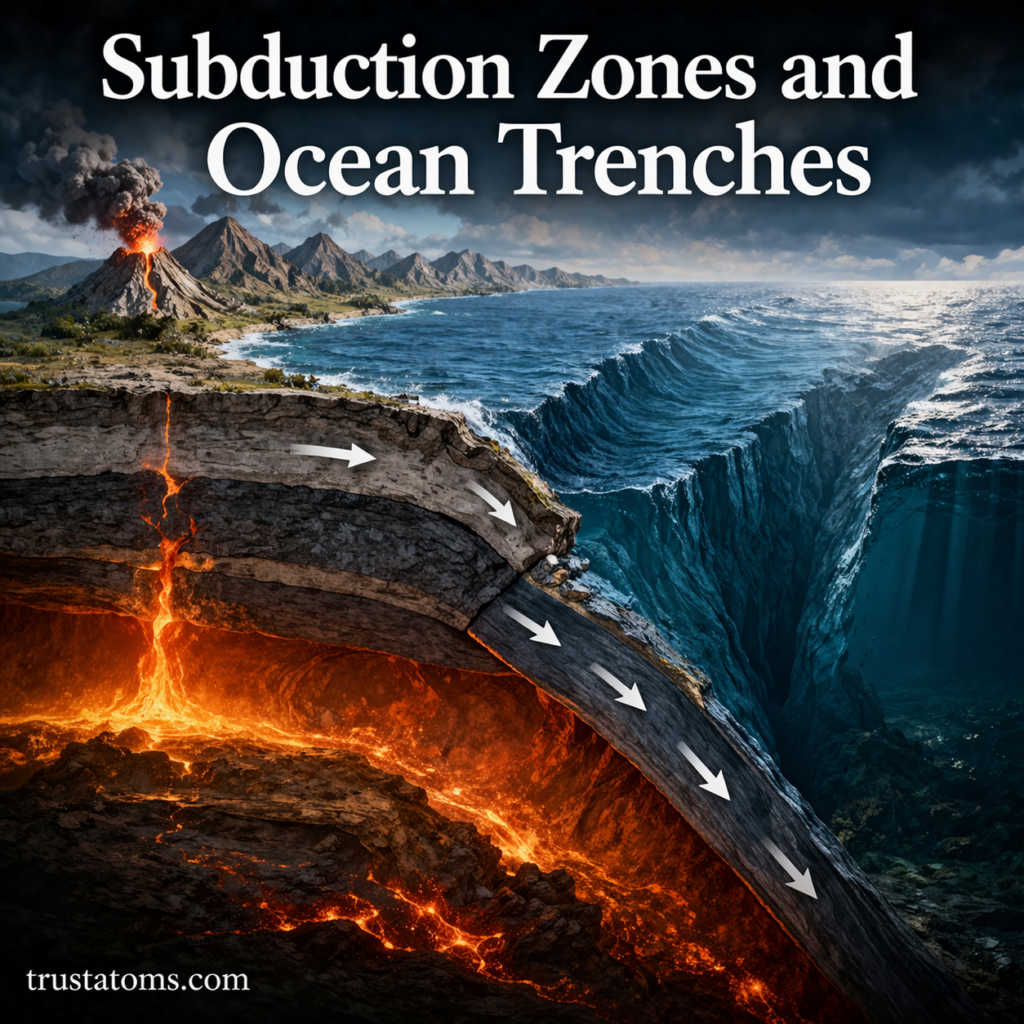
- Common at convergent plate boundaries (subduction zones)
- Magma is thicker and traps gas
- Pressure builds up over time
- Leads to explosive eruptions
Differences in Shape and Structure
One of the easiest ways to distinguish these volcanoes is by their appearance.
Shield Volcano Shape
- Broad and gently sloping
- Low height compared to width
- Smooth, gradual profile
Composite Volcano Shape
- Tall and steep-sided
- Symmetrical cone shape
- Layered internal structure
Eruption Styles Compared
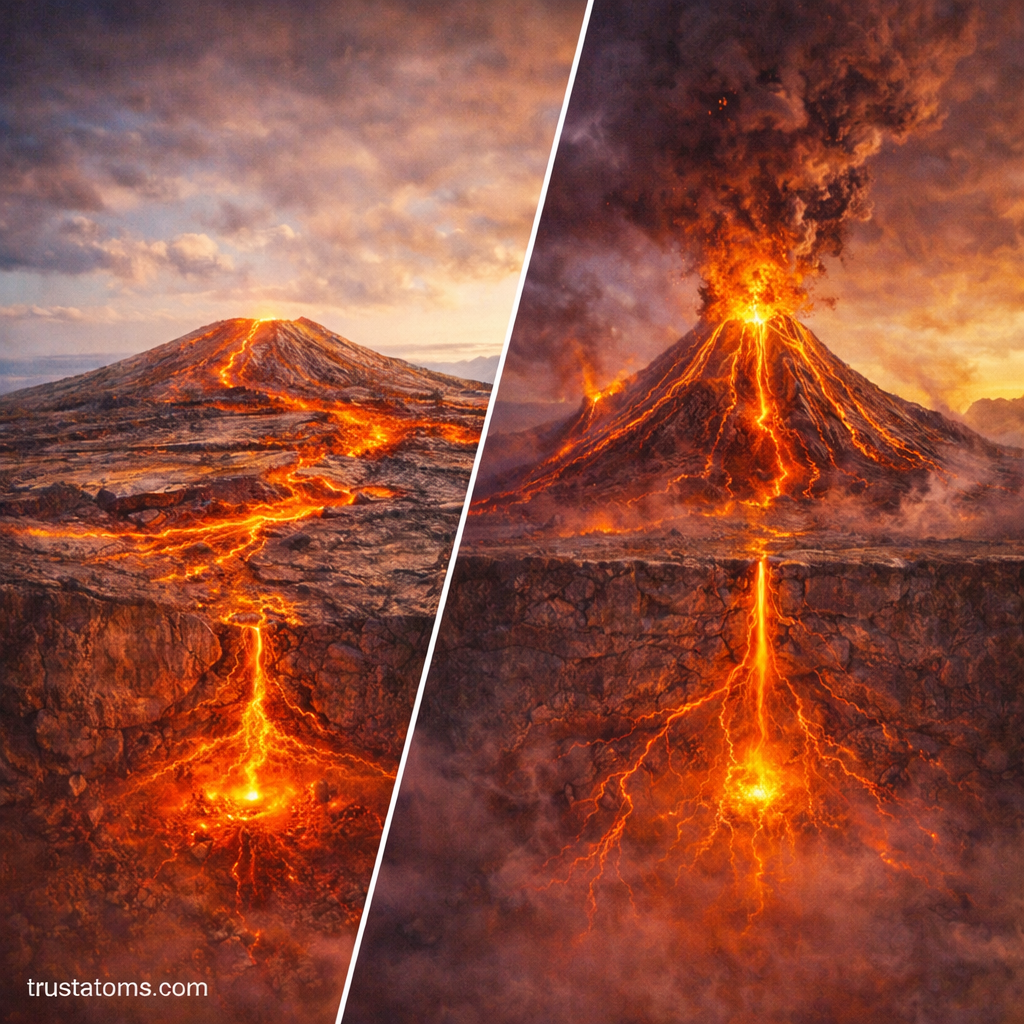
The eruption style is one of the most important differences between these two volcano types.
Shield Volcano Eruptions
- Effusive (lava flows steadily)
- Lava travels long distances
- Minimal ash and explosive activity
- Slower-moving hazards
Composite Volcano Eruptions
- Explosive and violent
- Produces ash clouds, pyroclastic flows, and lava domes
- Can affect large areas quickly
- Often unpredictable
Magma Composition and Behavior
The type of magma plays a major role in how each volcano behaves.
Shield Volcano Magma
- Basaltic composition
- Low silica content
- Thin and runny
- Allows gas to escape easily
Composite Volcano Magma
- Andesitic to rhyolitic composition
- High silica content
- Thick and sticky
- Traps gas, increasing pressure
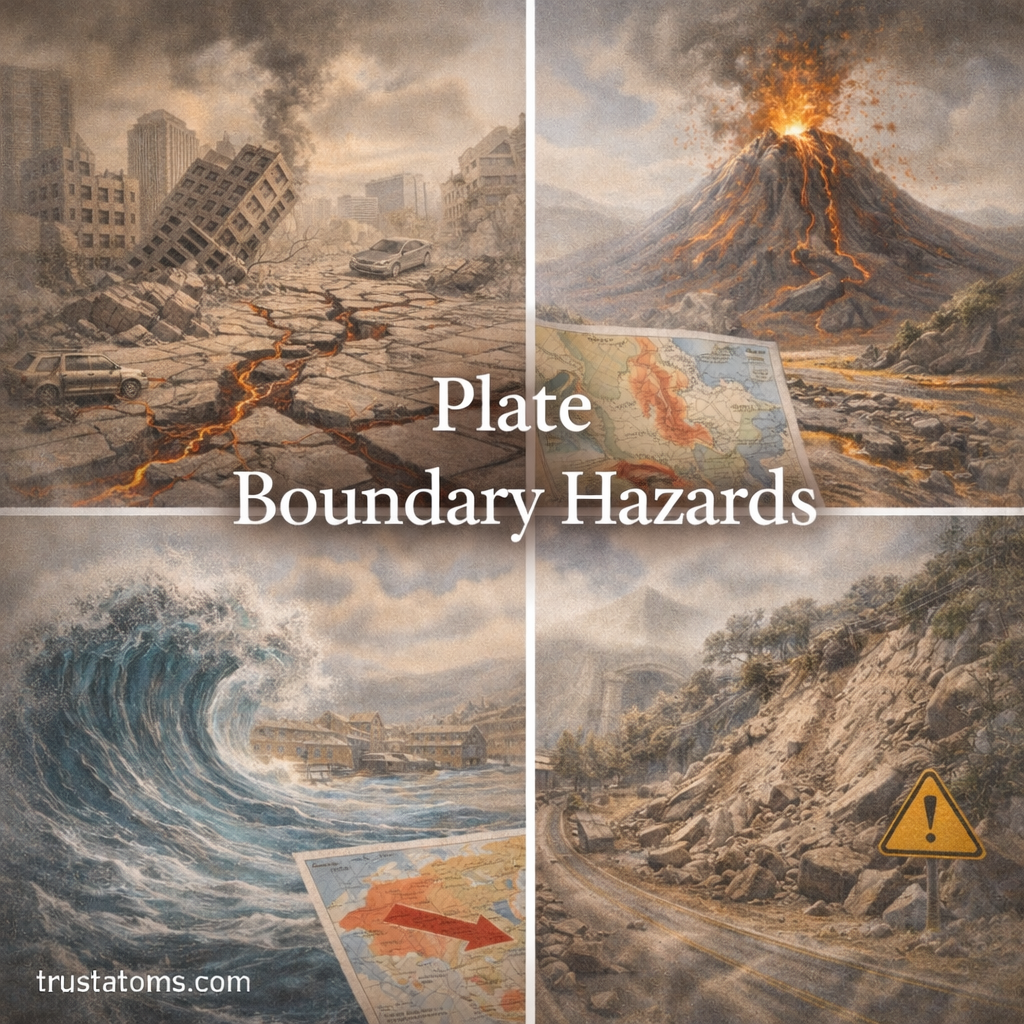
Hazards and Risks
Both volcano types pose risks, but the nature of those risks differs.
Shield Volcano Hazards
- Lava flows damaging property
- Volcanic gases
- Slow-moving but widespread impact
Composite Volcano Hazards
- Pyroclastic flows (fast and deadly)
- Ashfall affecting air quality and travel
- Explosive blasts
- Lahars (volcanic mudflows)
Composite volcanoes are generally considered more dangerous due to their explosive nature.
Famous Examples
Studying real-world examples helps illustrate these differences.
Shield Volcano Examples
- Mauna Loa (Hawaii, USA)
- Kilauea (Hawaii, USA)
These volcanoes are known for frequent, relatively gentle lava flows.
Composite Volcano Examples
- Mount St. Helens (USA)
- Mount Fuji (Japan)
These are famous for their explosive eruptions and iconic cone shapes.
Key Differences at a Glance
Shield vs Composite Volcanoes
- Shape: broad vs steep
- Lava: fluid vs thick
- Eruptions: gentle vs explosive
- Hazard level: moderate vs high
- Formation: hotspots/divergent vs subduction zones
Why This Comparison Matters
Understanding the differences between shield and composite volcanoes helps scientists:
- Predict eruption styles
- Assess risk levels
- Plan evacuations
- Design monitoring systems
For people living near volcanoes, this knowledge can be life-saving.
Common Misconceptions
“All volcanoes erupt the same way”
False—eruption style depends heavily on magma composition and gas content.
“Shield volcanoes are harmless”
Not entirely—they can still cause widespread damage through lava flows and gas emissions.
“Composite volcanoes erupt constantly”
They may remain dormant for long periods before erupting suddenly.
Final Thoughts
Shield and composite volcanoes represent two very different expressions of Earth’s internal energy. One builds slowly with flowing lava, while the other can erupt with explosive force.
By understanding their differences, we gain deeper insight into volcanic activity—and how to better prepare for the risks they bring.