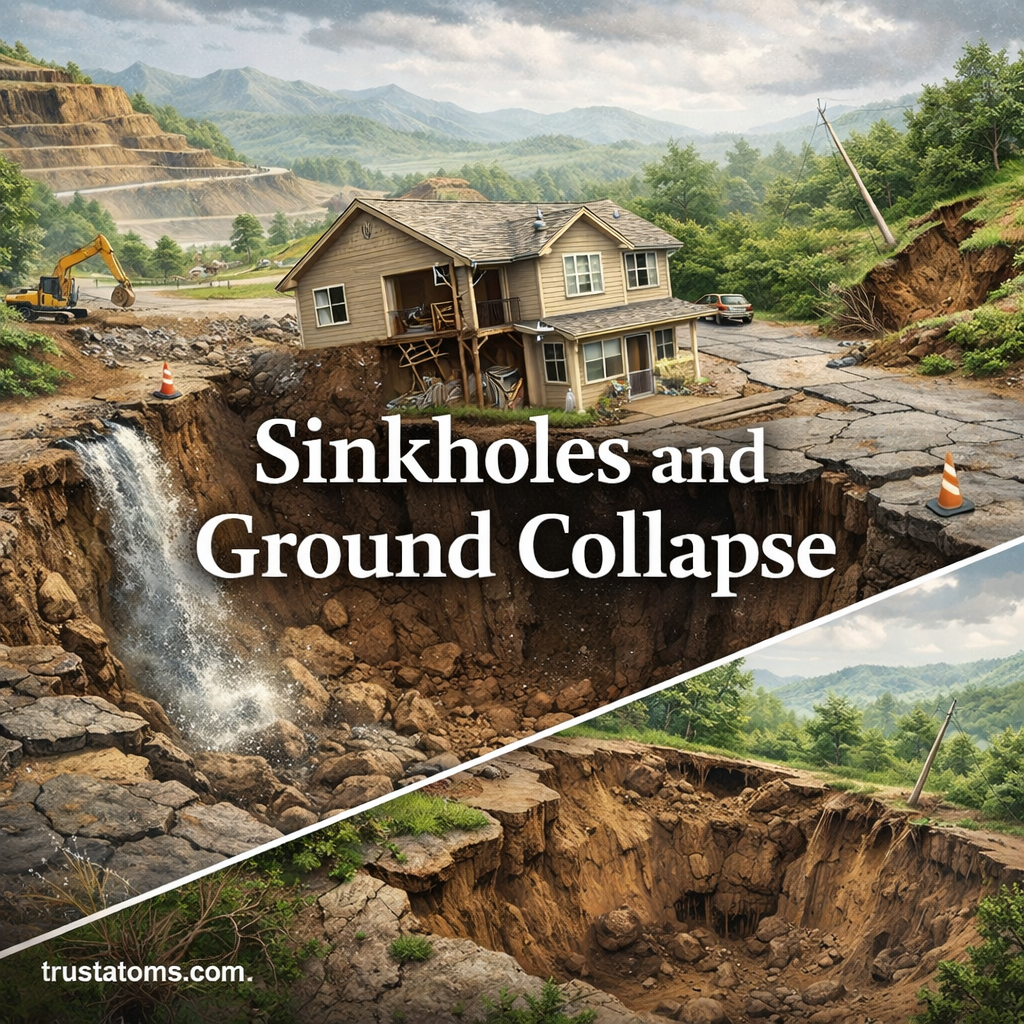
Sinkholes are dramatic natural features that can suddenly appear, swallowing land, roads, and even buildings. While some develop slowly over time, others form without warning, making them one of the more unpredictable Earth science hazards.
Understanding how sinkholes form and what causes ground collapse can help reduce risks and improve land-use decisions.
What Is a Sinkhole?
A sinkhole is a depression or hole in the ground caused by the collapse of a surface layer. This typically happens when underground materials—such as limestone, salt, or gypsum—dissolve and create empty spaces beneath the surface.
When the ground above these voids can no longer support its own weight, it collapses, forming a sinkhole.
What Causes Sinkholes?
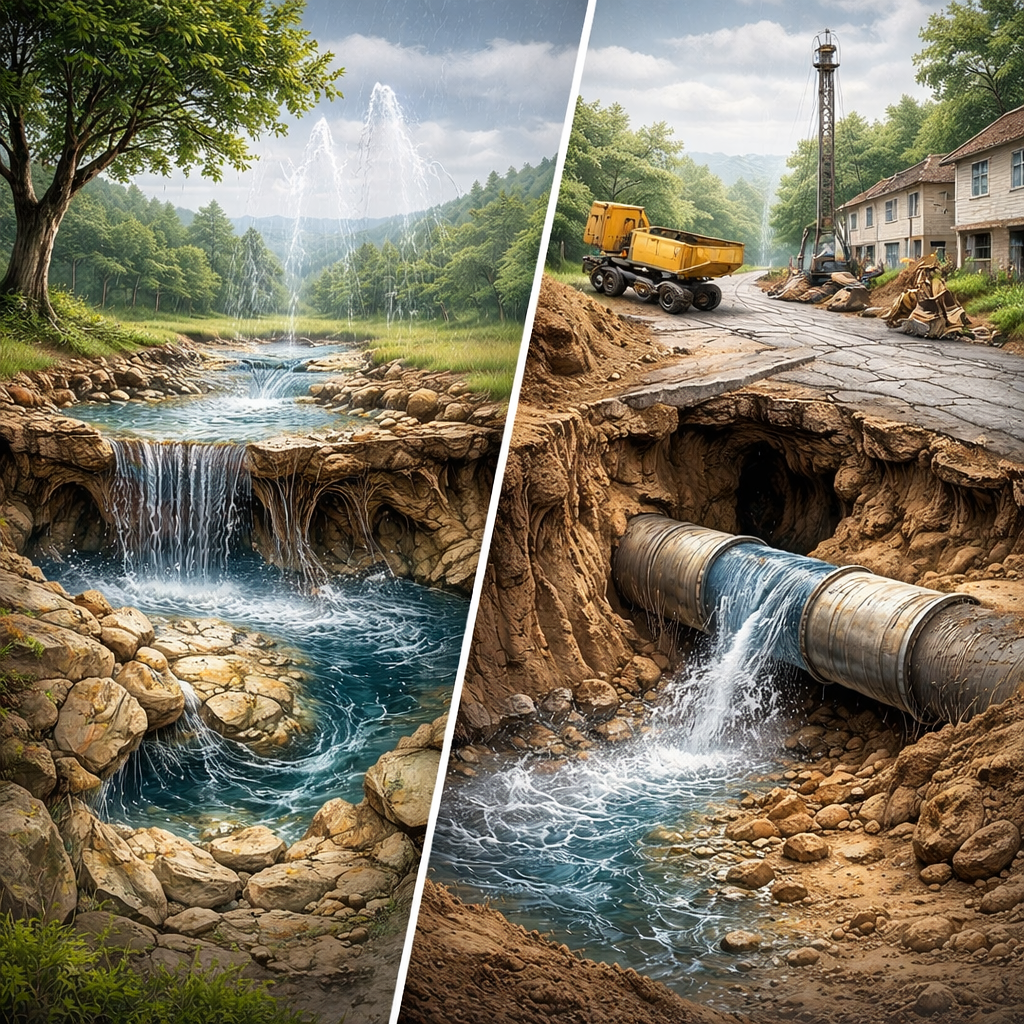
Sinkholes form due to a combination of natural processes and human activity. The most common causes include:
1. Natural Dissolution of Rock
- Water naturally dissolves soluble rocks like limestone
- Over time, underground cavities (voids) develop
- Common in karst landscapes
2. Heavy Rainfall or Flooding
- Water infiltrates the ground more rapidly
- Increases erosion and dissolution underground
- Can trigger sudden collapse
3. Drought Conditions
- Soil may lose moisture and structural support
- Cavities become more likely to collapse when water returns
4. Groundwater Withdrawal
- Pumping water from underground reduces support
- Voids may expand or destabilize
5. Human Activities
- Construction and drilling disturb underground layers
- Leaking pipes wash away soil beneath the surface
- Mining operations create underground voids
Types of Sinkholes
Not all sinkholes form the same way. They are generally classified into three main types:
Dissolution Sinkholes
- Form gradually as water dissolves rock at the surface
- Often shallow and slow to develop
- Common in areas with exposed limestone
Cover-Subsidence Sinkholes
- Occur when sandy soil slowly fills underground voids
- Develop over time with little surface disruption
- Less dramatic but still damaging
Cover-Collapse Sinkholes
- Sudden and often catastrophic
- Occur when a large underground void forms
- The surface collapses abruptly, creating deep holes
What Is Ground Collapse?
Ground collapse is a broader term that includes sinkholes but also refers to other types of sudden land failure.
This can include:
- Collapse of underground tunnels or caves
- Failure of man-made structures like mines
- Soil collapse due to erosion or water loss
Sinkholes are one of the most common forms of ground collapse, especially in regions with soluble rock.
Where Do Sinkholes Occur?
Sinkholes are most common in areas with karst terrain—landscapes formed by the dissolution of soluble rocks.
Examples of high-risk regions include:
- Florida (USA)
- Parts of Texas, Alabama, and Kentucky
- Regions in China, Mexico, and the Mediterranean
- Areas with extensive limestone or gypsum deposits
Warning Signs of a Potential Sinkhole
Sinkholes can sometimes show warning signs before they form. These include:
- Cracks in walls, floors, or pavement
- Doors and windows that suddenly stick
- Depressions forming in the ground
- Wilting vegetation in localized areas
- Standing water in unusual places
Recognizing these early signs can help prevent serious damage.
Impacts of Sinkholes
Sinkholes can have serious consequences for people and infrastructure:
- Damage to homes, roads, and buildings
- Disruption of utilities like water and electricity
- Risk of injury or loss of life
- Environmental damage to ecosystems
- Decreased property value
Even smaller sinkholes can lead to costly repairs and long-term instability.
How Sinkholes Are Monitored and Studied
Scientists use various methods to detect and monitor sinkhole activity:
- Ground-penetrating radar to identify underground voids
- Satellite imaging to track surface changes
- Soil and rock analysis to assess stability
- Water table monitoring to detect changes
While predicting exact timing is difficult, these tools help identify high-risk areas.
How to Prevent and Reduce Sinkhole Risk
While not all sinkholes can be prevented, many risks can be minimized with proper planning.
Land Management
- Avoid building on known karst terrain when possible
- Conduct geological surveys before construction
Water Control
- Repair leaking pipes and drainage systems
- Manage stormwater to prevent excessive infiltration
Engineering Solutions
- Reinforce foundations in high-risk areas
- Fill small voids before they expand
Monitoring and Maintenance
- Regular inspections of land and structures
- Early response to warning signs
Key Takeaways
- Sinkholes form when underground voids cause surface collapse
- Water plays a major role in dissolving rock and triggering collapse
- There are three main types: dissolution, subsidence, and collapse
- Human activities can increase sinkhole risk
- Early warning signs can help prevent damage
Final Thoughts
Sinkholes and ground collapse highlight the hidden dynamics beneath Earth’s surface. While they may seem sudden, most sinkholes develop over time due to natural processes or human influence.
With better awareness, monitoring, and planning, the risks associated with sinkholes can be significantly reduced—helping protect communities and infrastructure from unexpected ground failure.