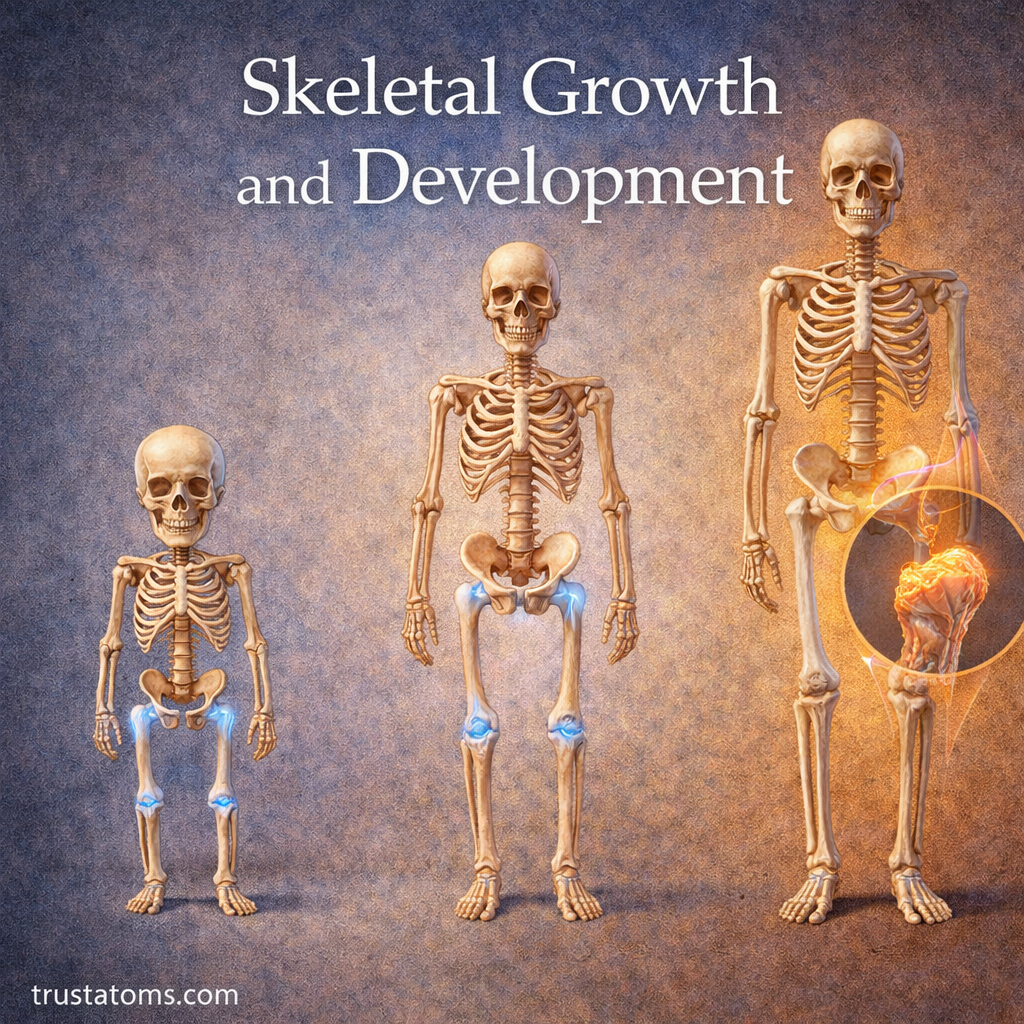
The human skeleton is not a fixed structure—it grows, adapts, and changes throughout life. From infancy to adulthood, bones develop in size, shape, and strength to support movement, protect organs, and maintain overall body structure.
Understanding skeletal growth and development helps explain how the body matures, how bones heal, and why proper nutrition and activity are essential for long-term health.
Overview of the Human Skeleton
The adult human skeleton consists of 206 bones, while infants are born with more (around 270), many of which fuse over time.
Functions of the Skeleton
- Provides structural support
- Protects vital organs (e.g., skull protects the brain)
- Enables movement with muscles
- Produces blood cells in bone marrow
- Stores minerals like calcium and phosphorus
How Bones Grow
Bone growth occurs through two main processes:
1. Longitudinal Growth (Length)
Bones grow in length at specialized regions called growth plates (epiphyseal plates).
- Located near the ends of long bones
- Made of cartilage that gradually turns into bone
- Active during childhood and adolescence
As a person matures:
- Growth plates harden and close
- Bone length stops increasing
2. Appositional Growth (Width)
Bones also grow in thickness:
- New bone tissue is added to the outer surface
- Old bone may be reabsorbed internally
- Increases bone strength and density
Stages of Skeletal Development
Skeletal growth occurs in distinct stages throughout life.
Infancy and Early Childhood
- Rapid bone growth
- Soft, flexible bones with more cartilage
- Skull bones gradually fuse
Childhood
- Steady growth in height and bone length
- Increased coordination and strength
- Growth plates remain active
Adolescence
- Growth spurts driven by hormones
- Rapid increases in bone length and density
- Growth plates begin to close
Adulthood
- Growth plates fully closed
- Bone remodeling continues
- Peak bone mass is reached in early adulthood
Bone Remodeling
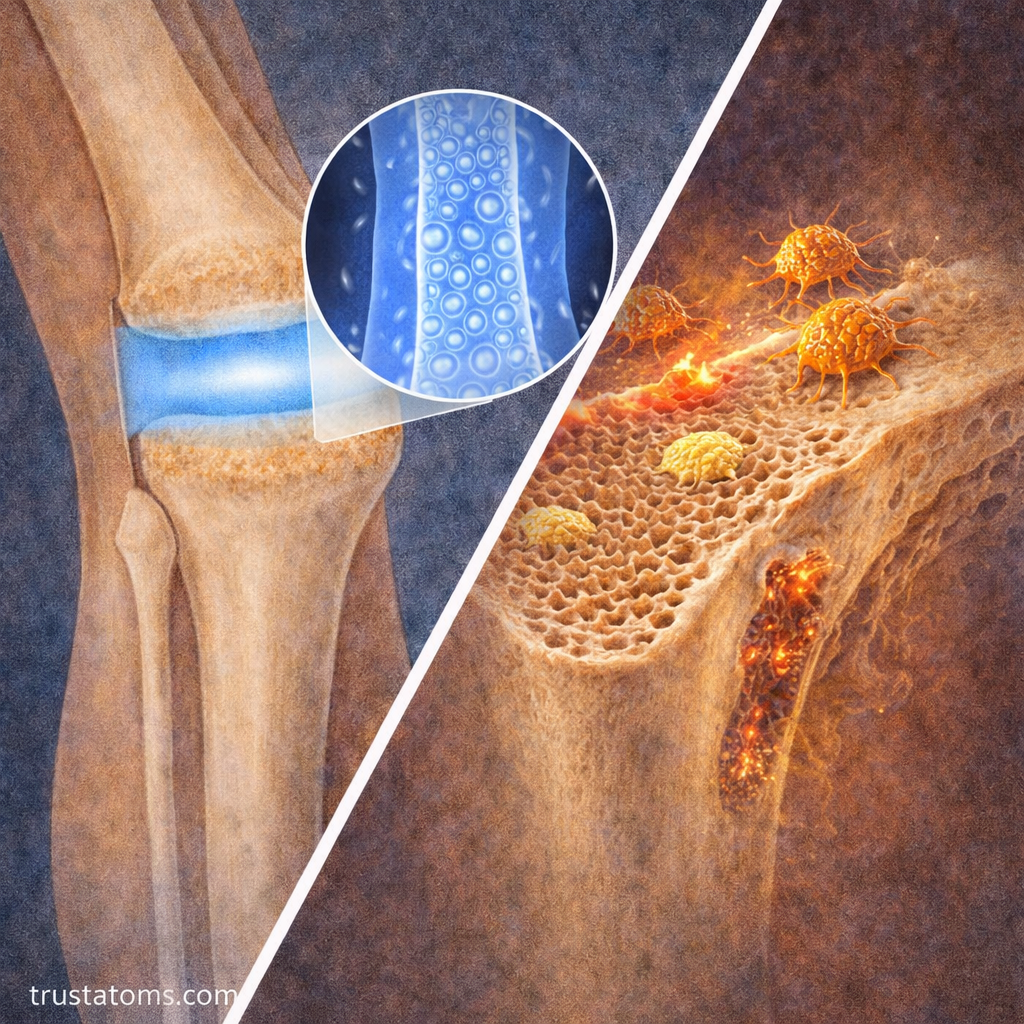
Even after growth stops, bones are constantly renewed through remodeling.
Key Cells Involved
- Osteoblasts: build new bone
- Osteoclasts: break down old bone
Why Remodeling Matters
- Repairs micro-damage
- Maintains bone strength
- Adapts to physical stress
This process continues throughout life.
Factors That Influence Skeletal Growth
Several factors affect how bones grow and develop.
Genetics
- Determines bone size and structure
- Influences growth potential
Nutrition
Essential nutrients include:
- Calcium: supports bone strength
- Vitamin D: aids calcium absorption
- Protein: supports tissue growth
Hormones
- Growth hormone stimulates bone growth
- Sex hormones (estrogen and testosterone) influence growth spurts and plate closure
Physical Activity
- Weight-bearing exercise strengthens bones
- Mechanical stress promotes bone formation
Importance of Growth Plates
Growth plates are critical for bone development.
Key Characteristics
- Softer and more vulnerable than mature bone
- Sites of active cell division
- Responsible for bone lengthening
Potential Issues
- Injuries can affect bone growth
- Damage may lead to uneven growth or deformities
Protecting growth plates is especially important in children and adolescents.
Common Skeletal Development Issues
Problems during growth can affect bone health.
Developmental Conditions
- Scoliosis (spinal curvature)
- Rickets (soft bones due to vitamin D deficiency)
- Growth plate injuries
Long-Term Effects
- Abnormal bone alignment
- Reduced bone strength
- Increased risk of fractures
Early detection and proper care can improve outcomes.
Maintaining Healthy Bone Development
Supporting skeletal growth is essential, especially during early life.
Practical Tips
- Eat a balanced diet rich in calcium and vitamin D
- Engage in regular physical activity
- Maintain proper posture
- Avoid excessive strain or injury
Lifelong Bone Health
- Continue exercise into adulthood
- Monitor bone density as you age
- Reduce risk factors for bone loss
Why Skeletal Growth Matters
Healthy skeletal development provides the foundation for movement, strength, and overall physical function. Strong bones support the body, protect organs, and allow for efficient movement throughout life.
Understanding how bones grow and adapt helps individuals make informed decisions about nutrition, activity, and long-term health.
Final Thoughts
Skeletal growth and development is a dynamic process that begins before birth and continues throughout life. From growth plates to bone remodeling, the skeleton is constantly adapting to meet the body’s needs.
By supporting bone health through proper nutrition, activity, and care, individuals can build a strong foundation for lifelong mobility and well-being.