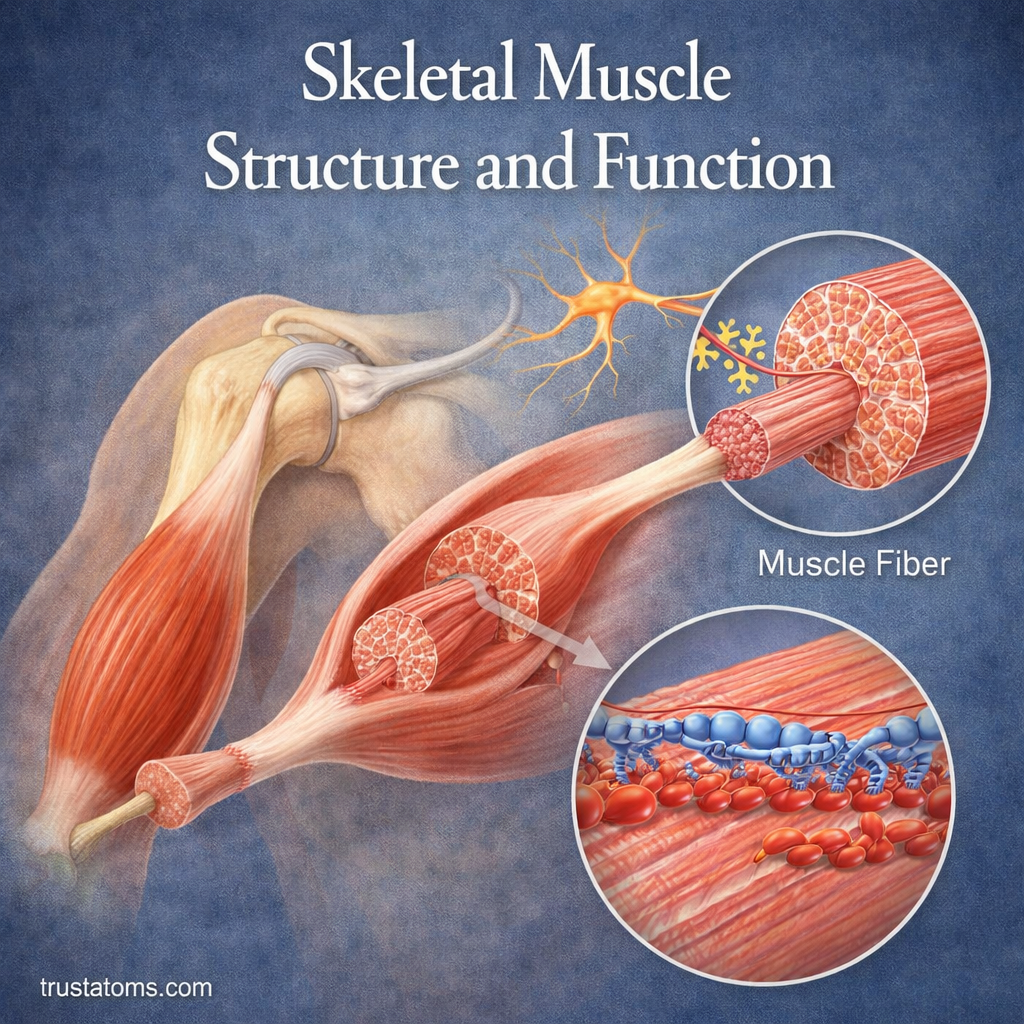
Skeletal muscles are the muscles attached to your bones that allow voluntary movement. Whether you’re walking, lifting, or even smiling, skeletal muscles are responsible for making those actions possible.
They are one of three muscle types in the body and play a key role in movement, posture, and overall physical strength.
What Is Skeletal Muscle?
Skeletal muscle is a type of striated muscle tissue that you can consciously control. It works closely with the skeletal system to move bones and joints.
Key characteristics include:
- Voluntary control (you decide when to move)
- Striated appearance (striped under a microscope)
- Attached to bones via tendons
- Typically works in pairs or groups
Structure of Skeletal Muscle
Skeletal muscle has a highly organized structure that allows it to contract efficiently.
Muscle Organization Levels
Skeletal muscle is structured in layers:
- Whole muscle (e.g., biceps)
- Fascicles (bundles of muscle fibers)
- Muscle fibers (individual muscle cells)
- Myofibrils (contractile units inside fibers)
Each level contributes to the muscle’s strength and function.
Muscle Fibers
Muscle fibers are long, cylindrical cells that contain multiple nuclei. They are packed with myofibrils, which are responsible for contraction.
Myofibrils and Sarcomeres
Myofibrils are made up of repeating units called sarcomeres, which are the basic units of muscle contraction.
Sarcomeres contain two key proteins:
- Actin (thin filaments)
- Myosin (thick filaments)
These proteins slide past each other during contraction, shortening the muscle.
How Skeletal Muscles Work
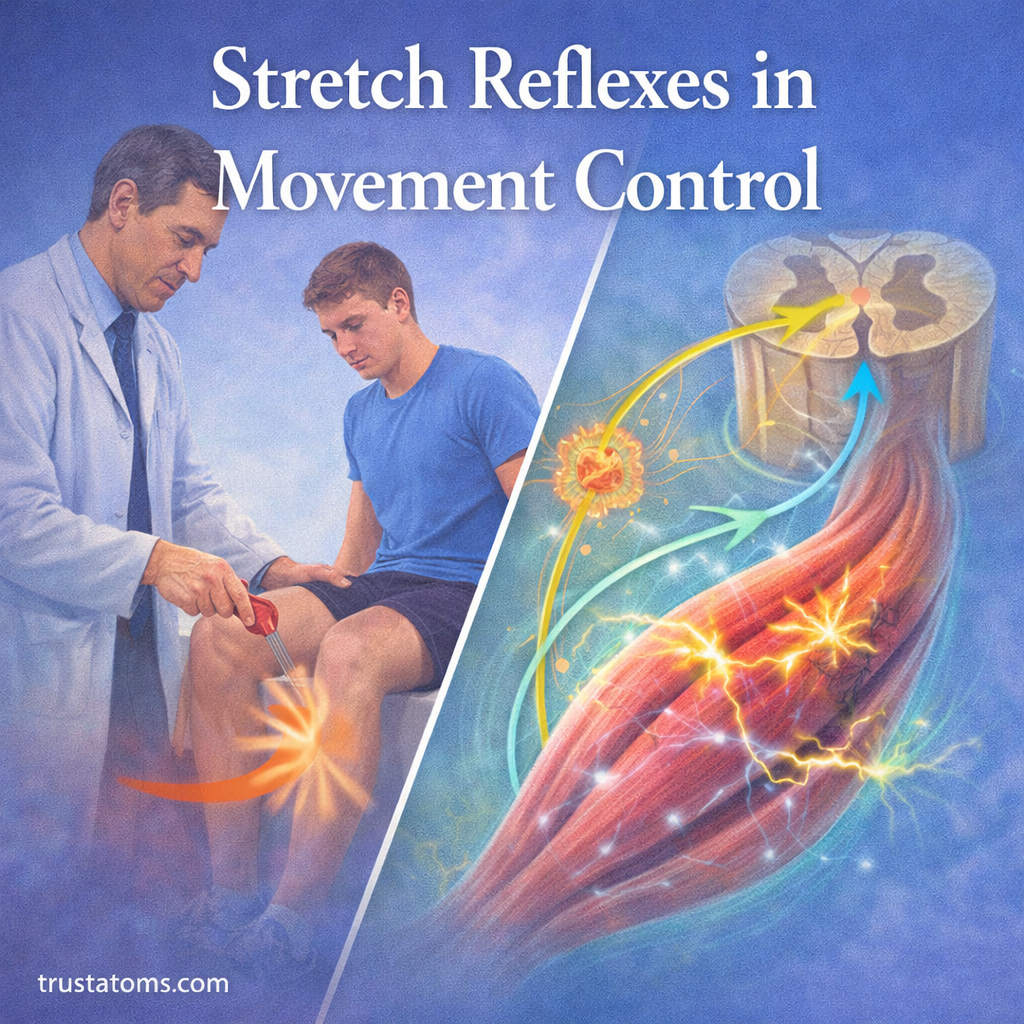
Skeletal muscle contraction follows a coordinated process involving the nervous system.
Step-by-Step Muscle Contraction
- A nerve signal is sent from the brain
- The signal reaches the muscle fiber
- Calcium is released inside the muscle cell
- Actin and myosin interact and slide past each other
- The muscle shortens (contracts)
When the signal stops, the muscle relaxes and returns to its original length.
Types of Skeletal Muscle Fibers
Not all skeletal muscle fibers are the same. They vary based on speed and endurance.
Type I (Slow-Twitch Fibers)
- Fatigue-resistant
- Ideal for endurance activities
- Found in muscles used for posture
Type II (Fast-Twitch Fibers)
- Contract quickly and powerfully
- Fatigue faster
- Used for explosive movements like sprinting or lifting
Most muscles contain a mix of both fiber types.
Functions of Skeletal Muscle
Skeletal muscles perform several essential functions beyond movement.
1. Movement
They work with bones to produce voluntary movements like walking, running, and lifting.
2. Posture
Muscles help maintain body position and stability, even when you’re standing still.
3. Heat Production
Muscle activity generates heat, helping regulate body temperature.
4. Joint Stability
Muscles support and stabilize joints during movement.
How Skeletal Muscles Work in Pairs
Skeletal muscles often work in pairs to create smooth movement.
Agonist and Antagonist Muscles
- Agonist: The muscle responsible for the movement
- Antagonist: The muscle that opposes the movement
For example:
- When the biceps contract to bend the arm,
- The triceps relax
This coordination allows controlled and precise motion.
Energy Use in Muscle Contraction
Muscles require energy to function, which comes from ATP (adenosine triphosphate).
Sources of Energy
- Immediate energy: Stored ATP in muscles
- Short-term energy: Creatine phosphate
- Long-term energy: Glucose and oxygen
Efficient energy use is essential for sustained muscle performance.
Common Skeletal Muscle Conditions
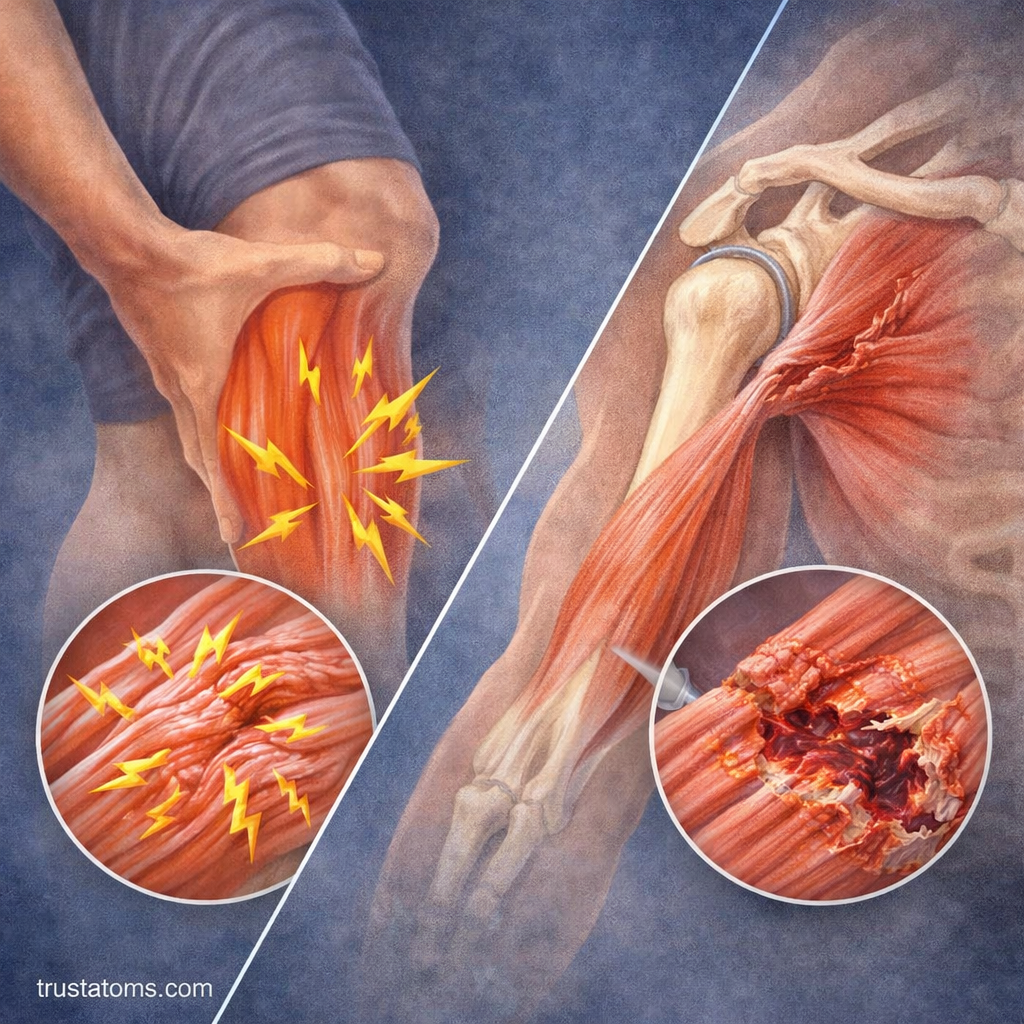
Skeletal muscles can be affected by injury or disease.
Common Issues
- Muscle strains (overstretching or tearing)
- Muscle cramps
- Tendinitis (inflammation of tendons)
- Muscular dystrophy (genetic muscle weakness)
Proper care and conditioning can help prevent many of these issues.
How to Keep Skeletal Muscles Healthy
Maintaining muscle health supports strength, mobility, and overall fitness.
Exercise
- Strength training builds muscle mass
- Stretching improves flexibility
- Regular activity prevents muscle loss
Nutrition
- Protein supports muscle repair and growth
- Hydration helps prevent cramps
- Balanced diet supports energy production
Recovery
- Allow time for rest and repair
- Avoid overtraining
- Practice proper form during exercise
Why Skeletal Muscle Matters
Skeletal muscles are essential for everyday life. They enable movement, protect joints, and help maintain posture and balance.
A healthy muscular system supports:
- Physical independence
- Athletic performance
- Injury prevention
- Overall well-being
Final Thoughts
Skeletal muscle structure is highly organized, allowing for efficient contraction and movement. From microscopic sarcomeres to whole muscle groups, each level plays a role in how your body moves and functions.
By understanding how skeletal muscles work and taking steps to care for them, you can maintain strength, mobility, and long-term health.