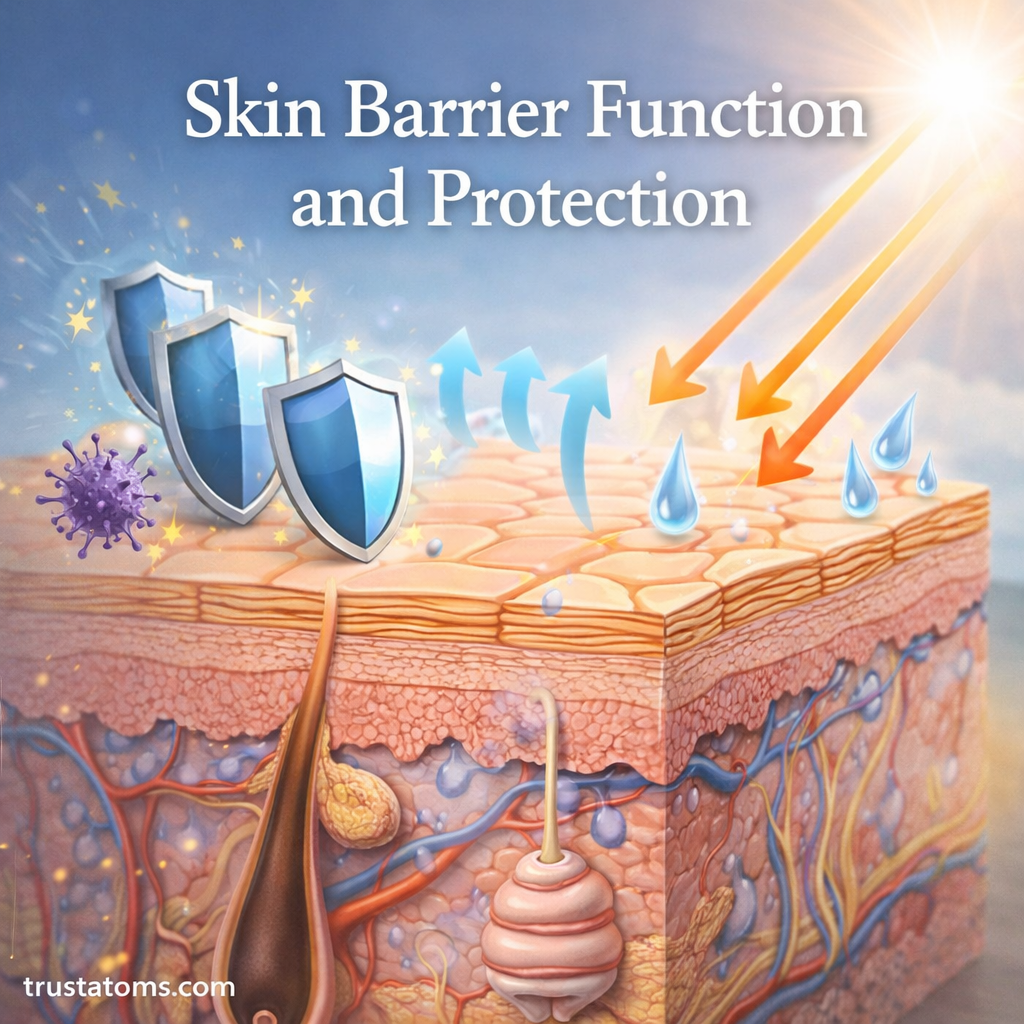
The skin is more than just a covering—it is a highly specialized barrier that protects the body from environmental threats while maintaining internal balance. This protective role is known as the skin barrier function, and it is essential for overall health and survival.
Understanding how the skin barrier works helps explain everything from hydration and immunity to how skin conditions develop.
What Is the Skin Barrier?
The skin barrier refers primarily to the outermost part of the skin, located in the epidermis—specifically the stratum corneum.
It acts as a shield that:
- Keeps harmful substances out
- Prevents excessive water loss
- Maintains internal stability
Think of it as a “brick-and-mortar” system:
- Skin cells (corneocytes) = bricks
- Lipids (fats like ceramides) = mortar
Together, they form a tightly packed structure that blocks unwanted entry while retaining moisture.
Structure Behind the Barrier Function
The effectiveness of the skin barrier depends on several key components:
1. Stratum Corneum
- Outermost layer of the epidermis
- Made of dead, flattened skin cells
- Provides the main physical barrier
2. Lipid Matrix
- Composed of ceramides, cholesterol, and fatty acids
- Fills the spaces between skin cells
- Prevents water loss and maintains flexibility
3. Natural Moisturizing Factors (NMFs)
- Substances within skin cells (e.g., amino acids, urea)
- Help retain water and keep skin hydrated
4. Acid Mantle
- Thin, slightly acidic film on the skin surface
- Protects against harmful bacteria and pollutants
- Maintains optimal pH balance (around 4.5–5.5)
Key Functions of the Skin Barrier
The skin barrier performs several essential protective roles:
Protection Against External Threats
- Blocks bacteria, viruses, and fungi
- Shields against pollutants and toxins
- Reduces damage from UV radiation
Prevention of Water Loss
- Limits transepidermal water loss (TEWL)
- Keeps skin hydrated and supple
- Maintains electrolyte balance
Immune Defense
- Contains immune cells that detect pathogens
- Triggers inflammatory responses when needed
- Helps prevent infections
Temperature and Environmental Regulation
- Works with sweat and blood flow
- Helps maintain stable internal conditions
What Happens When the Skin Barrier Is Damaged?
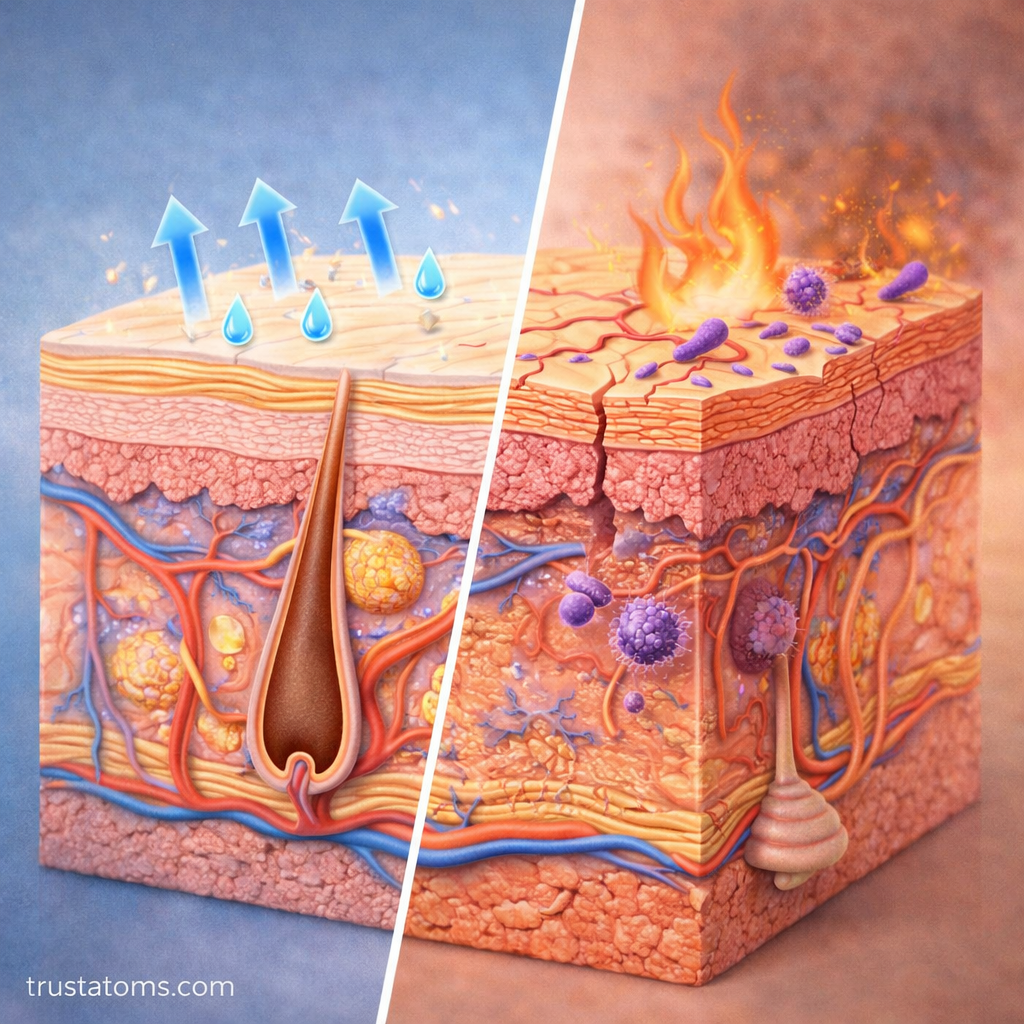
When the barrier is compromised, the skin becomes more vulnerable and less effective at protecting the body.
Common Signs of a Damaged Skin Barrier
- Dryness and flaking
- Redness and irritation
- Increased sensitivity
- Itching or tightness
Causes of Barrier Damage
- Overwashing or harsh cleansers
- Excessive exfoliation
- Environmental exposure (sun, wind, pollution)
- Allergens or irritants
- Underlying skin conditions
Skin Conditions Linked to Barrier Dysfunction
Several common conditions are directly related to a weakened skin barrier:
- Eczema (atopic dermatitis): Increased water loss and inflammation
- Acne: Disruption of oil balance and inflammation
- Rosacea: Heightened sensitivity and vascular response
- Contact dermatitis: Reaction to irritants or allergens
These conditions often involve both structural damage and immune system responses.
How the Skin Repairs Itself
The skin has a natural ability to repair and restore its barrier function.
Key Repair Processes
- Cell turnover
- New skin cells replace damaged ones
- Lipid production
- Rebuilds the “mortar” between cells
- Hydration balance
- Restores moisture levels
However, this process can take time and may be slowed by ongoing damage or poor care habits.
Supporting and Maintaining a Healthy Skin Barrier
Maintaining a strong skin barrier is essential for long-term skin health.
Simple Ways to Protect the Skin Barrier
- Use gentle, non-stripping cleansers
- Avoid over-exfoliation
- Keep skin hydrated with moisturizers
- Protect skin from excessive sun exposure
- Maintain a balanced skincare routine
Ingredients That Support the Barrier
- Ceramides: Restore lipid structure
- Hyaluronic acid: Attracts and retains moisture
- Glycerin: Improves hydration
- Fatty acids: Strengthen the barrier
Why the Skin Barrier Matters
The skin barrier is central to many aspects of health:
- It protects against infections and environmental harm
- It maintains hydration and internal balance
- It influences how skin looks, feels, and ages
- It plays a role in overall immune function
A strong barrier means resilient, healthy skin—while a weakened barrier can lead to discomfort and increased risk of skin issues.
Final Thoughts
The skin barrier is a complex, dynamic system that works constantly to protect and regulate the body. By understanding its structure and function, it becomes easier to recognize the importance of proper skin care and protection.
Supporting the skin barrier is not just about appearance—it is about maintaining one of the body’s most essential defense systems.