Digestion isn’t just about breaking down food—it’s also about controlling where and when that food moves. This precise control is managed by sphincters, specialized muscles that act like gates throughout the digestive system.
In this guide, you’ll learn how sphincters regulate digestive flow, where they are located, and why they are essential for efficient digestion.
What Are Sphincters?
Sphincters are circular muscles that open and close to control the passage of substances through the digestive tract.
Key characteristics:
- Ring-shaped muscles
- Act as valves or gates
- Open to allow passage
- Close to prevent backflow
They ensure that food moves in one direction and at the right pace.
Why Flow Regulation Is Important
Without proper control, digestion would be chaotic.
Sphincters help:
- Prevent backflow of food and digestive acids
- Control timing of digestion between organs
- Protect sensitive tissues
- Coordinate movement through the digestive tract
This regulation allows each organ to perform its specific role effectively.
Major Sphincters in the Digestive System
Several key sphincters are involved in digestion from start to finish.
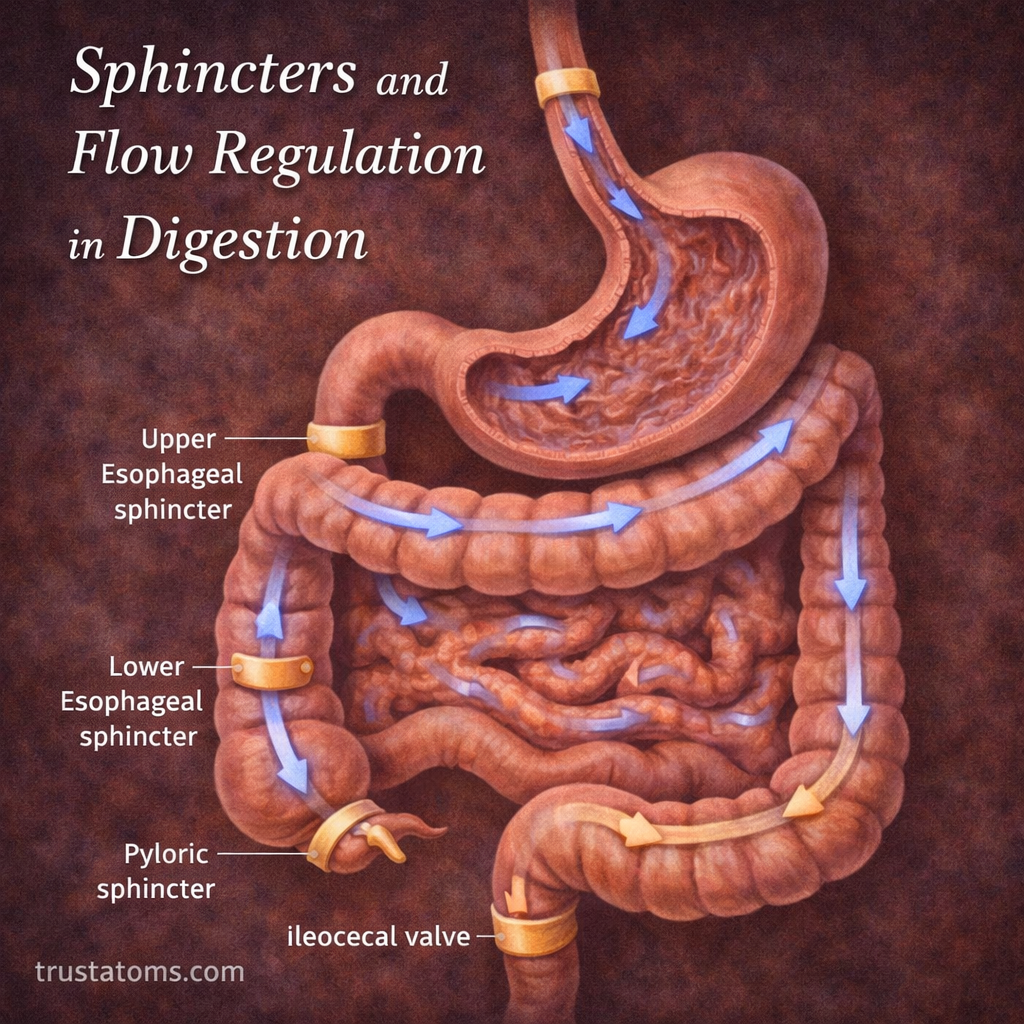
1. Upper Esophageal Sphincter (UES)
- Located between the throat and esophagus
- Opens during swallowing
- Prevents air from entering the esophagus
2. Lower Esophageal Sphincter (LES)
- Located between the esophagus and stomach
- Opens to allow food into the stomach
- Prevents stomach acid from flowing back up
3. Pyloric Sphincter
- Located between the stomach and small intestine
- Controls release of partially digested food (chyme)
- Ensures gradual entry into the small intestine
4. Ileocecal Valve (Sphincter)
- Located between the small and large intestine
- Regulates flow of material into the large intestine
- Prevents backflow from the colon
5. Anal Sphincters
- Internal (involuntary) and external (voluntary) muscles
- Control the release of waste
- Allow conscious control of bowel movements
How Sphincters Work Together
Sphincters don’t operate independently—they are part of a coordinated system.
Coordinated actions:
- Food is swallowed and passes through the UES
- Peristalsis pushes food down the esophagus
- The LES opens to allow entry into the stomach
- The pyloric sphincter releases chyme slowly
- The ileocecal valve regulates entry into the colon
- Anal sphincters control elimination
This sequence ensures smooth and controlled digestion.
What Controls Sphincter Function?
Sphincter activity is regulated by multiple systems.
Main regulators:
- Nervous system: Signals when to open or close
- Hormones: Such as gastrin influence digestive timing
- Local reflexes: Triggered by pressure and stretch
These controls allow sphincters to respond dynamically to food intake.
What Happens When Sphincters Malfunction?
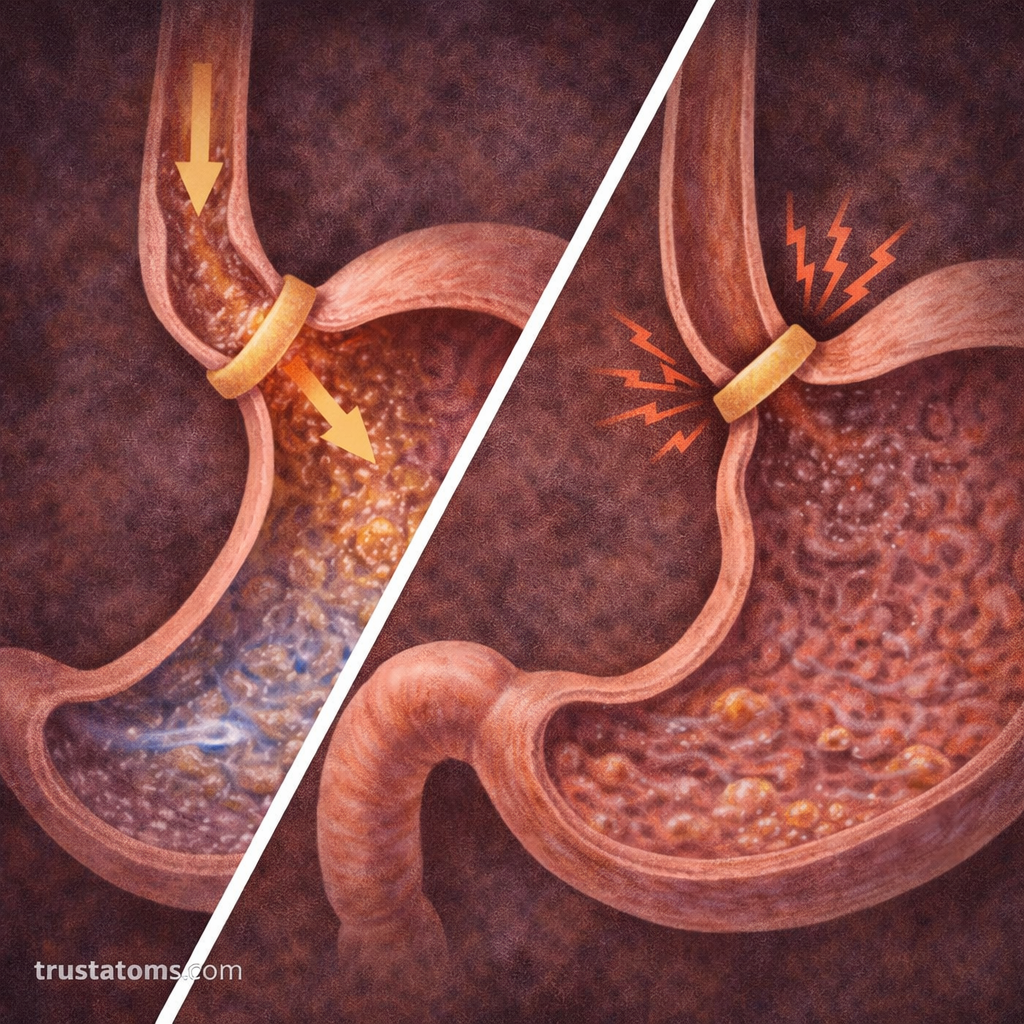
Problems with sphincters can disrupt digestion and cause discomfort.
Common issues:
- Acid reflux (LES not closing properly)
- Delayed stomach emptying (pyloric dysfunction)
- Incontinence (anal sphincter weakness)
- Blocked flow or spasms
Symptoms may include:
- Heartburn
- Difficulty swallowing
- Abdominal pain
- Irregular bowel movements
Sphincters vs. Valves: What’s the Difference?
The terms are sometimes used interchangeably, but there is a subtle distinction.
Sphincters:
- Made of muscle
- Actively open and close
Valves:
- May include structural flaps
- Often assist passive flow control
In digestion, most “valves” are actually sphincters with active control.
Why Sphincters Are Essential for Digestive Health
Sphincters ensure that digestion happens in the right place, at the right time.
Key benefits:
- Maintain one-way movement of food
- Protect organs from damage
- Optimize nutrient absorption
- Support controlled waste elimination
Without them, digestion would lose its structure and efficiency.
Final Thoughts
Sphincters are vital control points throughout the digestive system, ensuring that food moves in a coordinated and controlled manner. From swallowing to elimination, these muscles regulate flow and protect your body from potential harm.
Understanding how sphincters work highlights the precision of your digestive system—and why maintaining digestive health is so important.