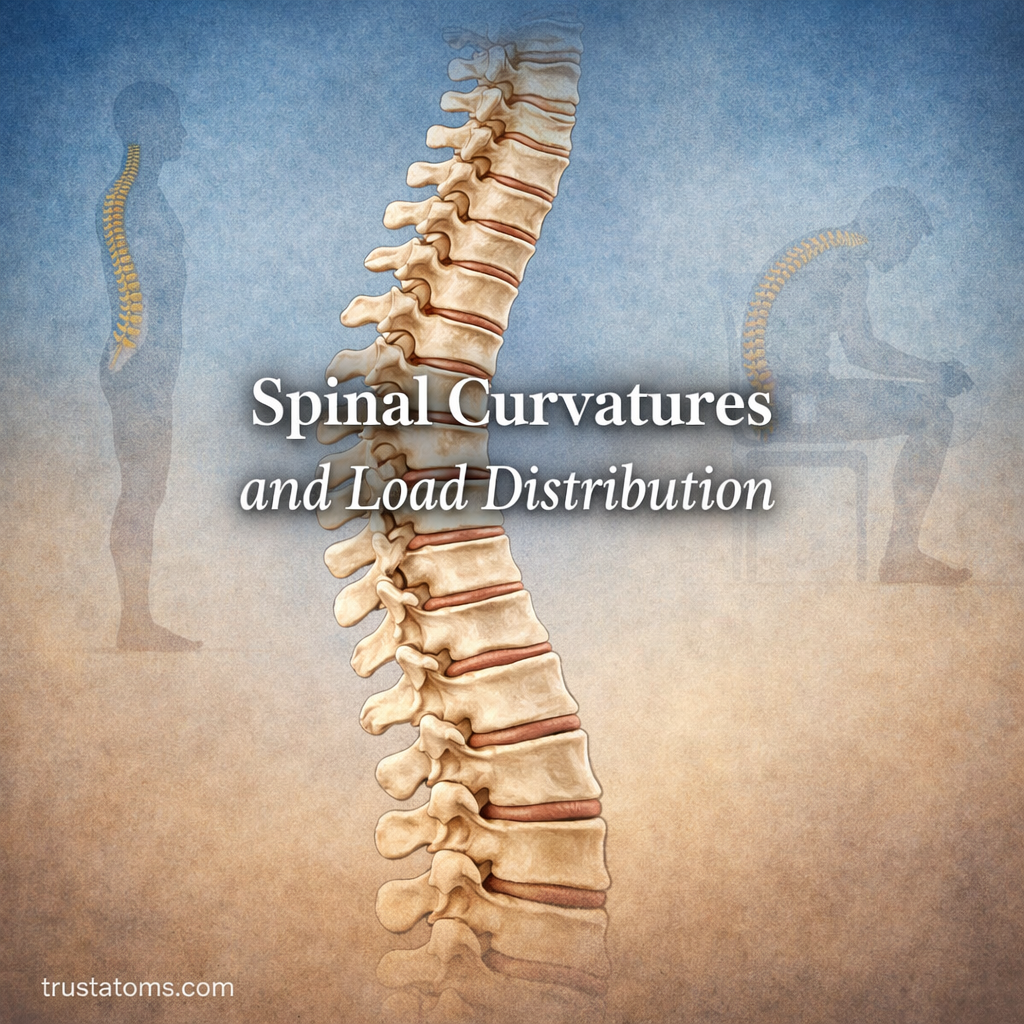
The human spine is not perfectly straight—and that’s by design. Its natural curves play a critical role in supporting body weight, maintaining balance, and absorbing shock during movement.
Understanding spinal curvatures and how they distribute load helps explain posture, back health, and why certain habits can lead to discomfort or injury.
What Are Spinal Curvatures?
The spine, also known as the vertebral column, has four natural curves when viewed from the side. These curves create an “S” shape that enhances strength and flexibility.
The Four Spinal Curves
- Cervical curve (neck) – curves inward (lordotic)
- Thoracic curve (upper back) – curves outward (kyphotic)
- Lumbar curve (lower back) – curves inward (lordotic)
- Sacral curve (base of spine) – curves outward (kyphotic)
Why These Curves Exist
- Improve balance and posture
- Distribute mechanical stress evenly
- Increase flexibility and resilience
- Reduce the risk of injury during movement
How Spinal Curvatures Support Load Distribution
The spine is constantly handling forces from body weight, movement, and external loads. Its curved structure helps distribute these forces efficiently.
Key Concepts
- Load distribution refers to how weight and force are spread across the spine
- Curves prevent excessive stress on a single point
- The spine acts like a spring system, absorbing and releasing energy
Benefits of Curved Structure
- Minimizes pressure on individual vertebrae
- Reduces wear on intervertebral discs
- Enhances shock absorption during walking or running
- Maintains stability while allowing movement
The Role of Intervertebral Discs
Between each vertebra are intervertebral discs, which act as cushions and play a major role in load distribution.
Disc Structure
- Outer layer: tough, fibrous ring (annulus fibrosus)
- Inner core: soft, gel-like center (nucleus pulposus)
Function in Load Distribution
- Absorb compressive forces
- Allow slight movement between vertebrae
- Help evenly spread pressure across the spine
Everyday Example
When you jump or run, discs compress slightly to absorb impact, then return to their original shape—protecting the spine from damage.
Load Distribution During Movement
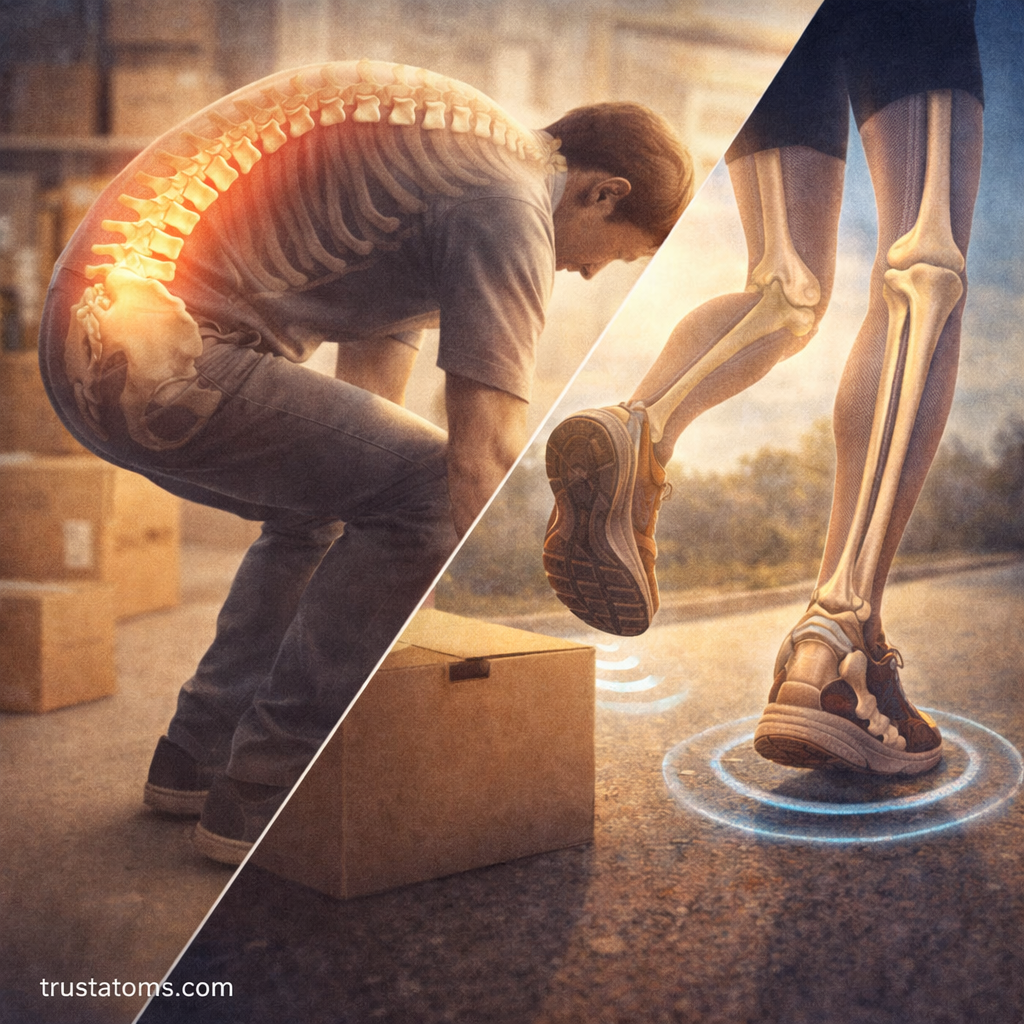
Spinal load is not constant—it changes based on posture and activity.
Common Scenarios
Standing Upright
- Weight is evenly distributed
- Lumbar curve supports most of the load
- Minimal stress on discs
Sitting (Especially Slouched)
- Increased pressure on lumbar discs
- Reduced natural curvature
- Higher risk of strain over time
Lifting Objects
- Load increases significantly on the lower back
- Proper posture helps distribute force safely
- Poor technique concentrates stress on discs and ligaments
Why Posture Matters
Proper posture maintains the natural spinal curves, ensuring optimal load distribution.
Good Posture Characteristics
- Head aligned over shoulders
- Shoulders relaxed, not rounded
- Neutral spine (natural curves maintained)
- Weight evenly distributed
Effects of Poor Posture
- Uneven load distribution
- Increased pressure on specific areas
- Muscle fatigue and imbalance
- Long-term risk of pain or injury
Common Spinal Curvature Disorders
When spinal curves become exaggerated or reduced, it can disrupt load distribution and lead to health issues.
Types of Disorders
- Kyphosis – excessive outward curve (hunchback appearance)
- Lordosis – excessive inward curve (swayback)
- Scoliosis – sideways curvature of the spine
Impact on Load Distribution
- Uneven pressure on discs and joints
- Increased strain on muscles and ligaments
- Reduced efficiency in movement and balance
How the Spine Absorbs Shock
The spine works together with muscles and joints to absorb impact forces.
Key Shock Absorption Features
- Curved structure distributes force
- Intervertebral discs compress and rebound
- Surrounding muscles stabilize movement
Real-Life Example
When walking or running:
- Foot strikes the ground
- Force travels upward through the legs
- Spinal curves and discs absorb and distribute the impact
- Energy is released efficiently for the next movement
Tips for Maintaining Healthy Spinal Load Distribution
Keeping your spine healthy helps maintain proper load distribution and reduces the risk of injury.
Practical Tips
- Maintain good posture when sitting and standing
- Use proper lifting techniques (bend at knees, not the back)
- Strengthen core and back muscles
- Avoid prolonged sitting without breaks
- Use ergonomic chairs and work setups
Why Spinal Curvatures Are Essential
The natural curves of the spine are not flaws—they are critical design features that allow the body to function efficiently.
Key Takeaways
- The spine has four natural curves that form an S-shape
- These curves help distribute weight and reduce stress
- Intervertebral discs act as shock absorbers
- Proper posture supports healthy load distribution
- Abnormal curvatures can lead to imbalance and pain
Final Thoughts
Spinal curvatures are essential for balance, movement, and overall body support. Without them, the spine would be far less capable of handling daily stresses and physical activity.
By understanding how these curves function and how load is distributed, you can make better decisions about posture, movement, and long-term spinal health.