Biological tissues are constantly exposed to forces during everyday activities like walking, lifting, and even breathing. Understanding how these tissues respond to forces is essential in fields like anatomy, biomechanics, medicine, and physical therapy.
Two key concepts used to describe how tissues respond to forces are stress and strain. These principles help explain how bones, muscles, tendons, and ligaments bear loads, adapt, and sometimes fail.
What Is Stress in Biological Tissues?
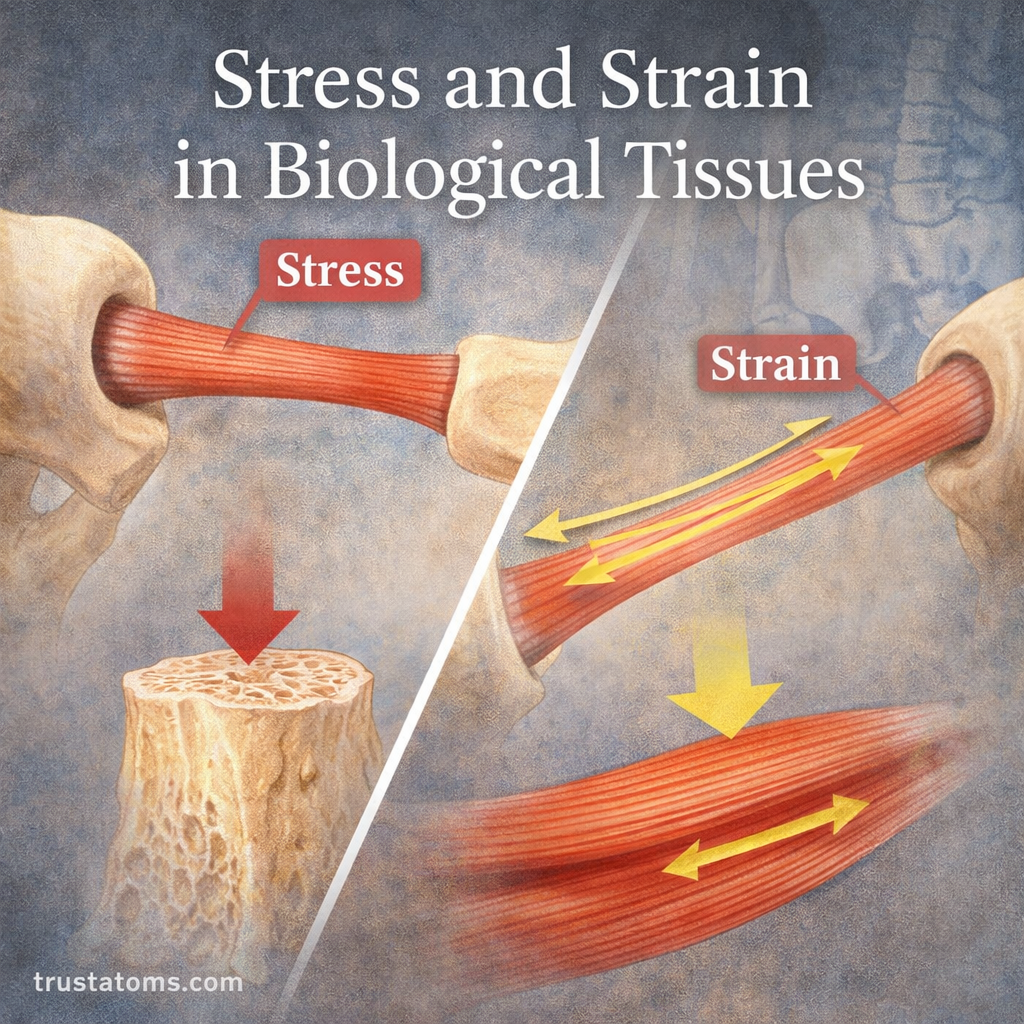
Stress refers to the internal force experienced by a tissue when an external force is applied.
In simple terms, it describes how much force is acting over a specific area within the tissue.
Key Characteristics of Stress
- Measured as force per unit area
- Occurs inside the material (not just on the surface)
- Helps determine how much load a tissue can bear before damage
Types of Stress
Biological tissues can experience different types of stress depending on the direction and nature of the force:
- Tensile stress: Pulling or stretching forces (e.g., tendons during movement)
- Compressive stress: Forces that squeeze or press (e.g., weight on bones)
- Shear stress: Forces that cause layers to slide against each other (e.g., joint movement)
Each type affects tissues differently and plays a role in injury or adaptation.
What Is Strain?
Strain describes how much a tissue deforms (changes shape or length) in response to stress.
It reflects the extent of stretching, compression, or distortion.
Key Characteristics of Strain
- Represents deformation rather than force
- Expressed as a ratio or percentage change
- Indicates how flexible or stiff a tissue is
For example, when a tendon stretches during movement, it experiences strain proportional to the applied force.
The Relationship Between Stress and Strain
Stress and strain are closely linked and are often studied together to understand tissue behavior.
Stress-Strain Relationship
- Low stress → small strain (elastic response)
- Moderate stress → greater strain (still recoverable)
- High stress → permanent deformation or damage
This relationship helps explain how tissues respond as force increases.
Elastic vs. Plastic Deformation
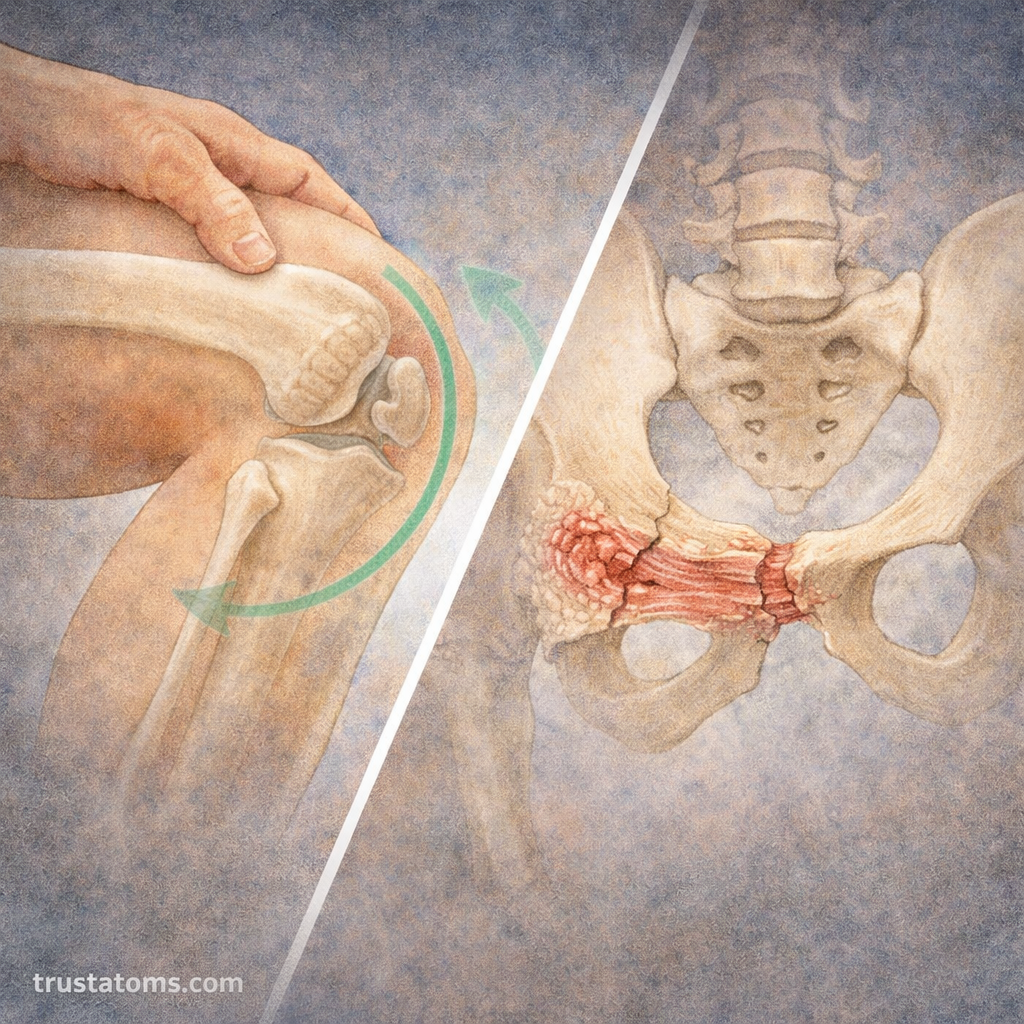
Biological tissues can respond to stress in two main ways:
Elastic Deformation
- Temporary change in shape
- Tissue returns to its original form after the force is removed
- Common in healthy muscles and ligaments
Plastic Deformation
- Permanent change in shape
- Occurs when stress exceeds the tissue’s normal limits
- Can lead to injury or structural damage
Understanding this distinction is critical in injury prevention and rehabilitation.
Mechanical Properties of Biological Tissues
Different tissues in the body have unique mechanical properties that determine how they respond to stress and strain.
Bones
- Strong under compression
- Resist bending and breaking
- Adapt to repeated stress through remodeling
Muscles
- Flexible and capable of contraction
- Handle both tension and movement-related forces
- Can fatigue under repeated stress
Tendons
- Highly resistant to tensile stress
- Transmit force from muscle to bone
- Limited elasticity compared to muscles
Ligaments
- Provide joint stability
- Resist excessive movement
- Slightly more elastic than tendons
Factors That Influence Tissue Response
Several factors affect how biological tissues respond to stress and strain:
Age
- Younger tissues are generally more elastic
- Aging reduces flexibility and increases injury risk
Activity Level
- Regular loading strengthens tissues
- Inactivity weakens structural integrity
Hydration and Nutrition
- Proper hydration maintains tissue elasticity
- Nutrients support repair and growth
Rate of Force Application
- Sudden forces increase injury risk
- Gradual loading allows tissues to adapt
Stress Adaptation and Tissue Remodeling
Biological tissues are not static—they adapt to the forces placed on them.
Adaptation Process
- Repeated stress stimulates strengthening
- Bone density increases with load-bearing activity
- Muscles and tendons become more resilient
Remodeling
- Old or damaged tissue is replaced
- Structural alignment improves over time
- Helps maintain long-term function and durability
This adaptive ability is why exercise can strengthen the body over time.
When Stress Leads to Injury
While stress is necessary for growth and adaptation, excessive or improper stress can cause damage.
Common Injury Types
- Strains: Overstretching or tearing of muscles or tendons
- Sprains: Ligament damage due to excessive force
- Stress fractures: Small cracks in bones from repeated loading
- Tissue fatigue: Gradual weakening from overuse
These injuries often occur when stress exceeds the tissue’s capacity to adapt.
Practical Applications in Health and Movement
Understanding stress and strain has real-world applications in health, fitness, and medicine.
Injury Prevention
- Proper technique reduces harmful stress
- Gradual progression allows tissues to adapt
Rehabilitation
- Controlled loading helps restore strength
- Avoiding overload prevents re-injury
Exercise Design
- Balanced training improves tissue resilience
- Variation reduces repetitive strain
Key Takeaways
- Stress is the internal force applied to biological tissues, while strain is the resulting deformation
- Different types of stress include tensile, compressive, and shear
- Tissues respond with either elastic (temporary) or plastic (permanent) deformation
- Bones, muscles, tendons, and ligaments each have unique mechanical properties
- Proper stress promotes adaptation, while excessive stress can lead to injury
- Understanding these concepts helps improve movement, performance, and overall health
Final Thoughts
Stress and strain are fundamental concepts that explain how the human body responds to physical forces. From everyday movement to athletic performance, these principles guide how tissues bear load, adapt, and maintain structural integrity.
By understanding how stress and strain affect biological tissues, you can make better decisions about exercise, injury prevention, and long-term physical health.