The human body is constantly adjusting to maintain stability, coordination, and movement efficiency. One of the fastest and most important mechanisms behind this is the stretch reflex. This automatic response helps muscles react instantly to changes in length, protecting the body and supporting smooth movement.
Understanding stretch reflexes provides insight into how your nervous system and muscles work together in real time.
What Is a Stretch Reflex?
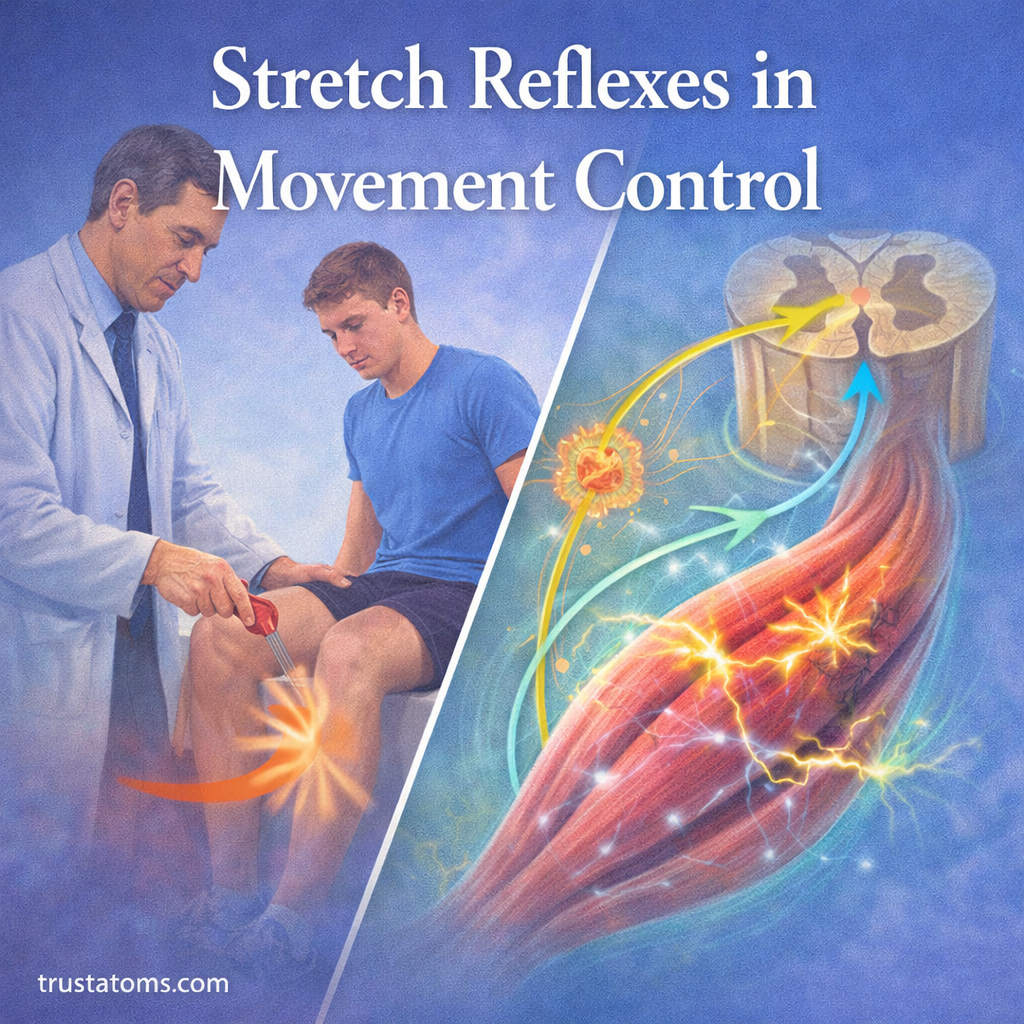
A stretch reflex is an automatic muscle contraction that occurs in response to stretching within the muscle. It happens without conscious effort and is controlled by the nervous system.
Simple Example
- When your knee is tapped during a medical exam, your leg kicks forward
- This is known as the knee-jerk reflex, a classic stretch reflex
Why Stretch Reflexes Are Important
Stretch reflexes play a crucial role in everyday movement and safety.
Key Functions
- Maintain posture and balance
- Prevent muscle overstretching
- Support coordinated movement
- Enhance muscle efficiency during activity
Without stretch reflexes, movements would be slower, less stable, and more prone to injury.
How the Stretch Reflex Works
The stretch reflex involves a rapid communication loop between muscles and the nervous system.
Step-by-Step Process
- Muscle Stretch Occurs
A muscle lengthens due to external force or movement - Muscle Spindles Detect the Stretch
Specialized sensory receptors inside the muscle sense the change - Signal Sent to the Spinal Cord
Sensory neurons transmit information quickly - Immediate Response Signal
The spinal cord sends a motor signal back - Muscle Contracts
The stretched muscle contracts to resist the stretch
This entire process happens in milliseconds.
The Role of Muscle Spindles
Muscle spindles are key components of the stretch reflex.
Functions of Muscle Spindles
- Detect changes in muscle length
- Monitor the speed of stretching
- Trigger reflexive contraction
They act as internal sensors that constantly inform the nervous system about muscle status.
Types of Stretch Reflexes
There are different forms of stretch reflexes depending on the situation.
Monosynaptic Reflex
- Involves a single connection between sensory and motor neurons
- Fastest reflex pathway
- Example: Knee-jerk reflex
Polysynaptic Reflex
- Involves multiple neural connections
- Allows more complex responses
- Coordinates multiple muscle groups
Reciprocal Inhibition
Stretch reflexes are often paired with a process called reciprocal inhibition.
How It Works
- When one muscle contracts, the opposing muscle relaxes
- Example:
- Quadriceps contract → Hamstrings relax
Benefits
- Prevents muscle conflict
- Improves movement efficiency
- Supports smooth coordination
Stretch Reflexes in Everyday Movement
Stretch reflexes are active in many daily activities:
- Walking and running
- Maintaining upright posture
- Catching yourself when you stumble
- Lifting and lowering objects
They allow your body to respond instantly without needing conscious thought.
Stretch Reflexes in Exercise and Sports
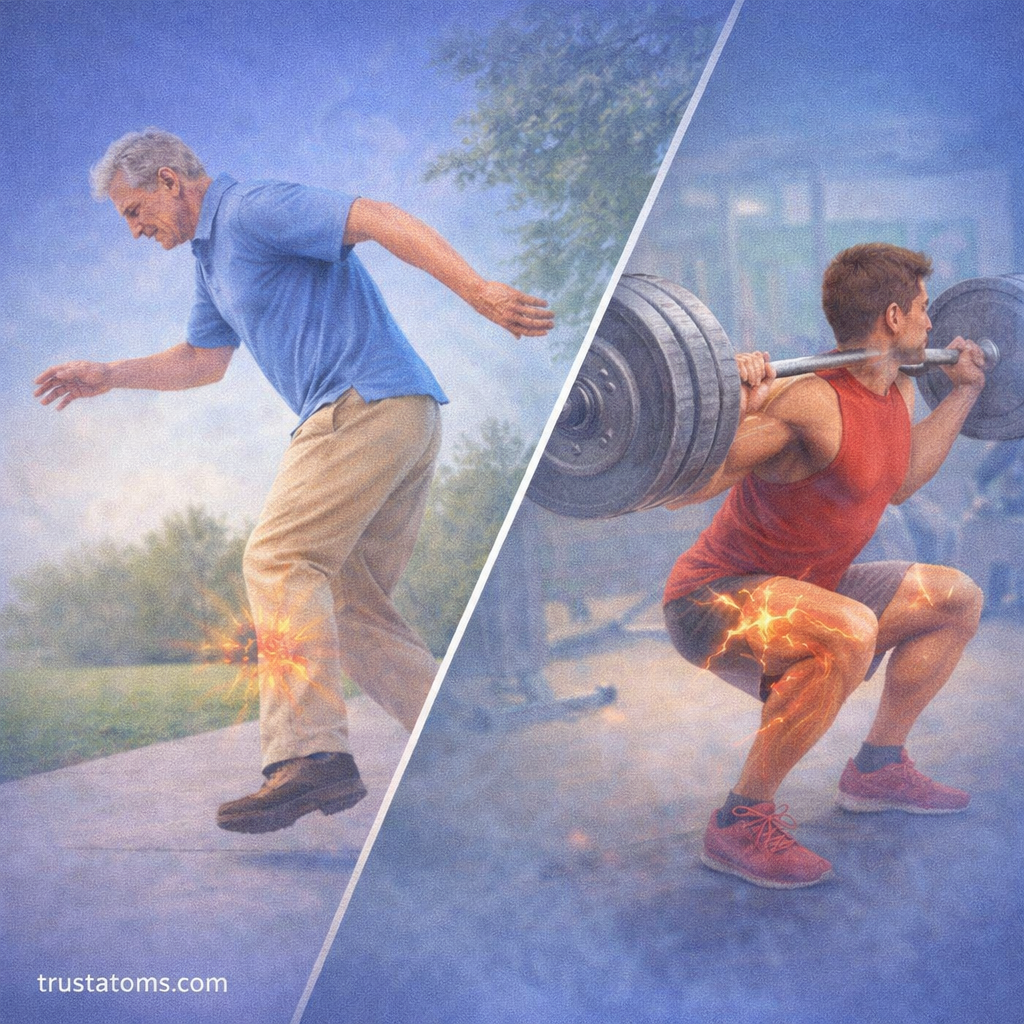
In physical activity, stretch reflexes enhance performance.
Examples
- Jumping
Pre-stretching muscles increases القوة (power output) - Running
Helps maintain rhythm and efficiency - Weightlifting
Assists in controlled lifting and stabilization
This is often referred to as the stretch-shortening cycle.
Factors That Affect Stretch Reflexes
Several factors influence how effectively stretch reflexes work:
- Muscle fatigue
- Age
- Nervous system health
- Flexibility and mobility
- Training level
Proper conditioning can improve reflex responsiveness.
How to Train and Improve Stretch Reflex Function
You can enhance stretch reflex efficiency through targeted training.
Effective Methods
- Plyometric exercises
- Jump squats
- Box jumps
- Dynamic stretching
- Controlled, movement-based stretches
- Strength training
- Builds muscle responsiveness
Training Tips
- Focus on proper form
- Avoid overtraining
- Progress intensity gradually
Common Misconceptions
Some misunderstandings about stretch reflexes include:
- Thinking they are voluntary (they are automatic)
- Believing stretching eliminates reflexes (it only modifies sensitivity)
- Assuming faster is always better (control matters more)
Final Thoughts
Stretch reflexes are a fundamental part of movement control, allowing your body to react quickly and efficiently to changes in muscle length. By linking sensory input with immediate motor responses, they help maintain posture, prevent injury, and improve performance.
Whether you’re walking, exercising, or simply standing still, stretch reflexes are constantly at work—keeping your movements smooth, stable, and responsive.