The human body is designed to maintain a stable internal temperature, even when external conditions change. One of the most important systems responsible for this balance is thermoregulation—and sweat glands play a central role in this process.
By producing sweat and working with the circulatory system, the body can cool itself efficiently and prevent overheating.
What Is Thermoregulation?
Thermoregulation is the body’s ability to maintain a consistent internal temperature, typically around 98.6°F (37°C), despite changes in the environment.
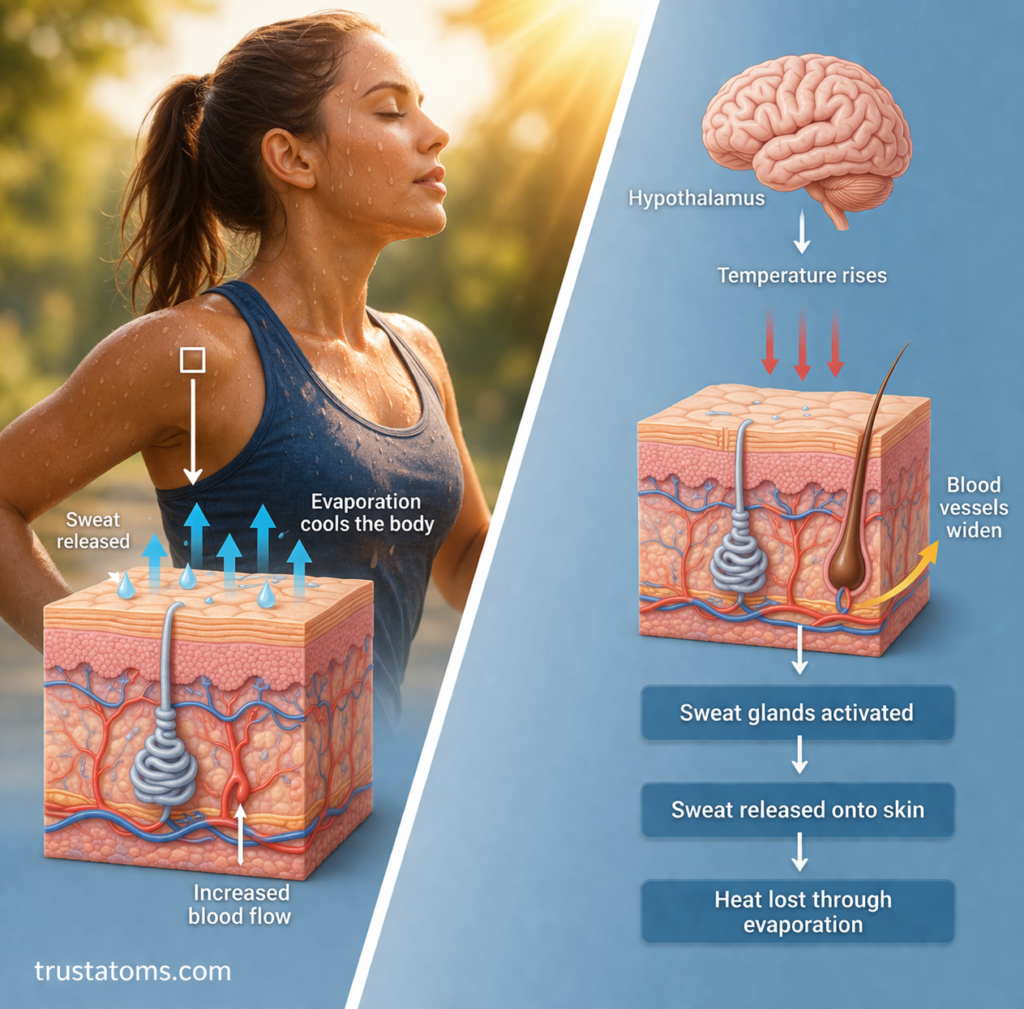
This process is controlled by the brain—specifically the hypothalamus—which acts as the body’s thermostat.
When body temperature rises, the body responds by:
- Activating sweat glands
- Increasing blood flow to the skin
- Promoting heat loss
What Are Sweat Glands?
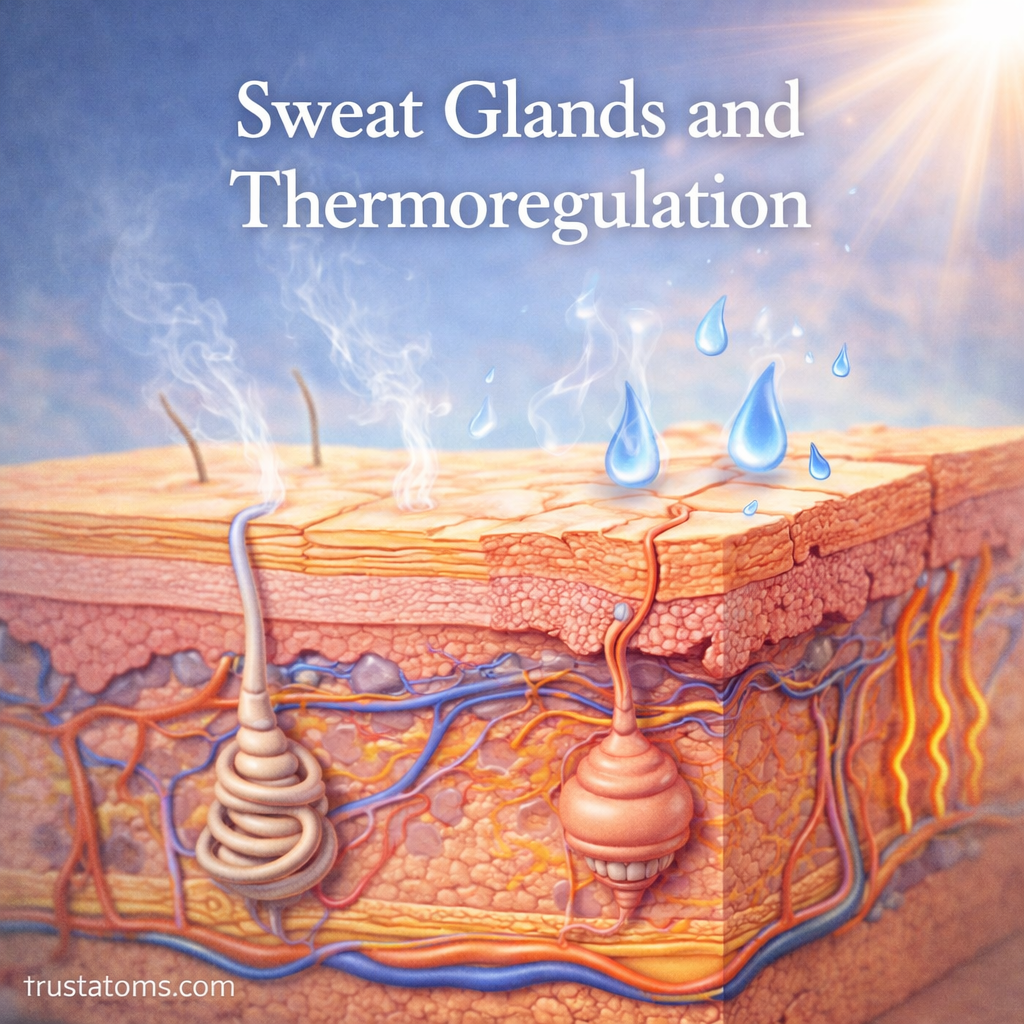
Sweat glands are specialized structures located in the dermis layer of the skin. Their primary function is to produce sweat, which helps regulate body temperature.
Humans have millions of sweat glands distributed across the body, but they are especially concentrated on the:
- Palms
- Soles of the feet
- Forehead
Types of Sweat Glands
There are two main types of sweat glands, each with distinct functions:
Eccrine Sweat Glands
- Most abundant type
- Found all over the body
- Produce a watery, odorless sweat
- Primarily responsible for thermoregulation
These glands release sweat directly onto the skin surface, where it evaporates and cools the body.
Apocrine Sweat Glands
- Located in areas like the armpits and groin
- Become active during puberty
- Produce thicker fluid rich in proteins and lipids
- Associated with body odor when broken down by bacteria
While apocrine glands are not primarily involved in cooling, they play a role in emotional sweating and scent signaling.
How Sweating Cools the Body
Sweating is an effective cooling mechanism based on evaporation.
The Cooling Process
- Body temperature rises
- The hypothalamus signals sweat glands to activate
- Sweat is released onto the skin surface
- Sweat evaporates into the air
- Heat is carried away from the body
This process reduces skin temperature and helps maintain internal balance.
Role of Blood Vessels in Thermoregulation
Sweat glands work alongside blood vessels in the dermis to regulate temperature.
Vasodilation
- Blood vessels widen
- More blood flows to the skin surface
- Heat is released into the environment
Vasoconstriction
- Blood vessels narrow
- Less blood reaches the skin
- Heat is conserved
Together, sweating and blood flow adjustments create a coordinated system for temperature control.
Factors That Affect Sweating
Sweat production can vary depending on several factors:
- Temperature: Higher temperatures increase sweating
- Physical activity: Exercise raises body heat
- Emotions: Stress and anxiety can trigger sweating
- Hydration levels: Dehydration reduces sweat production
- Genetics: Some individuals naturally sweat more or less
Why Sweating Is Important
Sweating is essential for maintaining health and preventing heat-related issues.
Key Benefits of Sweating
- Prevents overheating
- Maintains stable internal temperature
- Supports physical performance during activity
- Helps adapt to hot environments
Without effective sweating, the body would struggle to regulate heat, especially during exercise or in warm climates.
When Thermoregulation Fails
If the body cannot regulate temperature properly, it can lead to serious conditions.
Heat-Related Conditions
- Heat exhaustion: Caused by excessive fluid loss and overheating
- Heat stroke: A medical emergency where body temperature rises dangerously high
Sweat Gland Disorders
- Hyperhidrosis: Excessive sweating beyond normal needs
- Anhidrosis: Reduced or absent sweating, which can impair cooling
Recognizing these conditions is important for maintaining safety and health.
Supporting Healthy Thermoregulation
Maintaining proper thermoregulation involves simple habits:
- Stay hydrated, especially in hot weather
- Wear breathable clothing
- Take breaks during intense physical activity
- Avoid prolonged exposure to extreme heat
These steps help the body function efficiently and reduce the risk of overheating.
Final Thoughts
Sweat glands are a vital part of the body’s temperature control system. Through the process of sweating and collaboration with blood vessels, they help maintain a stable internal environment—even under challenging conditions.
Understanding how sweat glands and thermoregulation work highlights the importance of hydration, environmental awareness, and overall skin health in supporting the body’s natural cooling system.