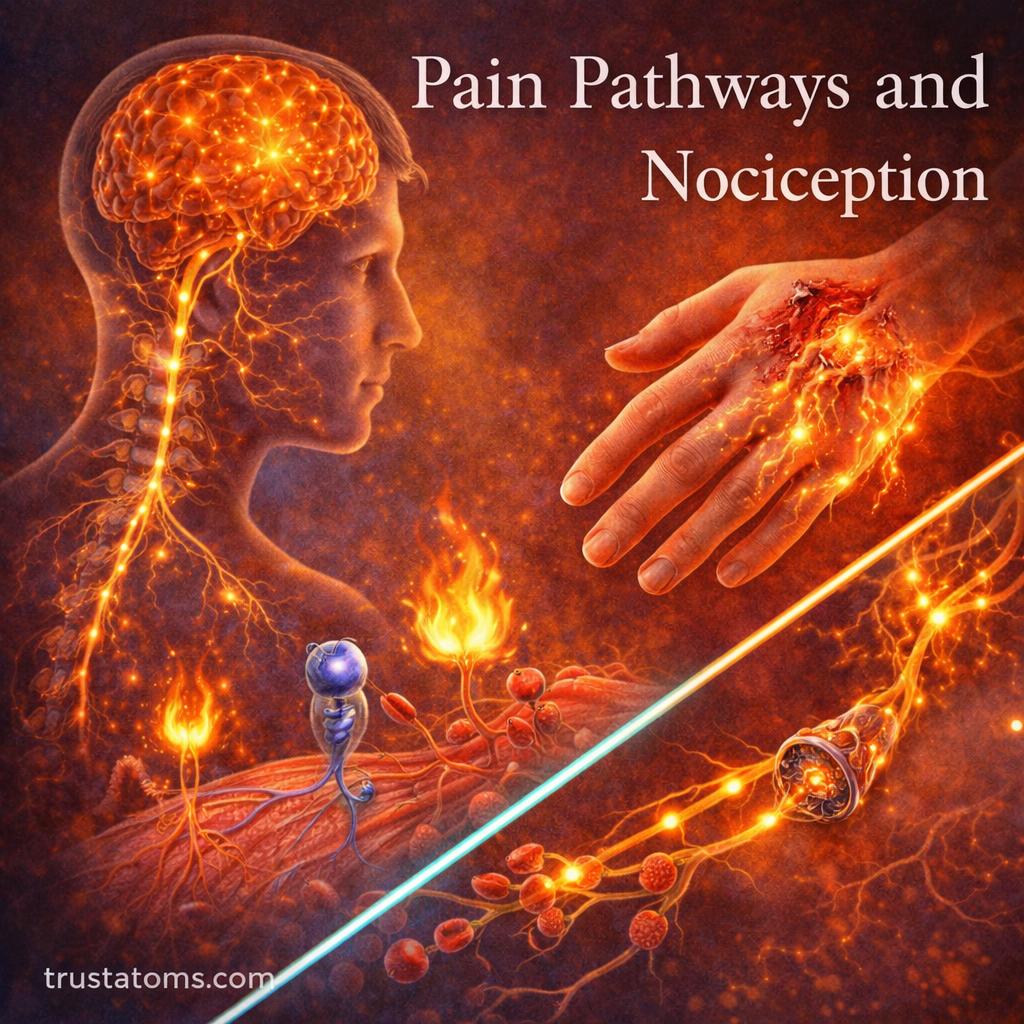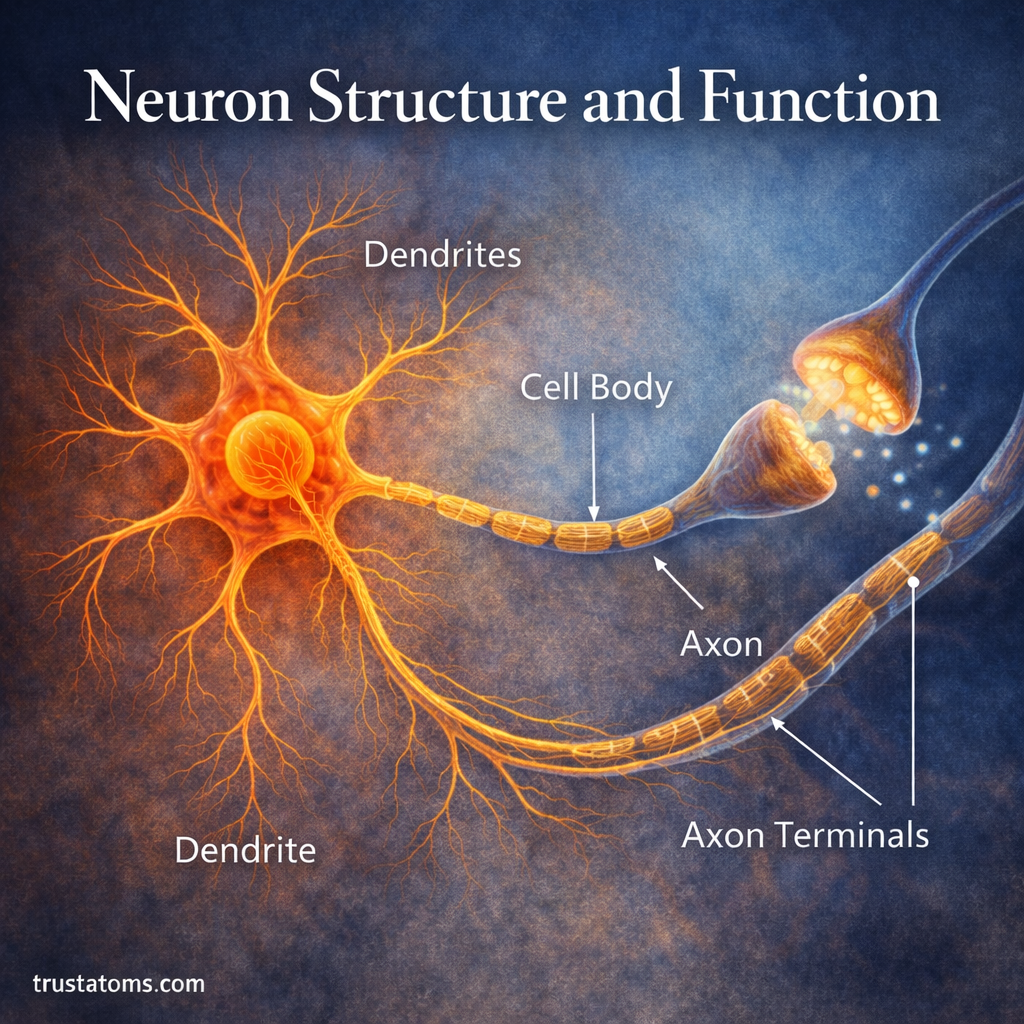
The nervous system relies on rapid communication between billions of neurons. One of the most important processes that allows this communication to occur is synaptic transmission.
Synaptic transmission is the process by which neurons send signals to one another across tiny gaps called synapses. These signals are transmitted using chemical messengers known as neurotransmitters.
This system of electrical and chemical signaling allows the brain and nervous system to coordinate movement, process sensory information, regulate emotions, and control many automatic body functions.
What Is a Synapse?
A synapse is a small junction where one neuron communicates with another neuron or with a target cell such as a muscle or gland.
Even though neurons may appear connected, they do not actually touch. Instead, they are separated by a microscopic space called the synaptic cleft.
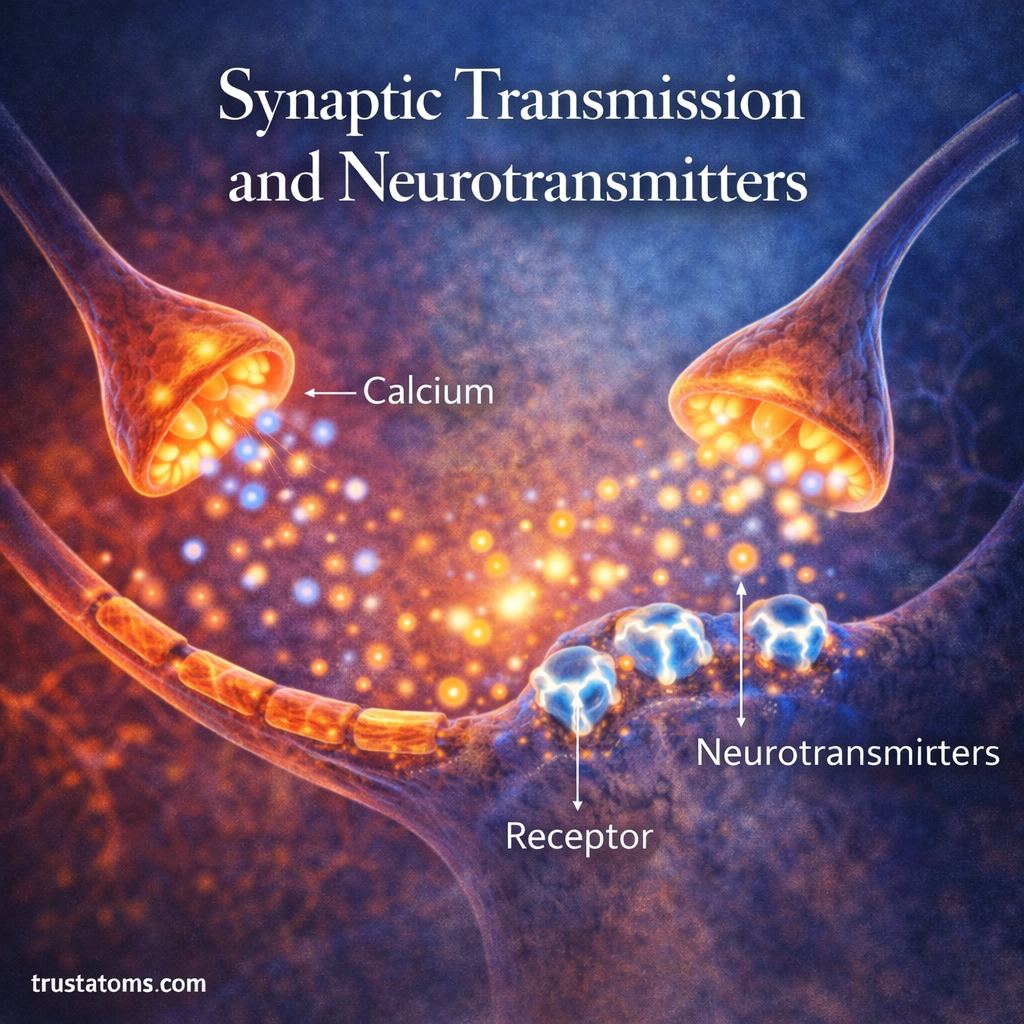
A synapse consists of three main components:
- Presynaptic terminal – the end of the sending neuron
- Synaptic cleft – the small gap between neurons
- Postsynaptic membrane – the receiving part of the next cell
Signals must cross this gap in order to continue traveling through the nervous system.
How Synaptic Transmission Works
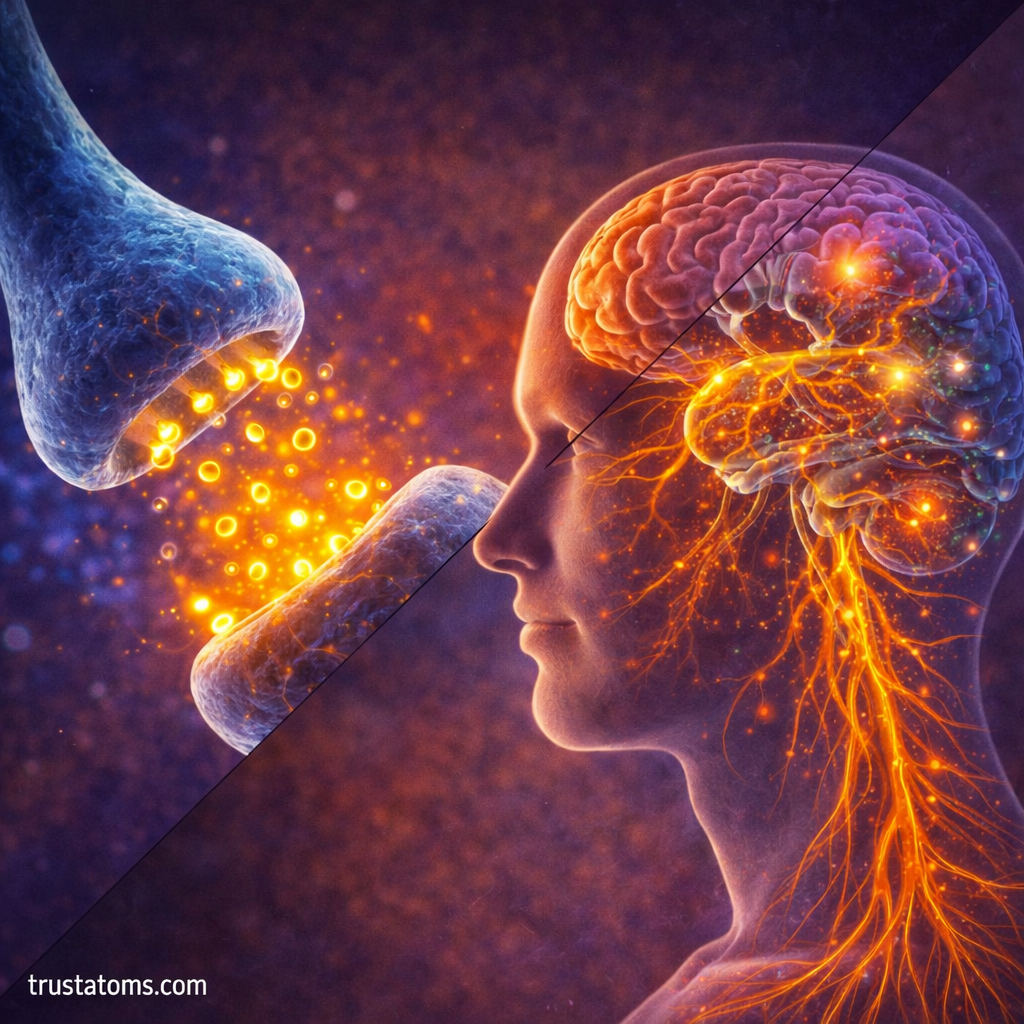
Synaptic transmission converts an electrical signal traveling along a neuron into a chemical signal that can be received by another cell.
The process typically occurs in several steps.
1. Arrival of the Action Potential
When an electrical impulse called an action potential reaches the axon terminal, it signals the neuron that a message is ready to be transmitted.
This electrical event triggers a series of chemical reactions inside the presynaptic neuron.
2. Release of Neurotransmitters
Special sacs called synaptic vesicles inside the neuron contain neurotransmitters.
When the action potential arrives:
- Calcium ions enter the presynaptic terminal
- Synaptic vesicles move toward the membrane
- Neurotransmitters are released into the synaptic cleft
This release process is called exocytosis.
3. Crossing the Synaptic Cleft
Once released, neurotransmitters diffuse across the synaptic cleft.
Because the gap is extremely small, this movement occurs very quickly.
Within milliseconds, the neurotransmitters reach the next cell.
4. Binding to Receptors
On the postsynaptic cell, specialized proteins called receptors recognize specific neurotransmitters.
When neurotransmitters bind to these receptors:
- Ion channels may open or close
- Electrical changes occur in the postsynaptic cell
- A new signal may be generated
If the signal is strong enough, it can trigger another action potential in the receiving neuron.
What Are Neurotransmitters?
Neurotransmitters are chemical messengers that allow neurons to communicate with each other.
They carry signals across synapses and influence how the receiving cell responds.
Neurotransmitters can:
- Stimulate activity in the receiving neuron
- Reduce or inhibit activity
- Modify how signals are processed
Different neurotransmitters have different roles depending on where they act in the nervous system.
Types of Neurotransmitters
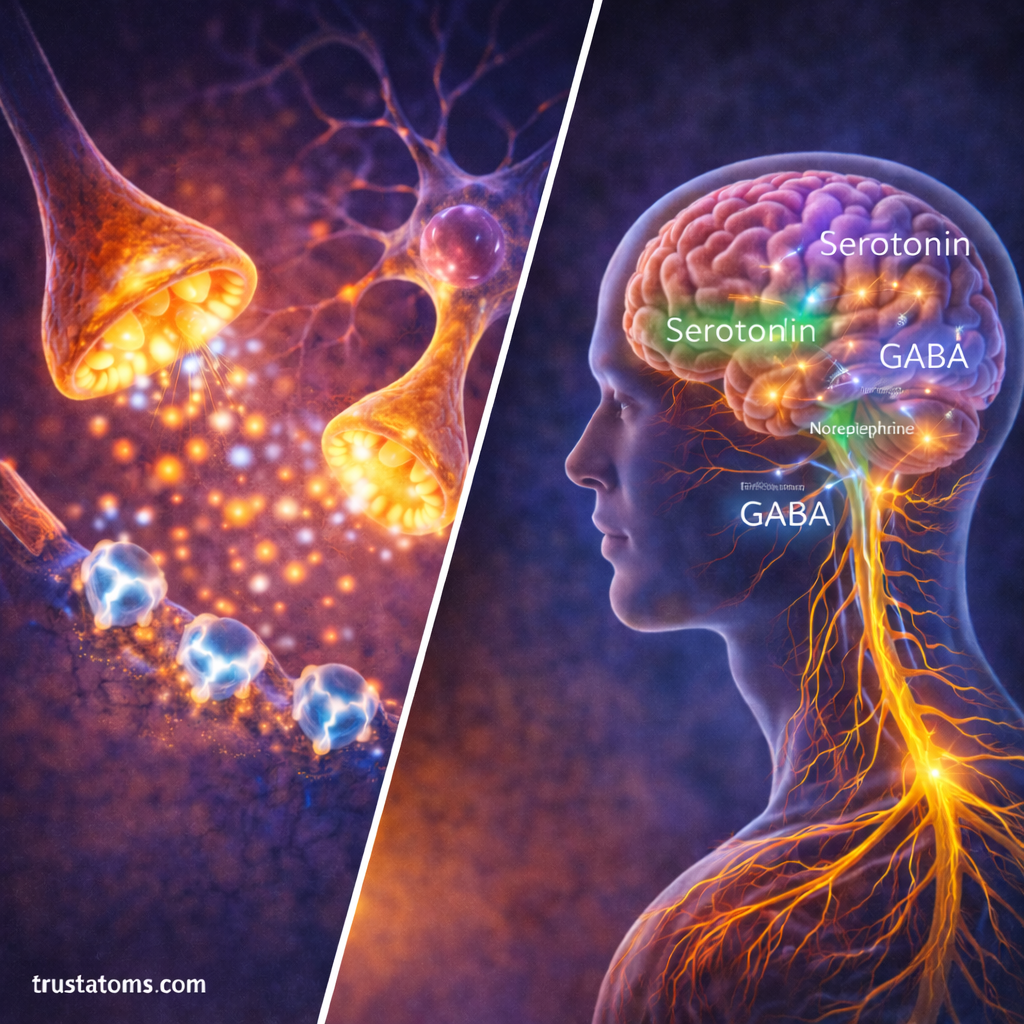
Scientists have identified many neurotransmitters, each with unique functions in the body.
Some of the most well-known include the following.
Acetylcholine
Acetylcholine plays an important role in muscle activation and nervous system communication.
Functions include:
- Stimulating muscle contractions
- Supporting learning and memory
- Regulating parts of the autonomic nervous system
Dopamine
Dopamine is associated with reward, motivation, and movement.
It is involved in:
- Motivation and pleasure
- Motor control
- Learning and reinforcement
Changes in dopamine levels are linked to disorders such as Parkinson’s disease.
Serotonin
Serotonin helps regulate mood and emotional balance.
It also contributes to:
- Sleep cycles
- Appetite regulation
- Digestive processes
Norepinephrine
Norepinephrine helps prepare the body for action and alertness.
It plays a role in:
- Attention and focus
- Stress responses
- Heart rate and blood pressure regulation
Gamma-Aminobutyric Acid (GABA)
GABA is the primary inhibitory neurotransmitter in the brain.
It helps:
- Reduce excessive neural activity
- Promote relaxation
- Maintain balanced brain signaling
Excitatory vs Inhibitory Neurotransmitters
Neurotransmitters can affect neurons in different ways depending on how they interact with receptors.
Excitatory Neurotransmitters
Excitatory neurotransmitters increase the likelihood that a neuron will fire an action potential.
They do this by making the postsynaptic cell more electrically positive.
Examples include:
- Glutamate
- Acetylcholine (in some contexts)
Inhibitory Neurotransmitters
Inhibitory neurotransmitters decrease the likelihood that a neuron will fire.
They make the postsynaptic cell more negative, stabilizing neural activity.
Examples include:
- GABA
- Glycine
The balance between excitatory and inhibitory signals helps maintain proper nervous system function.
Ending the Signal
Once neurotransmitters have transmitted their message, the signal must be stopped so the synapse can reset.
Several mechanisms help end synaptic transmission.
These include:
- Reuptake – neurotransmitters are reabsorbed by the presynaptic neuron
- Enzymatic breakdown – enzymes destroy the neurotransmitter
- Diffusion – neurotransmitters drift away from the synapse
These processes prevent continuous stimulation and allow neurons to prepare for the next signal.
Why Synaptic Transmission Is Important
Synaptic transmission is essential for nearly every function of the nervous system.
It allows neurons to form complex communication networks that support:
- Thinking and decision-making
- Memory formation
- Emotional regulation
- Movement coordination
- Sensory perception
Because of this, disruptions in neurotransmitter signaling can affect many aspects of brain and body function.
Disorders Related to Neurotransmitters
Imbalances in neurotransmitters are linked to several neurological and psychological conditions.
Examples include:
- Parkinson’s disease – reduced dopamine levels
- Depression – changes in serotonin and norepinephrine
- Anxiety disorders – altered GABA activity
- Alzheimer’s disease – reduced acetylcholine signaling
Many medications used in neurology and psychiatry work by modifying neurotransmitter activity in the brain.
Final Thoughts
Synaptic transmission is the process that allows neurons to communicate across the nervous system. By releasing neurotransmitters into synapses, neurons can pass signals to other cells and coordinate complex functions throughout the body.
This combination of electrical and chemical communication forms the foundation of how the brain processes information, controls movement, regulates emotions, and maintains balance within the body.
Understanding synaptic transmission and neurotransmitters provides valuable insight into how the nervous system works and how disruptions in these processes can affect health.