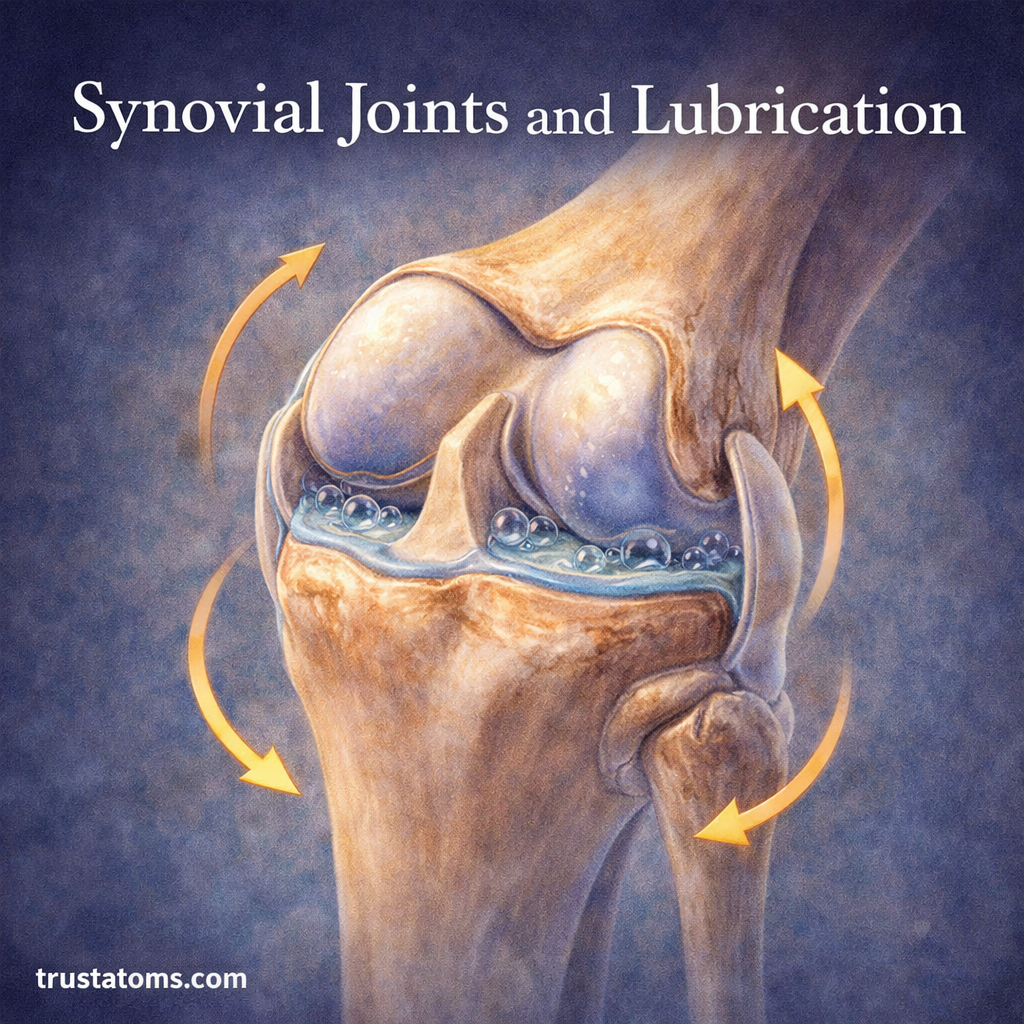
Synovial joints are the most mobile and commonly used joints in the human body. From walking and running to lifting and rotating, these joints allow for smooth, controlled movement.
A key factor behind this efficiency is lubrication, which reduces friction and protects joint structures during motion. Understanding how synovial joints work—and how they stay lubricated—reveals why joint health is essential for everyday function.
What Are Synovial Joints?
Synovial joints are a type of joint characterized by a fluid-filled cavity that allows for a wide range of motion.
Common Examples
- Knee
- Shoulder
- Hip
- Elbow
- Wrist
Key Features of Synovial Joints
- Joint cavity filled with synovial fluid
- Articular cartilage covering bone ends
- Synovial membrane lining the joint
- Joint capsule enclosing the structure
- Ligaments providing stability
These components work together to enable smooth and efficient movement.
Structure of a Synovial Joint
Each part of a synovial joint has a specific role in reducing friction and maintaining joint integrity.
Articular Cartilage
- Smooth, slippery tissue covering bone ends
- Reduces friction during movement
- Absorbs shock
Synovial Membrane
- Inner lining of the joint capsule
- Produces synovial fluid
Joint Capsule
- Tough outer layer that encloses the joint
- Provides stability and protection
Synovial Fluid
- Thick, viscous fluid inside the joint cavity
- Acts as a lubricant and nutrient carrier
What Is Joint Lubrication?
Joint lubrication refers to the process of reducing friction between moving surfaces within a joint.
In synovial joints, this is mainly achieved through synovial fluid and cartilage interaction.
Role of Synovial Fluid
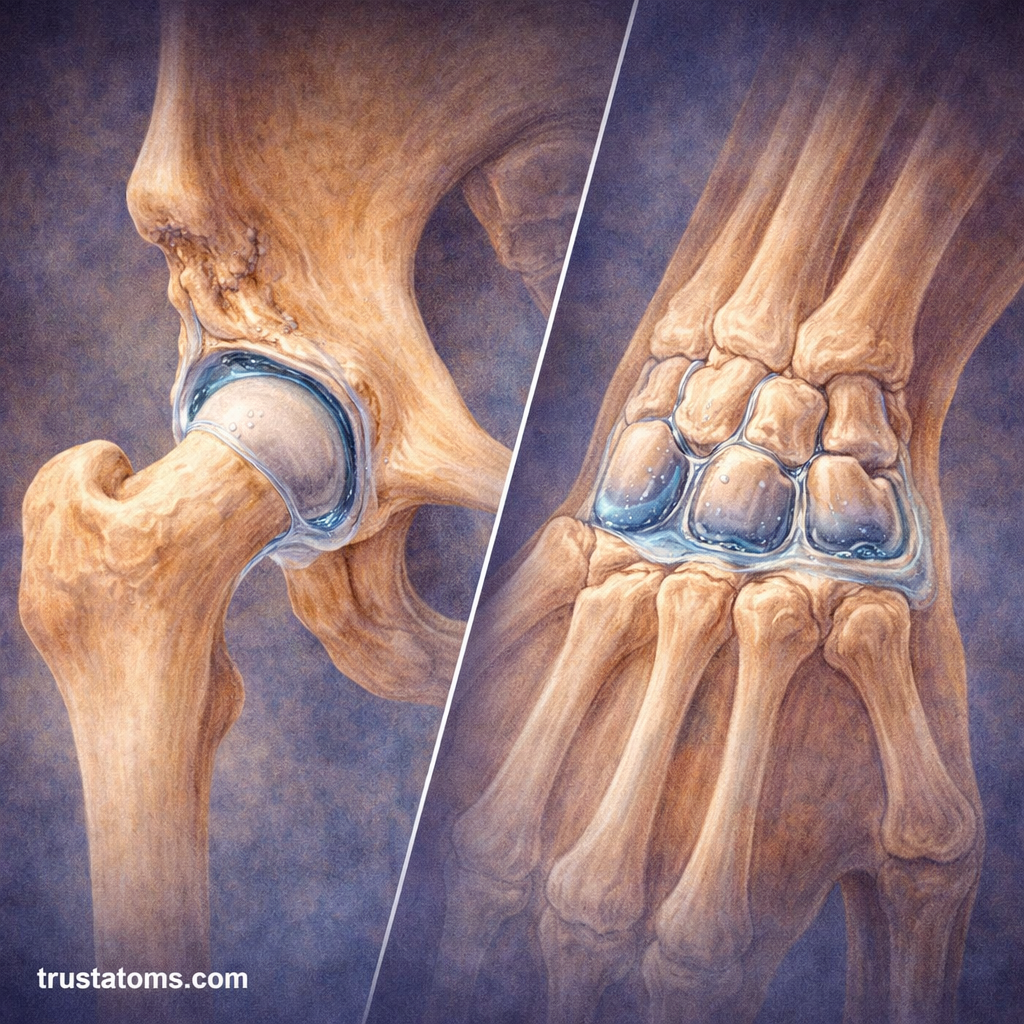
Synovial fluid is essential for keeping joints functioning smoothly.
Functions of Synovial Fluid
- Reduces friction between cartilage surfaces
- Provides nutrients to cartilage (which lacks blood supply)
- Absorbs shock during movement
- Helps remove metabolic waste
How It Works
When a joint moves:
- Synovial fluid spreads across cartilage surfaces
- It forms a thin, slippery film
- This minimizes direct contact between bones
This process allows joints to move with minimal resistance.
Types of Joint Lubrication
Synovial joints use multiple lubrication mechanisms to maintain efficiency.
Boundary Lubrication
- Occurs when a thin layer of fluid coats the cartilage
- Prevents surfaces from sticking together
Fluid Film Lubrication
- A thicker layer of fluid separates joint surfaces
- Distributes load and reduces wear
Weeping Lubrication
- Cartilage releases fluid under pressure
- Helps maintain lubrication during movement
Why Lubrication Is Critical for Joint Health
Without proper lubrication, joints would experience increased friction, leading to damage over time.
Benefits of Healthy Joint Lubrication
- Smooth and pain-free movement
- Reduced wear and tear
- Protection against joint degeneration
- Improved mobility and flexibility
Factors That Affect Synovial Joint Lubrication
Several internal and external factors influence how well joints stay lubricated.
Biological Factors
- Age (fluid production may decrease over time)
- Hormonal changes
- Genetics
Lifestyle Factors
- Physical activity level
- Hydration
- Diet (nutrients supporting cartilage and fluid production)
Mechanical Factors
- Joint alignment
- Repetitive stress
- Injury history
Common Conditions Related to Poor Lubrication
When lubrication is compromised, joint problems can develop.
Osteoarthritis
- Cartilage breakdown
- Reduced lubrication
- Increased friction and pain
Joint Stiffness
- Reduced fluid movement
- Often occurs after inactivity
Inflammation (Synovitis)
- Excess fluid production
- Swelling and discomfort
How to Support Healthy Joint Lubrication
Maintaining joint lubrication is essential for long-term mobility.
Practical Tips
- Stay active to promote fluid circulation
- Drink enough water to support fluid balance
- Maintain a balanced diet rich in nutrients
- Avoid prolonged inactivity
- Use proper form during physical activity
Common Misconceptions
- Joints are naturally frictionless (they rely on lubrication systems)
- Only older adults need to worry about joint health
- Cracking joints always means damage (often harmless gas release)
Final Thoughts
Synovial joints are designed for movement, but their efficiency depends heavily on proper lubrication. Synovial fluid, cartilage, and joint structure work together to reduce friction and protect against wear.
By understanding how synovial joints function and how lubrication supports them, you can better appreciate the importance of maintaining joint health throughout life.